
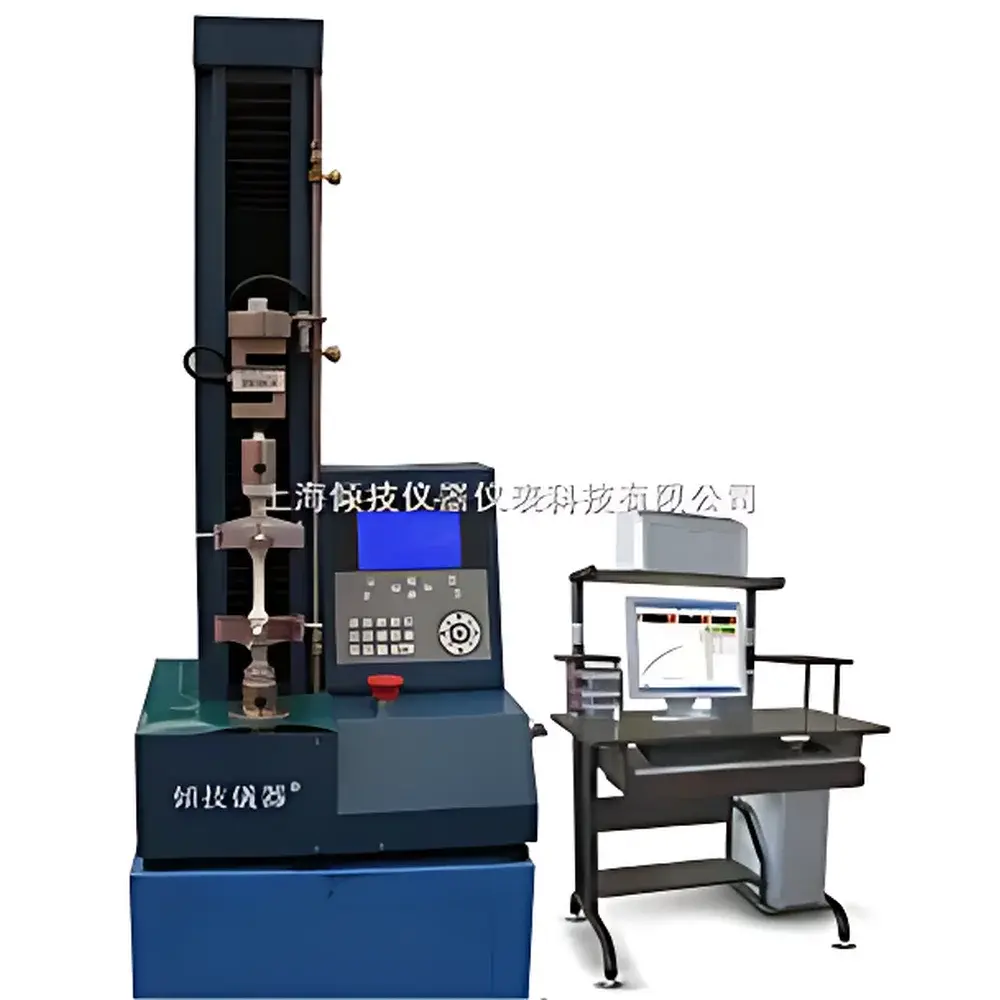
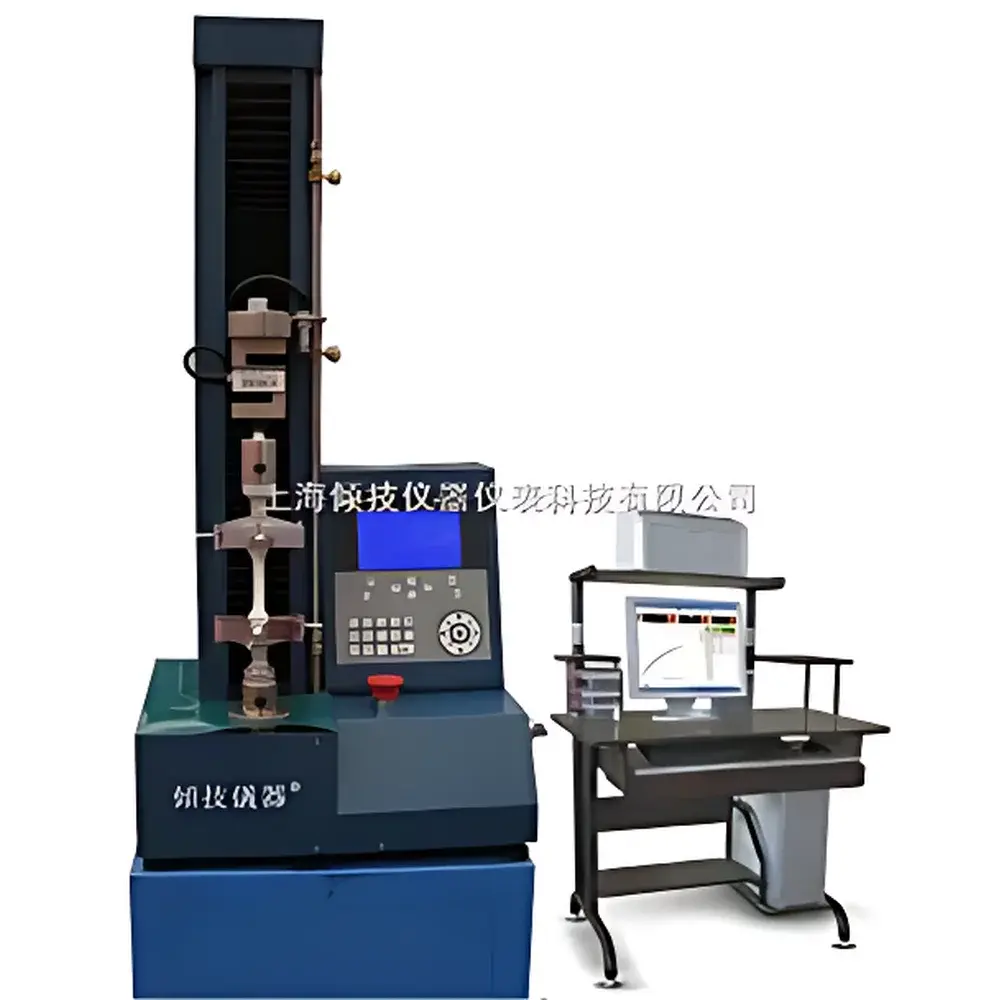
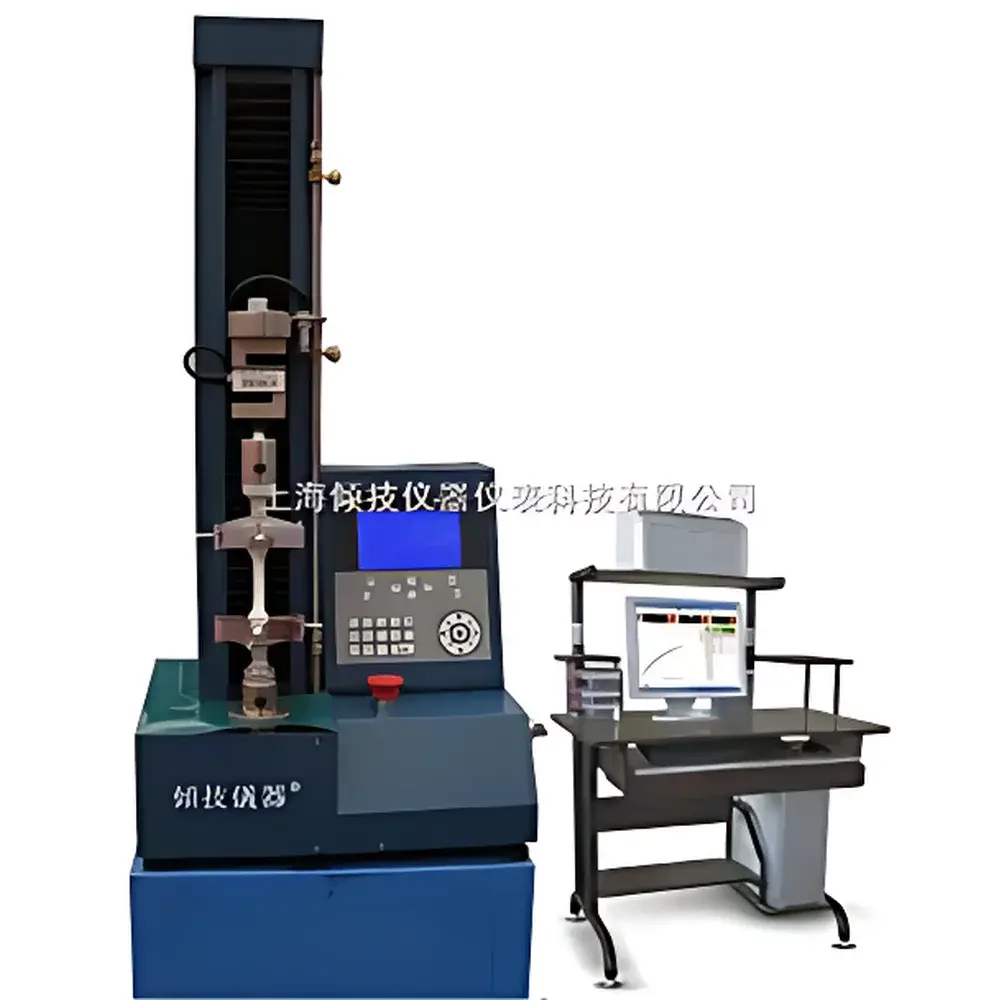
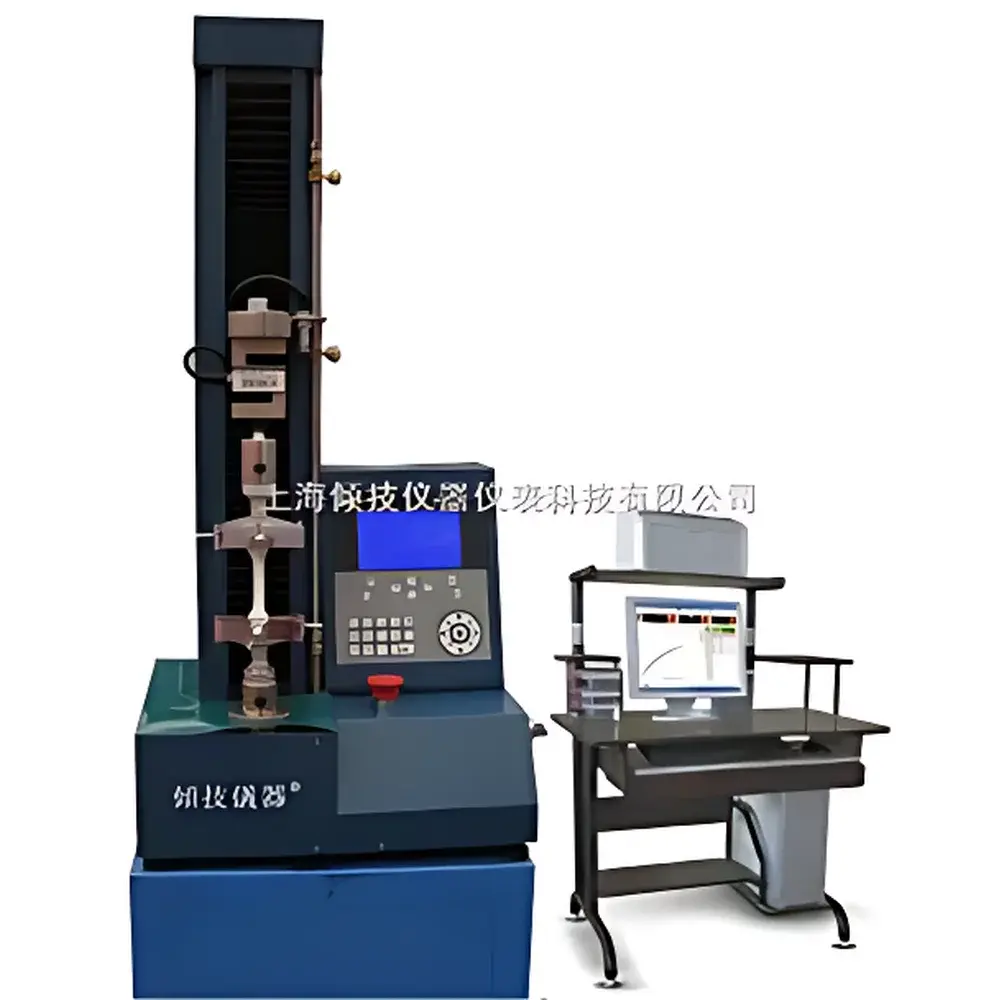
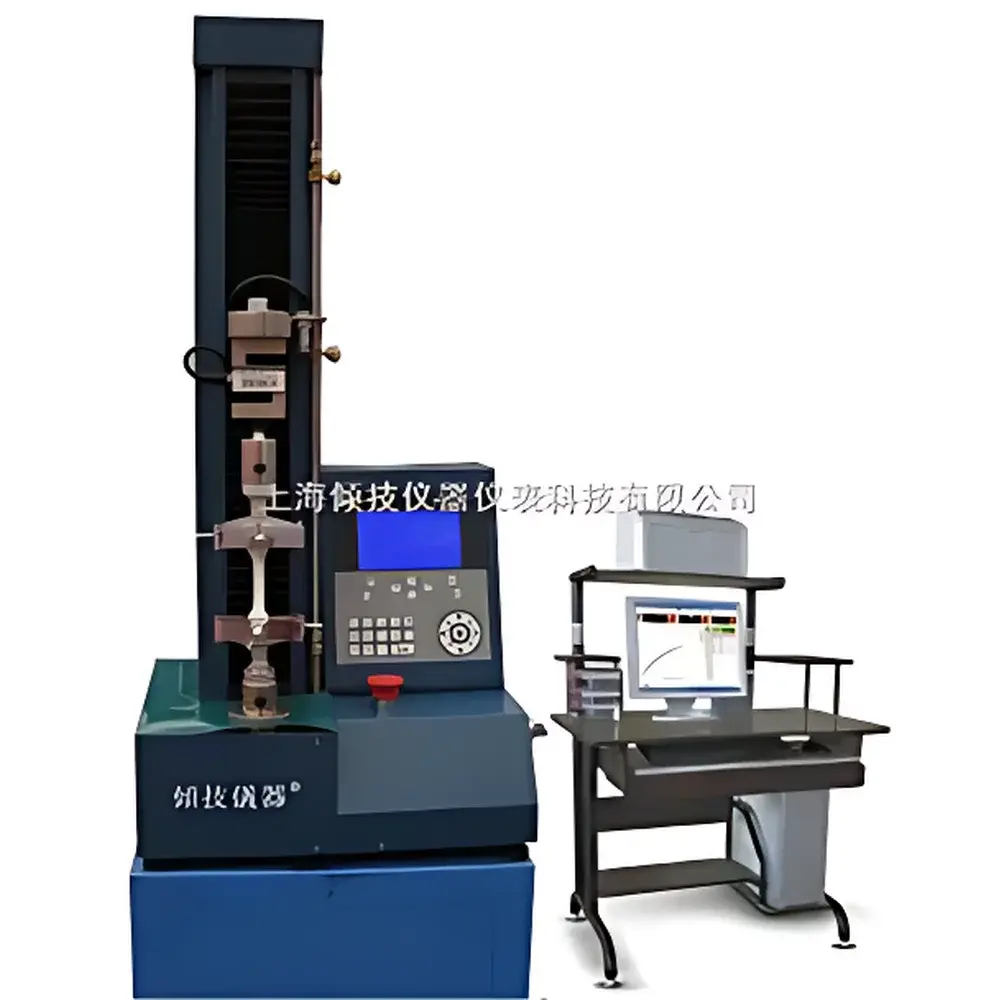
Qinji QJ210 45° Peel Adhesion Tester
| Origin | Shanghai, China |
|---|---|
| Manufacturer Type | Authorized Distributor |
| Origin Category | Domestic (China) |
| Model | QJ210 |
| Price | USD 6,300 (FOB Shanghai) |
| Load Capacity | 10 N to 2500 N (interchangeable within range) |
| Accuracy Class | 0.5 |
| Effective Test Width | 150 mm |
| Effective Stroke | 300 mm |
| Speed Range | 0.01–300 mm/min (adjustable) |
| Speed Accuracy | ±0.5% of reading |
| Displacement Accuracy | ±0.5% of reading |
| Force Resolution | 500,000 counts (full-scale, no range switching) |
| Sensor | High-precision load cell (USA-sourced) |
| Controller | Panasonic全数字交流伺服系统 |
| Control Mode | Full-digital closed-loop control (constant load, constant strain, constant displacement) |
| Safety Protection | Dual mechanical & software-based limit protection, overload shutdown (>110% FS), emergency stop button |
| Power | 200 W |
| Dimensions (L×W×H) | 430 × 315 × 855 mm |
| Net Weight | 45 kg |
Overview
The Qinji QJ210 45° Peel Adhesion Tester is a precision-engineered universal tensile and peel testing instrument designed for quantitative evaluation of interfacial bond strength in laminated, coated, and bonded materials. It operates on the fundamental principle of controlled uniaxial force application under standardized angular peel configurations—specifically optimized for 45° peel geometry per ASTM D903, ISO 8510-2, and GB/T 2790—while maintaining full compatibility with 90° and 180° peel, tensile, flexural, compressive, shear, and puncture test modes via interchangeable fixture sets. The system integrates a high-stiffness dual-column frame, preloaded ball-screw actuation driven by a 200 W Panasonic AC servo motor, and a synchronous belt reduction transmission—ensuring minimal axial play, thermal stability, and long-term repeatability (<0.5% RSD across repeated peel cycles). All motion and data acquisition are synchronized through a real-time digital control architecture, enabling traceable, audit-ready test execution in regulated environments.
Key Features
- Full-range force measurement from 10 N to 2500 N with 0.5-class accuracy and 500,000-count resolution—no range switching required, preserving linearity across the entire dynamic span.
- Adjustable crosshead speed from 0.01 to 300 mm/min with ±0.5% speed fidelity, validated per ISO 5893 and ASTM E4, supporting both quasi-static peel kinetics and rapid debonding characterization.
- Dual-mode positioning: independent fast/slow jog controls for rapid sample setup and precise sub-micron approach during preload engagement.
- Integrated dual-protection architecture: hardware-based mechanical limit switches combined with software-defined stroke boundaries and real-time load threshold monitoring (auto-shutdown at >110% FS).
- Emergency stop circuit compliant with IEC 60204-1, directly interrupting power to drive electronics and brake activation.
- Modular fixture interface compatible with DIN 53357, ASTM D3330, and ISO 29862-compliant peel jaws, tensile grips, three-point bend fixtures, and compression platens—custom tooling available upon specimen geometry specification.
Sample Compatibility & Compliance
The QJ210 accommodates specimens up to 150 mm wide and 300 mm active travel length, supporting standard strip geometries used in pressure-sensitive adhesives (PSAs), medical tapes, flexible packaging laminates, automotive trim bonding, and printed electronics substrates. It meets metrological and procedural requirements of ISO/IEC 17025-accredited laboratories when operated with documented calibration certificates (traceable to NIM or equivalent national standards). Test protocols align with ASTM D903 (peel resistance of adhesive bonds), ASTM D3330 (PSA peel adhesion), ISO 8510-2 (adhesive-coated tapes), GB/T 2790 (peel strength of rubber-to-substrate bonds), and JIS Z 0237 (adhesive tape testing). Optional GLP/GMP-compliant software modules support 21 CFR Part 11–aligned electronic signatures, audit trails, and user-access-level management.
Software & Data Management
The embedded Windows-based test platform delivers real-time visualization of force-displacement curves, peak load capture, average peel force calculation (per ISO 8510-2 Annex A), and post-test statistical reporting (mean, SD, CV%, min/max). Raw data exports to CSV, Excel, or PDF formats include timestamped metadata: operator ID, environmental conditions (optional external sensor input), calibration status, and test parameter history. The closed-loop control firmware supports programmable multi-step sequences—including preload ramping, dwell periods, and conditional termination triggers (e.g., fracture detection via slope discontinuity). System diagnostics log controller health, encoder feedback integrity, and sensor zero-drift trends—enabling predictive maintenance scheduling without interrupting routine QA/QC throughput.
Applications
- Quantification of peel adhesion energy in medical transdermal patches and surgical tapes under controlled humidity and temperature (with optional environmental chamber integration).
- Quality assurance of lithium-ion battery electrode calendering adhesion to current collectors using 45° peel geometry to minimize substrate deformation artifacts.
- Evaluation of interlaminar shear strength in composite prepregs and fiber-reinforced polymer (FRP) joints per ASTM D1781.
- Validation of release liner adhesion loss profiles during unwind processes in converting lines.
- Comparative assessment of surface treatment efficacy (corona, plasma, flame) on polyolefin films prior to extrusion lamination.
- Mechanical screening of biodegradable packaging seal integrity under accelerated aging conditions.
FAQ
What standards does the QJ210 support for peel testing?
It natively supports ASTM D903, ISO 8510-2, GB/T 2790, JIS Z 0237, and ASTM D3330—with configurable test templates and pass/fail thresholds aligned to each standard’s acceptance criteria.
Can the system operate without a connected PC?
Yes—the front-panel LCD interface enables standalone operation with preset test methods, real-time curve display, and local data storage on internal flash memory; PC connectivity is required only for advanced reporting, database archiving, or remote diagnostics.
Is calibration traceability provided with delivery?
Each unit ships with a factory calibration certificate traceable to the National Institute of Metrology (NIM, China); accredited third-party calibration services (ISO/IEC 17025) are available upon request.
How is overload protection implemented?
Overload response is dual-stage: software monitors real-time load vs. configured upper limit and initiates immediate crosshead stop + servo disable; simultaneously, hardware current-limiting circuits engage to prevent motor or drive damage.
What is the recommended maintenance interval?
Preventive maintenance—including ball-screw lubrication, encoder alignment verification, and sensor zero-check—is advised every 500 operational hours or semiannually, whichever occurs first; all procedures are documented in the bilingual technical manual.



