
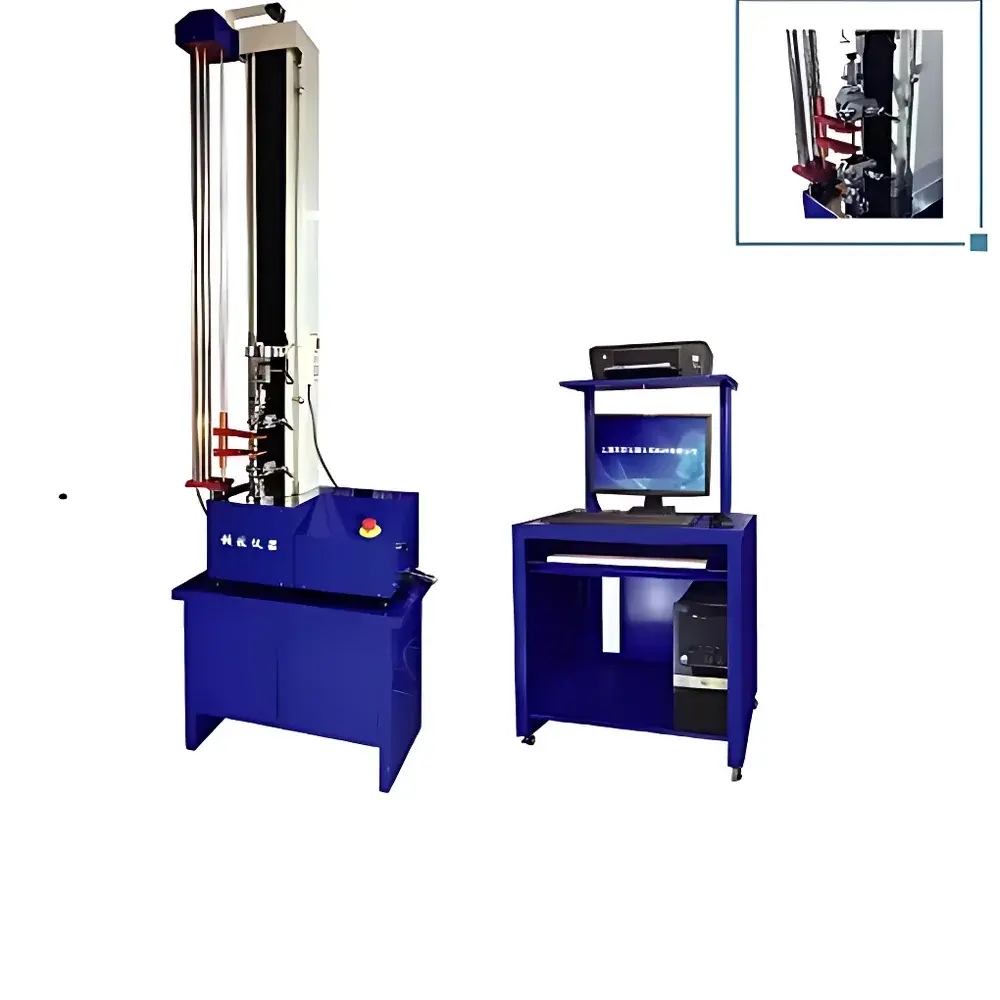
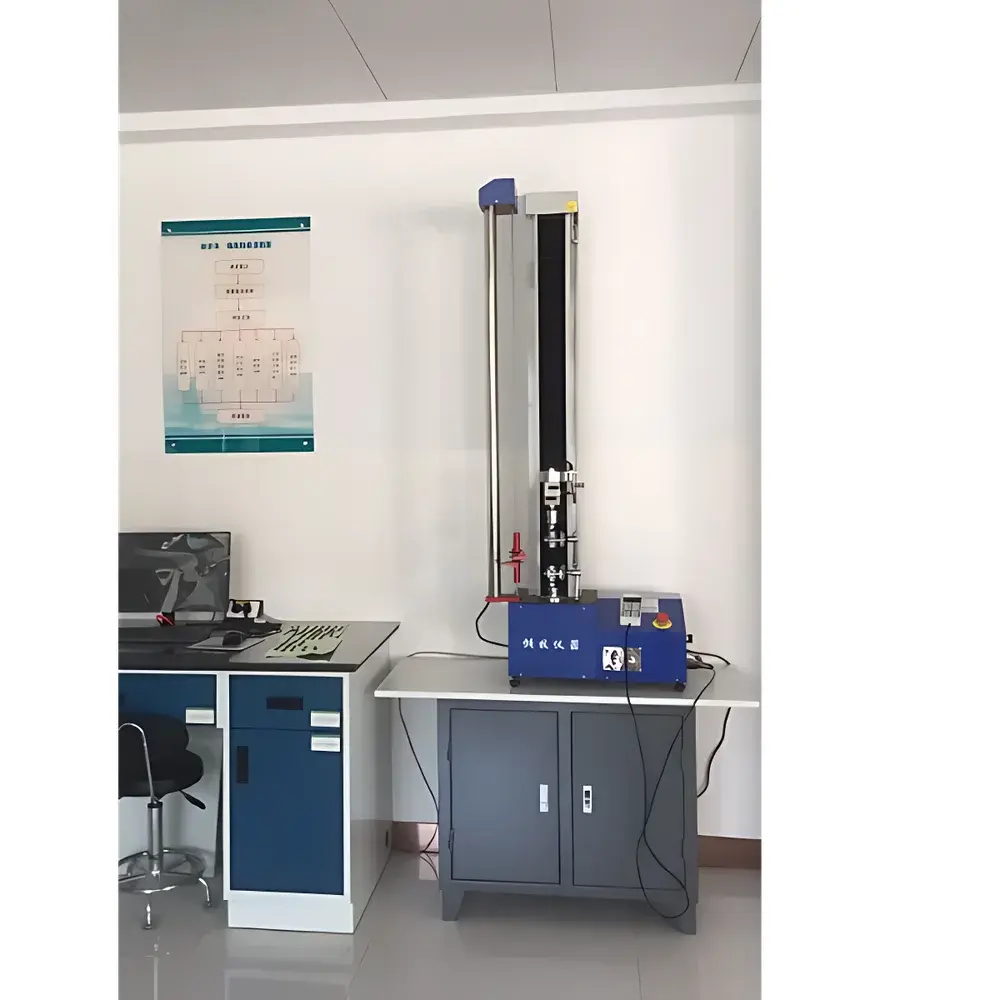
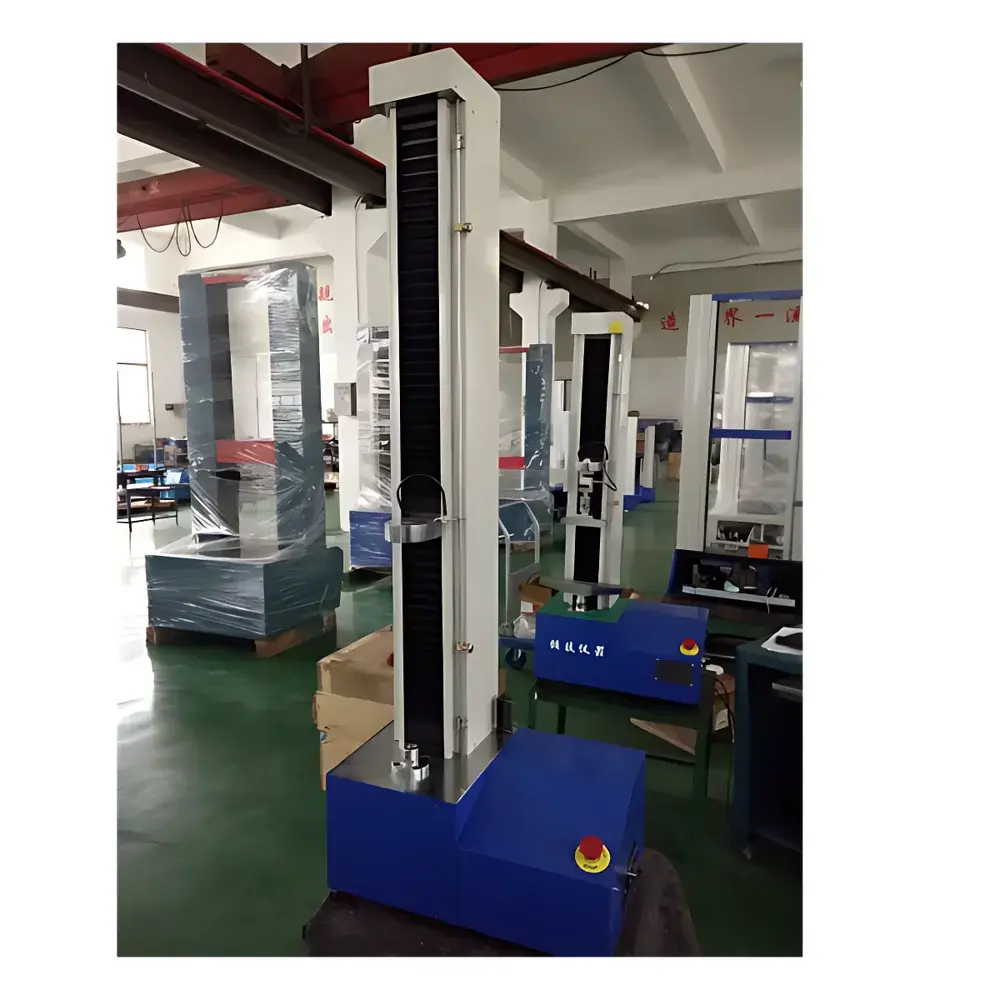
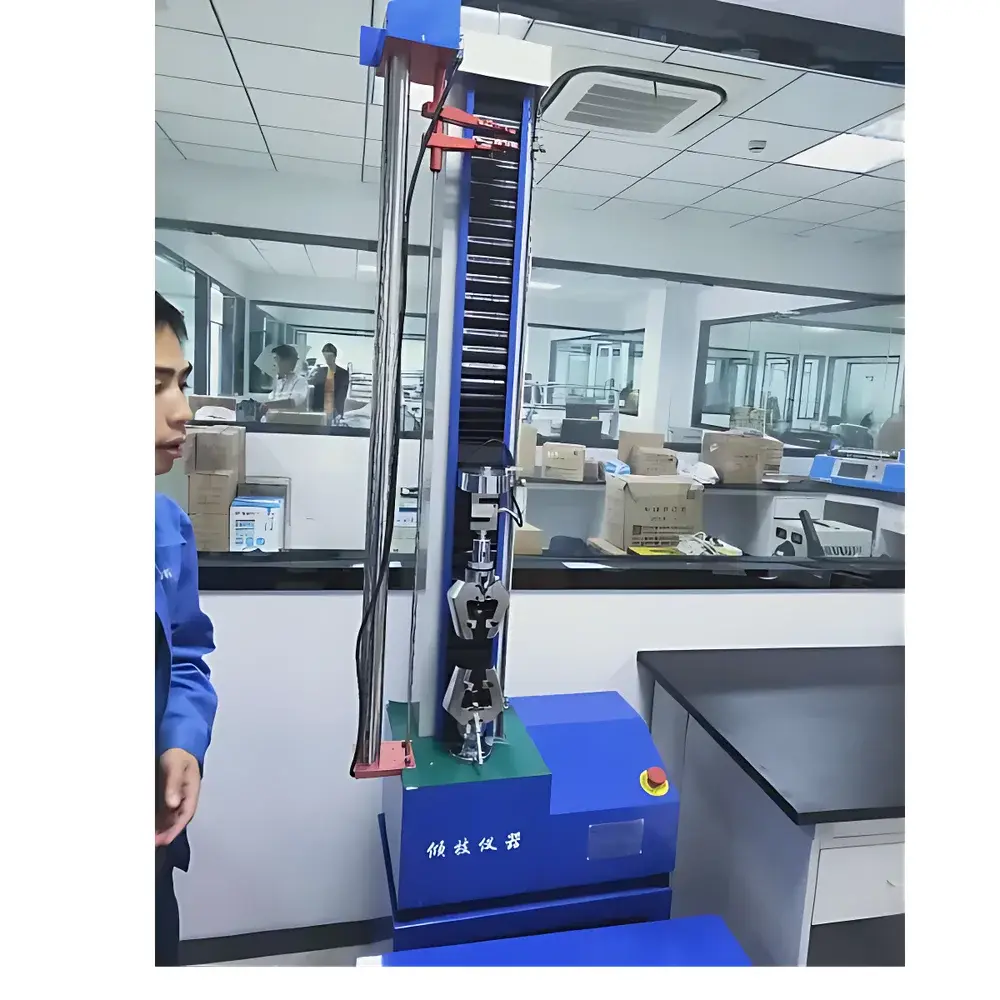
Qinsun QJ210A-500N Electronic Tensile Testing Machine
| Brand | Qinsun |
|---|---|
| Origin | Shanghai, China |
| Model | QJ210A-500N |
| Max Test Load | 5 kN |
| Load Range | 0–5000 N |
| Load Accuracy | ±0.5% of reading |
| Stroke | 800 mm |
| Displacement Resolution | 0.001 mm |
| Test Speed | 0.01–500 mm/min |
| Speed Accuracy | ±0.5% of set value |
| Crosshead Travel Width | 150 mm |
| Load Cell | High-precision U.S.-sourced sensor |
| Controller | Panasonic full-digital AC servo system |
| Protection | Software diagnosis, electronic limit switches, overload protection (110% F.S.), automatic return |
| Power Supply | 200 V, 400 W |
| Dimensions (L×W×H) | 590 × 355 × 1640 mm |
| Weight | ~85 kg |
Overview
The Qinsun QJ210A-500N is a microprocessor-controlled electronic tensile testing machine engineered for precision mechanical property evaluation of solid materials under uniaxial loading conditions. It operates on the fundamental principle of controlled displacement or load-rate application via a high-fidelity servo-driven crosshead system, enabling static and quasi-static mechanical characterization—including tensile, compressive, flexural, peel, tear, puncture, and shear deformation modes. Designed for laboratories requiring traceable, repeatable, and standards-compliant mechanical testing, the system delivers ISO 7500-1 Class 0.5 accuracy in force measurement across its full 0–5000 N range, with no internal range switching required. Its robust dual-speed crosshead actuation, integrated safety interlocks, and real-time feedback architecture support both routine QC workflows and advanced material research protocols.
Key Features
- High-resolution force measurement: 500,000-count A/D resolution with ±0.5% accuracy across the entire 0–5000 N range—no range segmentation or recalibration needed.
- Precise displacement control: 0.001 mm resolution and ±0.5% displacement accuracy over an effective stroke of 800 mm.
- Wide-speed capability: Adjustable test speed from 0.01 to 500 mm/min, with speed stability maintained within ±0.5% of setpoint.
- Advanced motion control: Panasonic full-digital AC servo controller ensures smooth acceleration/deceleration profiles and minimal overshoot during load ramping or hold phases.
- Multi-mode safety architecture: Dual-layer protection including software-based fault detection, hardware electronic limit switches, and automatic overload cutoff at 110% of full-scale load.
- Modular fixture interface: Standardized T-slot base and quick-mount adapters accommodate custom-designed grips and fixtures for wires, films, composites, elastomers, textiles, and biomedical specimens.
- Intuitive operator interface: Optional bundled Lenovo LCD workstation supports real-time curve plotting, multi-channel data logging, and post-test analysis without third-party software dependencies.
Sample Compatibility & Compliance
The QJ210A-500N accommodates a broad spectrum of specimen geometries and mechanical behaviors—ranging from thin polymer films (≥0.05 mm thickness) and metallic foils to rigid structural composites and viscoelastic hydrogels. Its 150 mm effective test width and 800 mm vertical travel allow standardized ASTM D638, ISO 527-2, GB/T 1040.2, JIS K7113, and EN 13924 compliant specimen mounting. The system meets mechanical verification requirements per ISO 7500-1 (Class 0.5), and its digital signal chain supports audit-ready documentation for GLP, GMP, and ISO/IEC 17025-accredited environments. All firmware and calibration routines are traceable to national metrology institutes; factory calibration certificates include uncertainty budgets per ISO/IEC 17025 Annex A.3.
Software & Data Management
The embedded control software provides native support for ASTM E4, ISO 179-1, and GB/T 228.1 test method templates—including stress–strain curve generation, modulus calculation (secant/tangent/initial), yield point identification (0.2% offset), elongation at break, and peak load reporting. Raw data export is available in CSV and XML formats with timestamped metadata (operator ID, environmental conditions, calibration ID). Audit trail functionality records all parameter changes, test start/stop events, and user logins—fully compliant with FDA 21 CFR Part 11 requirements when deployed with optional electronic signature modules. Data integrity safeguards include cyclic redundancy checks (CRC) on stored files and write-once-read-many (WORM) archive options for long-term regulatory retention.
Applications
This instrument serves as a foundational platform in quality assurance labs for incoming raw material inspection (e.g., polymer granules, metal strips, adhesive tapes), in-process validation (e.g., extruded tubing, laminated packaging, battery electrode coatings), and final product release testing (e.g., medical device sutures, automotive gaskets, aerospace fasteners). It is routinely deployed in R&D settings for comparative studies of formulation variants, aging effects, temperature-dependent behavior (when paired with environmental chambers), and failure mode analysis. Typical use cases include tensile strength mapping of biodegradable scaffolds, peel adhesion quantification of pressure-sensitive labels, flexural rigidity assessment of printed circuit board substrates, and creep compliance profiling of thermoplastic elastomers.
FAQ
What international standards does the QJ210A-500N support out-of-the-box?
It includes preconfigured test methods for ASTM D638, ISO 527-2, GB/T 1040.2, JIS K7113, DIN 53455, and EN 13924—with customizable parameters for strain rate, preload, and extensometer integration.
Is the system compatible with external extensometers or environmental chambers?
Yes—the controller features analog and digital I/O ports supporting third-party clip-on or non-contact extensometers (LVDT, video-based), and chamber synchronization signals for temperature/humidity-controlled testing.
How is traceability ensured for calibration and maintenance?
Each unit ships with a UKAS-traceable calibration certificate covering force, displacement, and speed axes; annual recalibration services include NIST-traceable reference standards and full uncertainty analysis reports.
Can test data be integrated into LIMS or ERP systems?
Yes—via OPC UA or RESTful API interfaces (optional license), enabling automated transfer of pass/fail status, statistical summaries, and raw time-series data to enterprise platforms.
What is the warranty coverage and service response time?
Standard coverage includes 12 months parts-and-labor warranty; extended service contracts provide 4-hour remote diagnostics and next-business-day on-site engineer dispatch for critical failures.



