
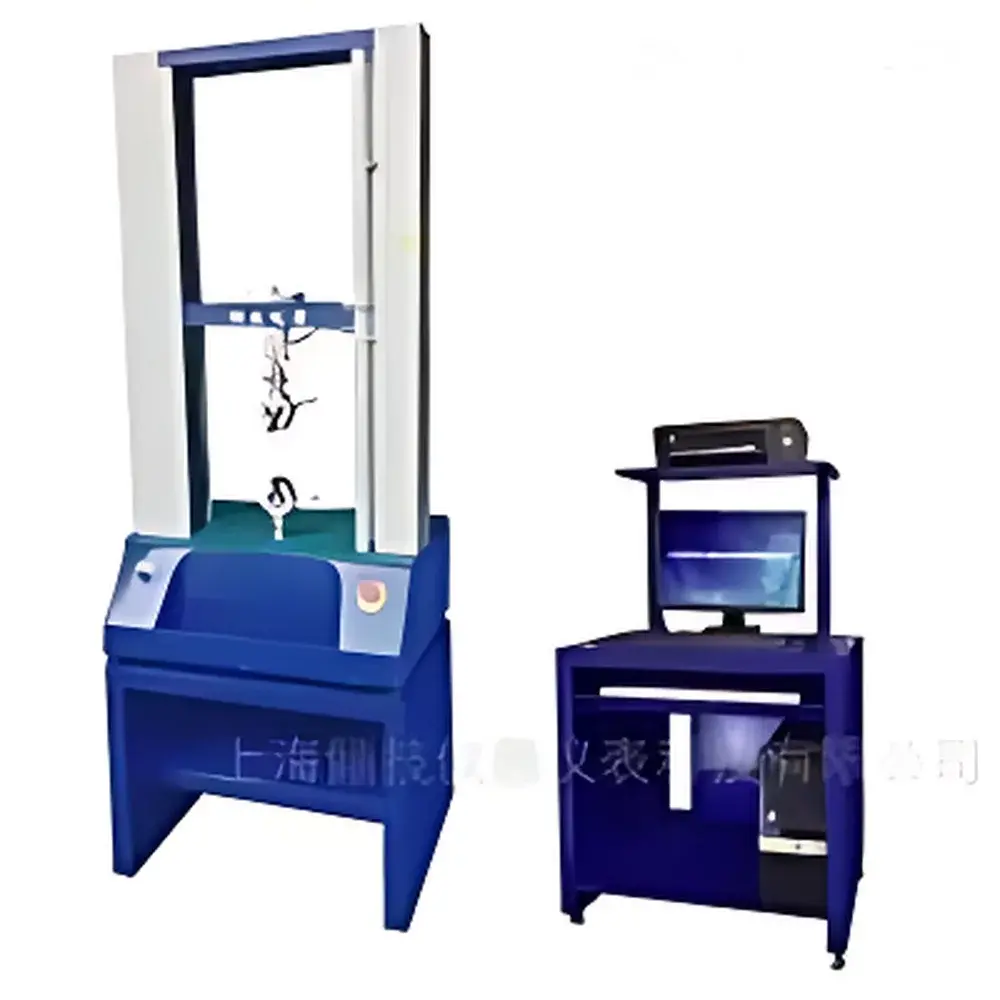
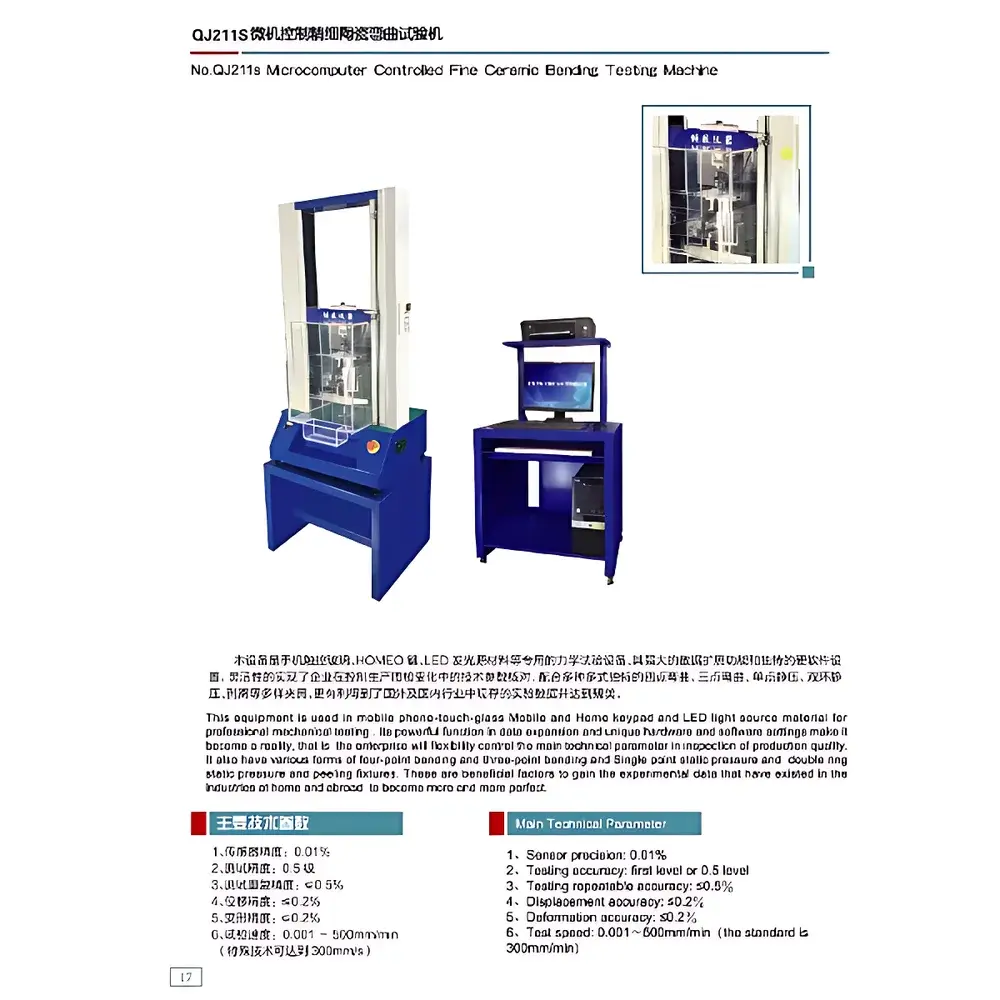
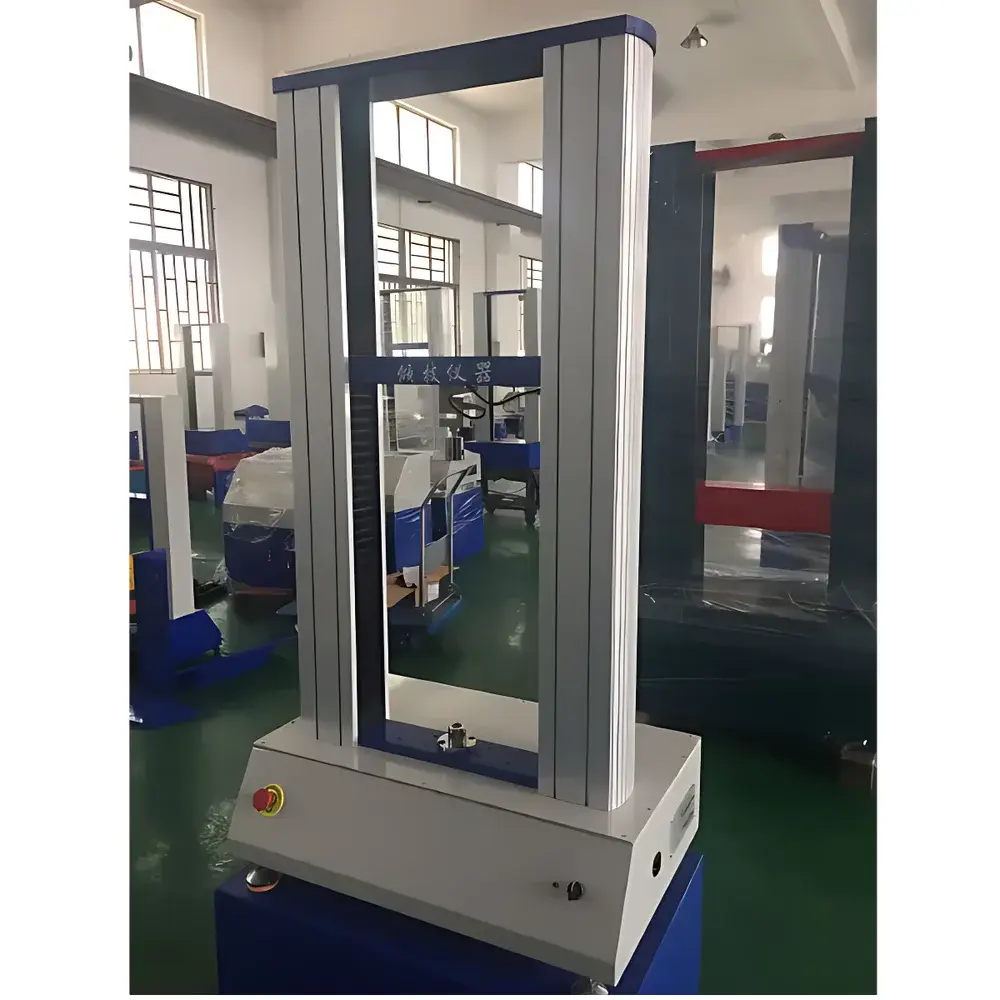
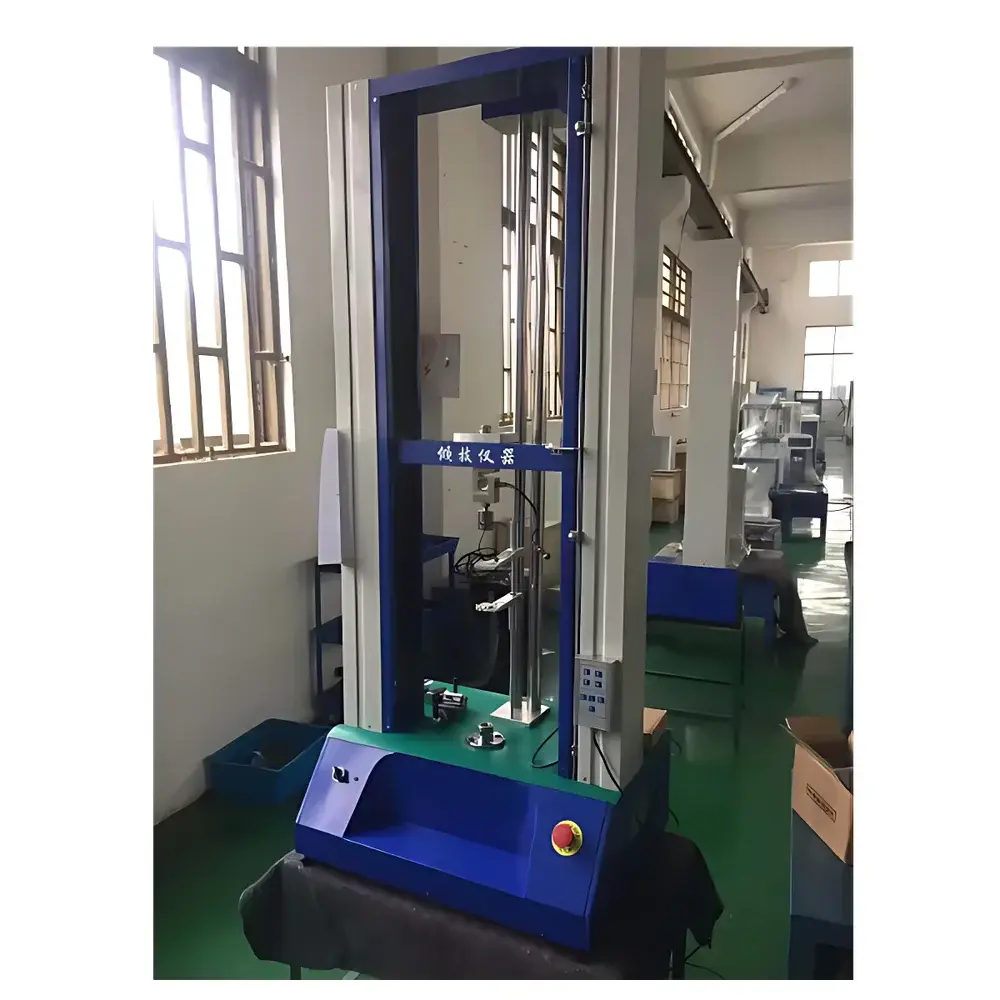
Qinsun QJ211S Advanced Composite Tensile Testing Machine
| Brand | Qinsun |
|---|---|
| Origin | Shanghai, China |
| Model | QJ211S |
| Instrument Type | Electromechanical Universal Testing Machine |
| Maximum Test Load | 0–30 kN |
| Load Accuracy | ±0.5% of reading |
| Effective Travel | 800 mm |
| Load Cell Resolution | 300,000 counts (full-scale, no range switching) |
| Crosshead Speed Range | 0.001–500 mm/min |
| Speed Accuracy | ±0.5% of set value |
| Displacement Accuracy | ±0.5% of reading |
| Deformation Measurement Accuracy | ±0.5% of reading |
| Effective Test Width | 420 mm |
| Power Supply | 750 W motor |
| Dimensions (W×D×H) | 700 × 420 × 1600 mm |
| Weight | 145 kg |
| Compliance | Meets ISO 7500-1 Class 0.5, ASTM E4, ASTM D3039 (for composites), GB/T 228.1–2021 |
Overview
The Qinsun QJ211S Advanced Composite Tensile Testing Machine is a high-precision electromechanical universal testing system engineered for static mechanical characterization of fiber-reinforced polymer (FRP), carbon fiber laminates, glass/epoxy composites, thermoplastic matrix composites, and hybrid structural materials. It operates on the principle of controlled displacement-driven loading, where a servo-controlled AC motor actuates the crosshead to apply uniaxial tensile, compressive, flexural, or shear forces while synchronously acquiring load, displacement, and optional strain data via calibrated transducers. Designed in accordance with ISO 7500-1:2018 (Class 0.5 accuracy for force measurement) and aligned with ASTM D3039/D3410/D7264 test standards for composite mechanical properties, the QJ211S delivers traceable, reproducible results essential for R&D validation, quality control release testing, and regulatory documentation under GLP and GMP frameworks.
Key Features
- High-resolution dual-channel acquisition: Simultaneous real-time capture of load (0–30 kN, ±0.5% FS accuracy) and displacement (0–800 mm, ±0.5% reading accuracy), with optional extensometer input for true strain measurement.
- Full-range force resolution: 300,000-count A/D conversion across the entire 30 kN capacity—no auto-ranging or signal degradation at low loads.
- Precise speed control: Programmable crosshead velocity from 0.001 to 500 mm/min (±0.5% deviation), enabling quasi-static tensile tests per ISO 527-4 and high-strain-rate compliance assessments.
- Robust mechanical architecture: Heavy-duty cast-iron frame with reinforced column assembly ensures minimal deflection (<0.02 mm/kN) during high-load testing, critical for modulus determination in stiff composites.
- Dual-mode operation: Manual jog control for fixture alignment and automated test sequencing via Windows-based software with customizable test profiles and pass/fail criteria.
- Integrated safety systems: Electronic travel limit switches, overload cutoff (110% FS), emergency stop circuitry, and programmable return-to-start functionality comply with EN ISO 13850 requirements.
Sample Compatibility & Compliance
The QJ211S accommodates standardized composite specimens per ASTM D3039 (tensile), ASTM D3410 (compressive), ASTM D7264 (flexural), and ISO 14125 (bending). Its 420 mm effective test width and 800 mm vertical stroke support both coupon-level testing (e.g., 250 × 25 mm laminates) and sub-component evaluation (e.g., bonded joints, sandwich cores). Optional pneumatic, wedge-grip, or hydraulic fixtures—custom-engineered per customer drawings—ensure secure clamping without premature failure at grips. The system supports full traceability per FDA 21 CFR Part 11 when configured with audit-trail-enabled software, and meets ISO/IEC 17025 documentation requirements for accredited testing laboratories.
Software & Data Management
The Windows-native QinsunTest Suite provides real-time graphical display of stress–strain, load–displacement, and time-series curves. Users may perform post-test operations including curve overlay, derivative calculation (modulus, yield point), automatic peak detection, and ISO-standardized property extraction (e.g., tensile strength, elongation at break, secant modulus). All raw data are stored in open CSV and XML formats; report templates conform to ASTM E139 and ISO 10360-6 for metrological validation. Software logs user actions, instrument calibration events, and environmental metadata—enabling full audit readiness for internal QA reviews or external accreditation audits.
Applications
- Tensile property mapping of unidirectional and woven CFRP laminates under ambient and elevated temperature conditions (with optional environmental chamber integration).
- Interlaminar shear strength (ILSS) assessment using short-beam shear (ASTM D2344) and Iosipescu configurations.
- Compression-after-impact (CAI) residual strength evaluation following ASTM D7137 protocols.
- Creep and stress-relaxation profiling for thermoset and thermoplastic composites over extended durations (up to 1,000 hours with scheduled logging).
- Adhesive bond line integrity verification via peel and lap-shear testing per ASTM D1876 and D3164.
- Quality conformance screening for aerospace-grade prepregs, wind turbine blade materials, and automotive lightweighting components.
FAQ
Does the QJ211S meet international calibration standards for force measurement?
Yes—it complies with ISO 7500-1:2018 Class 0.5 requirements, and its load cell is supplied with NIST-traceable calibration certificate.
Can the system be integrated with third-party extensometers or video-based strain measurement tools?
Yes—the controller features analog and digital inputs compatible with LVDTs, clip-on extensometers (e.g., MTS 632 series), and DIC-compatible synchronization triggers.
Is software validation support available for regulated industries?
Qinsun provides IQ/OQ documentation packages and 21 CFR Part 11 configuration guidance upon request, including electronic signature workflows and audit trail configuration.
What maintenance intervals are recommended for long-term reliability?
Biannual mechanical inspection (guide rail lubrication, belt tension check) and annual load cell recalibration are advised; all service procedures follow ISO 17025-compliant work instructions.
Are custom fixtures validated for specific ASTM or ISO test methods?
Fixture design documentation—including FEA-supported stress distribution analysis and grip pressure uniformity reports—is provided for each custom order to ensure method compliance.



