
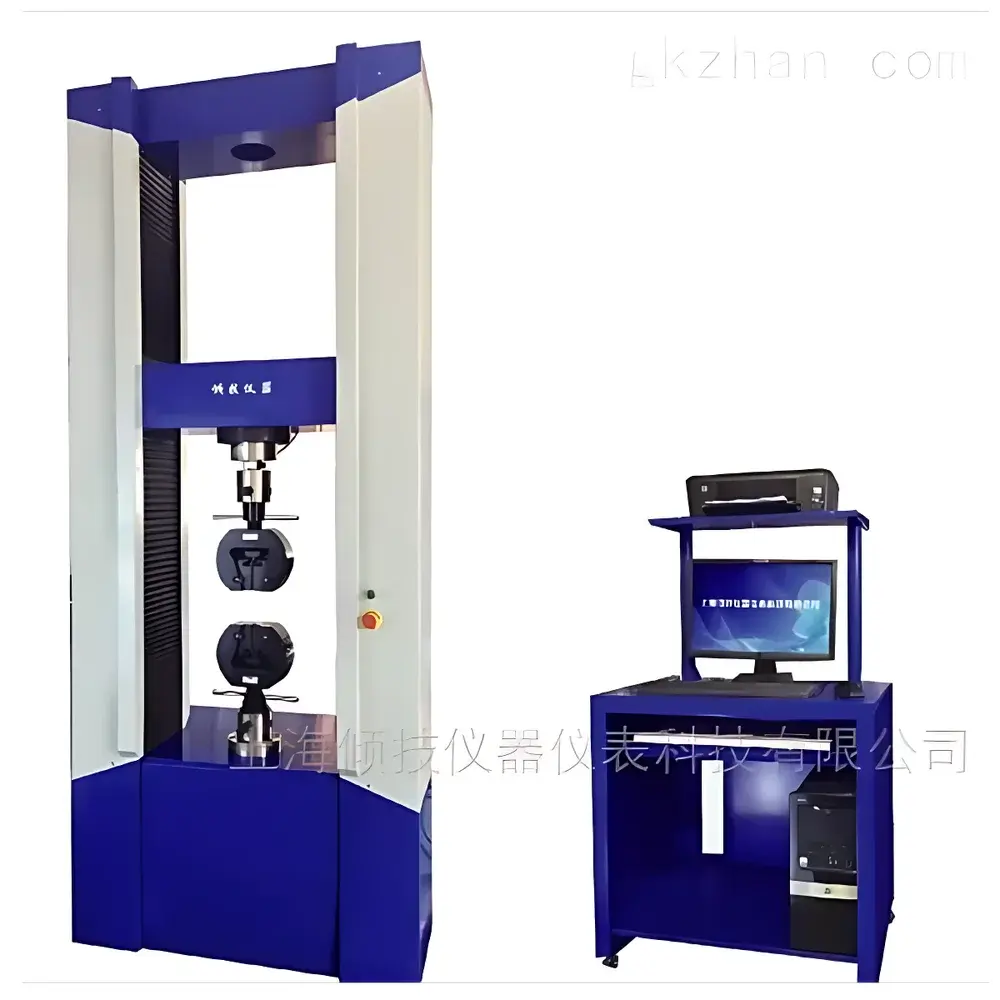
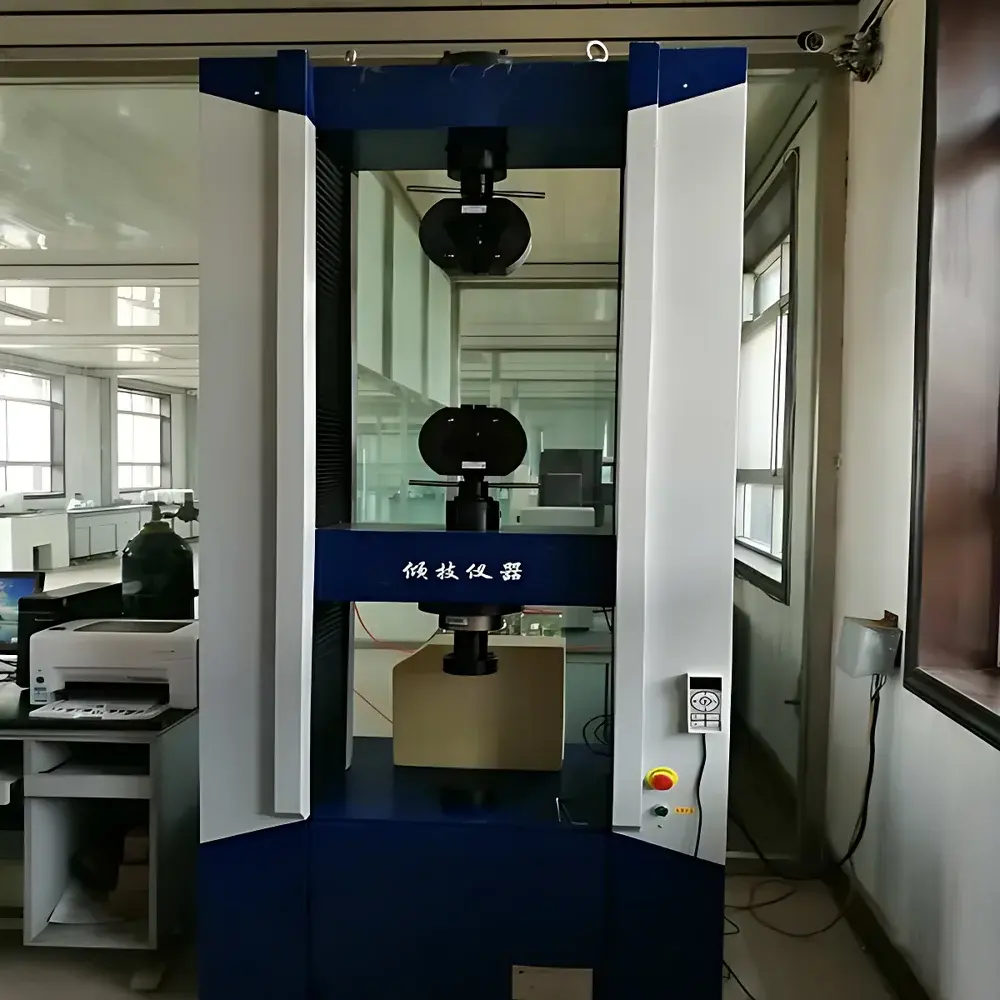
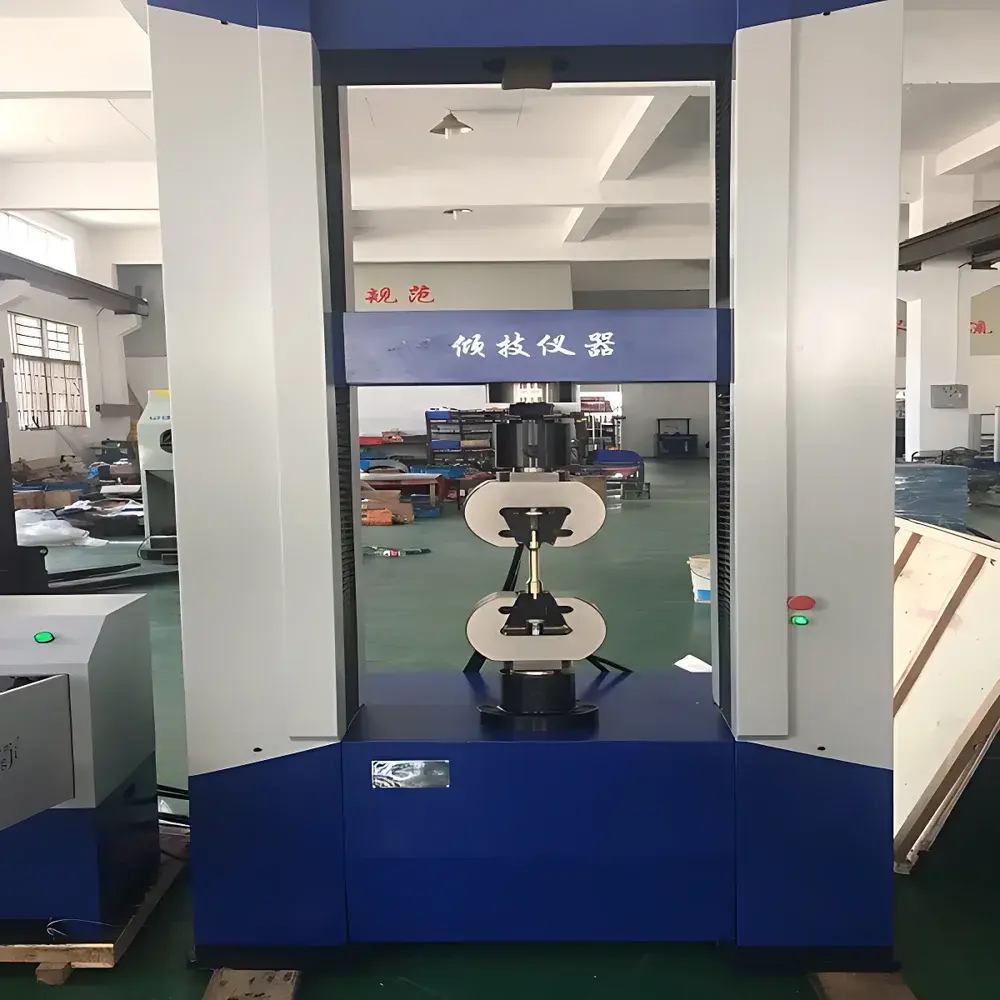
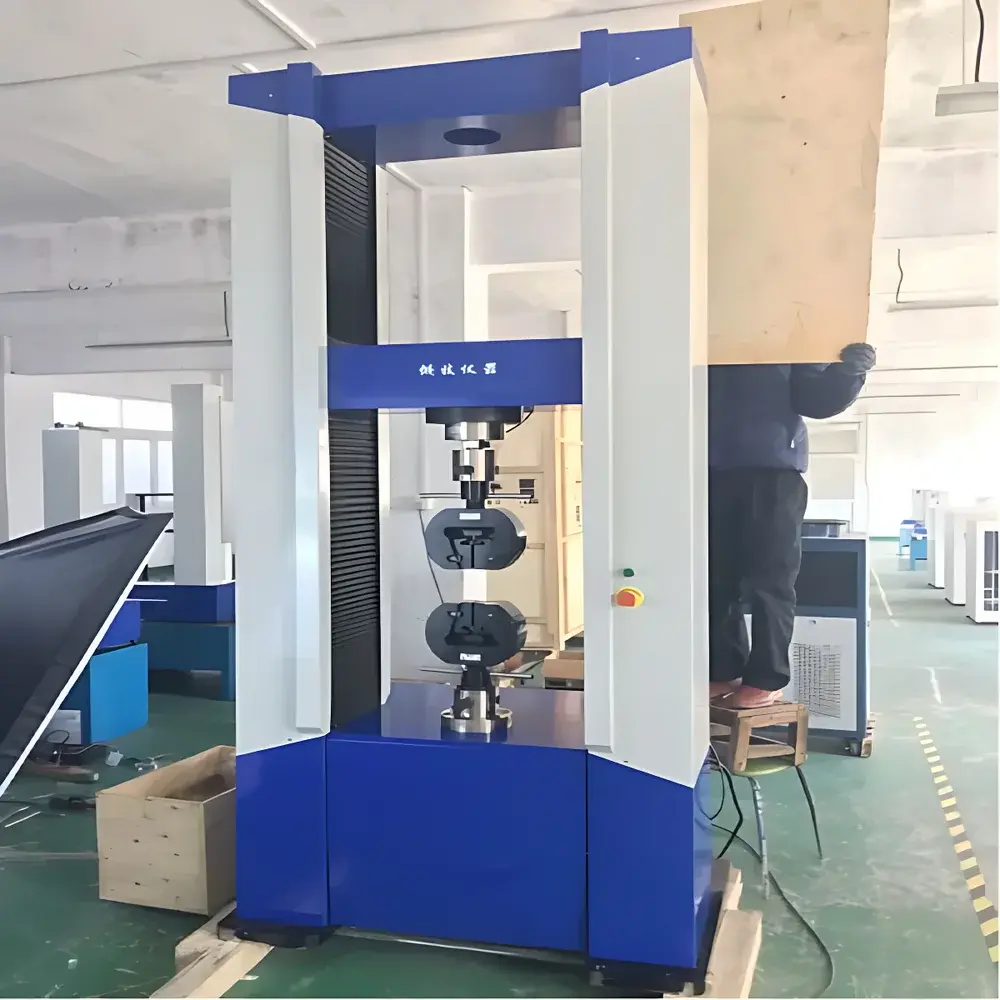
Qinsun QJ212C 100 kN Electromechanical Tensile Testing Machine
| Brand | Qinsun |
|---|---|
| Origin | Shanghai, China |
| Model | QJ212C |
| Maximum Test Load | 100 kN |
| Load Range | 0–100 kN (full-scale) |
| Load Accuracy | ±0.5% of reading |
| Crosshead Travel | 800 mm |
| Displacement Resolution | 0.001 mm |
| Effective Test Width | 500 mm |
| Test Speed Range | 0.001–1000 mm/min |
| Speed Accuracy | ±0.5% of set value |
| Displacement Measurement Accuracy | ±0.5% of reading |
| Strain Measurement Accuracy | ±0.5% of reading |
| Load Resolution | 1/250,000 full scale (single-range, no auto-ranging) |
| Overload Protection | Activates at >110% of rated capacity |
| Dimensions (W×D×H) | 1000 × 680 × 2450 mm |
| Weight | 1250 kg |
Overview
The Qinsun QJ212C is a precision-engineered electromechanical tensile testing machine designed for static mechanical property evaluation of metallic, polymeric, composite, and elastomeric materials under controlled uniaxial loading conditions. Operating on the principle of servo-controlled linear actuation, it applies calibrated axial force via a high-rigidity load frame and measures real-time response using integrated load cell, encoder-based displacement, and optional extensometer inputs. The system complies with fundamental mechanical test methodology standards including ISO 6892-1 (tensile testing of metals), ASTM E8/E8M, ASTM D638 (plastics), ASTM D3039 (composites), and ISO 178 (flexural testing). Its modular architecture supports standardized test configurations—tensile, compression, bend, peel, shear, and ring stiffness—within a single platform, enabling laboratories to consolidate multiple test protocols while maintaining traceable, repeatable results.
Key Features
- High-resolution dual-closed-loop control: Simultaneous feedback from load cell and crosshead encoder ensures stable force ramping and precise displacement tracking across the full 0.001–1000 mm/min speed range.
- Single-range, high-fidelity load measurement: 1/250,000 internal resolution over 0–100 kN, eliminating range-switching artifacts and guaranteeing consistent accuracy from 0.02% to 100% FS.
- Robust dual-speed crosshead drive: Independent fast (for specimen setup) and slow (for test execution) modes, with programmable acceleration/deceleration profiles to minimize inertial disturbance.
- Integrated safety architecture: Electronic limit switches, automatic overload cutoff (>110% FS), emergency stop circuitry, and software-enforced operational boundaries ensure operator and equipment protection per ISO 13857 and IEC 60204-1.
- Thermally stabilized load cell: Temperature-compensated strain-gauge transducer with <±0.5% linearity and hysteresis, calibrated to NIST-traceable standards.
- Modular fixture interface: Standard M12 threaded mounting base and T-slot table accommodate ASTM-compliant grips (pneumatic, wedge, vise, compression platens) and custom tooling.
Sample Compatibility & Compliance
The QJ212C accommodates specimens up to 500 mm wide and 800 mm in active gauge length, supporting standard test geometries per ISO, ASTM, DIN, and JIS specifications. It is routinely deployed in quality control labs operating under ISO/IEC 17025 accreditation requirements and supports GLP/GMP workflows through audit-ready data logging. All test sequences—including method definition, parameter validation, result export, and report generation—are fully documented with timestamped metadata. Optional configuration enables 21 CFR Part 11 compliance via electronic signatures, role-based access control, and immutable audit trails when paired with validated software modules.
Software & Data Management
Controlled via Windows-based QinsunTest software, the system delivers real-time graphical visualization of stress–strain, load–displacement, and time-based curves. The software supports multi-curve overlay, dynamic scaling, point-and-click modulus calculation (e.g., secant, tangent, chord), yield point detection per ASTM E111, and automated reporting in PDF, Excel, or XML formats. Raw data files are stored in open ASCII format for third-party analysis. Calibration records, user activity logs, and instrument configuration snapshots are archived automatically. Software updates are delivered through secure, version-controlled channels with full backward compatibility for legacy test methods.
Applications
- Mechanical qualification of structural alloys, welds, and fasteners per ASTM E8 and ISO 6892-1.
- Tensile characterization of thermoplastics, thermosets, and biopolymers per ASTM D638 and ISO 527.
- Compression testing of foams, ceramics, and packaging materials per ASTM D3574 and ISO 844.
- Flexural strength and modulus determination of composites and laminates per ASTM D790 and ISO 178.
- Peel and shear adhesion assessment of tapes, films, and bonded joints per ASTM D903 and ISO 8510.
- Ring stiffness evaluation of plastic pipes per ISO 9969 and ASTM D2412.
FAQ
What international standards does the QJ212C support out-of-the-box?
The system includes preconfigured test methods for ISO 6892-1, ASTM E8, ASTM D638, ASTM D790, and ISO 178, with customizable parameter sets for other standards.
Is the load cell calibration traceable to national metrology institutes?
Yes—each unit ships with a factory calibration certificate traceable to CNAS-accredited laboratories; optional NIST-traceable recalibration services are available.
Can the QJ212C be integrated into an existing LIMS or MES environment?
Yes—the software provides ODBC-compliant database connectivity and RESTful API endpoints for bidirectional data exchange with laboratory information management systems.
What maintenance intervals are recommended for long-term accuracy retention?
Annual verification of force and displacement metrology is recommended; routine inspection of grip alignment, lubrication points, and encoder cleanliness should occur every 250 operational hours.
Does the system support extensometer input for true strain measurement?
Yes—it features dual analog inputs compatible with clip-on, video, or laser extensometers meeting ASTM E83 Class B-2 or ISO 9513 Class 1 requirements.



