
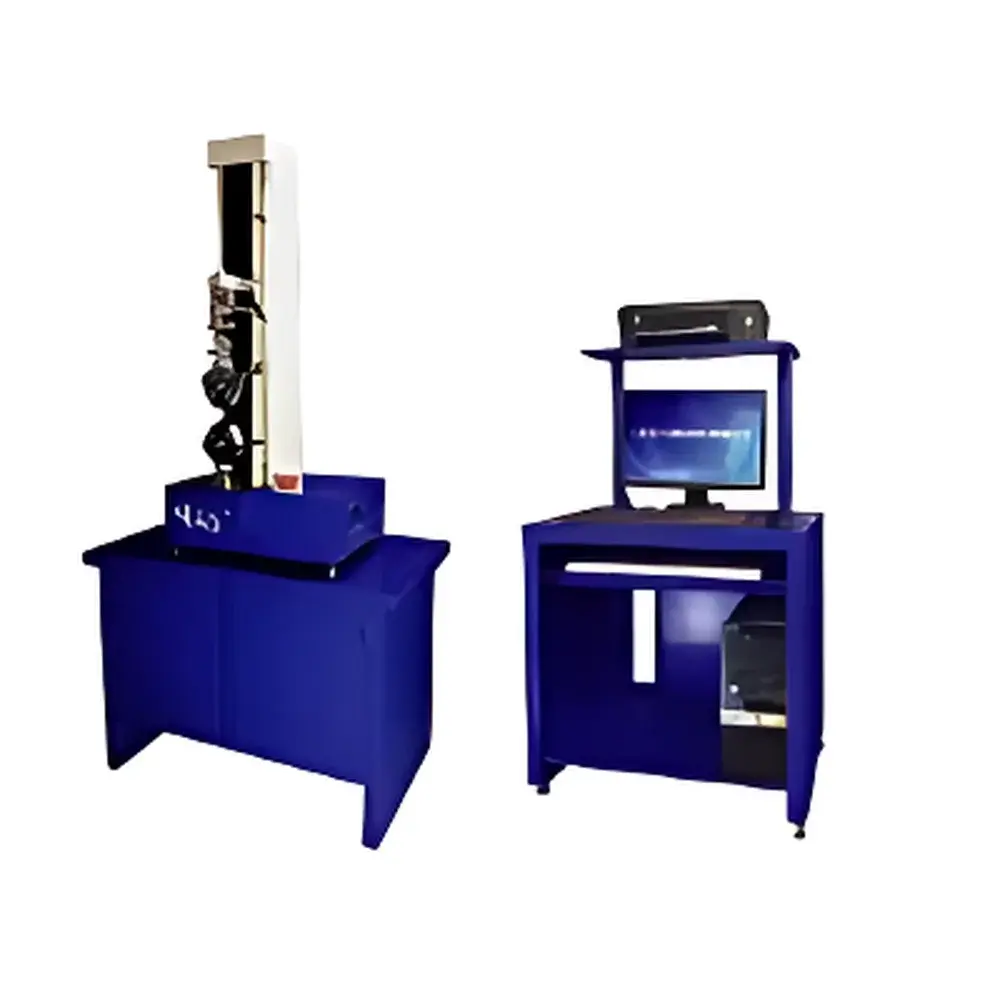
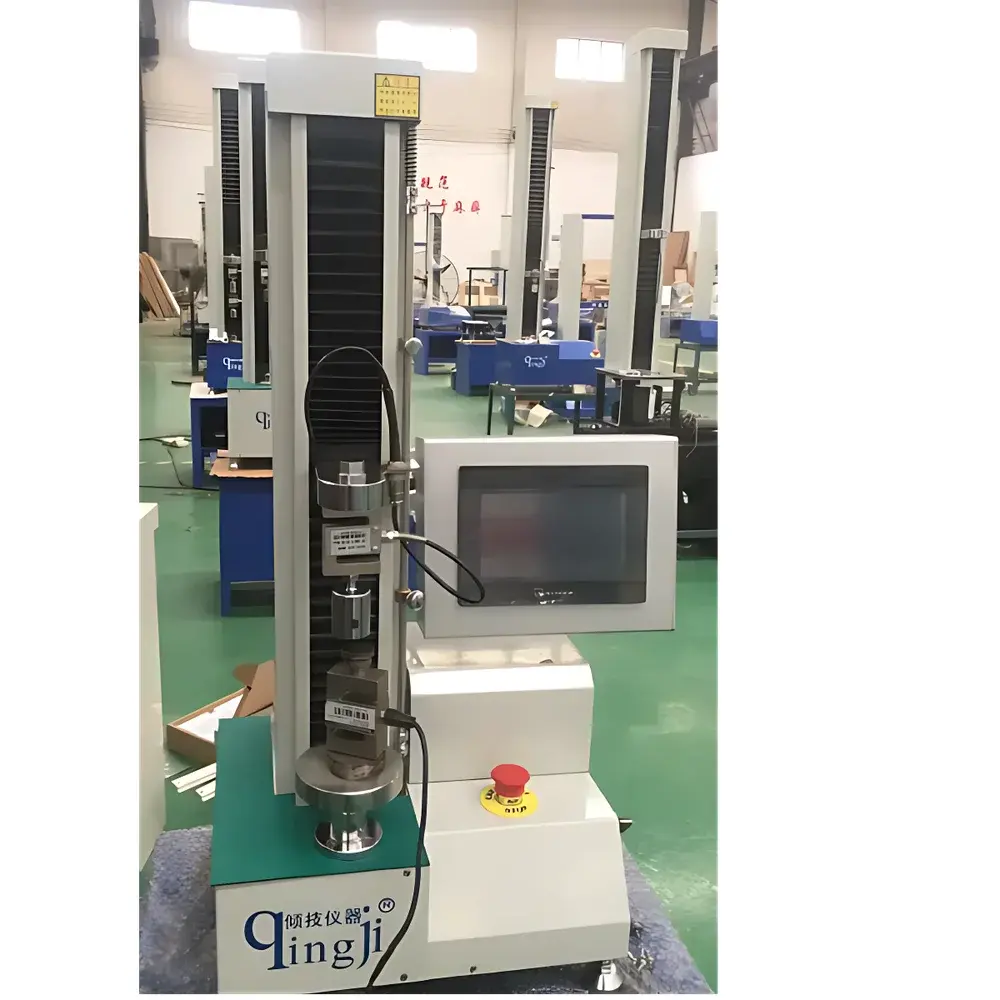
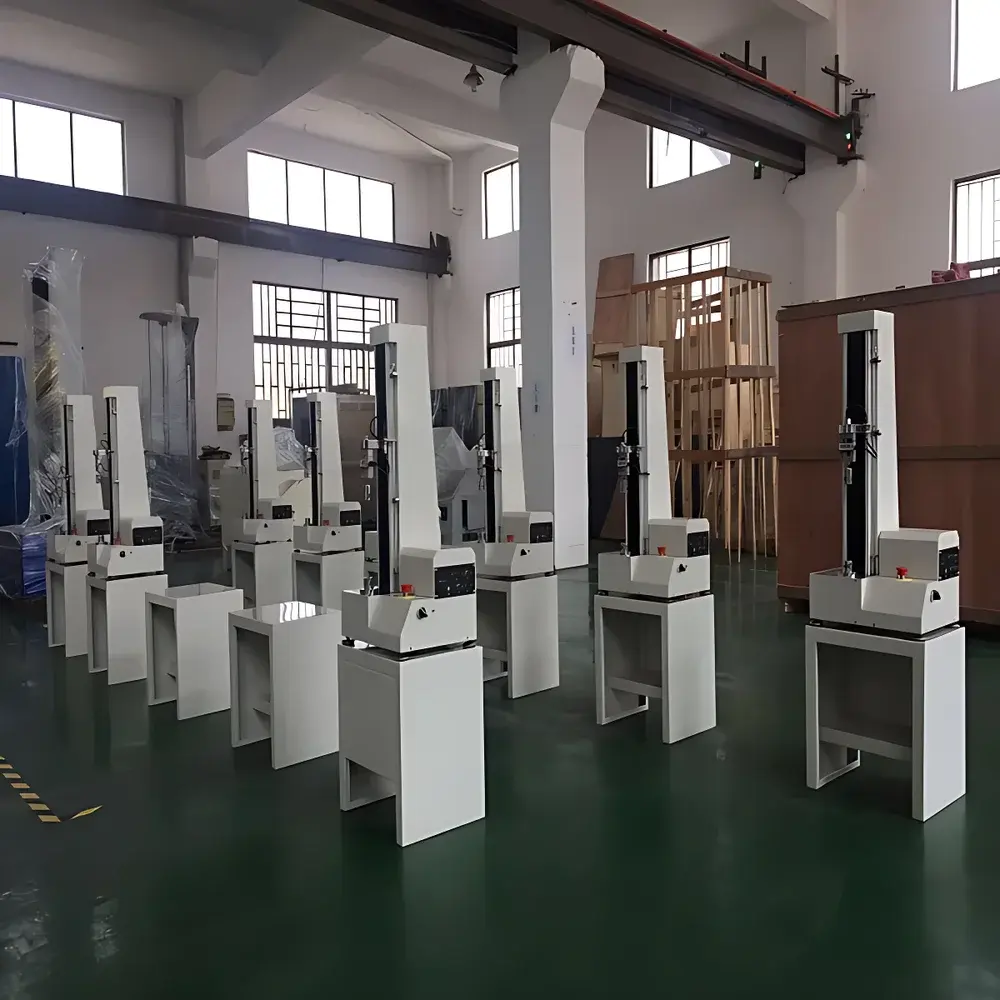
QJ210 Universal Testing Machine
| Brand | Qinsun |
|---|---|
| Origin | Shanghai, China |
| Type | Electronic Universal Testing Machine |
| Max Load Capacity | 0–2500 N |
| Load Accuracy | ±0.5% |
| Measuring Accuracy | < ±0.5% |
| Valid Width | 150 mm |
| Stroke | 300 mm (extendable) |
| Test Speed Range | 0.001–300 mm/min |
| Speed Accuracy | ±0.5% |
| Stroke Accuracy | ±0.5% |
| Displacement Accuracy | ±0.5% |
| Safety Features | Electronic stroke limit protection, emergency stop button |
| Unit Weight | ~45 kg |
Overview
The QJ210 Universal Testing Machine is an electronically actuated, microprocessor-controlled mechanical testing system engineered for precision tensile, compression, flexural, peel, and puncture testing of metallic, polymeric, composite, and elastomeric materials. Based on servo-motor-driven linear motion architecture and high-stiffness dual-column frame design, the instrument implements closed-loop load and displacement control in accordance with ISO 7500-1 (Class 0.5), ASTM E4, and ISO 5893 standards. Its modular load cell integration—calibrated to ±0.01% full-scale linearity—and real-time digital signal processing enable repeatable force measurement across the full 0–2500 N range. The system’s compact footprint (~45 kg), rigid extruded aluminum enclosure with electrostatic powder coating, and integrated 4.3-inch TFT LCD controller support benchtop deployment in QC labs, R&D facilities, and contract testing environments where space, reliability, and regulatory traceability are critical.
Key Features
- High-resolution servo-controlled actuation delivering precise test speeds from 0.001 to 300 mm/min with ±0.5% speed accuracy
- Dual-mode operation: standalone LCD interface with real-time dynamic display of force, displacement, and stress–strain curves—or full PC-based control via USB/RS232 interface
- Compliant load cell with 0.01% full-scale linearity and automatic zero-point compensation
- Adjustable crosshead travel (standard 300 mm; extendable upon request) and 150 mm effective test width accommodating standard ASTM/ISO specimen fixtures
- Integrated safety architecture including programmable electronic stroke limits, hardware-based emergency stop circuitry, and overload cut-off protection
- Modular grip system compatible with wedge-action, pneumatic, and custom-fixture interfaces for diverse material geometries
Sample Compatibility & Compliance
The QJ210 supports standardized test specimens per ASTM D638 (tensile), ASTM D790 (flexure), ASTM D903 (peel), ISO 6892-1 (metallic tensile), and ISO 178 (plastics flexural). Its mechanical design conforms to ISO 7500-1 Class 0.5 accuracy requirements for force measurement systems. When operated under validated software protocols—including audit-trail-enabled data capture—the system meets foundational GLP documentation needs and supports alignment with FDA 21 CFR Part 11 when paired with compliant PC-based acquisition software (e.g., third-party LabVIEW or vendor-supplied compliant modules). Calibration certificates traceable to NIM (National Institute of Metrology, China) or ISO/IEC 17025-accredited providers are available upon request.
Software & Data Management
The machine operates natively via embedded firmware supporting parameter setup (preload, break detection, hold time, return speed), real-time curve plotting, and automatic report generation with customizable templates (PDF/Excel). Optional PC software enables advanced analysis: modulus calculation at user-defined strain ranges, yield point identification per ISO 6892-1 Annex B, hysteresis loop integration, and statistical batch reporting. All raw data files include timestamped metadata (operator ID, environmental conditions if sensor-integrated, calibration status flags), ensuring traceability. Export formats comply with ASTM E1434 and ISO 10360-5 requirements for metrological data exchange.
Applications
- Tensile strength and elongation-at-break evaluation of thermoplastics, films, adhesives, and textile yarns
- Compression testing of foams, gels, and biomedical hydrogels per ISO 844
- Three-point bending characterization of composite laminates and printed circuit board substrates
- Peel adhesion assessment of pressure-sensitive tapes and laminated packaging structures
- Quality conformance verification against internal specifications or customer-facing standards (e.g., UL 94, MIL-STD-810)
- Educational use in materials science laboratories for hands-on mechanical property instruction
FAQ
What is the maximum allowable specimen thickness for the standard grips?
Standard wedge-action grips accommodate specimens up to 10 mm thick; custom jaw inserts are available for thicker or irregular profiles.
Does the system support multi-step cyclic testing?
Yes—via PC software, users can define up to 99 sequential steps including load-controlled ramps, displacement holds, and conditional break triggers.
Is third-party calibration certification included with purchase?
A factory calibration certificate (traceable to NIM) is provided; ISO/IEC 17025-accredited external calibration is available as a paid option.
Can test data be exported to LIMS platforms?
Raw ASCII .csv and XML-formatted outputs are supported; API-level integration with major LIMS vendors requires optional middleware licensing.
What maintenance intervals are recommended for long-term accuracy?
Load cell verification every 6 months and mechanical alignment check annually are advised; routine cleaning and lubrication of lead screws per operator manual ensures >10,000-cycle repeatability.
Related Products



