
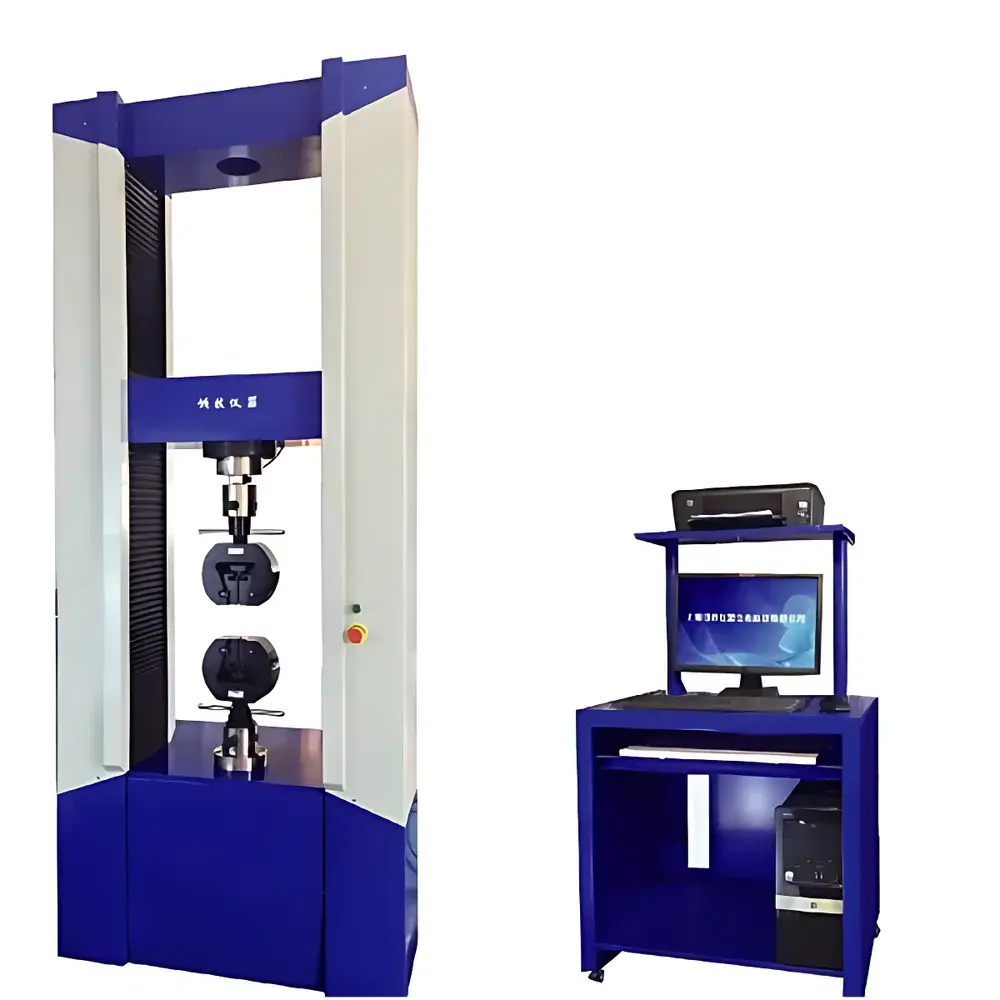
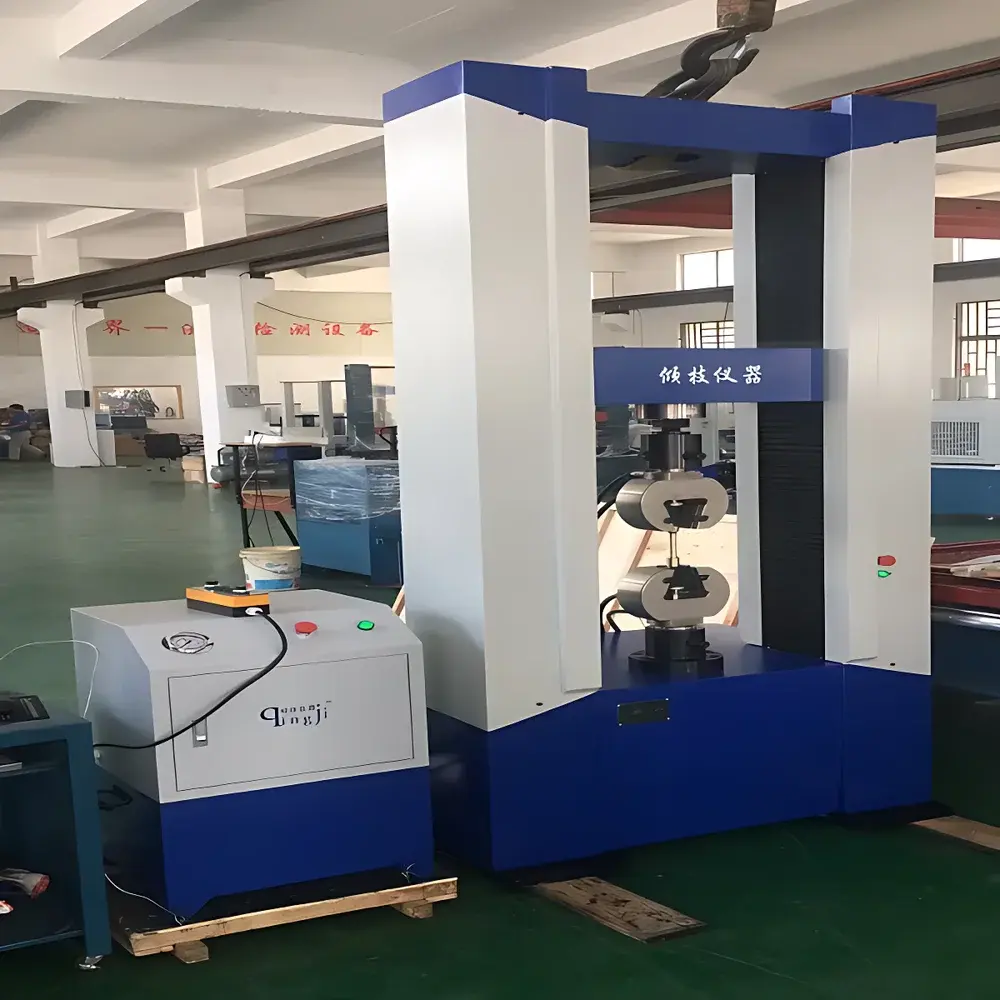
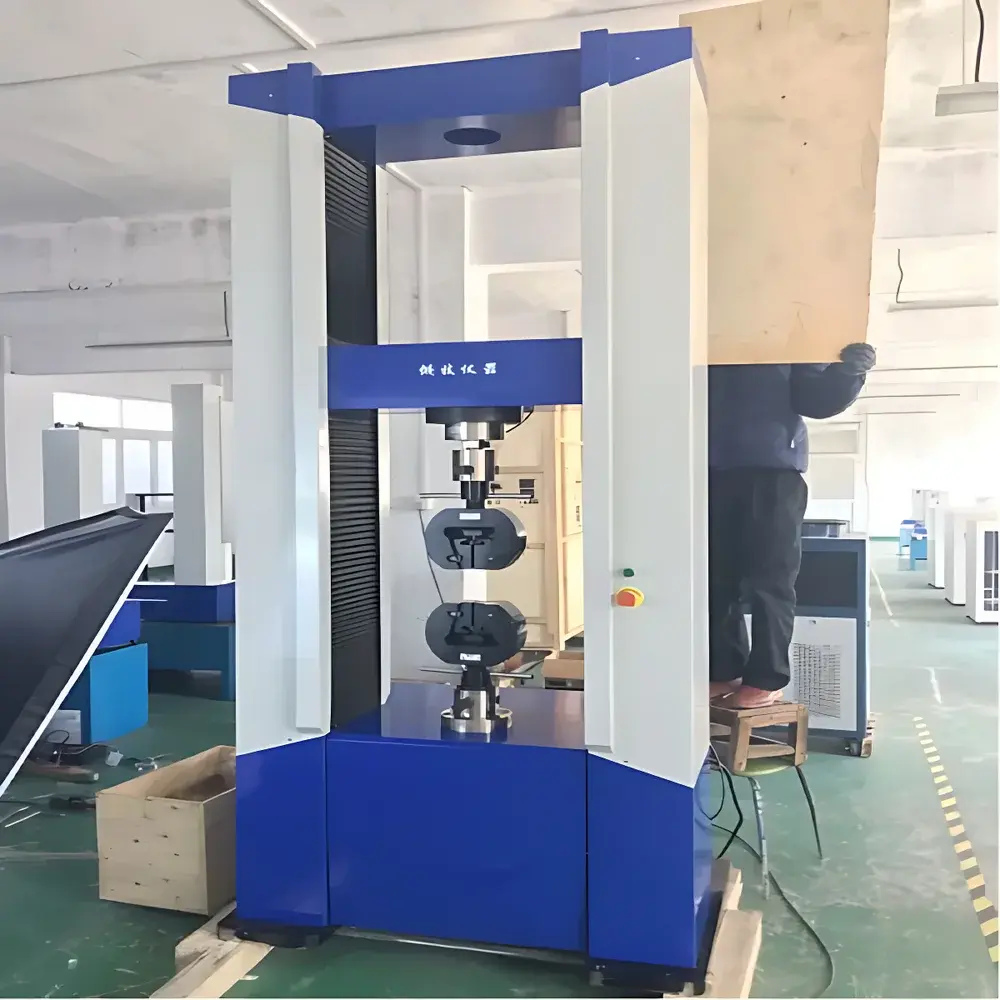
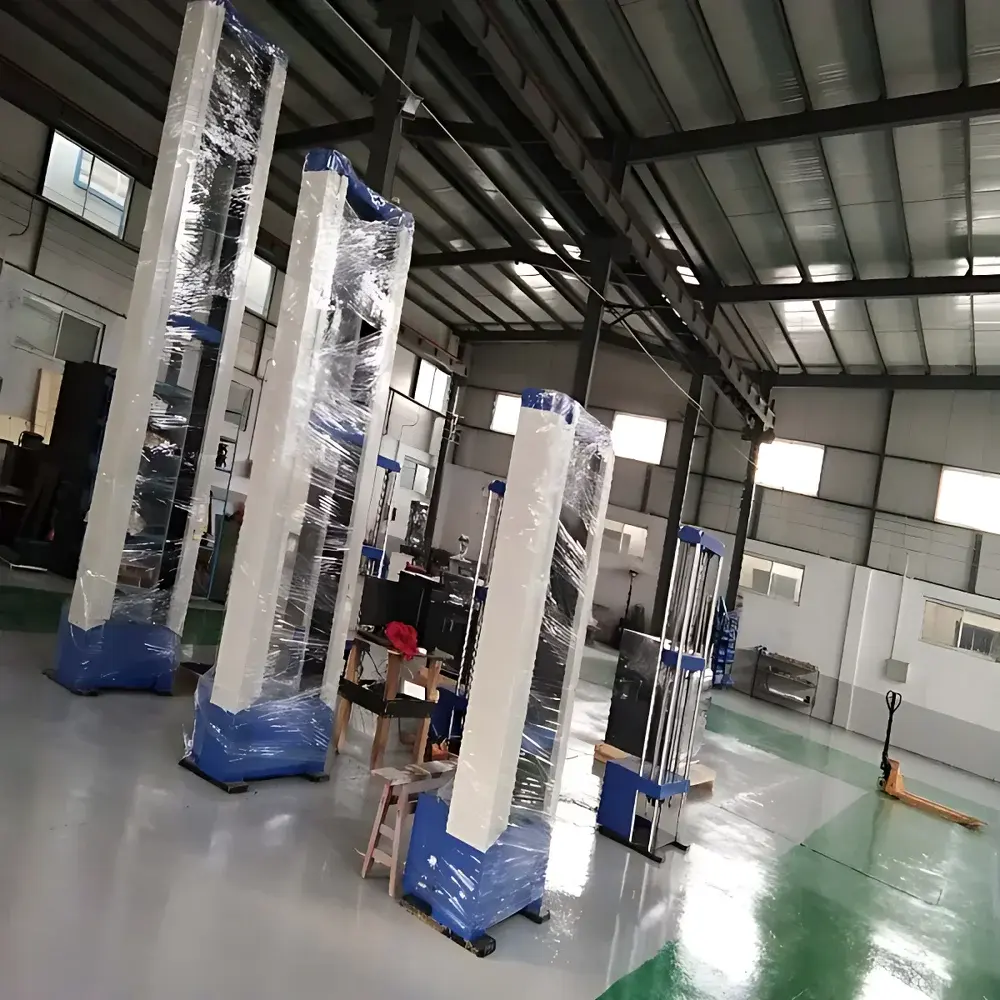
QJ212-50 Universal Tensile Testing Machine by Qingji
| Brand | Qingji |
|---|---|
| Origin | Shanghai, China |
| Model | QJ212-50 |
| Instrument Type | Electromechanical Universal Testing Machine |
| Maximum Test Load | 100 kN |
| Adjustable Load Range | Up to 50 kN (user-selectable) |
| Load Accuracy | ±0.5% of full scale |
| Crosshead Travel | 800 mm |
| Displacement Resolution | ±0.5% of reading |
| Load Cell | High-precision U.S.-sourced transducer |
| Control System | Panasonic all-digital AC servo controller |
| Control Mode | Full-closed-loop digital control enabling constant stress, constant strain, and constant displacement testing |
| Effective Test Width | 520 mm |
| Test Speed Range | 0.01–1000 mm/min (standard speed: 300 mm/min) |
| Speed Accuracy | ±0.5% of set value |
| Displacement Measurement Accuracy | ±0.5% of reading |
| Strain Measurement Accuracy | ±0.5% of reading |
| Safety Protection | Software-based fault diagnosis, electronic limit switches, overload protection at 110% of rated load |
| Fixture Customization | Available per specimen geometry and standard requirements |
| Power Supply | 2–5 kW |
| Dimensions (W×D×H) | 1000 × 680 × 2450 mm |
| Weight | ~1450 kg |
| Compliance | ISO 6892-1, ASTM E8/E21, JIS Z2241, DIN 50125 |
Overview
The QJ212-50 Universal Tensile Testing Machine by Qingji is an electromechanical static testing system engineered for high-reproducibility mechanical characterization of metallic materials—particularly structural steels, alloy bars, welded joints, and cold-formed sections—under uniaxial tension, compression, bending, and shear loading conditions. Built on a rigid dual-column frame with precision-ground ball screws and preloaded linear guides, the machine employs a full-closed-loop digital control architecture to maintain traceable force and displacement fidelity across its operational range. Its core measurement principle relies on real-time feedback from a calibrated, temperature-compensated load cell (U.S.-sourced) and high-resolution encoder-based crosshead positioning, ensuring compliance with international static testing standards including ISO 6892-1 (metallic materials — tensile testing), ASTM E8/E21 (tension tests of metallic materials), JIS Z2241, and DIN 50125. The system supports both manual and automated test sequences, with deterministic actuation via a Panasonic all-digital AC servo motor drive delivering stable velocity control from 0.01 mm/min to 1000 mm/min.
Key Features
- Rigid structural frame with 1450 kg mass and reinforced base plate, minimizing vibration-induced noise during high-load testing up to 100 kN
- Full-range load resolution of 500,000 counts without internal range switching—ensuring consistent sensitivity from 0.02% to 100% of full scale
- Dual-mode crosshead movement: independent fast/slow speed control for rapid positioning and precise test initiation
- Integrated safety architecture featuring hardware-enforced electronic limits, software-driven diagnostic monitoring, and automatic overload cutoff at 110% of nominal capacity
- Modular fixture interface compatible with wedge-action, pneumatic, hydraulic, and custom-designed grips—including ASTM E8-compliant tabbed flat specimens and round bar adapters
- Windows-based test software supporting real-time curve overlay, dynamic scaling, point-wise data annotation, and post-test curve reprocessing without raw data loss
Sample Compatibility & Compliance
The QJ212-50 accommodates standardized steel specimens per ISO 6892-1 Types 1A, 2, 5, and 8; ASTM E8 rectangular and round cross-sections; and JIS Z2241 Type 1B geometries—with effective test width of 520 mm and minimum gauge length support down to 25 mm. Specimen thickness is constrained only by grip throat depth and alignment tolerance, typically accommodating plates up to 40 mm thick and bars up to Ø50 mm. All force, displacement, and strain measurements are traceably calibrated against national metrological standards, with documented uncertainty budgets available upon request. The system satisfies essential requirements for GLP-compliant mechanical testing laboratories, including audit-ready calibration logs, user-accessible parameter lockout, and configurable test report templates aligned with ISO/IEC 17025 documentation practices.
Software & Data Management
The embedded Windows-native test platform provides native support for ASTM E122-22 (sample size determination), ISO 5893 (testing machine verification), and USP (mechanical testing of pharmaceutical packaging materials, where applicable). Raw data acquisition occurs at ≥1 kHz sampling rate, stored in binary .tdms format with embedded metadata (operator ID, timestamp, environmental conditions, calibration certificate IDs). Export options include CSV, PDF, and XML for LIMS integration. Audit trail functionality records all parameter modifications, test start/stop events, and calibration actions—fully compliant with FDA 21 CFR Part 11 requirements when deployed with domain-authenticated user accounts and electronic signature workflows. Curve analysis tools include modulus calculation (tangent, secant, chord), yield point detection (0.2% offset, automatic upper/lower yield), elongation at break, and reduction in area derivation—all per ISO 6892-1 Annex B.
Applications
- Tensile property validation of hot-rolled and cold-drawn carbon steels (e.g., ASTM A615, GB/T 1499.2)
- Yield strength, ultimate tensile strength, and total elongation assessment of reinforcing bars under ambient and elevated temperature conditions
- Compression testing of concrete-encased steel columns and structural hollow sections per EN 1993-1-1
- Bending stiffness evaluation of sheet metal strips and thin-walled profiles using three-point loading fixtures
- Peel and shear strength characterization of metallurgical bonds in clad steels and explosion-welded interfaces
- Low-cycle fatigue pre-screening via controlled displacement cycling (optional add-on module required)
FAQ
What international standards does the QJ212-50 support out-of-the-box?
The system includes preconfigured test methods for ISO 6892-1, ASTM E8/E21, JIS Z2241, and DIN 50125, with editable parameters to accommodate lab-specific deviations or client-specified protocols.
Is the load cell calibration traceable to national standards?
Yes—each unit ships with a factory calibration certificate traceable to CNAS-accredited reference standards, and optional third-party recalibration services are available with NIST-traceable documentation.
Can the machine perform cyclic loading or fatigue tests?
The base configuration supports monotonic quasi-static tests only; high-cycle fatigue capability requires the optional electrodynamic actuator upgrade and dedicated waveform generator module.
What maintenance intervals are recommended for long-term accuracy retention?
Load cell and encoder verification every 12 months; ball screw lubrication every 6 months; full mechanical inspection and alignment check every 24 months—per the included Maintenance Logbook and ISO 17025-aligned SOPs.
Does the software support multi-user role-based access control?
Yes—administrator, operator, and reviewer roles can be defined with granular permissions over method editing, test execution, data export, and report signing functions, satisfying 21 CFR Part 11 electronic record requirements.



