
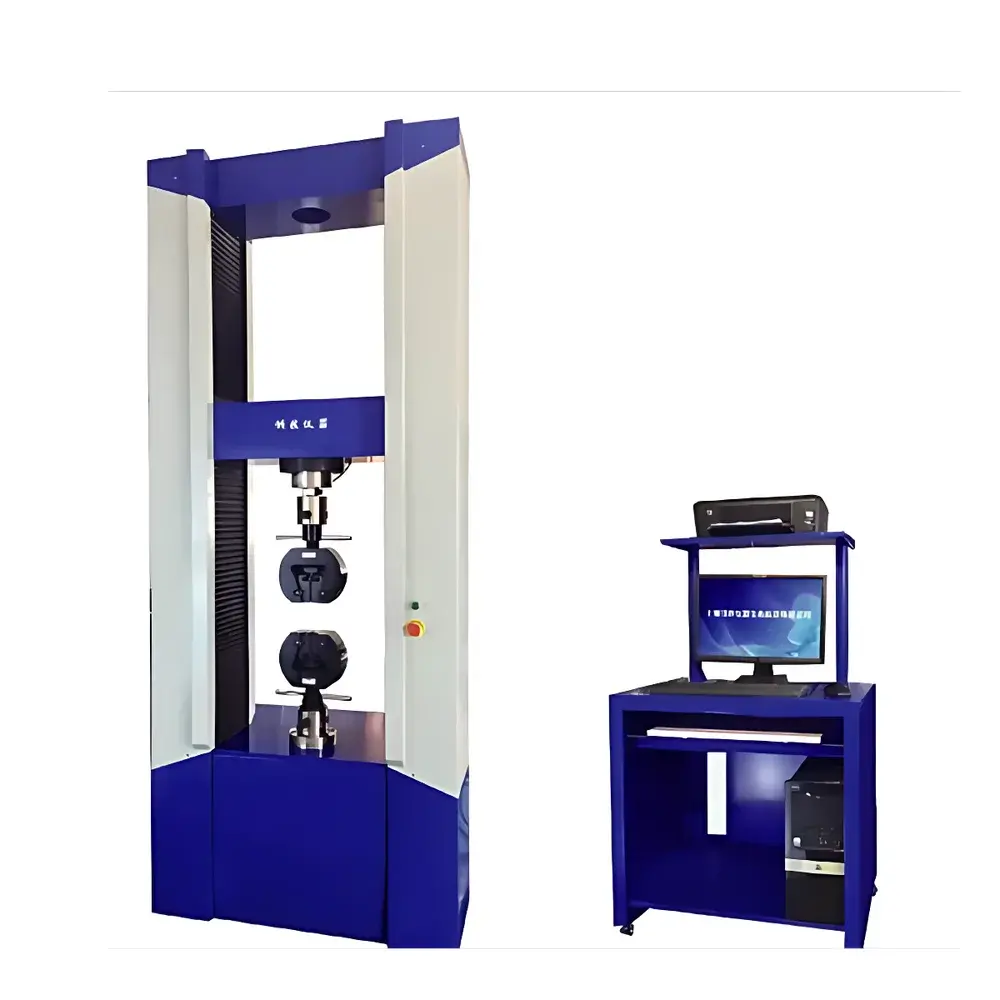
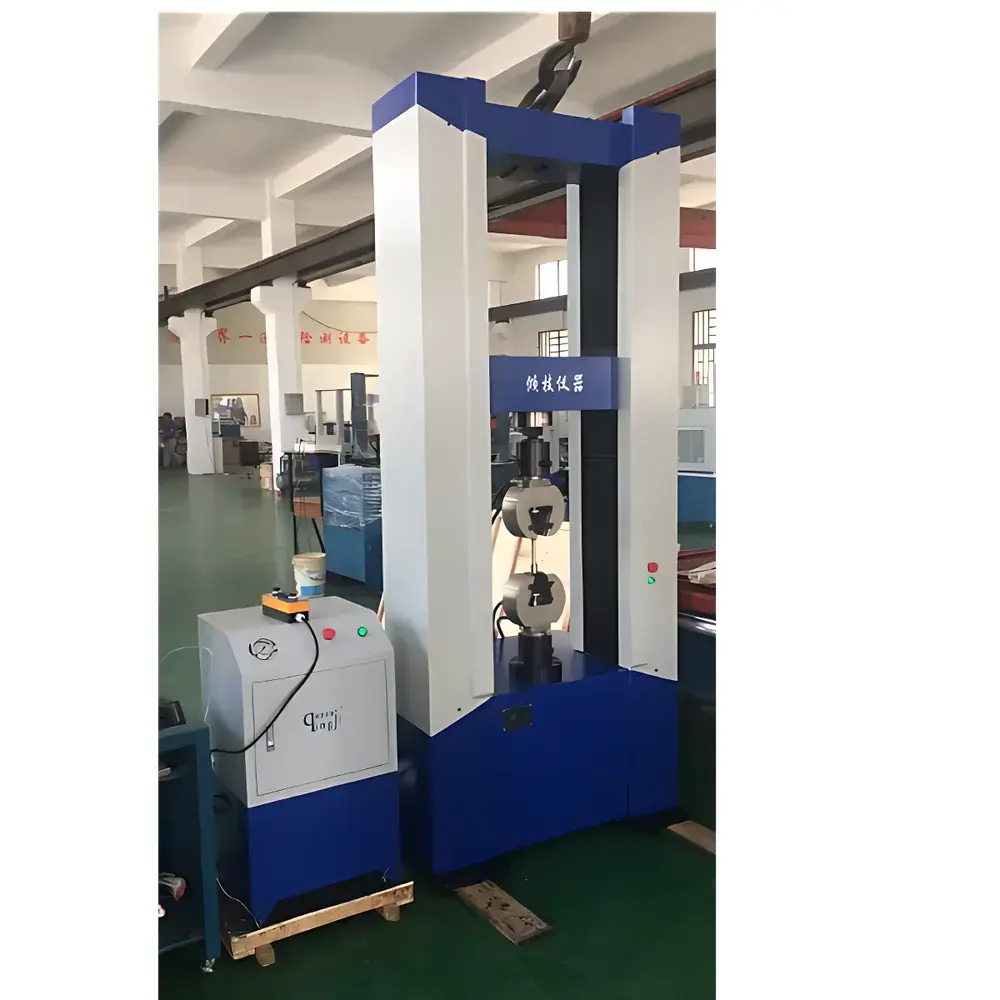
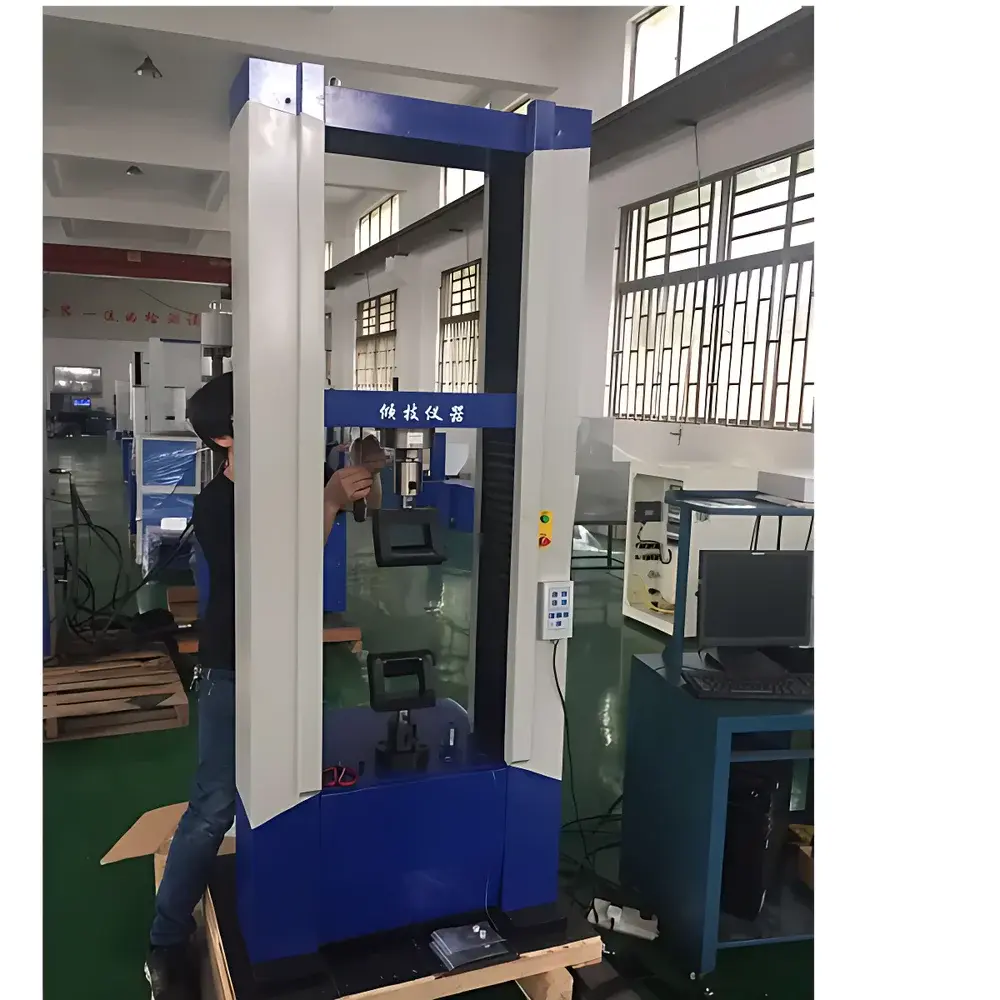
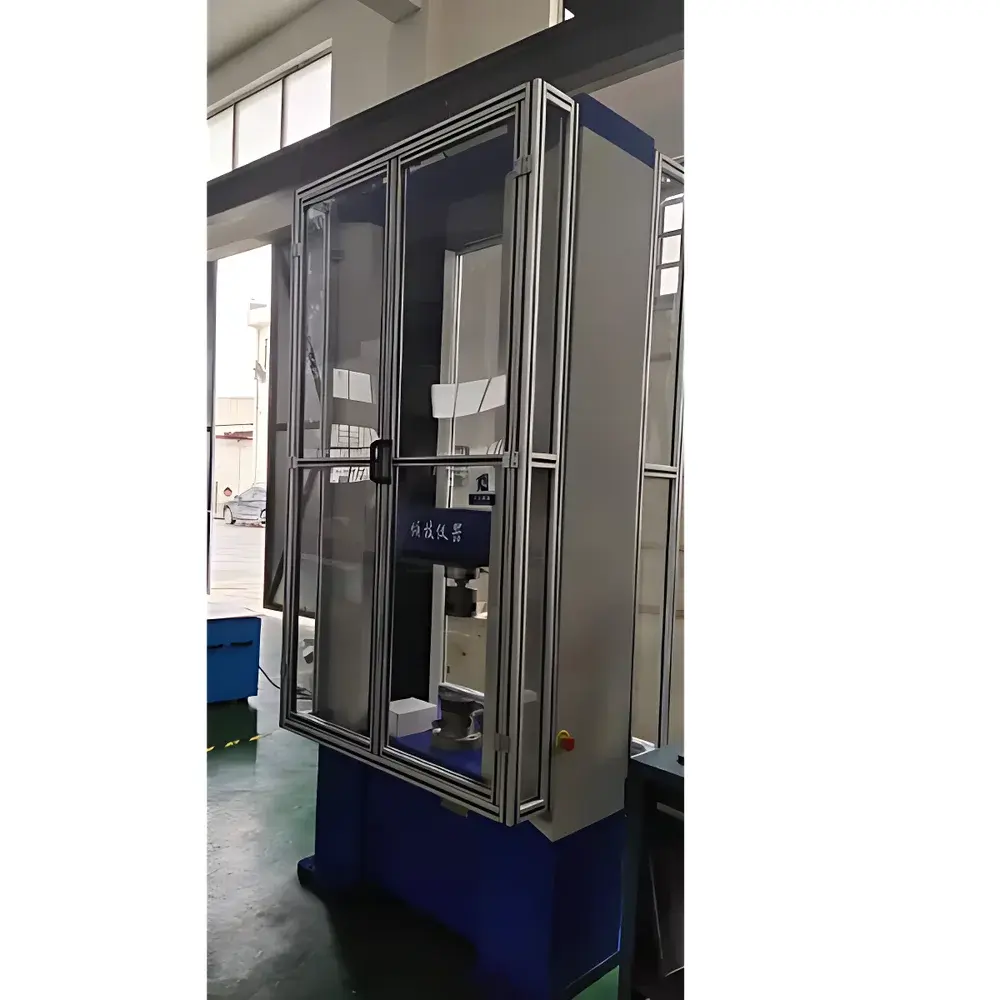
QJ212 Qinsun Electronic Tensile Testing Machine
| Brand | Qinsun |
|---|---|
| Origin | Shanghai, China |
| Model | QJ-212-500KN |
| Max. Test Load | 500 kN |
| Load Accuracy | Class 0.5 |
| Test Stroke | 420 mm |
| Displacement Resolution | ±0.5% of reading |
| Load Cell Options | 10 / 20 / 30 / 50 / 100 / 300 / 500 kN |
| Effective Test Width | 500 mm |
| Effective Tensile Travel | 600 mm or 800 mm |
| Test Speed Range | 0.001–1000 mm/min |
| Speed Accuracy | ±0.5% of indication |
| Displacement & Strain Measurement Accuracy | ±0.5% of indication |
| Load Resolution | ±1/250000 full scale (no range switching, constant resolution) |
| Safety Protection | Electronic limit switches, overload protection at 110% of full scale |
| Return Mode | Manual or automatic post-test return |
| Dimensions (W×D×H) | 1000 × 680 × 2450 mm |
| Weight | 1250 kg |
Overview
The QJ212 Qinsun Electronic Tensile Testing Machine is a high-capacity, microprocessor-controlled universal testing system engineered for precision mechanical characterization of metallic materials and structural components under static axial loading. Based on the fundamental principles of uniaxial force–displacement measurement in accordance with ISO 6892-1, ASTM E8/E21, and EN 10002-1, this machine delivers repeatable and traceable tensile, compression, bending, shear, peel, and ring stiffness testing up to 500 kN. Its robust dual-column frame architecture ensures minimal deflection during high-load operation, while the integrated load cell—available in seven selectable capacities (10–500 kN)—enables optimal signal-to-noise ratio across diverse specimen geometries and strength classes. Designed for compliance-driven environments, the system supports audit-ready data acquisition workflows aligned with GLP and GMP documentation requirements.
Key Features
- Class 0.5 load accuracy per ISO 7500-1 and JJG 139–2014, verified by third-party calibration certificates traceable to NIM (National Institute of Metrology, China)
- Constant-resolution force measurement at ±1/250000 full scale, eliminating range-switching artifacts and ensuring linearity across the entire 500 kN span
- Wide-speed actuation system (0.001–1000 mm/min) with closed-loop servo control and ±0.5% speed fidelity, suitable for quasi-static to high-rate deformation studies
- Dual-mode crosshead positioning: precision jog control for specimen alignment and programmable auto-return functionality post-test
- Integrated electronic safety interlocks—including programmable upper/lower limit stops and 110% overload cutoff—to prevent mechanical damage and ensure operator safety
- Thermally stable load cell housing and low-drift signal conditioning circuitry minimize thermal drift during extended test sequences
- Modular extensometer interface supporting contact and non-contact strain measurement systems (e.g., video extensometers compliant with ISO 9513)
Sample Compatibility & Compliance
The QJ212 accommodates standard metallic specimens per ASTM E8 (tensile bars), ASTM E9 (compression cylinders), ISO 6892-1 (flat and round coupons), and EN 10002 series, with a maximum effective test width of 500 mm and adjustable gauge lengths up to 800 mm. Its rigid frame and reinforced base plate support high-stiffness fixtures for threaded rods, weld joints, fasteners, and sheet metal laminates. The system is fully compatible with international standards including ISO 527 (plastics), ISO 178 (flexural), ISO 14130 (short-beam shear), and ASTM D695/D6671 (composite compression). All test reports include timestamped metadata, operator ID, environmental conditions (optional sensor integration), and digital signatures—meeting FDA 21 CFR Part 11 readiness when paired with validated software configurations.
Software & Data Management
Controlled via Windows-based QinsunTest v4.x software, the system provides real-time graphical display of stress–strain, load–displacement, and time-based curves. Raw data is stored in .csv and proprietary .qdt formats with embedded calibration coefficients and hardware configuration logs. Users may perform post-test operations including curve overlay, derivative calculation (modulus, yield point, elongation at break), statistical batch analysis, and automated report generation in PDF/Excel. Audit trails record all parameter modifications, data deletions, and user logins—fully compliant with ISO/IEC 17025 internal quality management protocols. Optional API integration enables direct data ingestion into LIMS platforms (e.g., LabWare, Thermo Fisher SampleManager).
Applications
- Tensile property evaluation of structural steels, aluminum alloys, titanium grades, and high-strength nickel-based superalloys
- Compression testing of cast iron, sintered metals, and powder metallurgy compacts
- Bending modulus and fracture toughness assessment of welded joints and heat-affected zones (HAZ)
- Ring stiffness determination for metallic pipes and tubular profiles per ISO 9969
- Peel and shear strength validation of brazed, soldered, or adhesive-bonded metallic assemblies
- Quality assurance in aerospace component manufacturing, automotive powertrain testing, and nuclear-grade material certification
FAQ
What international standards does the QJ212 support for tensile testing?
It complies with ISO 6892-1, ASTM E8/E21, EN 10002-1, JIS Z2241, and GB/T 228.1, with built-in test method templates and reporting structures.
Is the system compatible with external extensometers?
Yes—it features a standardized analog/digital input interface supporting both clip-on and video-based extensometers meeting ISO 9513 Class 1 or better.
Can test data be exported for regulatory submission?
All raw and processed data export in CSV, XML, and PDF formats with embedded digital signatures, audit trail logs, and calibration history—satisfying FDA 21 CFR Part 11 and EU Annex 11 requirements.
What maintenance is required during the first year of operation?
Qinsun provides remote diagnostics, annual verification services, and on-site recalibration support; no scheduled downtime is required beyond routine visual inspection and lubrication of lead screws.
Does the system support multi-user role-based access control?
Yes—administrator, technician, and reviewer roles can be assigned with granular permissions for method editing, test execution, and report approval.



