
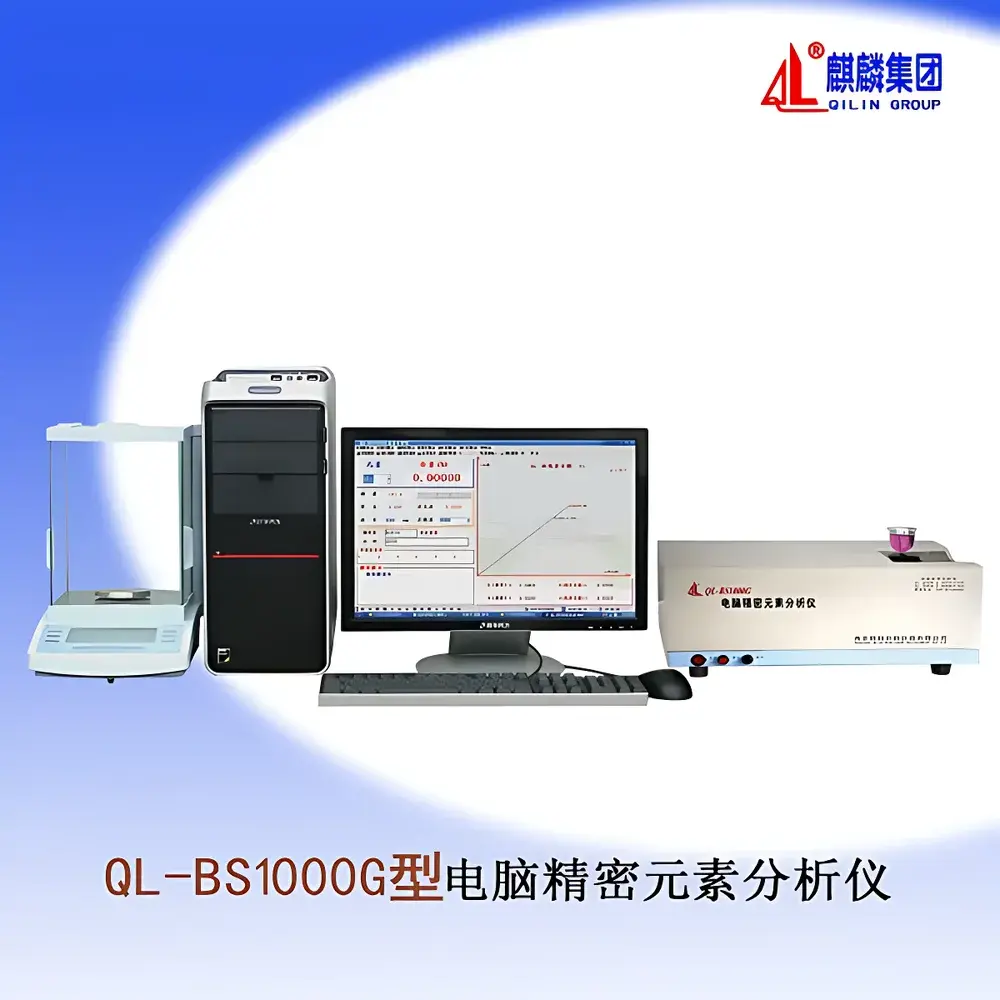
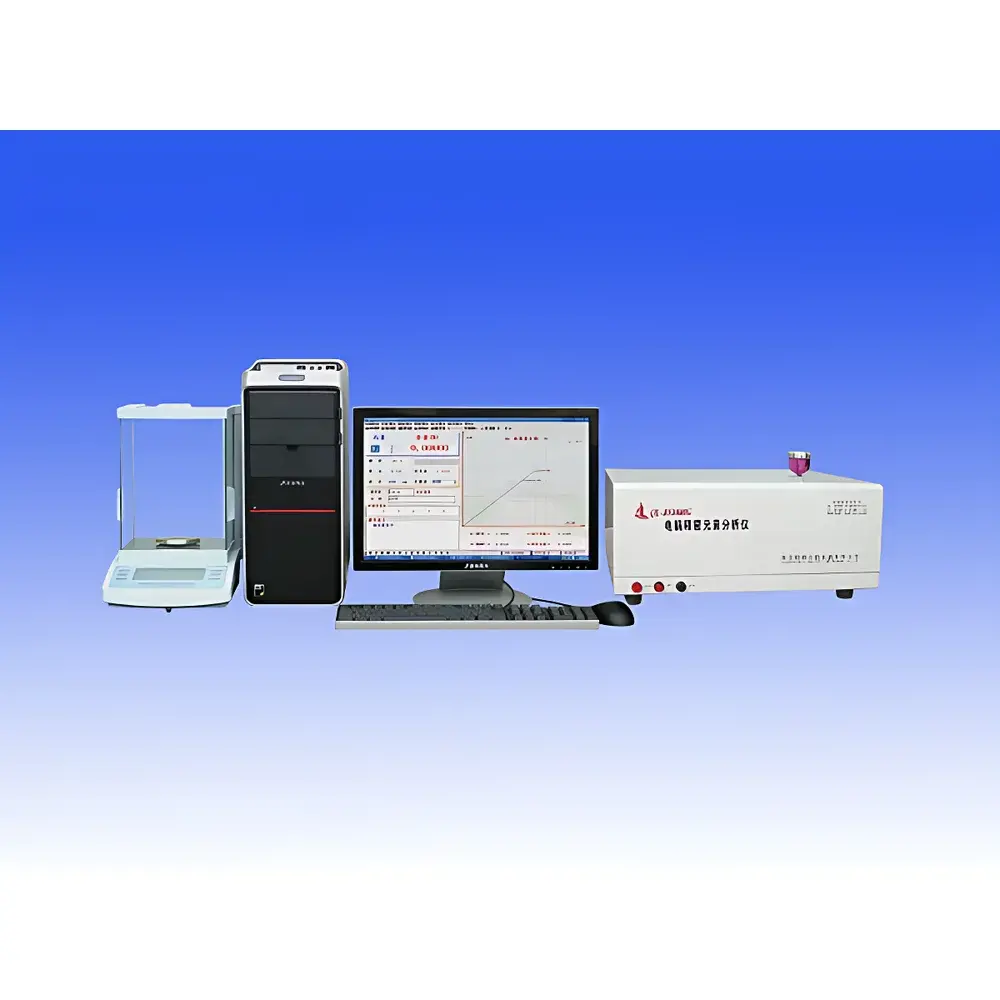
QL-BS1000G Qilin Computer-Controlled Precision Elemental Analyzer
| Brand | Qilin (QL) |
|---|---|
| Origin | Jiangsu, China |
| Model | QL-BS1000G |
| Wavelength Range | 400–750 nm (motorized auto-adjustable) |
| Absorbance Range | 0–1.999 A |
| Concentration Display Range | 0.000–99.99% (auto-ranging) |
| Measurement Time | ~2 minutes per sample |
| Analytical Accuracy | Compliant with GB/T 223.3–223.5–1988 and equivalent ISO/ASTM elemental analysis standards |
| Detection Elements | Si, Mn, P, Cr, Ni, Mo, Cu, Ti, V, Mg, Al, W, Rare Earths (Ce, La), Fe, etc. |
| Calibration Curves | Up to 99 user-definable, regression-based calibration curves stored in PC memory |
| Sample Introduction | Off-instrument acid dissolution (external digestion) |
| Detection Principle | Photometric colorimetry with tunable-wavelength optical system |
| Power Supply | AC 220 V ±10%, 50 Hz ±5% |
| Power Consumption | 350 W |
| Interface | PC-controlled via USB/RS232 |
Overview
The QL-BS1000G Qilin Computer-Controlled Precision Elemental Analyzer is a benchtop photometric elemental analyzer engineered for routine quantitative determination of major and minor metallic elements in ferrous and non-ferrous alloys. It operates on the principle of visible-range photometric colorimetry: after controlled chemical digestion (performed externally), analyte-specific chromogenic reactions generate colored complexes whose absorbance is measured at precisely selected wavelengths between 400 nm and 750 nm. Unlike fixed-filter or diode-array systems, the QL-BS1000G employs a motor-driven monochromator with high-resolution wavelength stepping (±3 nm accuracy), enabling dynamic optimization of measurement conditions for each element—thereby enhancing selectivity, minimizing interferences, and extending linear dynamic range. Designed for metallurgical laboratories, foundries, and QC departments, it delivers rapid (<120 s/sample), reproducible results without requiring vacuum optics or inert gas purging, making it suitable for high-throughput furnace-side, incoming material inspection, and finished product certification workflows.
Key Features
- Motorized tunable-wavelength optical system (400–750 nm) with ±3 nm wavelength repeatability—significantly improved over legacy ±20 nm tolerance systems.
- PC-integrated control architecture featuring real-time absorbance monitoring, automatic zero/full-scale self-calibration, and cold-light source stability for reduced thermal drift.
- Up to 99 regression-based calibration curves storable in host PC memory, supporting multi-point standardization per element and adaptive curve fitting (linear, polynomial, or logarithmic).
- Off-instrument sample digestion protocol eliminates internal fluidic valves and tubing, reducing maintenance frequency and eliminating degradation-related baseline drift.
- Direct mass input interface: compatible with industry-standard analytical balances (via RS232/USB); automatic weight import into calculation engine or manual entry option.
- Full software control of reagent delivery timing, reaction incubation duration, and photometric readout synchronization—ensuring method consistency across operators and shifts.
- Compliance-ready data handling: audit-trail-enabled session logs, user-access levels, and timestamped result exports in CSV/TXT/Excel formats for traceability under GLP and ISO/IEC 17025 frameworks.
Sample Compatibility & Compliance
The QL-BS1000G is validated for solid metallic samples—including carbon steels, low- and high-alloy steels, cast irons (gray, ductile, alloyed), and nickel- or copper-based superalloys—following standardized acid digestion (e.g., HCl/HNO₃ mixtures per ASTM E306 or ISO 11885). It meets performance criteria specified in Chinese national standards GB/T 223.3 (Mn), GB/T 223.5 (Si), GB/T 223.11 (Cr), and GB/T 223.63 (Ni), which align closely with ISO 4940, ASTM E1019, and EN 10316 for compositional verification. While not a certified reference material (CRM)-based instrument, its calibration traceability supports internal method validation per ISO/IEC 17025 Clause 7.7. The system’s external digestion design inherently avoids cross-contamination risks associated with integrated digestion modules, improving long-term measurement integrity in multi-shift environments.
Software & Data Management
Control and data acquisition are managed through a dedicated Windows-based application with intuitive Chinese–English bilingual GUI (English default). All analytical parameters—including wavelength selection, curve coefficients, dilution factors, and sample IDs—are configurable and saved per-method templates. Raw absorbance values, calculated concentrations, and statistical summaries (mean, SD, RSD%) are stored in encrypted local databases with automated daily backup options. Export functions support laboratory information management system (LIMS) integration via delimited text files or ODBC connectivity. Audit trail functionality records operator ID, method version, calibration date, and critical parameter changes—supporting compliance with FDA 21 CFR Part 11 requirements when deployed with electronic signature modules and role-based access controls.
Applications
- Rapid furnace-side composition verification for melt adjustment in steelmaking and casting operations.
- Incoming raw material inspection for scrap metal, ferroalloys, and master alloys against purchase specifications.
- Finished product release testing in mechanical component manufacturing (e.g., automotive crankshafts, gear blanks, valve bodies).
- Quality assurance in heat treatment facilities where elemental segregation or decarburization must be monitored.
- Educational use in metallurgy and materials science laboratories for teaching classical wet-chemical spectrophotometric analysis principles.
- Contract testing labs performing accredited elemental analysis under ISO/IEC 17025 scope for non-ferrous alloys and specialty steels.
FAQ
What detection principle does the QL-BS1000G employ?
It uses photometric colorimetry with a tunable-wavelength optical path (400–750 nm), measuring absorbance of chromogenic reaction products formed during off-instrument acid digestion.
Is the instrument compliant with international quality standards?
Yes—it satisfies analytical performance requirements outlined in GB/T 223 series standards, which are technically harmonized with ISO 4940, ASTM E1019, and EN 10316 for metallic matrix analysis.
Can calibration curves be transferred between instruments?
Calibration data (curve coefficients, wavelengths, reagent factors) are exportable as XML or CSV files and can be imported into other QL-BS1000G units running identical firmware versions.
Does the system require annual recalibration by the manufacturer?
No scheduled factory recalibration is mandated; users perform daily zero/full-scale verification and periodic calibration using NIST-traceable or CRM-certified standards per their internal QA protocol.
What sample preparation is required?
Solid samples must be dissolved using standardized open-vessel acid digestion (e.g., HCl/HNO₃) prior to analysis; no microwave or closed-vessel digestion is integrated into the instrument.






