
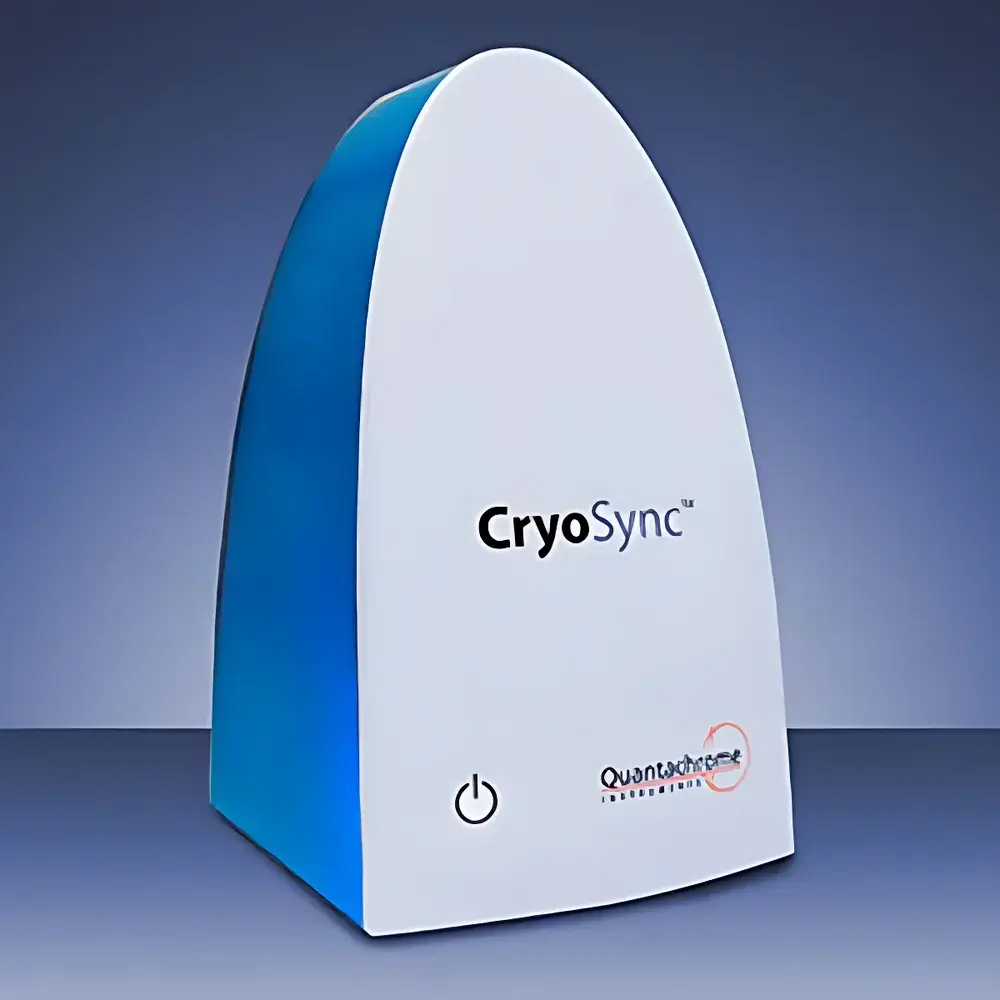
Quantachrome Cryosync Automated Low-Temperature Variable-Temperature Controller
| Brand | Quantachrome |
|---|---|
| Origin | USA |
| Manufacturer Type | Authorized Distributor |
| Product Category | Imported Instrument |
| Model | Cryosync |
| Instrument Type | Specific Surface Area and Pore Size Analyzer |
| Measurement Principle | Static Volumetric Gas Adsorption |
| Operating Ambient Temperature | 15–35 °C |
| Temperature Control Range (with LN₂) | 82–115 K |
| Stability | ±0.005 K (s.d.) |
| Hold Time at 87.3 K | >50 h without refilling |
| Dimensions (Controller only) | 170 × 95 × 100 mm |
| Weight (Controller) | 0.9 kg |
| Power Supply | 100–240 V AC, 50–60 Hz, ≤30 W, Grounded Single-Phase |
Overview
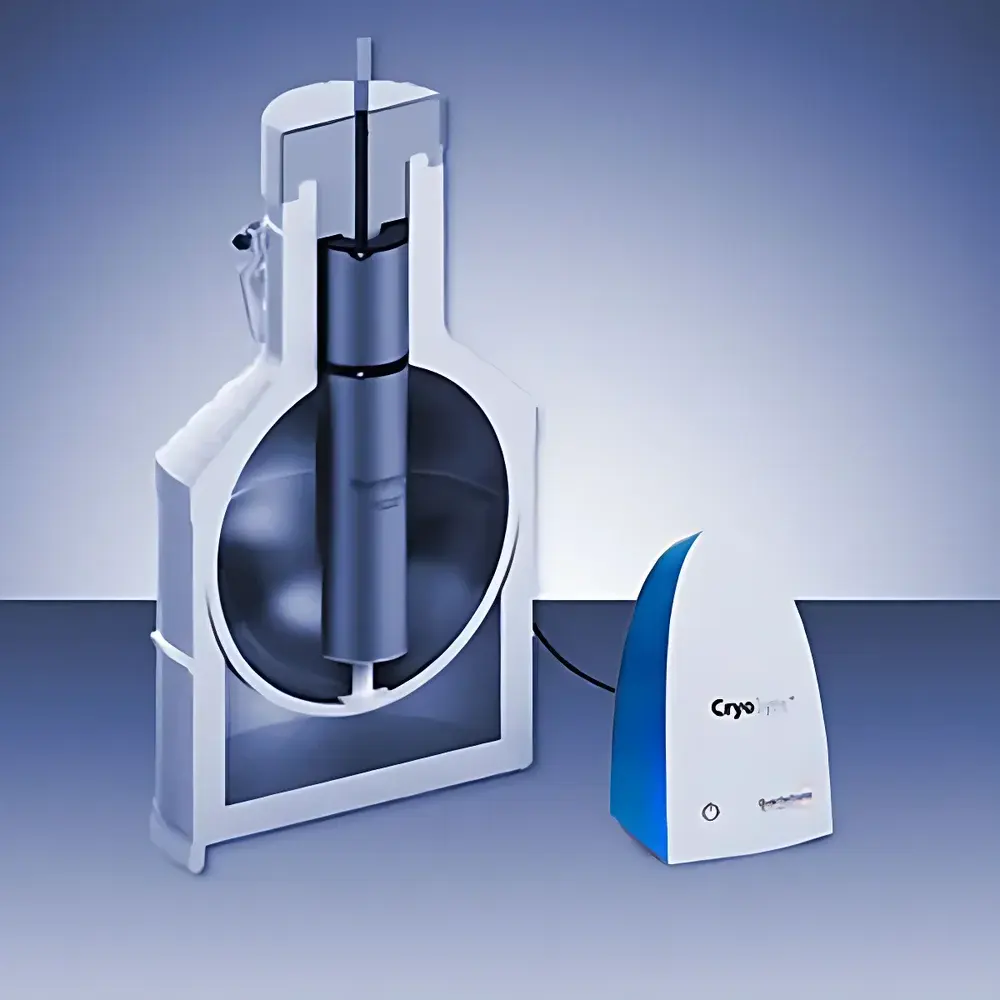
The Quantachrome Cryosync Automated Low-Temperature Variable-Temperature Controller is a precision-engineered thermal management system designed to extend the operational capability of volumetric gas adsorption analyzers—particularly for high-resolution micropore characterization using argon adsorption at 87.3 K. Unlike conventional liquid nitrogen–cooled systems operating at 77.4 K, the Cryosync enables stable, reproducible temperature control across an extended cryogenic range (82–115 K), with exceptional stability of ±0.005 K (standard deviation). This performance meets the stringent thermal requirements outlined in IUPAC’s 2022 technical recommendations for argon-based physisorption analysis, which emphasize improved kinetic accessibility, reduced quadrupole interaction artifacts, and enhanced resolution for narrow micropores (< 0.7 nm) compared to nitrogen at 77 K. The Cryosync is not a standalone analyzer but a modular, externally mounted temperature controller compatible with Quantachrome Autosorb iQ series instruments and other volumetric adsorption platforms equipped with external cryostat interfaces.
Key Features
- High-precision temperature regulation from 82 K to 115 K using liquid nitrogen as the sole cryogen—eliminating the need for costly closed-cycle refrigerators or liquid argon.
- Thermal stability of ±0.005 K (s.d.) maintained over extended durations—critical for low-pressure isotherm acquisition and accurate determination of pore size distribution via DFT/NLDFT kernel models.
- Integrated sample-stage thermostat design ensures the adsorption cell resides directly within the controlled thermal zone, minimizing axial and radial gradients.
- Compact footprint (controller: 170 × 95 × 100 mm; cooler unit: 280 × 55 × 55 mm) enables benchtop integration without compromising instrument accessibility or lab space efficiency.
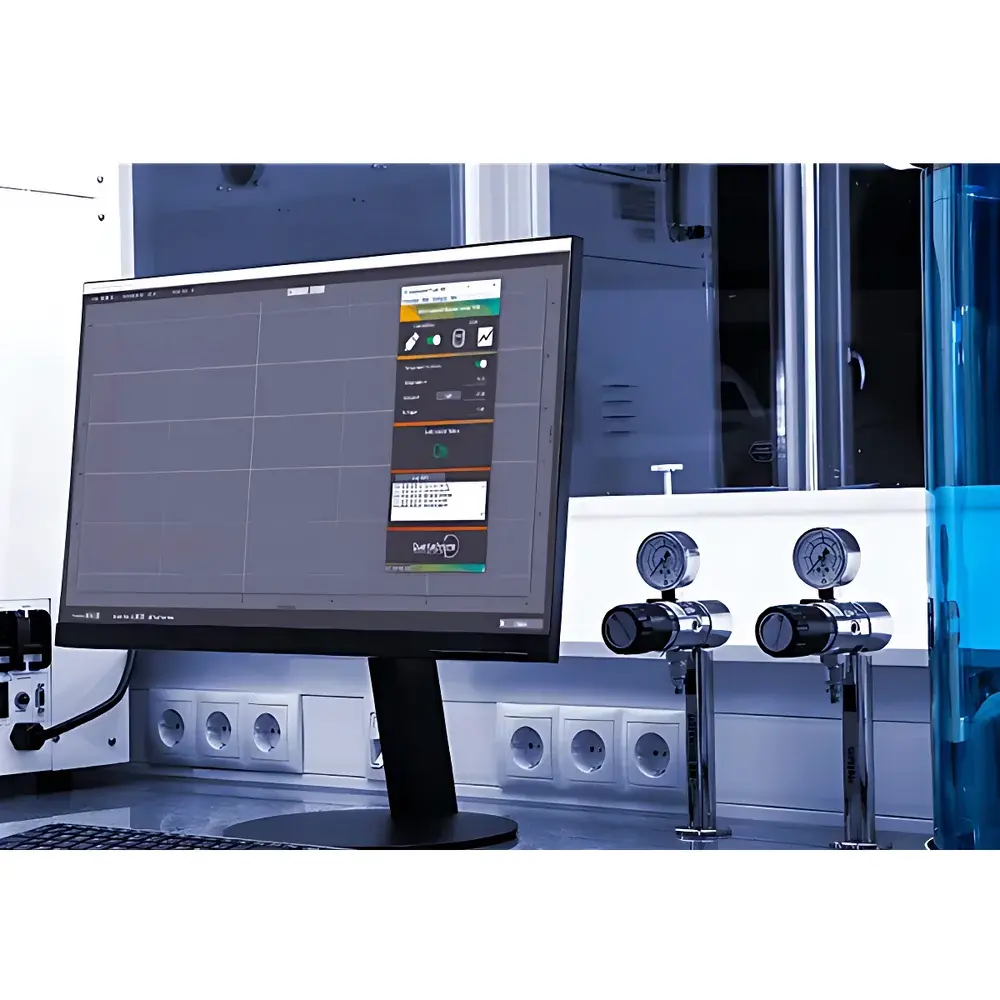
- Self-contained operation with optional real-time monitoring via proprietary CryoSync™ software—supports timestamped temperature logging, alarm thresholds, and exportable CSV data streams compliant with GLP documentation workflows.
- No recalibration of saturation pressure (P₀) required when switching between N₂ and Ar isotherms, as the controller maintains fixed setpoints independent of vapor pressure dependencies.
Sample Compatibility & Compliance
The Cryosync is optimized for use with standard 6–12 mm OD glass or quartz sample tubes used in volumetric gas adsorption systems. It supports both degassed solid powders and monolithic catalysts suitable for BET surface area, Langmuir surface area, t-plot, αs-plot, and Horvath–Kawazoe analyses. Its thermal performance aligns with ASTM D3663 (Standard Test Method for Surface Area of Catalysts), ISO 9277 (Determination of Specific Surface Area by Gas Adsorption), and IUPAC 2022 guidelines on low-temperature adsorbate selection. The controller’s electrical design conforms to IEC 61010-1 for laboratory equipment safety, and its firmware architecture supports audit-trail-ready operation when integrated with 21 CFR Part 11–compliant data acquisition environments.
Software & Data Management
The optional CryoSync™ software provides a Windows-based interface for real-time temperature supervision, setpoint adjustment, and event-triggered logging. All temperature records include UTC timestamps, instrument ID, and user-defined session tags—enabling traceable correlation with adsorption isotherm files generated by host analyzers (e.g., Autosorb iQ v5.x). Export formats include UTF-8 CSV and XML, facilitating import into LIMS platforms or third-party modeling tools such as Micromeritics ASAP Analysis Suite or Zeo++ post-processing pipelines. No proprietary drivers or dongles are required; communication occurs via standard USB 2.0 CDC class protocol.
Applications
- High-fidelity micropore analysis of activated carbons, MOFs, zeolites, and templated silicas using Ar at 87.3 K per IUPAC-recommended protocols.
- Comparative evaluation of adsorption mechanisms across multiple adsorbates (N₂, Ar, Kr, CO₂) under identical thermal conditions.
- Low-temperature kinetics studies requiring sub-0.01 K thermal drift control over multi-hour measurement cycles.
- Validation of DFT model selection through consistent temperature anchoring—reducing uncertainty in pore width assignment below 0.5 nm.
- Quality assurance in catalyst manufacturing where batch-to-batch surface heterogeneity must be quantified with <2% RSD repeatability.
FAQ
Can the Cryosync be used with non-Quantachrome gas sorption analyzers?
Yes—provided the host instrument features a standardized external cryostat interface (e.g., analog voltage input for temperature feedback, mechanical mounting provisions, and vacuum-compatible thermal coupling).
Does the Cryosync require liquid argon?
No. It uses only liquid nitrogen as the primary cryogen and achieves 87.3 K via active temperature regulation—not passive bath immersion.
Is calibration traceable to NIST standards?
The internal Pt100 sensor is factory-calibrated against ITS-90 reference points; users may perform in-situ verification using certified NIST-traceable cryogenic thermometers.
How is thermal uniformity verified across the sample zone?
Quantachrome validates axial and radial gradients using multipoint micro-thermocouple mapping during QA testing; typical gradient magnitude is <0.003 K over 10 mm sample height.
What maintenance is required?
None beyond periodic visual inspection of O-rings and dewar integrity; no consumables, moving parts, or refrigerant recharging are involved.



