
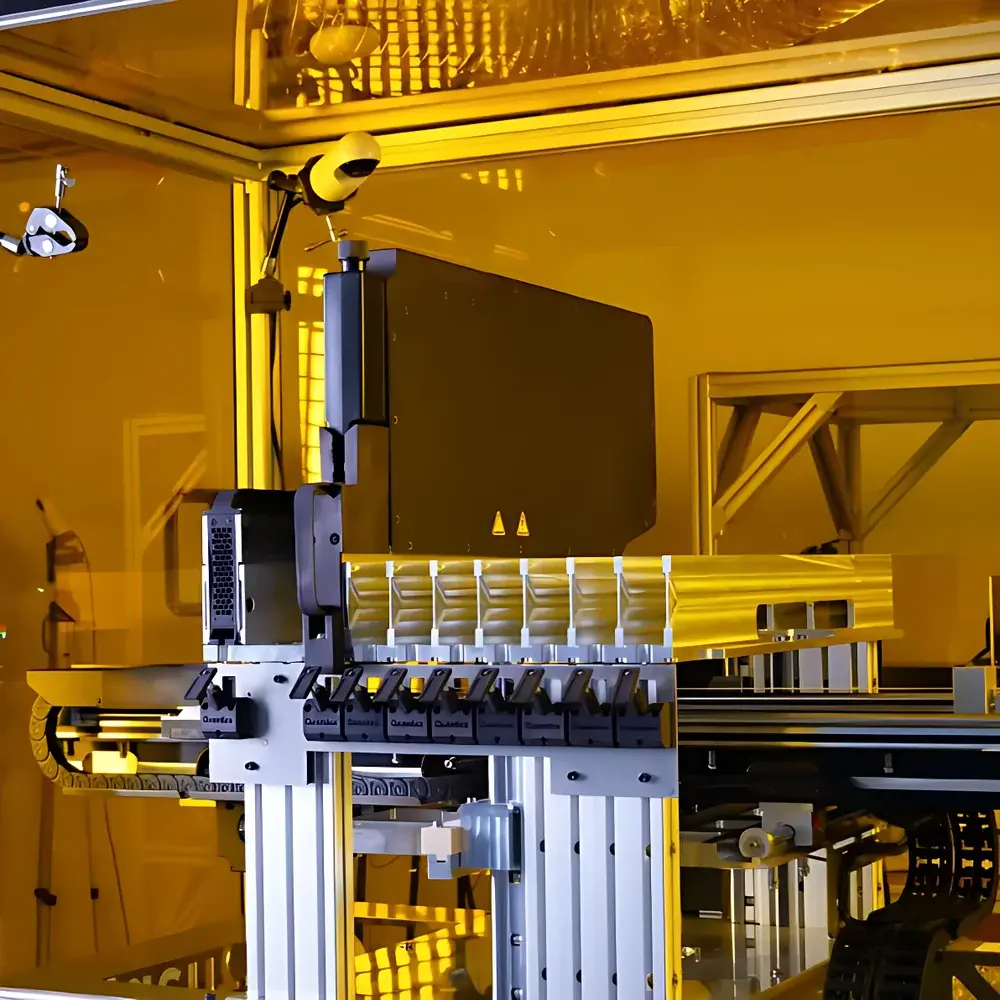
Quantica Novojet High-Viscosity Digital Inkjet Printing System
| Brand | Quantica |
|---|---|
| Origin | Germany |
| Manufacturer Type | Authorized Distributor |
| Origin Category | Imported |
| Model | Novojet |
| Pricing | Available Upon Request |
Overview
The Quantica Novojet High-Viscosity Digital Inkjet Printing System is an industrial-grade, non-contact precision deposition platform engineered for the digital application of functional materials with viscosities up to 15× higher than conventional piezoelectric or thermal inkjet systems. Unlike standard drop-on-demand (DOD) printheads limited to low-viscosity inks (<20 mPa·s), the Novojet leverages a proprietary electromechanical actuation architecture and thermally stabilized fluidic pathway to enable reliable, repeatable ejection of shear-thinning and thixotropic formulations — including structural adhesives, thermal interface materials (TIMs), conductive pastes, catalyst inks, and sealants — within the 50–500 mPa·s range (measured at 100 s⁻¹, 25°C). Its core principle is volumetrically controlled, pixel-level material placement without physical contact, eliminating tool wear, substrate deformation, or registration drift associated with dispensing needles or screen-printing stencils. Designed for integration into automated production lines, the system supports continuous motion printing at line speeds up to 1.2 m/s, making it suitable for high-throughput manufacturing environments governed by ISO 9001, IATF 16949, and ISO 14001 frameworks.
Key Features
- High-viscosity capability: Stable jetting of materials from 50 to 500 mPa·s (at 100 s⁻¹), validated per ASTM D2196 and ISO 2555
- Digital precision: Sub-50 µm positional accuracy (±3 µm repeatability) across full print area; programmable droplet volume from 15 to 120 pL
- Non-contact deposition: Eliminates mechanical interaction with substrates—critical for fragile laminates, thin foils, and coated membranes
- Multi-material compatibility: Supports solvent-based, UV-curable, and two-component epoxy formulations via modular fluid handling modules
- Real-time monitoring: Integrated vision-guided closed-loop feedback using high-speed CMOS imaging (≥10 kHz frame rate) for in-line droplet verification and defect detection
- Modular integration: Standardized SECS/GEM and OPC UA interfaces for seamless connectivity with MES, SCADA, and PLC-based factory automation systems
Sample Compatibility & Compliance
The Novojet accommodates rigid and flexible substrates ranging from silicon wafers and metal bipolar plates to polymer electrolyte membranes (PEMs), carbon fiber composites, and laminated electrical steel stacks. It is compatible with industry-standard adhesive chemistries—including acrylates, epoxies, silicones, and polyurethanes—meeting UL 94 V-0, RoHS 3, and REACH SVHC criteria. For regulated applications such as automotive traction motor assembly or PEM fuel cell stack fabrication, the system supports audit-ready documentation packages aligned with ISO/IEC 17025 calibration traceability, FDA 21 CFR Part 11-compliant electronic records (via optional software module), and GLP/GMP-aligned operational logs for process validation (IQ/OQ/PQ protocols available upon request).
Software & Data Management
Controlled via Quantica’s proprietary NovoPrint Suite v4.2, the system provides parametric print job definition, real-time thermal and pressure profiling, and layer-by-layer deposition mapping. All process parameters—including waveform timing, drive voltage, ambient temperature/humidity, and fluid temperature—are logged with UTC timestamps and digitally signed for integrity. Export formats include CSV, HDF5, and XML for integration with statistical process control (SPC) platforms. Optional cloud-based analytics enable cross-facility benchmarking of material utilization efficiency, nozzle health trends, and yield correlation against electrical performance metrics (e.g., AC impedance, thermal resistance, peel strength).
Applications
- E-motor stator/rotor lamination bonding: Precise, patterned deposition of structural adhesives across hundreds of stacked electrical steel laminations—improving interlaminar shear strength by >35%, reducing eddy current losses, and enabling variable-thickness bondlines to compensate for sheet flatness tolerances
- PEM fuel cell MEA fabrication: Digital printing of catalyst layers (e.g., Pt/C on Nafion membranes) and gas diffusion layers (GDLs) with controlled porosity gradients and edge definition, supporting DOE targets for catalyst loading uniformity (±5% CV)
- Battery module thermal management: Direct-write application of phase-change TIMs onto battery cell surfaces and cold plates, achieving consistent bondline thickness (±8 µm) and eliminating air voids responsible for localized hot spots
- Power electronics encapsulation: Selective dispensing of conformal coatings and potting compounds onto IGBT modules and SiC inverters under inert atmosphere conditions
FAQ
What viscosity range is supported, and how is rheological stability ensured during printing?
The Novojet handles materials from 50 to 500 mPa·s (measured at 100 s⁻¹, 25°C) using active fluid temperature control (±0.3°C) and pressure-regulated reservoirs to maintain consistent shear history and prevent particle settling.
Can the system be validated for GMP-compliant medical device manufacturing?
Yes—when configured with the NovoAudit software package and calibrated per ISO/IEC 17025, it supports full IQ/OQ/PQ execution and 21 CFR Part 11 compliance for electronic signatures and audit trails.
Is offline programming supported for complex multi-layer geometries?
Yes—NovoPrint Suite includes CAD-to-print workflow with STEP/IGES import, automatic path optimization, and collision-aware gantry motion planning for 3-axis synchronized deposition.
How does the system address nozzle clogging with filled or abrasive formulations?
It employs ultrasonic-assisted priming, programmable purge cycles, and self-cleaning waveforms—validated for formulations containing ≤40 vol% ceramic or metallic fillers (e.g., Al₂O₃, Ag flakes) up to 5 µm D90.
What level of support is provided for process transfer from R&D to high-volume production?
Quantica offers joint process development programs—including material screening, print parameter optimization, and line-integration engineering—backed by application-specific SOPs and operator training certified to VDA 6.3 standards.







