
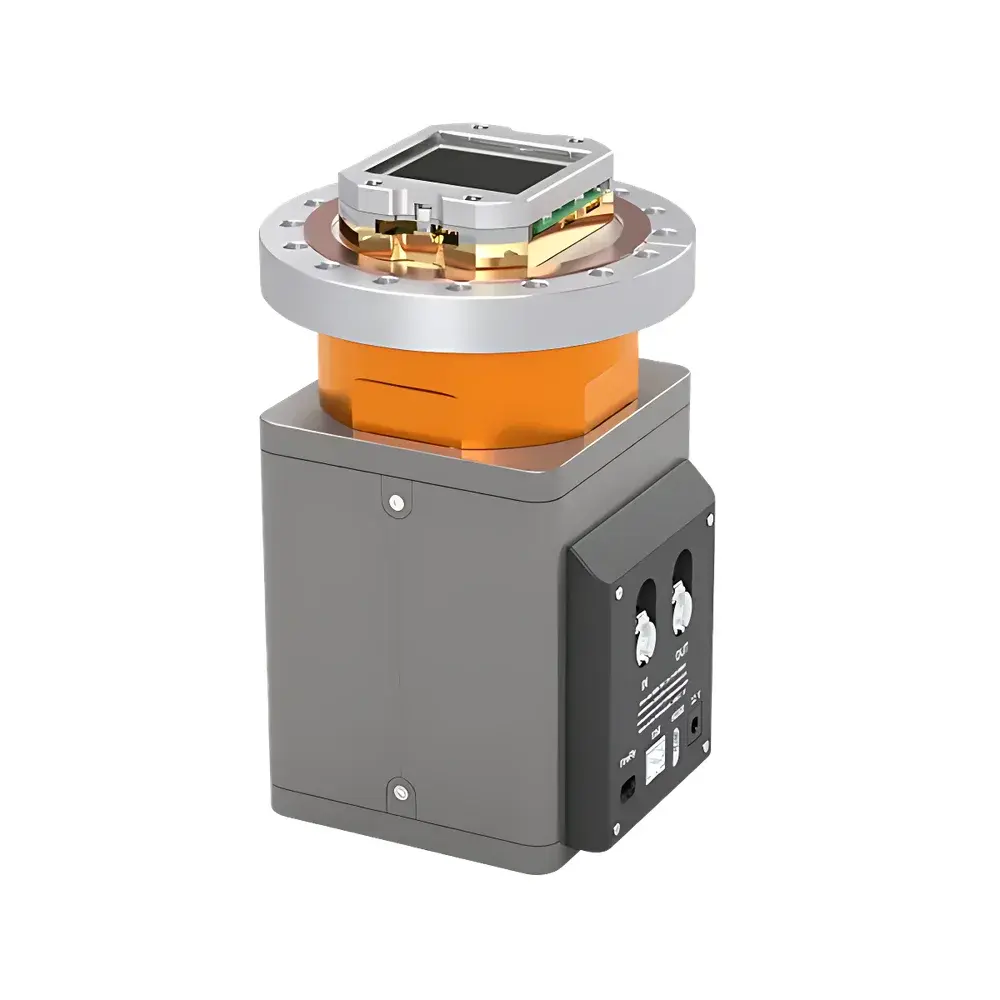
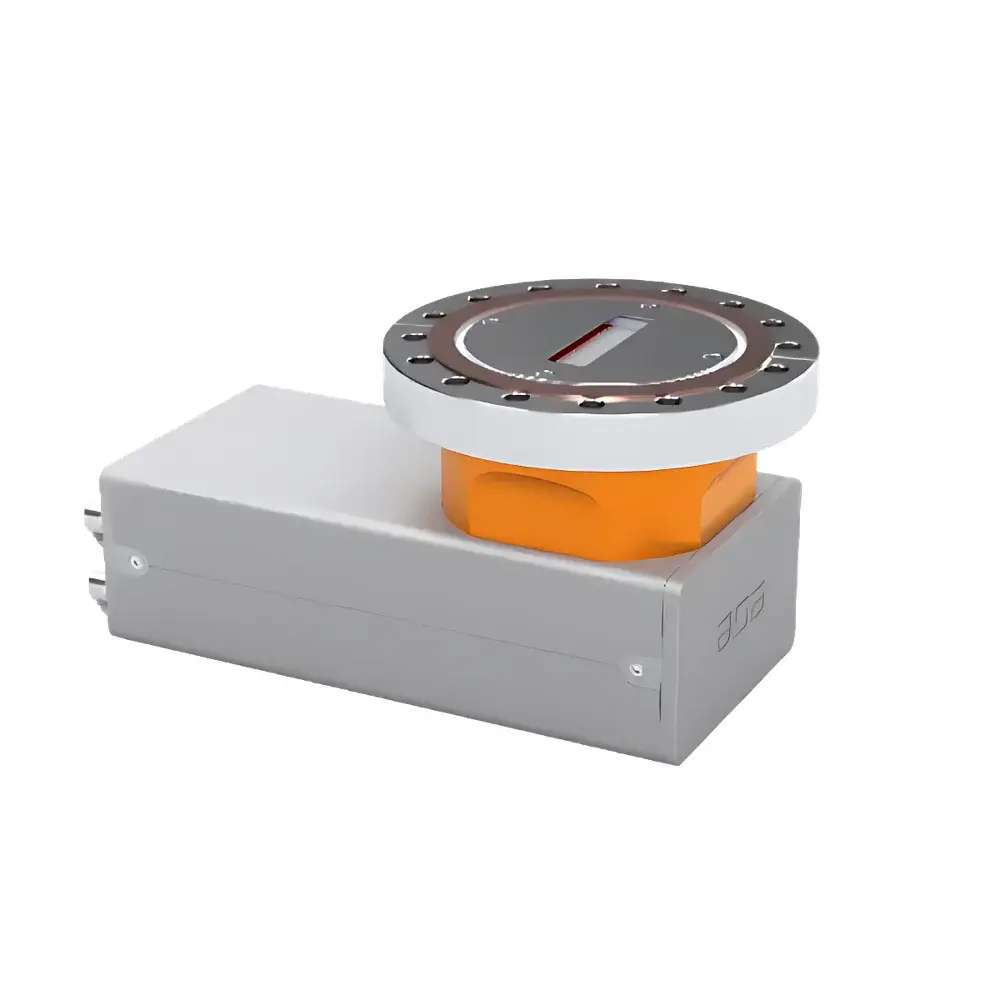
Quantum Detectors CheeTah T3 EELS Direct Electron Detection Camera
| Brand | Quantum Detectors |
|---|---|
| Origin | United Kingdom |
| Manufacturer Type | Authorized Distributor |
| Origin Category | Imported |
| Model | CheeTah T3 EELS |
| Pricing | Available Upon Request |
Overview
The Quantum Detectors CheeTah T3 EELS is a time-resolved, event-driven hybrid pixel direct electron detector engineered for high-fidelity, low-dose electron energy loss spectroscopy (EELS) in transmission electron microscopes (TEM/STEM) operating at 200 kV and 300 kV. Unlike conventional integrating detectors, the CheeTah T3 EELS operates on single-electron counting principles enabled by Medipix3RX readout architecture, delivering noise-free, quantitative signal acquisition with intrinsic time-stamping resolution of 1.56 ns. This temporal precision enables correlation of electron arrival events with beam pulsing, laser excitation, or scanning synchronization—critical for dose-sensitive materials, dynamic phase transitions, and ultrafast structural dynamics studies. The detector employs a monolithic 1024 × 256 pixel sensor (1×4 tiling configuration), fabricated using silicon-on-insulator (SOI) technology to minimize charge diffusion and ensure sub-pixel spatial fidelity. Its design adheres to vacuum-compatible CF100 flange mounting standards and integrates seamlessly into post-column energy-filtered imaging paths, including Gatan Imaging Filter (GIF), CEOS Ω-filter, and double-tilt spectrometer geometries.
Key Features
- Event-driven single-electron counting with zero readout noise and no dark current accumulation
- 1.56 ns time resolution per electron event, enabling time-correlated EELS (tc-EELS) and pump-probe experiments
- Monolithic 1024 × 256 pixel sensor optimized for EELS dispersion direction and energy windowing
- Real-time data preview and histogram-based live feedback during acquisition
- Time-to-Digital Converter (TDC) output port for hardware-level synchronization with scan generators, laser delay units, or beam blankers
- Compact form factor compatible with standard energy filter insertion mechanisms and limited clearance environments
- Full software integration with CEOS Panta Rhei for synchronized acquisition, spectral binning, and time-gated energy filtering
Sample Compatibility & Compliance
The CheeTah T3 EELS is validated for use with beam-sensitive specimens including metal–organic frameworks (MOFs), lithium-ion battery cathodes, cryo-preserved biological macromolecules, and 2D van der Waals heterostructures. Its nanosecond-scale dwell time capability reduces cumulative dose by up to three orders of magnitude compared to frame-integrating CCD/CMOS detectors—enabling EELS mapping at ≤1 e⁻/Ų/s without irreversible radiolysis or knock-on damage. The system complies with ISO 13485–certified manufacturing protocols for scientific instrumentation and supports audit-ready metadata logging required under GLP and GMP-aligned TEM laboratories. All firmware and acquisition modules are designed to meet FDA 21 CFR Part 11 requirements for electronic records and signatures when deployed with validated Panta Rhei configurations.
Software & Data Management
Acquisition and processing are fully supported through CEOS Panta Rhei v4.2+, which provides native support for time-tagged event lists (TTELS), enabling post-acquisition time gating, drift correction via event clustering, and multi-dimensional spectral reconstruction. Raw event streams are stored in HDF5 format with embedded timestamps, pixel coordinates, and energy-channel metadata—ensuring full traceability and reproducibility. The software implements lossless compression algorithms compliant with IEC 61966-2-1 (sRGB) and IEEE 1789-2015 for temporal stability reporting. Integration with Python-based analysis pipelines (e.g., HyperSpy, PyXEM) is facilitated via standardized ASDF and NXdata schemas, allowing batch processing of terabyte-scale time-resolved EELS datasets across HPC clusters.
Applications
- Low-dose elemental mapping of beam-labile catalysts and solid electrolytes
- Nanosecond-resolved plasmon dynamics and interband transition kinetics in quantum dots
- In situ EELS monitoring of redox reactions in operando battery TEM cells
- Time-gated core-loss spectroscopy for separating overlapping edges (e.g., Ti-L₂,₃ and O-K in perovskites)
- Correlative tc-EELS + 4D-STEM for strain-dependent electronic structure quantification
- Ultra-low-dose valence EELS of organic semiconductors and frozen-hydrated viruses
FAQ
What vacuum compatibility specifications does the CheeTah T3 EELS support?
The detector is rated for continuous operation at ≤1×10⁻⁷ mbar and features all-metal seals and bakeable ceramic feedthroughs compatible with UHV TEM column integration.
Is the 1.56 ns timing resolution hardware-limited or configurable?
It is fixed by the Medipix3RX ASIC clock architecture; however, user-selectable time binning (1.56 ns to 1 µs) is available via firmware for trade-offs between temporal resolution and data volume.
Can CheeTah T3 EELS be used for parallel EELS without energy filtering?
Yes—when coupled with a magnetic prism spectrometer or electrostatic omega filter, it supports unfiltered spectrum imaging with energy-dispersive readout across the full 1024-pixel dispersion axis.
Does the system support real-time energy-windowed imaging?
Yes—Panta Rhei enables hardware-triggered region-of-interest (ROI) readout for dynamic energy selection during acquisition, including dual-window difference imaging.
How is calibration traceability maintained for quantitative EELS?
Each unit ships with NIST-traceable gain and linearity certificates; energy scale calibration is performed using Cr, Cu, and Si reference foils with automated peak centroid tracking across temperature and dose history.




