
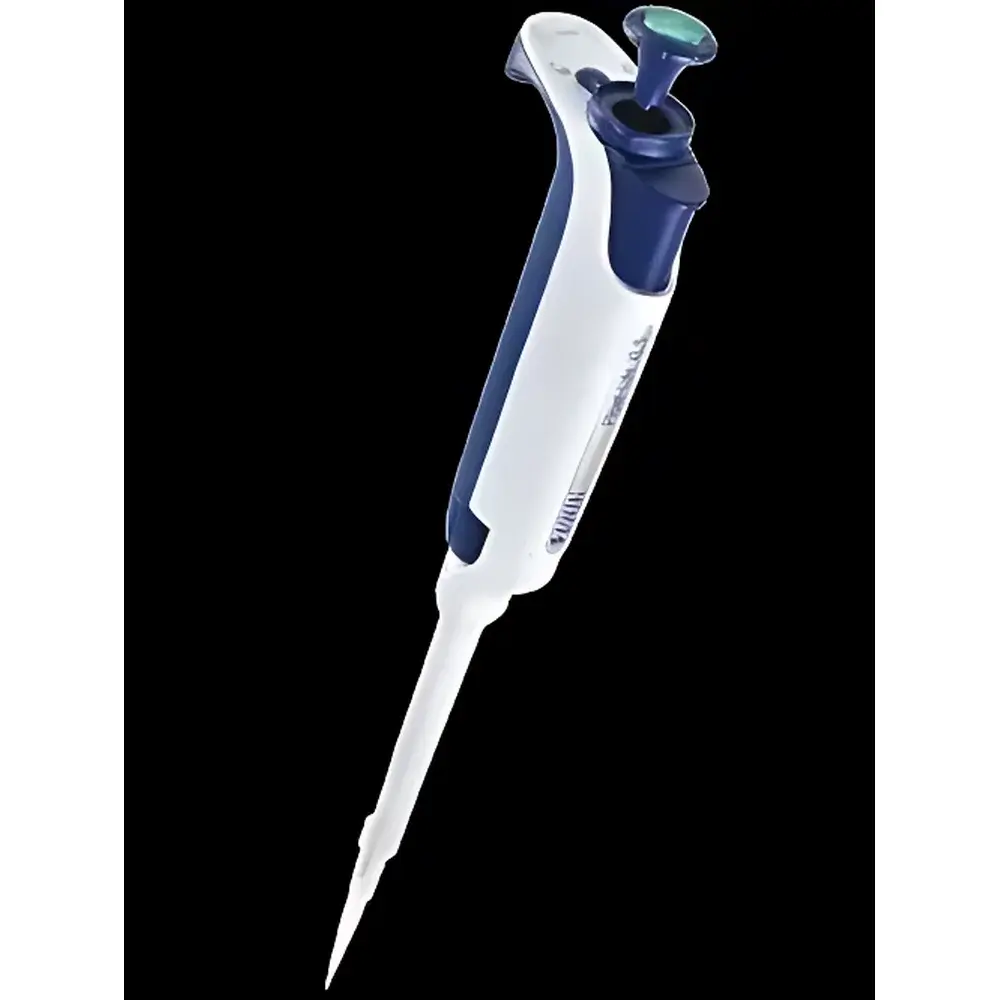
Rainin Pipet-Lite XLS+ Magnetic-Assisted Manual Single-Channel Adjustable Pipette
| Brand | Rainin |
|---|---|
| Origin | Switzerland |
| Model | L-20MLXLS+ |
| Type | Manual Single-Channel Pipette |
| Volume Range | 2–20 mL |
| Accuracy | ±12.0% at full scale |
| Compliance | GLP/GMP-ready, RFID-enabled, autoclavable (full liquid end and tip ejector) |
| Tip Compatibility | LTS (Low Retention Tip) and conical tips |
| Ergonomics | Patented Magnetic Assistance™ and LiteTouch™ Tip Ejection System |
| Certifications | ISO 8655 compliant, CE-marked, RoHS-compliant |
Overview
The Rainin Pipet-Lite XLS+ Magnetic-Assisted Manual Single-Channel Adjustable Pipette is an ISO 8655–compliant precision liquid handling instrument engineered for high reproducibility, operator safety, and long-term traceability in regulated laboratory environments. Unlike conventional air-displacement pipettes, the XLS+ integrates patented Magnetic Assistance™ technology—a passive magnetic coupling system that reduces plunger actuation force by up to 50% compared to standard manual pipettes—thereby minimizing biomechanical stress during repetitive operations. Its calibrated piston-driven air displacement mechanism ensures consistent volumetric delivery across its full 2–20 mL range, with accuracy specified per ISO 8655-2 (±12.0% at maximum volume) and precision validated under controlled temperature and humidity conditions (20–25°C, 40–60% RH). Designed for daily use in QC, clinical diagnostics, pharmaceutical development, and academic research labs, the XLS+ meets foundational requirements for Good Laboratory Practice (GLP) and Good Manufacturing Practice (GMP) workflows—including audit-ready calibration history tracking via embedded RFID.
Key Features
- Patented Magnetic Assistance™ technology enables smooth, low-force plunger operation—reducing hand fatigue and risk of repetitive strain injury (RSI) during extended pipetting sessions.
- LiteTouch™ Tip Ejection System utilizes a high-density polymer ejection sleeve engineered for chemical resistance, thermal stability (autoclavable at 121°C for 20 min), and single-motion tip release without lateral force.
- Full liquid-end autoclavability: piston seal assembly, tip cone, and ejection sleeve are fully detachable and withstand repeated sterilization cycles without dimensional drift or performance degradation.
- Integrated RFID chip stores unique serial number, calibration date, service history, and user-defined metadata—enabling seamless integration with Rainin’s Liquidator® software and third-party LIMS platforms.
- Ergonomic handle geometry with textured soft-grip surface and optimized center-of-mass distribution supports neutral wrist posture and minimizes torque during aspiration and dispensing.
- Glove-friendly volume adjustment dial with anti-slip knurling and mechanical lock prevents accidental volume shift—even when wearing nitrile or latex gloves.
Sample Compatibility & Compliance
The Pipet-Lite XLS+ is compatible with standard LTS (Low Retention Tip) and universal conical pipette tips, supporting aqueous, viscous (e.g., glycerol, serum), and mildly corrosive solutions (pH 2–12) when used with appropriate tip materials. All wetted components—including O-rings, piston seals, and tip cones—are manufactured from chemically inert, USP Class VI–certified polymers. The device conforms to ISO 8655 (volumetric performance), IEC 61326-1 (EMC), and EN 61000-4-2 (ESD immunity). Its RFID architecture supports 21 CFR Part 11–aligned electronic records when paired with validated software, fulfilling data integrity requirements for FDA-regulated environments. Calibration certificates issued per ISO/IEC 17025 are available upon request through authorized Rainin service centers.
Software & Data Management
RFID data from each XLS+ unit is readable via Rainin’s optional ProPoint™ RFID Reader or integrated into enterprise LIMS via Rainin Liquidator® Software (v4.2+). The system logs calibration due dates, last verification results, maintenance events, and operator assignments—generating PDF or CSV reports compliant with internal QA audits and external inspections. Audit trails include timestamped, user-authenticated entries with immutable hash signatures. No proprietary drivers or cloud dependencies are required; local database export supports offline review and archival per institutional SOPs.
Applications
- Quantitative dilution series preparation in ELISA, PCR setup, and cell culture media formulation.
- High-volume reagent dispensing in bioprocess development (e.g., buffer transfer, harvest collection).
- Standardized sample aliquoting for LC-MS, HPLC, and ICP-MS workflows requiring traceable volume delivery.
- Calibration standard preparation in reference laboratories operating under ISO/IEC 17025 accreditation.
- Teaching laboratories emphasizing ergonomic technique training and metrological traceability principles.
FAQ
Is the L-20MLXLS+ fully autoclavable?
Yes—the entire liquid end (piston, seals, tip cone) and the LiteTouch™ tip ejector are designed for full-cycle autoclaving at 121°C for 20 minutes. Disassembly instructions and validation guidelines are provided in the Operation & Maintenance Manual.
Does the RFID chip require a battery or external power source?
No—it is a passive RFID tag powered wirelessly by the reader’s electromagnetic field, ensuring indefinite operational life without maintenance.
Can the XLS+ be calibrated in-house using standard gravimetric methods?
Yes. ISO 8655–compliant gravimetric calibration is supported using certified weights, Class A distilled water, and environmental monitoring (temperature, barometric pressure, humidity). Rainin provides detailed calibration SOPs and uncertainty calculation templates.
What tip types are recommended for optimal accuracy at 20 mL?
LTS-compatible wide-bore 20 mL tips (e.g., Rainin LTS-20ML) are recommended to minimize surface tension effects and ensure complete tip sealing during aspiration.
How frequently should recalibration be performed?
Per ISO 8655-5, initial calibration verification is recommended before first use; subsequent intervals depend on usage intensity and risk assessment—but typically every 3–6 months for routine QC applications, or after any physical impact or sterilization cycle exceeding 100 cycles.



