
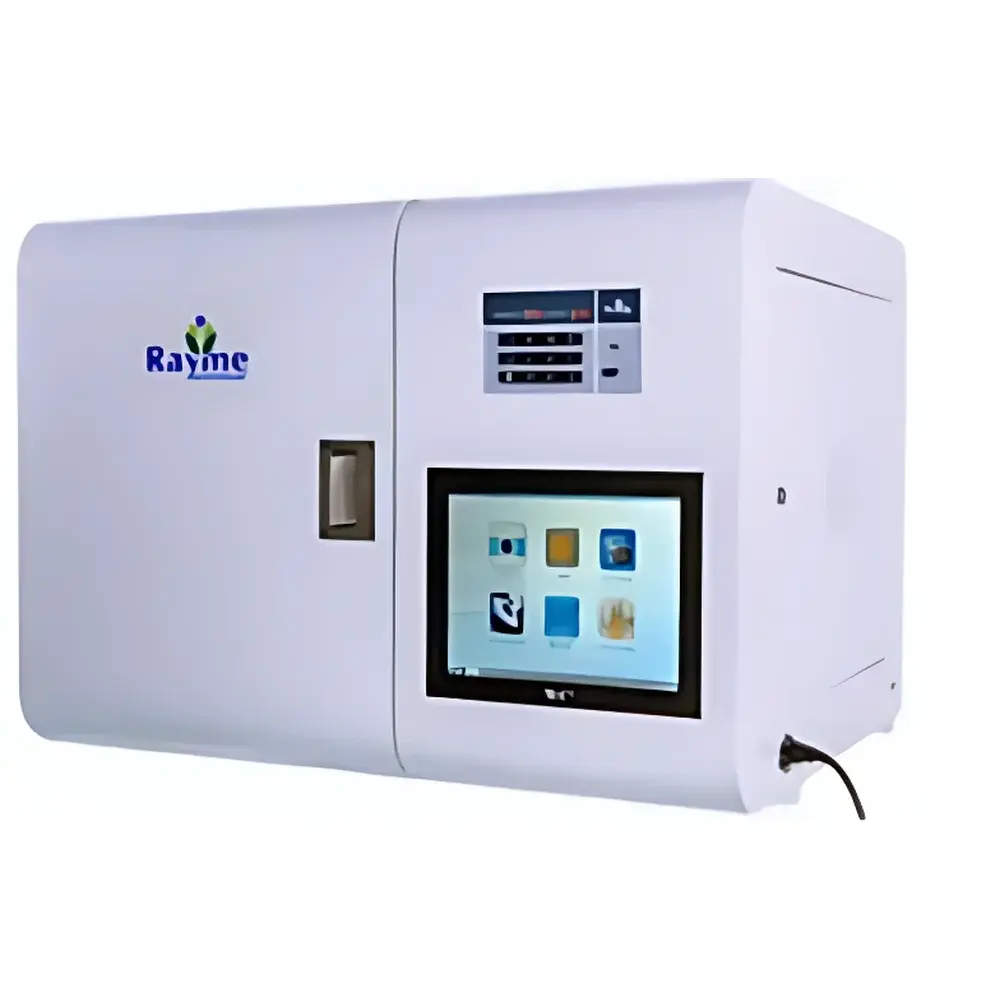
Raymetech SCATM Single Cell Analyzer
| Brand | Raymetech |
|---|---|
| Origin | Jiangsu, China |
| Manufacturer Type | Authorized Distributor |
| Country of Origin | China |
| Model | SCATM |
| Pricing | Available Upon Request |
Overview
The Raymetech SCATM Single Cell Analyzer is a high-precision, multimodal platform engineered for real-time, in situ, quantitative, and qualitative interrogation of single living cells at subcellular resolution. It operates on a dual-modality detection principle—integrating nanoscale optical fluorescence sensing with concurrent electrochemical signal acquisition—to resolve dynamic biochemical events within intact biological systems. Unlike conventional flow cytometry or bulk lysate assays, the SCATM enables spatially resolved, non-destructive monitoring of metabolic fluxes, signaling cascades, redox states, ion channel activity, and molecular interactions directly inside viable cells, tissues, or even small model organisms. Its core innovation lies in the use of multifunctional, bio-orthogonal nanoprobes—chemically tailored to target specific biomolecules (e.g., ATP, Ca²⁺, ROS, NO, neurotransmitters, phosphorylated proteins)—which transduce localized biochemical changes into measurable photonic or electronic outputs. This architecture supports true correlative analysis: simultaneous optical imaging and electrophysiological readout from the same subcellular compartment, preserving native cellular context and temporal fidelity.
Key Features
- Nanoscale dual-modal probing: Integrated fluorescence photon counting and low-noise potentiostatic/galvanostatic electrochemical detection within a single probe tip
- Sub-100 nm spatial resolution: Enabled by piezo-driven nanopositioning and adaptive focus stabilization for precise intracellular targeting
- Ultra-microinjection & microextraction module: Capable of attoliter-scale (≤1 aL) delivery or aspiration of drugs, plasmids, proteins, viral vectors, or functionalized nanoparticles into defined cytoplasmic or nuclear regions
- Live-cell compatible operation: Minimal phototoxicity via pulsed LED excitation and low-bias electrochemical protocols; validated for >6-hour continuous monitoring of primary neurons, stem cells, and organoid cultures
- Modular design: Interchangeable probe cartridges support customized surface chemistries (e.g., aptamer-functionalized, antibody-conjugated, or enzyme-immobilized tips) for multiplexed analyte detection
- Real-time synchronization: Hardware-level timestamp alignment between optical frames and electrochemical current/potential traces (sub-millisecond latency)
Sample Compatibility & Compliance
The SCATM accommodates diverse biological specimens without fixation or lysis—including adherent and suspension mammalian cells (e.g., HEK293, Jurkat, iPSC-derived cardiomyocytes), plant protoplasts, yeast, bacterial spheroplasts, fungal hyphae, thin tissue slices (≤300 µm), and zebrafish larvae (up to 5 dpf). All hardware and firmware comply with IEC 61000-6-3 (EMC emission standards) and IEC 61010-1 (safety requirements for laboratory equipment). Data acquisition workflows support audit-trail generation and user-access logging in accordance with GLP and GMP-aligned practices. While not FDA-cleared as an IVD device, the system meets ISO/IEC 17025 traceability requirements for research-grade instrumentation when operated with NIST-traceable calibration standards.
Software & Data Management
The proprietary SCATM Control Suite (v4.2+) provides a unified interface for instrument control, multimodal data acquisition, and integrated analysis. It supports time-synchronized export of raw photon counts (in TCSPC or intensity mode), current/voltage waveforms, and coordinate-stamped positional metadata in HDF5 format—ensuring compatibility with MATLAB, Python (via h5py), and open-source tools like ImageJ/Fiji and Clampfit. Built-in algorithms enable baseline correction, drift compensation, ratiometric fluorescence quantification (e.g., FRET or dual-emission dyes), and spike detection in electrophysiological traces. The software includes configurable electronic lab notebook (ELN) fields compliant with 21 CFR Part 11 for signature-enabled protocol archiving and version-controlled experiment documentation.
Applications
- Single-cell pharmacodynamics: Real-time tracking of drug uptake kinetics, intracellular target engagement, and secondary messenger activation (e.g., cAMP, IP₃)
- Neurochemical profiling: Subsecond detection of neurotransmitter release (dopamine, serotonin, acetylcholine) from individual synapses or dendritic spines
- Metabolic heterogeneity mapping: Simultaneous monitoring of mitochondrial membrane potential (ΔΨm), NAD(P)H autofluorescence, and proton flux in tumor cell subpopulations
- Gene editing validation: In situ assessment of CRISPR-Cas9 activity via real-time DNA damage response (γH2AX) and p53 phosphorylation kinetics
- Microbial stress response: Quantifying antibiotic-induced membrane depolarization coupled with reactive oxygen species (ROS) burst dynamics in single bacteria
- Plant cell signaling: Spatially resolved Ca²⁺ wave propagation across guard cells during stomatal closure induced by ABA
FAQ
What types of nanoprobes are compatible with the SCATM system?
The platform accepts third-party and custom-fabricated nanoprobes with diameters ≤200 nm and conductive/optical coupling interfaces compliant with SCATM’s standardized probe holder (ISO 8033–compatible taper). Raymetech offers validated probe kits for Ca²⁺, pH, H₂O₂, glucose, and dopamine detection.
Can the SCATM perform long-term time-lapse experiments on primary neurons?
Yes—optimized thermal regulation (90% neuronal viability and synaptic functionality.
Is remote operation supported for multi-user labs?
The SCATM Control Suite includes secure TLS-encrypted client-server architecture, enabling authenticated remote access, collaborative session sharing, and centralized instrument scheduling via web-based dashboard.
Does the system meet regulatory requirements for preclinical study documentation?
All acquired datasets include embedded metadata (user ID, timestamp, calibration state, environmental logs) and support export to PDF/A-2b or XML formats suitable for IND-enabling toxicology or efficacy reports under FDA or EMA guidelines.




