
Rayscience IPCE Quantum Efficiency Measurement System
| Brand | Rayscience |
|---|---|
| Origin | Germany |
| Model | IPCE |
| Price | €40,000 |
| Measurement Mode | DC |
| Spectral Range | 390–1090 nm |
| Measurement Time per Wavelength | 8 s |
| Number of Wavelengths | 40 |
| Spot Size | 4–12 mm |
| Working Distance | 5 mm |
| Light Source | High-Stability LED Array |
| Bias Voltage Range | ±5000 mV |
| Photodiode Monitor | Integrated |
| Background Illumination Options | Red / Blue / White |
| Connector Type | Male BNC |
| Operating System | Windows |
| Input Voltage | 220 V AC |
| Dimensions (L×W×H) | 45 × 28 × 38 cm |
| Weight | 46 kg |
| Warranty | 1 Year Comprehensive (Parts, Labor, Global Return Shipping) |
| Software | GUI-Based FastEQE Suite with Unlimited Installations & Free Updates |
Overview
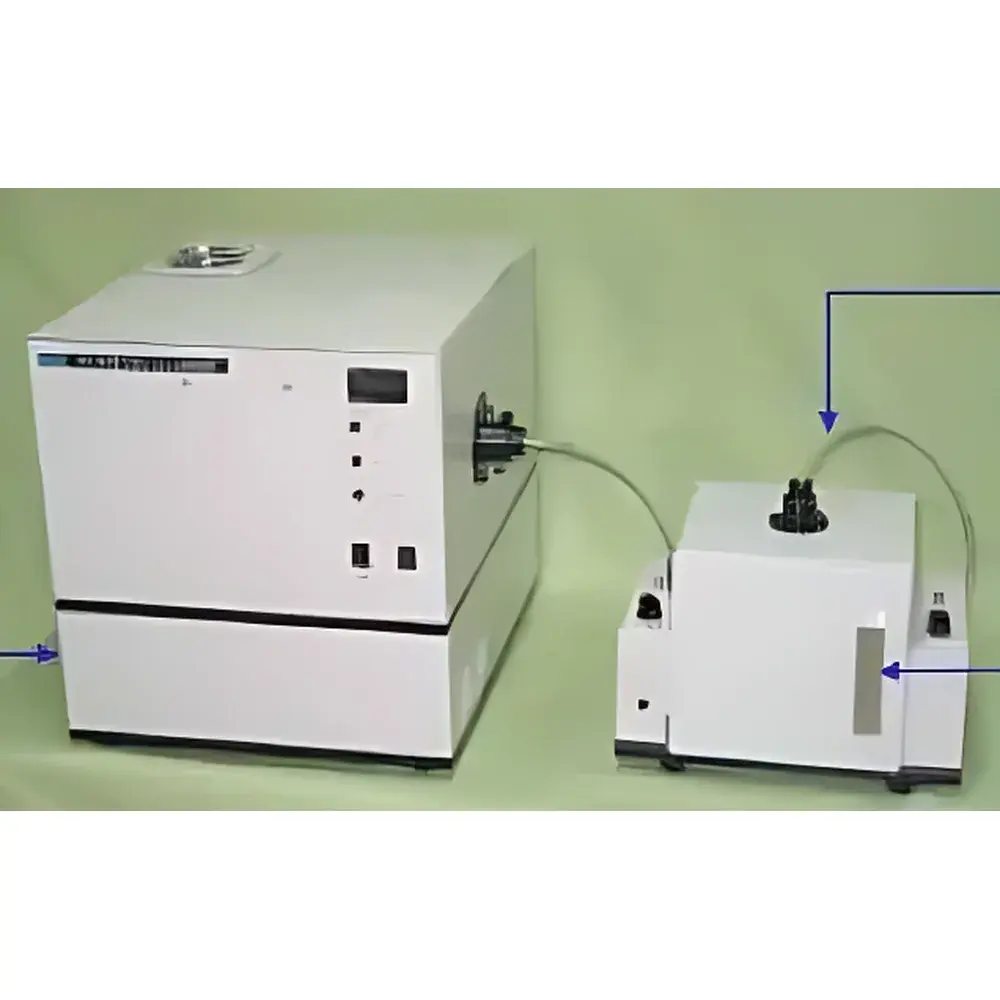
The Rayscience IPCE Quantum Efficiency Measurement System is a purpose-built, DC-based external quantum efficiency (EQE) and incident photon-to-current efficiency (IPCE) characterization platform engineered for rapid, high-reproducibility photovoltaic device evaluation. Unlike traditional monochromator-driven systems relying on mechanical grating rotation and lock-in amplification—where spectral scanning typically requires >480 seconds—the IPCE system employs a calibrated, multi-wavelength LED array combined with synchronous DC current measurement and real-time photodiode reference monitoring. This architecture eliminates moving optical components, minimizes thermal drift, and delivers full-spectrum EQE data across 40 discrete wavelengths (390–1090 nm) in just 8 seconds per measurement cycle. The system operates under controlled bias conditions (±5000 mV), enabling accurate quantification of charge carrier collection efficiency as a function of photon energy—critical for R&D optimization of perovskite, silicon heterojunction, organic, and tandem solar cells.
Key Features
- Sub-10-second full-spectrum EQE acquisition (40 points, 390–1090 nm) — over 59× faster than conventional monochromator-based instruments
- Integrated, temperature-stabilized LED light source with factory-calibrated spectral output and intensity linearity traceable to NIST-traceable standards
- Onboard reference photodiode with real-time optical power normalization, compensating for LED aging and ambient fluctuations
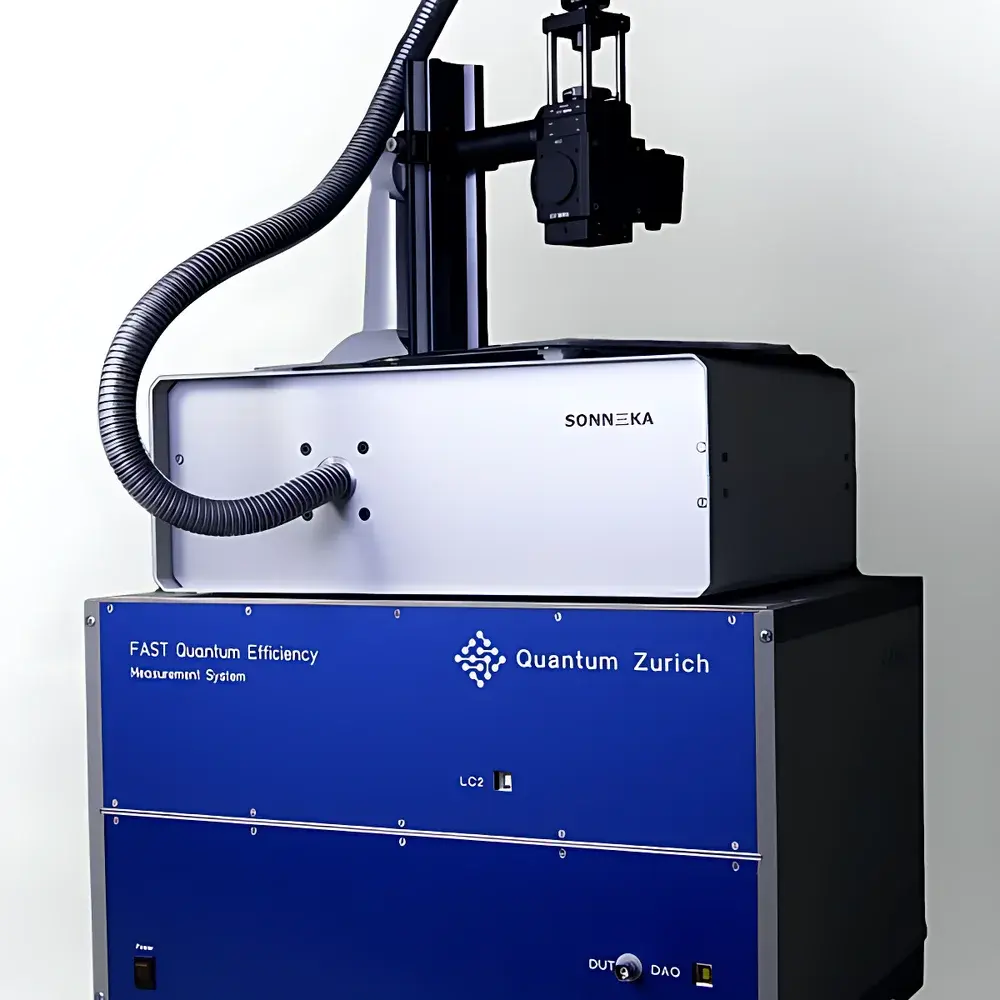
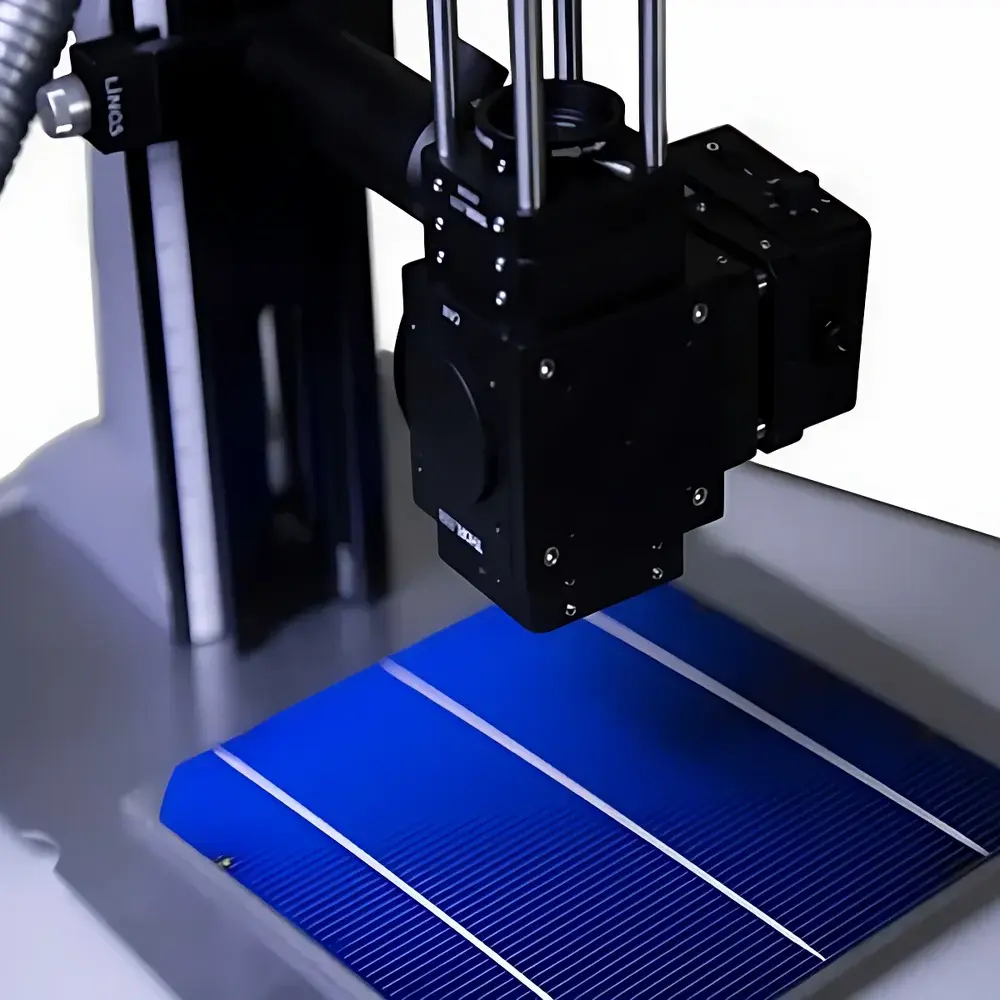
- Adjustable probe head with 4–12 mm collimated spot size and fixed 5 mm working distance—optimized for uniform illumination of standard test cells (e.g., 1 cm² active area)
- DC measurement architecture compliant with IEC 60904-8 and ASTM E1021 standards for spectral responsivity determination
- Compact benchtop footprint (45 × 28 × 38 cm) designed for integration into cleanroom environments, pilot lines, or automated test stations
- Bias voltage control (±5000 mV) with programmable sweep capability for voltage-dependent EQE analysis (e.g., recombination losses at open-circuit vs. short-circuit conditions)
Sample Compatibility & Compliance
The IPCE system supports rigid and flexible photovoltaic devices up to 15 cm × 15 cm, including wafer-based Si, thin-film CIGS/CdTe, perovskite mini-modules, and organic photovoltaic (OPV) cells. Its non-contact optical design avoids mechanical pressure or thermal loading during measurement. All hardware and firmware comply with CE marking requirements (EMC Directive 2014/30/EU and Low Voltage Directive 2014/35/EU). Data acquisition adheres to GLP principles: timestamped raw current/voltage records, photodiode reference logs, and user-defined metadata are stored in HDF5 format with embedded calibration coefficients. While not FDA 21 CFR Part 11 certified out-of-the-box, the software architecture supports audit trail configuration for regulated environments upon customer request.
Software & Data Management
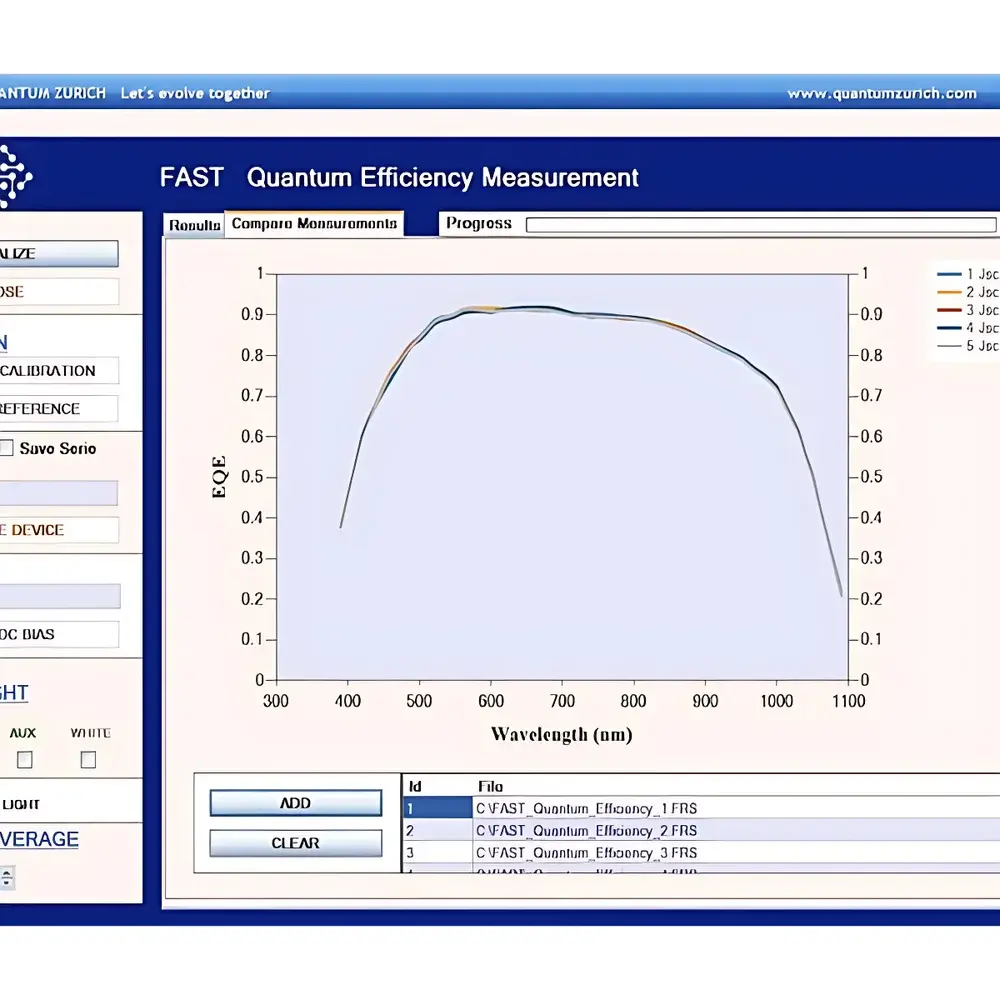
The FastEQE software suite runs natively on Windows OS and provides a fully graphical interface with zero-code operation: users select sample type, define bias condition, initiate measurement, and export standardized EQE/IEQE curves in CSV, PNG, and PDF formats. Raw datasets include synchronized photocurrent (A), reference diode signal (V), bias voltage (V), wavelength (nm), and calculated EQE (%). Version-controlled updates are delivered automatically via secure HTTPS; no license keys or activation servers are required. All installations—including lab-wide deployments—are unrestricted. Data files embed instrument serial number, calibration date, and operator ID to support ISO/IEC 17025 documentation requirements.
Applications
- Routine EQE validation of incoming solar cell wafers in manufacturing QA workflows
- Process development feedback for anti-reflection coating, emitter doping, and passivation layer optimization
- Comparative analysis of interfacial recombination in multi-junction architectures
- Stability assessment via time-resolved EQE mapping under controlled illumination and bias stress
- Correlation of spectral response with electroluminescence (EL) and photoluminescence (PL) imaging results
- Supporting ISO 18580 and IEC 61215-1 MQT 14.1 testing protocols for module-level spectral mismatch correction
FAQ
What standards does the IPCE system comply with for photovoltaic testing?
The system meets the optical and electrical measurement requirements of IEC 60904-8 (spectral responsivity measurement) and ASTM E1021 (quantum efficiency determination), with traceable calibration documentation provided for each unit.
Can the system measure devices under illumination from external light sources?
Yes—the background illumination module supports red, blue, and white LED bias lighting to simulate operating conditions such as low-light performance or spectral filtering effects.
Is remote operation supported for integration into automated production lines?
The system exposes a documented COM/ActiveX API and TCP/IP command set, enabling direct integration with PLCs, SCADA systems, or custom Python/LabVIEW automation frameworks.
How is calibration maintained over time?
Each system ships with a NIST-traceable photodiode calibration certificate. Users may perform in-house verification using supplied reference cells; recalibration services are available through Rayscience’s German service center.
Does the warranty cover on-site support?
The standard 1-year warranty includes global return shipping and technical assistance via remote diagnostics. On-site service is available under extended service agreements.






