
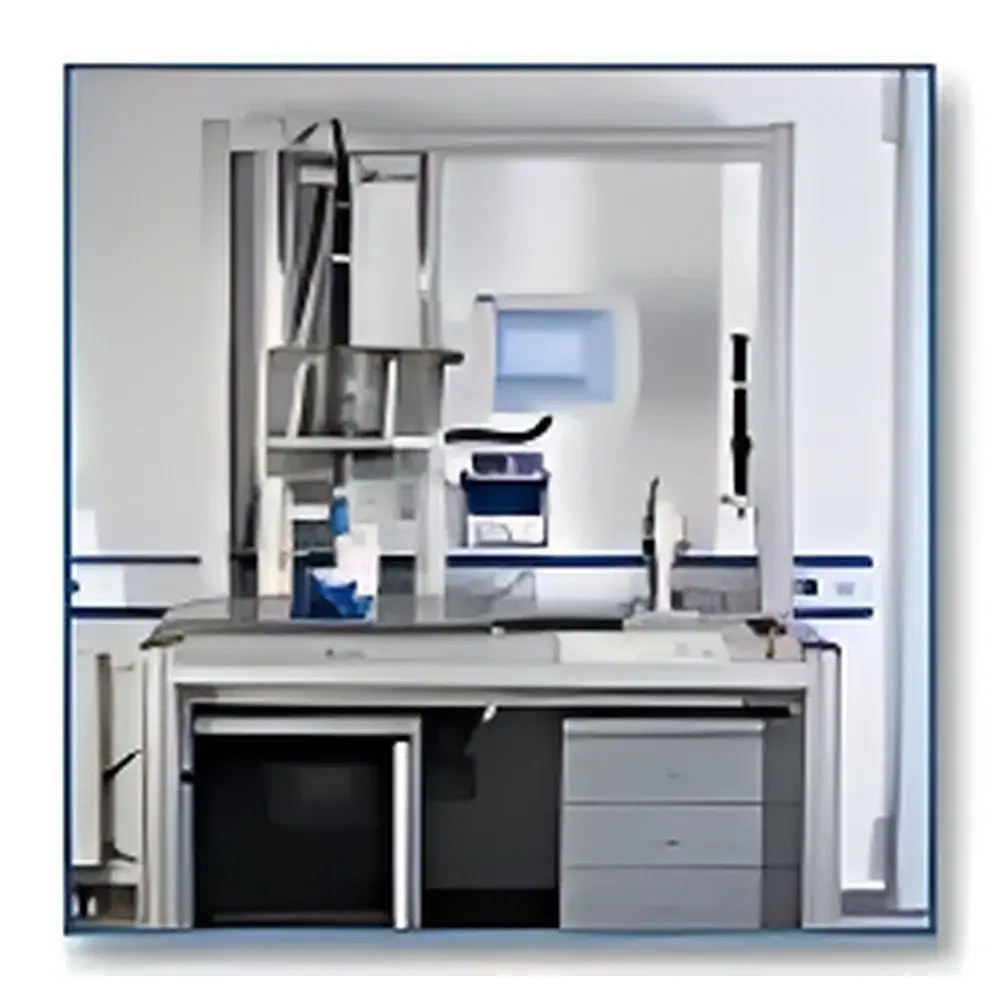
REC FAS T-Series Bolt and Nut Torsion Testing System
| Origin | Germany |
|---|---|
| Manufacturer Type | Authorized Distributor |
| Origin Category | Imported |
| Model | FAS T-Series |
| Pricing | Available Upon Request |
Overview
The REC FAS T-Series Bolt and Nut Torsion Testing System is a precision-engineered torsion testing machine designed for the quantitative mechanical characterization of threaded fasteners under controlled assembly conditions. Based on the fundamental principles of rotational torque–angle measurement and axial force transduction, this system enables simultaneous acquisition of tightening torque, clamp load (preload), thread friction torque, bearing surface friction torque, and total energy input during bolt tightening. Its architecture adheres to ISO 16047 (Fasteners — Torque/clamp force testing) and ASTM F2329 (Standard Test Method for Determining the Coefficient of Friction of External Threaded Fasteners), supporting traceable, repeatable evaluation of fastener performance in R&D, quality control, and production validation environments.
Key Features
- High-accuracy dual-sensor architecture: Integrated rotary torque sensor (±0.5% FS typical accuracy) and axial load cell (±0.5% FS) enable synchronized real-time measurement of torque-angle and clamp load-angle curves.
- Motorized, programmable tightening head with closed-loop speed and position control (0.01–30 rpm adjustable), supporting standard ISO/ASTM test profiles including ramp-to-yield, step-torque, and breakaway tests.
- Modular tooling interface compatible with standard socket adapters (1/4″–1″ drive), custom collets, and fixture plates for M3–M48 fasteners (or larger with optional extensions).
- Thermal-stable aluminum frame with anti-vibration base plate, engineered for high reproducibility across ambient temperature ranges (15–30 °C) and long-term calibration stability.
- Compliance-ready hardware design: Supports audit trails, user access levels, and electronic signature functionality in accordance with FDA 21 CFR Part 11 when paired with validated software configurations.
Sample Compatibility & Compliance
The FAS T-Series accommodates a broad spectrum of externally threaded fasteners—including hex bolts, flange bolts, stud bolts, and specialty aerospace-grade fasteners—across metric (M3–M64) and imperial (No. 4–1-1/2″) thread standards. It supports both free-running and pre-assembled joint configurations (e.g., nut-on-bolt, bolt-in-plate). All test methods align with international regulatory frameworks: ISO 898-1 (mechanical properties of bolts), ISO 16047 (friction coefficient determination), ASTM F606 (mechanical testing of external and internal threaded fasteners), and VDI/VDE 2647 (guidelines for fastener testing in automotive applications). Calibration certificates are traceable to DAkkS-accredited national standards.
Software & Data Management
The system operates with REC’s proprietary TorsionLab™ software (v4.2+), a Windows-based platform compliant with GLP/GMP data integrity requirements. It provides real-time graphical overlay of torque vs. angle, clamp load vs. angle, and derived friction coefficients (μthread, μunderhead). Raw data export is supported in CSV, XML, and PDF report formats—with embedded metadata (operator ID, timestamp, environmental conditions, calibration status). Audit trail logging records all parameter changes, test executions, and result modifications. Optional integration with LIMS or MES systems is available via OPC UA or RESTful API interfaces.
Applications
- Quantitative friction analysis for lubricant development and verification (e.g., zinc flake coatings, molybdenum disulfide pastes).
- Validation of torque-tension relationships in critical joints (e.g., engine cylinder heads, wind turbine pitch systems, rail vehicle suspension assemblies).
- Failure mode analysis—including galling onset, thread stripping, and yield point identification—during proof load and ultimate tensile testing.
- Supplier qualification per OEM specifications (e.g., VW TL 52202, Ford WSS-M2C171-A, GM GMW14872).
- Root cause investigation of field failures through comparative benchmarking against reference fastener batches.
FAQ
What standards does the FAS T-Series support for friction coefficient calculation?
It implements ISO 16047 Annex A methodology, calculating μthread and μunderhead from measured torque components using standardized equations based on thread geometry and clamping force.
Can the system perform dynamic loosening or vibration resistance tests?
Yes—when equipped with optional servo-controlled oscillation module (FAS-VIB add-on), it executes standardized tests per ISO 16130 (proof of clamping force retention under transverse loading).
Is calibration documentation provided with shipment?
Each unit ships with a factory calibration certificate (traceable to PTB or UKAS), including as-found/as-left data for torque and axial load channels, valid for 12 months under normal use conditions.
Does the software support multi-user role-based permissions?
Yes—TorsionLab™ supports three default roles (Operator, Supervisor, Administrator) with configurable access rights to test methods, calibration functions, and report generation.
What is the maximum recommended test speed for accurate clamp load capture?
For optimal signal fidelity and minimal inertial error, the recommended upper limit is 15 rpm; higher speeds (up to 30 rpm) are permissible for qualitative screening where absolute preload accuracy is secondary to trend analysis.



