
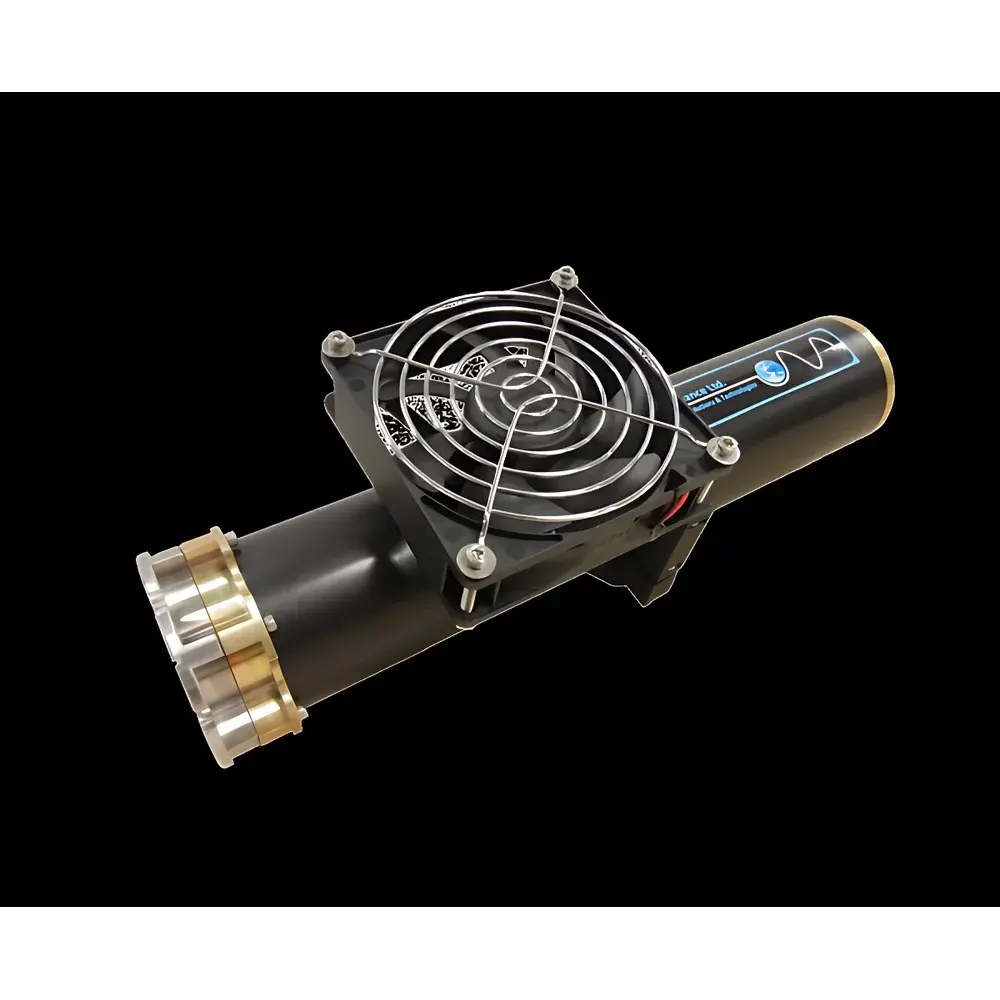
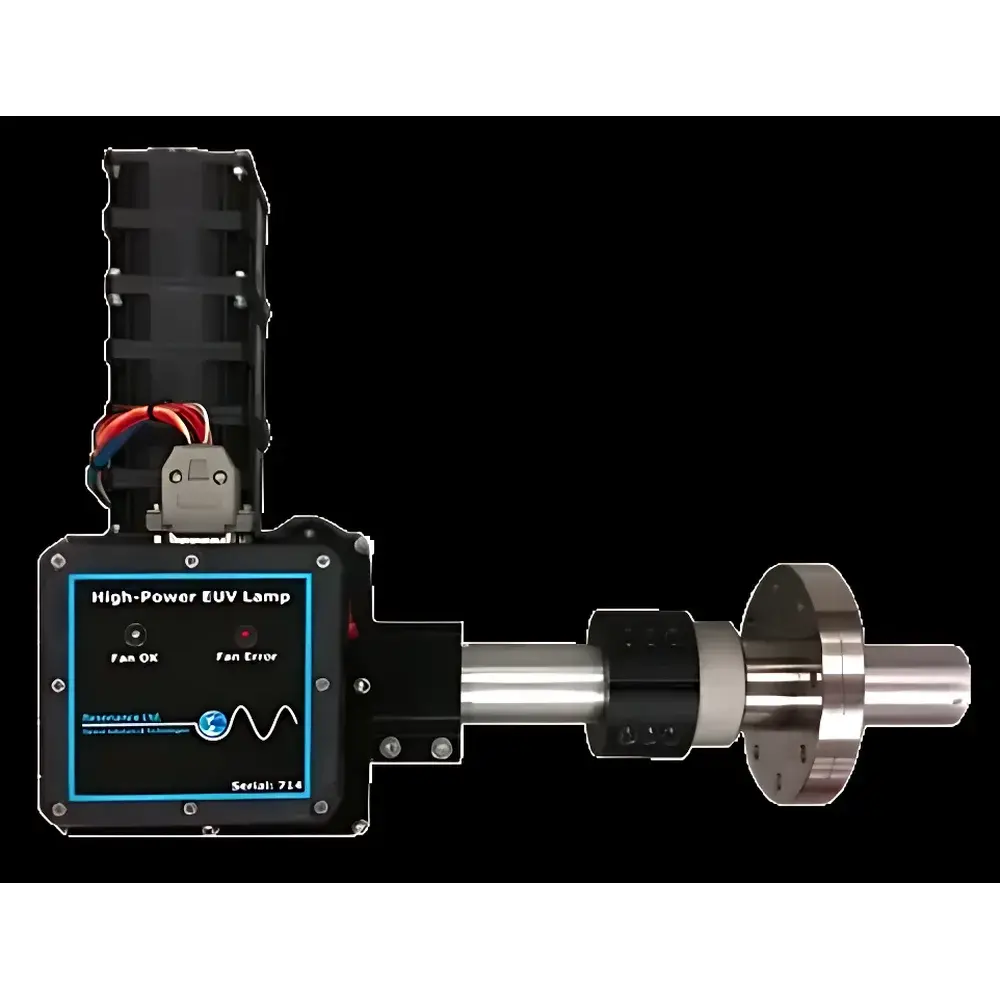
Resonance VUV Vacuum Ultraviolet Light Source LQD12
| Origin | Canada |
|---|---|
| Manufacturer Type | Authorized Distributor |
| Origin Category | Imported |
| Model | LQD12 |
| Instrument Type | Vacuum UV Detector Light Source |
| Wavelength Range | 117–172 nm |
| Measurement Method | Dual-Beam |
| Light Source | Argon Discharge Lamp |
| Compliance | Designed for integration with GC, HPLC, and standalone VUV spectroscopy systems |
Overview
The Resonance VUV Vacuum Ultraviolet Light Source LQD12 is a high-stability, continuous-wave argon-based discharge lamp engineered for demanding vacuum ultraviolet (VUV) spectral applications in analytical chemistry and process monitoring. Operating exclusively under high-vacuum conditions (<10⁻⁴ mbar), the LQD12 emits intense, spectrally stable radiation across the 117–172 nm range—spanning the critical ionization and electronic excitation thresholds of small molecules including O₂, N₂, CO, CH₄, H₂O, NO, SO₂, and hydrocarbons. Unlike conventional deuterium or xenon lamps, this source leverages resonant atomic transitions in low-pressure argon plasma to deliver narrowband-enhanced continuum output with minimal self-absorption and superior long-term radiometric reproducibility. It is specifically designed for integration into gas chromatography–vacuum ultraviolet (GC-VUV) detection systems, standalone VUV absorption spectrometers, and custom-built photoionization or photolysis chambers used in environmental, petrochemical, and planetary science laboratories.
Key Features
- Stable argon plasma discharge architecture optimized for operation at pressures below 10⁻⁴ mbar, ensuring consistent photon flux and minimized spectral drift over extended duty cycles.
- Dual-beam optical configuration enables real-time background correction and compensates for lamp aging, window transmission loss, and vacuum chamber fluctuations—critical for quantitative trace gas analysis.
- Hermetically sealed fused silica exit window with MgF₂-coated optics (optional) to maximize transmission efficiency above 115 nm while suppressing ozone generation.
- Integrated thermal management system maintains cathode temperature within ±0.5 °C, preserving emission profile stability and extending operational lifetime beyond 2,000 hours under nominal current conditions.
- Modular mechanical interface compatible with standard UHV flanges (CF-35 or ISO-KF40), facilitating direct coupling to gas cells, chromatographic flow cells, or beamlines without optical realignment.
- Low-noise, regulated DC power supply with analog/digital control inputs (0–10 V or RS-232) for synchronized intensity modulation and external triggering in time-resolved experiments.
Sample Compatibility & Compliance
The LQD12 is validated for use with gaseous and volatile liquid-phase samples introduced via heated transfer lines or static gas cells. Its spectral output supports quantitative analysis of permanent gases, VOCs, and inorganic hydrides without derivatization. The system complies with vacuum integrity requirements outlined in ASTM E2896–22 (Standard Practice for Calibration of Vacuum Ultraviolet Spectrophotometers) and supports method validation per USP and ICH Q2(R2) guidelines when deployed in regulated QC environments. While the light source itself is not an end-user detector, its design conforms to electromagnetic compatibility (EMC) standards per CISPR 11 Class B and meets CE marking requirements for laboratory equipment. Integration into GxP workflows—including GLP and GMP-compliant laboratories—is supported through audit-ready documentation packages and optional 21 CFR Part 11–compliant software logging modules.
Software & Data Management
The LQD12 operates as a hardware component within third-party analytical platforms (e.g., VUV Analytics GC-VUV systems, custom LabVIEW or Python-controlled spectrometers). It does not include embedded firmware or proprietary acquisition software. However, its analog intensity monitor output and TTL-compatible trigger input enable seamless synchronization with data acquisition systems supporting NIST-traceable wavelength calibration routines. Users may implement automated intensity normalization, lamp-on/off cycling, and runtime logging using open APIs provided by host instrument vendors. All calibration certificates—including spectral irradiance measurements traceable to NRC Canada’s VUV radiometry facility—are supplied with each unit and archived digitally upon request.
Applications
- Gas-phase speciation and quantification in environmental air monitoring (e.g., ambient ozone precursors, refinery stack emissions).
- Hydrocarbon fingerprinting in petroleum refining and natural gas processing, where VUV absorption cross-sections provide superior selectivity versus FID or TCD detectors.
- In-situ soil headspace analysis for volatile organic contaminants (e.g., chlorinated ethenes, BTEX) coupled with purge-and-trap GC-VUV.
- Fundamental photochemistry studies requiring tunable VUV photons for bond dissociation energy mapping and radical yield determination.
- Calibration reference source for synchrotron beamline monochromators and space-qualified VUV sensors developed under CSA and NASA collaboration frameworks.
FAQ
Is the LQD12 compatible with atmospheric pressure detection cells?
No. This source requires operation under high vacuum (<10⁻⁴ mbar) and must be coupled to vacuum-compatible sample cells or directly integrated into evacuated GC detector manifolds.
Can the wavelength output be tuned or filtered?
The LQD12 provides broadband VUV emission from 117–172 nm. Tuning is achieved externally using monochromators or bandpass filters; no internal wavelength selection mechanism is included.
What safety certifications does the unit carry?
It bears CE marking per Directive 2014/30/EU (EMC) and 2014/35/EU (LVD), and complies with CAN/CSA-C22.2 No. 61010-1 for laboratory electrical equipment.
Does the lamp require periodic gas refilling?
No. The argon plasma chamber is permanently sealed during manufacturing and rated for the full operational lifetime without maintenance or replenishment.
Is technical support available outside North America?
Yes. Resonance maintains authorized service partners in the EU, APAC, and EMEA regions, with remote diagnostics and on-site calibration support available under extended service agreements.






