
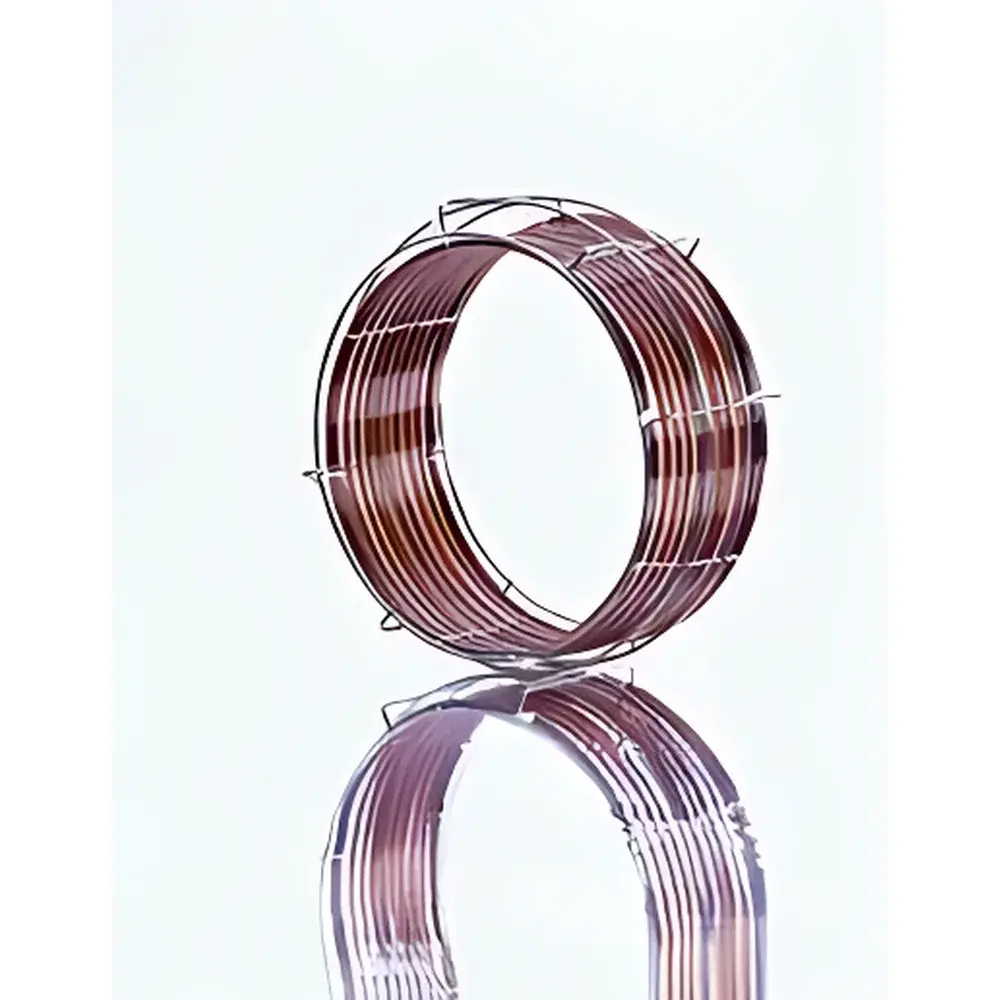
Restek Quartz and Metal Capillary GC Columns
| Brand | Restek |
|---|---|
| Origin | USA |
| Manufacturer Type | Authorized Distributor |
| Import Status | Imported |
| Models | Over 1,000 Standard and Specialty Columns |
| Pricing | Available Upon Request |
Overview
Restek quartz and metal capillary gas chromatography (GC) columns represent a comprehensive portfolio of high-performance stationary phase solutions engineered for precision separation across diverse analytical domains. These columns operate on the fundamental principle of partition chromatography, where analytes are differentially distributed between the mobile gas phase (typically helium, hydrogen, or nitrogen) and the chemically bonded stationary phase coated on the inner wall of the fused-silica or metal capillary tubing. The column’s selectivity, resolution, thermal stability, and inertness are determined by the chemical nature (e.g., polarity, functional group substitution), film thickness, internal diameter, and length—parameters rigorously optimized for specific regulatory methods and application classes. Designed for compatibility with all major GC and GC/MS platforms—including Agilent, Thermo Fisher, Shimadzu, and PerkinElmer—Restek columns meet stringent performance criteria defined in ASTM, USP, EPA, and ISO standards (e.g., EPA Methods 502.2, 624, 8081A, 8141A; ASTM D2887, D6352; USP ). Their robust fused-silica architecture ensures mechanical integrity under rapid temperature ramping, while proprietary deactivation technologies minimize active site interactions—critical for trace-level analysis of basic compounds, polar metabolites, and labile organohalides.
Key Features
- Thermal stability up to 400 °C (e.g., MXT®-1), enabling high-temperature simulated distillation (SimDist) and polymer analysis per ASTM D2887 and D6352.
- High-resolution separation of complex mixtures—e.g., Rtx®-1 achieves baseline resolution of ≥55 peaks in reformulated gasoline or heavy naphtha matrices.
- Ultra-low bleed profiles across wide temperature ranges, ensuring signal-to-noise ratios suitable for trace-level GC/MS detection (e.g., Rtx®-5Sil MS, Rtx®-Dioxin2).
- Consistent lot-to-lot reproducibility validated against NIST-traceable reference standards and certified retention index (RI) values.
- Specialized phase chemistries—including non-polar (Rtx®-1, MXT®-1), mid-polarity (Rtx®-65, Rtx®-1701), polar (Stabilwax®, Rtx®-Wax), and highly selective phases (Rt-CW20M™, Rt-TCEP®, Rtx®-OPPesticides)—each tailored to target compound classes and regulatory protocols.
- Available in multiple dimensions (e.g., 10–60 m length, 0.10–0.53 mm ID, 0.10–5.0 µm film thickness) to balance resolution, speed, and sample capacity.
Sample Compatibility & Compliance
Restek capillary columns support quantitative and qualitative analysis of volatile and semi-volatile organic compounds (VOCs/SVOCs) in environmental, pharmaceutical, petrochemical, food, and forensic matrices. They are routinely employed in compliance testing for EPA Method 8260/8270 (VOCs/SVOCs), USP (residual solvents), ASTM D5599 (gasoline oxygenates), and CLP/608 (organochlorine pesticides). Columns such as Rtx®-CLPesticides2 and Rtx®-Dioxin2 demonstrate full conformance with U.S. EPA Contract Laboratory Program (CLP) performance specifications, including retention time reproducibility (<0.02 min), peak symmetry (asymmetry factor 0.9–1.2), and sensitivity thresholds for dioxin congeners at sub-picogram levels. All columns undergo rigorous QC screening—including blank runs, retention index verification, and inertness testing with basic compounds (e.g., amphetamines, pyridine)—to ensure low activity and minimal tailing, particularly critical for alkaline and acidic analytes.
Software & Data Management
Restek columns integrate seamlessly with industry-standard GC data systems (e.g., OpenLab CDS, Chromeleon, Empower) and support full audit trail functionality compliant with FDA 21 CFR Part 11 and GLP/GMP requirements. Column-specific method parameters—including recommended temperature programs, carrier gas linear velocities, and inlet pressures—are embedded in Restek’s free ChromaTOOL™ software and accessible via QR codes on column packaging. Retention index databases (e.g., NIST RI Library) and method transfer guides facilitate cross-platform validation and method equivalency assessments. For regulated labs, column history logs (installation date, bake-out cycles, cumulative run count) can be exported and archived as part of instrument qualification documentation.
Applications
- Petrochemical: Simulated distillation (ASTM D2887/D6352), hydrocarbon type analysis (PIONA), sulfur speciation, and refinery gas profiling using Rtx®-PONA, Stx™-1HT, and Rtx®-VRX.
- Environmental: EPA-compliant analysis of PCBs (Rtx®-PCB), dioxins/furans (Rtx®-Dioxin2), chlorinated pesticides (Rtx®-CLPesticides2), and VOCs (Rtx®-624, Rtx®-502.2).
- Pharmaceutical: Residual solvent quantification per USP (Rtx®-G27, Rtx®-G43), impurity profiling (Rtx®-5MS), and genotoxic impurity screening (Rtx®-XLB).
- Food & Flavor: FAME profiling (Rt-2560, FAMEWAX®), aroma compound separation (Rt-CW20M™, Rtx®-1 F&F), and pesticide residue analysis (Rtx®-OPPesticides).
- Forensic & Toxicology: Blood alcohol and solvent confirmation (Rtx®-BAC1/BAC2), explosives detection (Rtx®-TNT2), and drug-of-abuse screening (Rtx®-5Amine, Rtx®-1701).
FAQ
Are Restek capillary columns compatible with both split/splitless and PTV inlets?
Yes—columns are validated for use with standard split/splitless injectors and programmable temperature vaporizing (PTV) inlets across recommended liner configurations and injection volumes.
Do Restek columns require special conditioning procedures before first use?
Conditioning is recommended per the specific column’s datasheet; typical protocols involve ramping to 20–30 °C below maximum temperature for 1–2 hours under carrier gas flow to remove residual solvents and stabilize the phase.
How does Restek ensure column-to-column reproducibility for regulatory submissions?
Each batch undergoes retention index verification against certified standards, bleed testing at elevated temperatures, and inertness assessment using test mixes containing basic and acidic compounds—data documented in Certificate of Analysis (CoA) supplied with every column.
Can metal capillary columns (e.g., MXT® series) be used in standard GC ovens?
Yes—MXT® columns feature stainless-steel tubing with fused-silica inner lining and are designed for direct replacement of conventional fused-silica columns without hardware modification.
What is the expected lifetime of a Restek column under routine GC/MS operation?
Lifetime depends on sample cleanliness, injection technique, and operating conditions; under optimal maintenance (regular inlet maintenance, proper bake-outs), typical service life exceeds 1,500–2,000 injections for most applications.





