
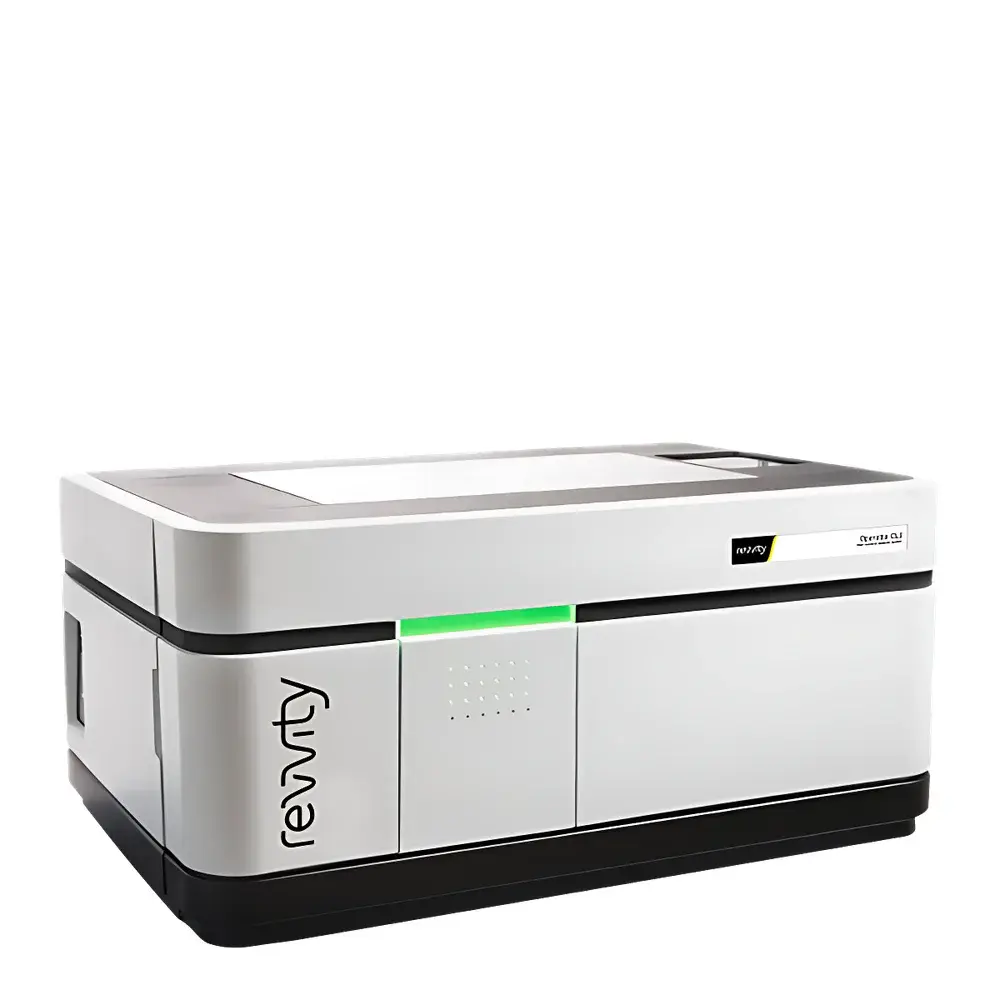
Revvity Operetta CLS High-Content Screening System
| Brand | Revvity |
|---|---|
| Origin | United Kingdom |
| Manufacturer Type | Original Equipment Manufacturer (OEM) |
| Import Status | Imported |
| Model | Operetta CLS |
| Pricing | Available upon Request |
Overview
The Revvity Operetta CLS High-Content Screening (HCS) System is an engineered platform for quantitative, multi-parametric cellular phenotyping using automated fluorescence microscopy. It operates on a hybrid optical architecture combining spinning-disk confocal imaging with widefield, brightfield, and digital fluorescence modalities—enabling rigorous morphological, spatial, and kinetic analysis of live and fixed cells across 2D monolayers, 3D spheroids, organoids, and tissue sections. The system leverages Cuénot–type spinning-disk confocal optics to achieve optical sectioning with minimal phototoxicity and photobleaching—critical for longitudinal live-cell assays. Its core measurement principle relies on high-fidelity photon capture from fluorophore-labeled subcellular targets (e.g., nuclei, membranes, organelles, proteins), followed by pixel-level intensity, texture, and object-based feature extraction to generate statistically robust, multivariate readouts per well.
Key Features
- Spinning-disk confocal imaging engine with dual microlens-enhanced disk design for >95% light throughput efficiency and <100 ms z-stack acquisition per field
- Integrated 8-channel solid-state excitation source (375–740 nm), each independently controllable and spectrally matched to common fluorophores (e.g., DAPI, FITC, TRITC, Cy5, Alexa Fluor series) and fluorescent proteins (e.g., GFP, RFP, mCherry)
- Eight-position dichroic mirror turret and eight-position emission filter wheel for precise spectral separation and cross-talk minimization
- Large-format scientific CMOS (sCMOS) camera (6.5 µm pixel size, 22 mm diagonal sensor) delivering 95% quantum efficiency at 550 nm, 16-bit dynamic range, and <1.2 e⁻ RMS read noise
- Water-immersion objective support (up to 60×/1.2 NA) enabling superior numerical aperture, axial resolution (~0.6 µm), and signal-to-background ratio in thick specimens
- On-board environmental control module with ±0.2 °C temperature stability and ±0.1% CO₂ regulation for extended-duration live-cell imaging (up to 72 h)
- Multi-modal illumination: near-infrared (NIR) LED brightfield, LED-based phase contrast simulation, and digital fluorescence overlay capabilities
Sample Compatibility & Compliance
The Operetta CLS accommodates standard microplate formats (6–384-well), chambered coverslips, glass-bottom dishes, and custom slide carriers. It supports primary cells, iPSC-derived lineages, co-cultures, 3D extracellular matrix-embedded models, and cleared tissue sections. All hardware and software components comply with ISO 13485:2016 (for IVD-relevant configurations), IEC 61000-6-3 (EMC), and IEC 61000-6-4 (emissions). When configured with Columbus Server and enabled audit trail functionality, the system meets FDA 21 CFR Part 11 requirements for electronic records and signatures in regulated environments—including GLP and GMP-aligned workflows in preclinical safety assessment and biologics development.
Software & Data Management
Acquisition and analysis are managed through Harmony software—a modular, scriptable platform supporting both guided workflows and advanced customization via Python API. Preconfigured assay modules include cell cycle profiling (EdU/Hoechst), apoptosis (Annexin V/Caspase-3), mitochondrial membrane potential (TMRM), receptor internalization (β-arrestin translocation), and neurite outgrowth quantification. Image data are stored in OME-TIFF format compliant with Bio-Formats; metadata adhere to MIAME and MIAPE standards. Optional integration with Columbus Server provides centralized image repository management, role-based access control, and RESTful API connectivity to LIMS and ELN systems. Spotfire integration enables interactive multivariate visualization (PCA, t-SNE, heatmaps) and statistical modeling without code.
Applications
The Operetta CLS serves as a foundational instrument in target validation, mechanism-of-action studies, and phenotypic screening across therapeutic areas including oncology (e.g., tumor spheroid invasion, immune synapse formation), neurodegeneration (e.g., tau aggregation kinetics, synaptic vesicle trafficking), cardiovascular disease (e.g., cardiomyocyte calcium flux, endothelial barrier integrity), and regenerative medicine (e.g., stem cell differentiation trajectory mapping). Its ability to resolve subcellular dynamics in physiologically relevant models supports translational research aligned with NIH Common Fund initiatives and IMI/Innovative Medicines Initiative consortia standards.
FAQ
Does the Operetta CLS support time-lapse imaging of sensitive primary neurons?
Yes—the combination of low-phototoxicity spinning-disk optics, water-immersion objectives, and NIR brightfield illumination enables stable, high-resolution time-lapse acquisition over 48–72 hours without compromising neuronal viability or network activity.
Can Harmony software export quantitative features compatible with machine learning pipelines?
Yes—Harmony exports structured CSV and HDF5 files containing >500 morphometric, intensity, texture, and relational features per object, fully annotated with plate/well/field metadata and compatible with scikit-learn, TensorFlow, and PyTorch frameworks.
Is remote system monitoring and troubleshooting supported?
Yes—Revvity’s SecureConnect remote diagnostics portal provides encrypted, audited access for firmware updates, log review, and real-time performance telemetry, compliant with HIPAA and GDPR data handling protocols.
What level of validation documentation is provided for regulated labs?
A complete IQ/OQ/PQ protocol package is available, including traceable calibration certificates for excitation/emission spectra, camera linearity, stage positioning accuracy, and environmental chamber performance—validated against NIST-traceable references.




