
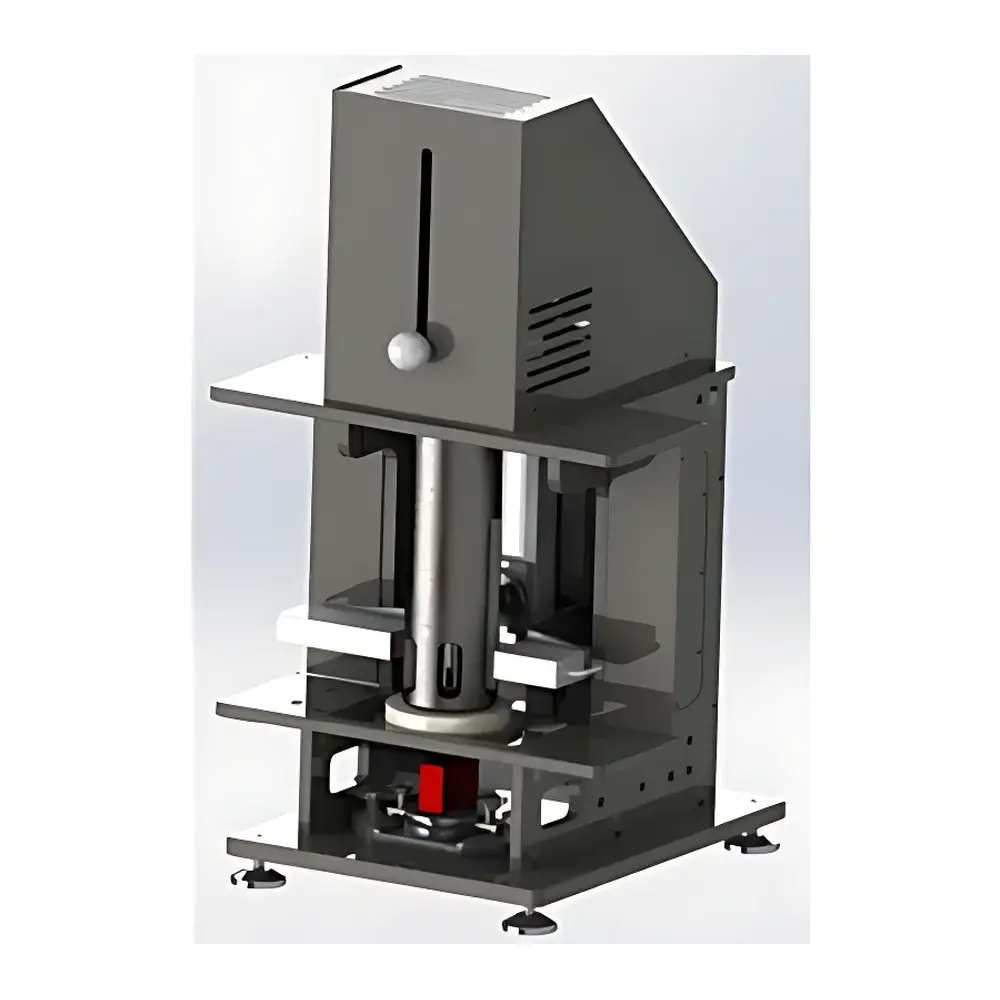
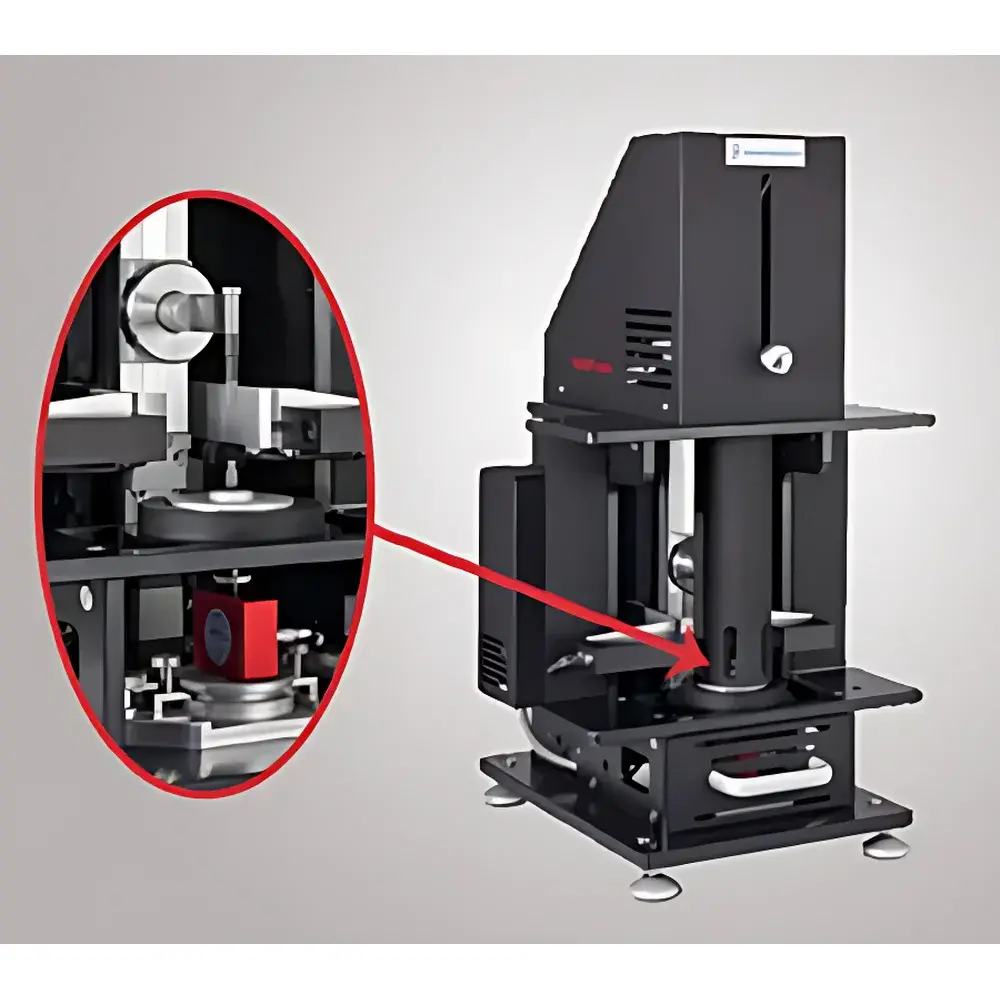
RHEO FILAMENT VADER 1000 Filament Stretching Rheometer
| Brand | RHEO FILAMENT |
|---|---|
| Origin | Denmark |
| Model | VADER 1000 |
| Instrument Type | Filament Stretching Rheometer |
| Bearing Type | Mechanical |
| Minimum Axial Speed | 0.001 mm/s |
| Maximum Axial Speed | 600 mm/s |
| Max Hencky Strain | 9 |
| Min Strain Rate | 0.0001 s⁻¹ |
| Max Strain Rate | 5 s⁻¹ |
| Min Measurable Stress | 15 Pa |
| Max Measurable Stress | 1×10¹⁰ Pa |
| Sample Diameter Range | 0.1–10 mm |
| Temperature Range | Ambient to 250 °C (±0.1 °C) |
| Optional Convection Oven Flow Rate | 5 L/min |
| Recommended Minimum Sample Viscosity | 1000 Pa·s |
Overview
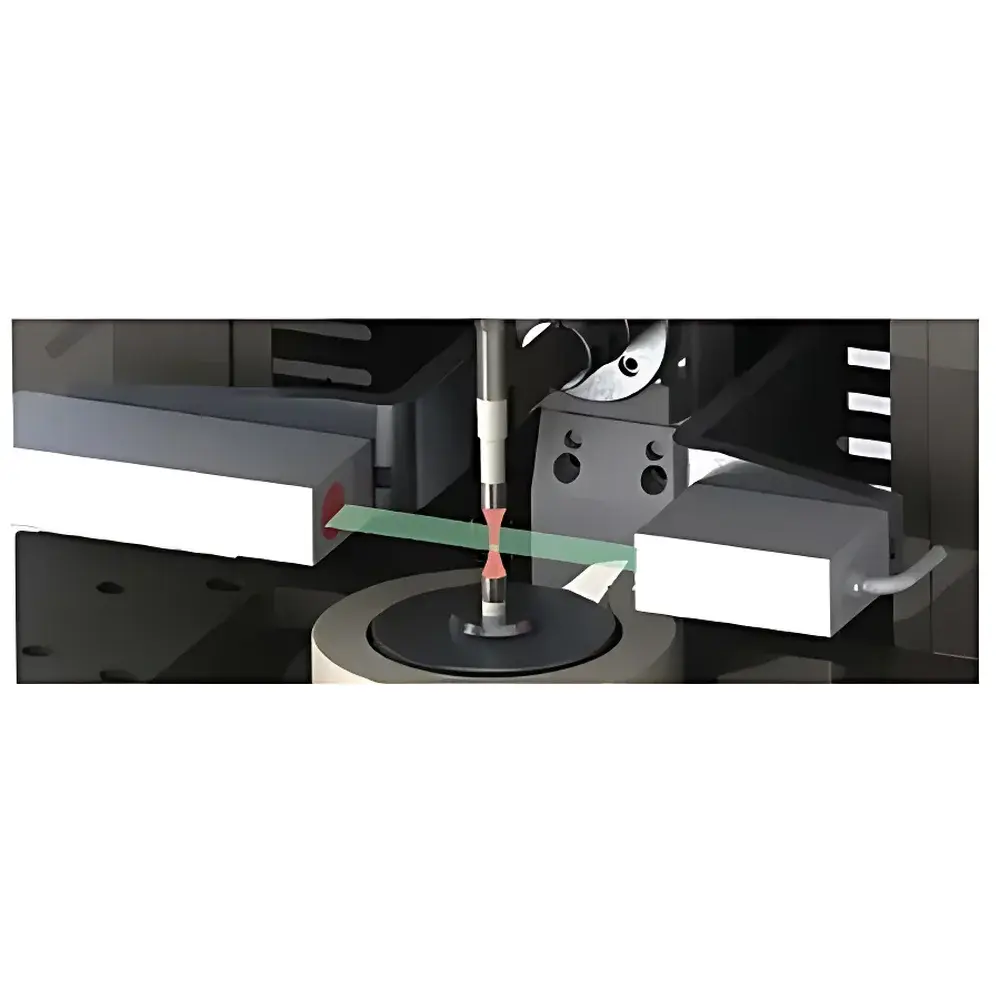
The RHEO FILAMENT VADER 1000 is a high-precision filament stretching rheometer engineered for quantitative characterization of extensional rheology in polymeric melts, solutions, and soft viscoelastic materials. Unlike rotational or capillary-based instruments, the VADER 1000 implements the filament stretching principle—where a cylindrical sample is axially elongated between two parallel end-plates while continuously monitoring force, diameter evolution, and axial displacement. This geometry enables true uniaxial extension under controlled Hencky strain rate or stress conditions, delivering fundamental data on extensional viscosity, strain hardening, stress relaxation, and nonlinear viscoelastic response. The system is specifically designed to bridge the gap between academic research-grade methodologies and industrial R&D requirements—offering reproducible, traceable measurements compliant with ASTM D3835 (for polymer melt rheology) and ISO 11443 (plastics—determination of flow properties). Its architecture supports both transient and steady-state extensional deformation protocols across a broad range of thermomechanical conditions.
Key Features
- Patented active real-time control algorithm enabling precise imposition of constant strain rate, constant stress, or programmed deformation profiles—even for highly nonlinear and strain-softening materials.
- Three-zone conductive furnace with aerospace-grade ceramic insulation, delivering temperature uniformity ±0.1 °C from ambient to 250 °C; integrated optical viewport for in situ visual monitoring before, during, and after stretching.
- Modular thermal environment: optional convection oven with inert gas compatibility (N₂, Ar), stainless-steel gas lines, bottom-flow distribution plate, and interlocked safety cutoff when furnace is elevated.
- Quench-capable design: rapid mechanical retraction of heating elements enables cryo-quenching of stretched filaments—preserving non-equilibrium microstructures for subsequent scattering analysis (SAXS, SANS, light scattering).
- High-resolution axial actuation (0.001 mm/s minimum speed; up to 600 mm/s) coupled with calibrated load cell (15 Pa – 1×10¹⁰ Pa dynamic range) and in-line diameter measurement via laser micrometry.
- Support for six sequential experimental modes within a single run: constant strain rate, creep, stress relaxation, oscillatory extension, step-strain, and multi-step ramp protocols.
Sample Compatibility & Compliance
The VADER 1000 accommodates samples with diameters from 0.1 mm to 10 mm and recommends minimum viscosities ≥1000 Pa·s to mitigate surface-tension-driven instabilities. It is validated for thermoplastics (e.g., PS, LDPE, PMMA copolymers), polymer solutions, elastomers, and structured fluids exhibiting strong extensional thickening or thinning behavior. All firmware and data acquisition modules are architected to support audit-ready operation under GLP and GMP frameworks. Full electronic records—including raw force/displacement/diameter time series, calibration metadata, operator ID, timestamped environmental logs, and version-controlled test parameters—are stored in encrypted binary format compatible with FDA 21 CFR Part 11-compliant data management systems upon integration with third-party LIMS platforms.
Software & Data Management
RHEO FILAMENT’s proprietary VADER Control Suite provides deterministic real-time feedback control, synchronized multi-channel acquisition (force, position, temperature, diameter), and automated post-processing routines for calculating extensional viscosity ηE(t), Trouton ratio Tr(t), creep compliance JE(t), and relaxation modulus E(t). Export options include ASCII (CSV), HDF5, and MATLAB-compatible .mat formats. Batch processing scripts allow normalization across strain rates, master curve construction via time–temperature superposition (WLF/TTS), and direct comparison against constitutive model predictions (e.g., K-BKZ, Pom-Pom, Giesekus). All software binaries undergo annual cybersecurity review and are distributed with SHA-256 checksums and signed digital certificates.
Applications
- Validation of molecular constitutive models for branched polymers using transient extensional viscosity and strain-hardening ratio (λ = σE/σshear).
- Processing-relevant characterization of fiber spinning, film blowing, and thermoforming stability margins via critical draw ratio and rupture onset prediction.
- Structure–property relationships in biopolymer hydrogels and food colloids under large-deformation extensional flow.
- Time-resolved structural arrest studies in vitrifying systems using quenched filament morphology coupled with synchrotron X-ray scattering.
- Quality-by-Design (QbD) implementation in pharmaceutical hot-melt extrusion processes where extensional elasticity governs die swell and melt fracture thresholds.
FAQ
What distinguishes filament stretching rheometry from other extensional techniques?
Filament stretching isolates pure uniaxial extension at a defined location—the mid-filament neck—avoiding wall slip, entrance effects, and secondary flows inherent in cross-slot or opposed-jet geometries. Stress is calculated directly from measured force and instantaneous diameter, not inferred from pressure gradients or velocity fields.
Can the VADER 1000 perform tests under inert atmosphere?
Yes—when equipped with the optional convection oven module, it supports continuous inert gas purging (N₂, Ar) at up to 5 L/min through stainless-steel manifolds, with automatic flow shutoff during furnace elevation for operational safety.
Is temperature calibration traceable to national standards?
All furnaces ship with NIST-traceable calibration certificates for each zone; users may perform periodic verification using certified PT100 probes inserted into dedicated thermal ports adjacent to the sample region.
How is data integrity ensured during long-duration stress relaxation experiments?
The system employs hardware-timed acquisition with onboard buffering (≥2 GB RAM), anti-aliasing filters, and dual-stage analog signal conditioning to preserve low-frequency (<0.001 Hz) relaxation signatures without drift or quantization artifacts.
Does the instrument support method transfer between labs?
Yes—VADER Control Suite includes method export/import functionality with embedded metadata (geometry, calibration history, environmental setpoints), enabling full procedural replication across globally distributed installations.



