
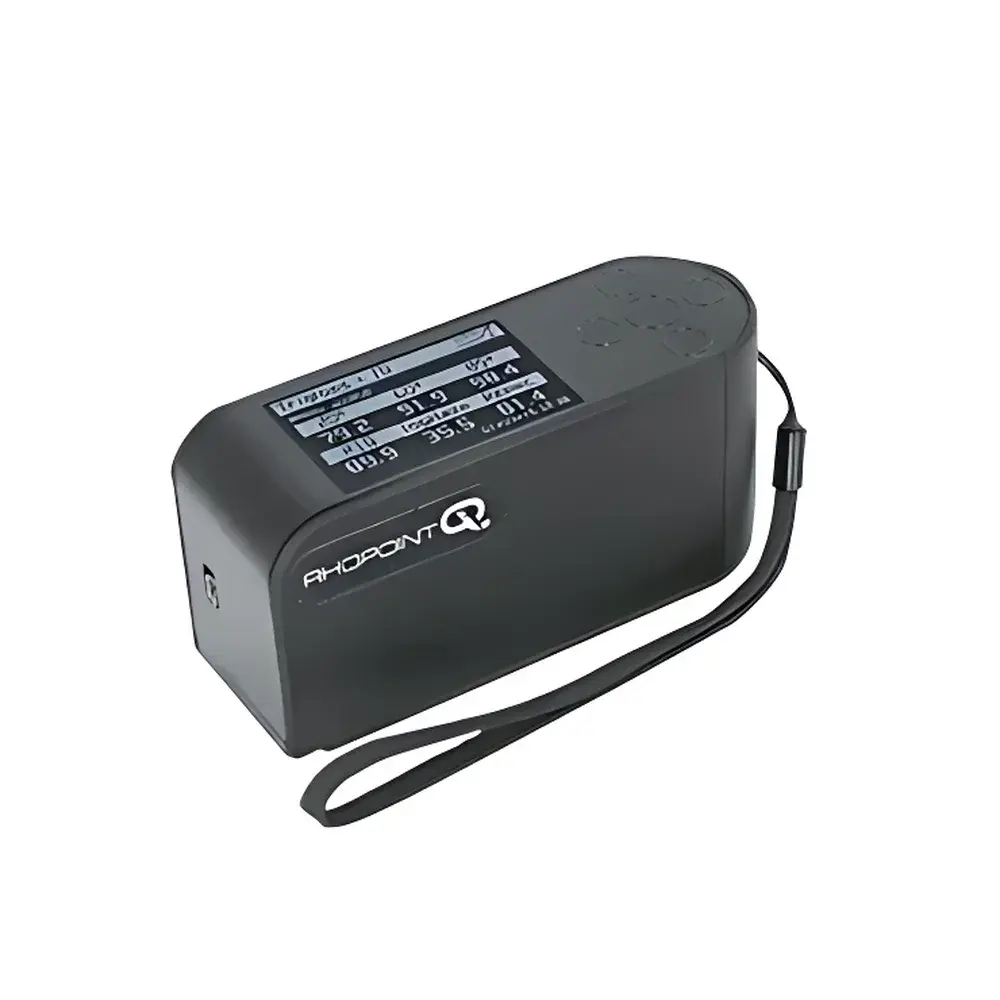
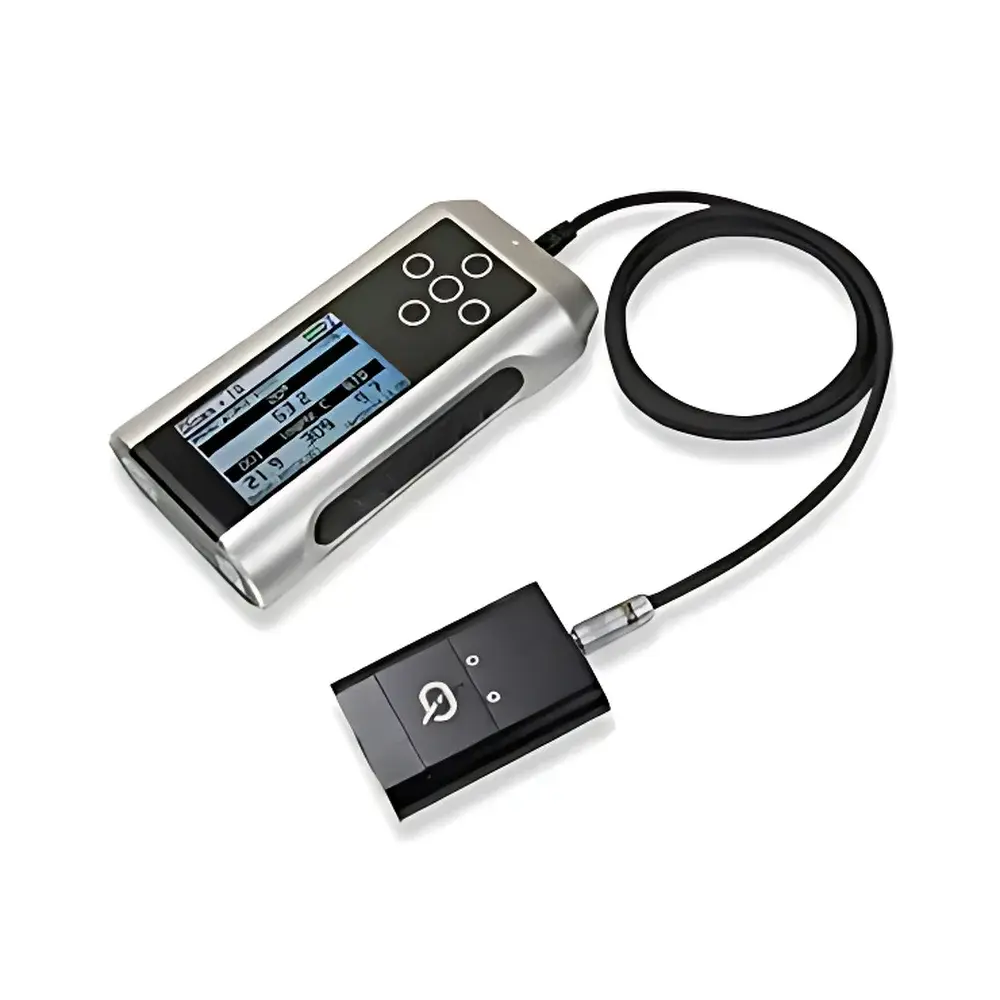
Rhopoint IQ-S Reflectance Haze and Image Clarity Meter by Konica Minolta
| Brand | Konica Minolta |
|---|---|
| Origin | Japan |
| Model | Rhopoint IQ-S |
| Instrument Type | Handheld, Automatic |
| Haze Range | 0–90% |
| Transmittance Range | 0–100% |
| Haze Repeatability | ±0.2% |
| Transmittance Repeatability | ±0.2% |
| Measurement Angles | 20°, 60°, 85° (angle-selectable per surface finish) |
| Key Metrics | Gloss, Peak Gloss, Reflectance Haze, Reflectance Image Quality (RIQ), DOI (Distinctness of Image) |
Overview
The Rhopoint IQ-S Reflectance Haze and Image Clarity Meter is a handheld optical metrology instrument engineered for quantitative assessment of surface appearance quality in high-value coated materials—particularly automotive clearcoats, architectural finishes, industrial coatings, and precision-polished substrates. Unlike conventional glossmeters that measure only specular reflectance intensity at fixed angles (e.g., 20°, 60°, or 85°), the IQ-S employs multi-angle reflectance profiling combined with high-resolution photometric analysis to characterize not just “how much” light is reflected, but “how coherently” it is reflected. Its core measurement principle is based on controlled-source directional illumination and spatially resolved detection of reflected irradiance distribution—enabling quantification of optical disturbances arising from micro-topography, subsurface scattering, and interfacial heterogeneity. This enables direct evaluation of reflectance haze—a parameter defined as the ratio of scattered to total reflected luminous flux within a defined angular acceptance cone—and Reflectance Image Quality (RIQ), a proprietary metric correlating strongly with human visual perception of surface distortion in mirror-like reflections.
Key Features
- Simultaneous acquisition of six critical optical parameters: Gloss (20°/60°/85°), Peak Gloss (±1.5° around specular angle), Reflectance Haze, Reflectance Image Quality (RIQ), Distinctness of Image (DOI), and Total Reflectance.
- Angle-optimized optical path: automatic or manual selection of 20° (high-gloss), 60° (medium-gloss), or 85° (matte/low-gloss) geometry per ISO 2813 and ASTM D523, ensuring compliance with standard test protocols.
- Reflectance haze compensation algorithm for metallic, pearlescent, and high-pigment-volume-fraction (PVF) coatings—minimizing bias from diffuse background reflectance.
- Integrated high-dynamic-range CMOS sensor array with calibrated photopic response, enabling linear signal capture across 0–100% transmittance and 0–90% haze ranges.
- On-device statistical engine: real-time calculation of mean, SD, min/max, CPK, and trend graphs; pass/fail evaluation against user-defined tolerances with color-coded feedback (green/red).
- Battery life exceeding 20,000 measurements per full charge; rechargeable via USB-C or AC adapter; no proprietary dock required.
Sample Compatibility & Compliance
The IQ-S is validated for flat or gently curved rigid surfaces (radius ≥ 100 mm) with reflectance >5%. It supports ISO 13803 (plastics — determination of haze), ASTM D1003 (transparent plastics), ISO 2813 (gloss of non-metallic paint films), and ASTM E430 (measurement of distinctness of image). While primarily designed for reflectance mode, its transmittance capability complies with ISO 14782 for transparent and translucent sheet materials. The instrument meets IEC 61326-1:2013 for electromagnetic compatibility and carries CE marking under EU Directive 2014/30/EU. Data integrity features—including timestamped readings, operator ID tagging, and audit-trail-ready export logs—support GLP and GMP-aligned quality systems. Firmware supports optional 21 CFR Part 11-compliant electronic signatures when used with Novo-Soft Multi Gauge v4.2+.
Software & Data Management
Novo-Soft Multi Gauge is the native desktop application for advanced data aggregation, comparative analysis, and regulatory reporting. It imports .csv, .xlsx, and proprietary .iqs files directly; supports batch alignment, cross-instrument normalization, and SPC charting (X-bar/R, Cpk, Ppk). Reports are exportable as PDF (with embedded calibration certificates), Excel (.xlsx), CSV, or XML for LIMS integration. Bluetooth 5.0 and USB mass-storage-class connectivity enable zero-software data transfer: the device appears as a removable drive in Windows Explorer or macOS Finder. Bluetooth LE also allows live streaming into Excel or LabVIEW via OLE/COM interface—eliminating manual transcription. All measurement metadata (date/time, GPS tag if enabled, instrument serial, calibration status) is embedded in each record.
Applications
- Automotive OEM and Tier-1 suppliers: validation of clearcoat smoothness, detection of orange peel, spray mottle, and buffing-induced micro-scratches prior to final inspection.
- Coatings R&D labs: correlation of formulation variables (resin MW, solvent blend, rheology modifiers) with RIQ and haze; DOE-driven optimization of cure schedules and film thickness uniformity.
- Plastics extrusion and thermoforming: in-line monitoring of surface degradation during aging, UV exposure, or thermal cycling—quantifying haze onset before visible yellowing occurs.
- Optical component manufacturing: verification of polishing quality on acrylic, polycarbonate, or glass substrates used in lighting, displays, and sensors.
- Quality control in decorative laminates and wood finishes: objective replacement of subjective “panel matching” assessments with traceable, repeatable metrics.
FAQ
How does Reflectance Haze differ from transmission haze?
Reflectance haze quantifies forward-scattered light in the reflection direction—caused by surface texture or near-surface defects—whereas transmission haze (per ISO 13803) measures scattered light passing through a bulk material. The IQ-S measures only reflectance haze; transmission haze requires a separate integrating sphere setup.
Can the IQ-S measure curved or textured surfaces?
It is calibrated for planar or low-curvature surfaces (radius ≥ 100 mm). Highly textured, deeply embossed, or aggressively curved geometries (>5° local slope variation) will compromise angular accuracy and require empirical correlation studies.
Is calibration traceable to national standards?
Yes—each unit ships with a NIST-traceable calibration certificate for gloss and reflectance, issued by Konica Minolta’s A2LA-accredited calibration lab (ISO/IEC 17025:2017). Field recalibration kits (gloss and haze standards) are available.
Does the instrument support automated reporting for ISO/TS 16949 or IATF 16949 audits?
All exported reports include instrument ID, calibration due date, operator ID, environmental conditions (optional), and statistical summaries—fully compliant with IATF 16949 clause 8.6.2 on release of products and services.
What maintenance is required beyond routine cleaning?
No scheduled mechanical maintenance. Optical windows should be cleaned weekly with lens-grade tissue and isopropyl alcohol; firmware updates are delivered free-of-charge via Konica Minolta’s support portal.




