
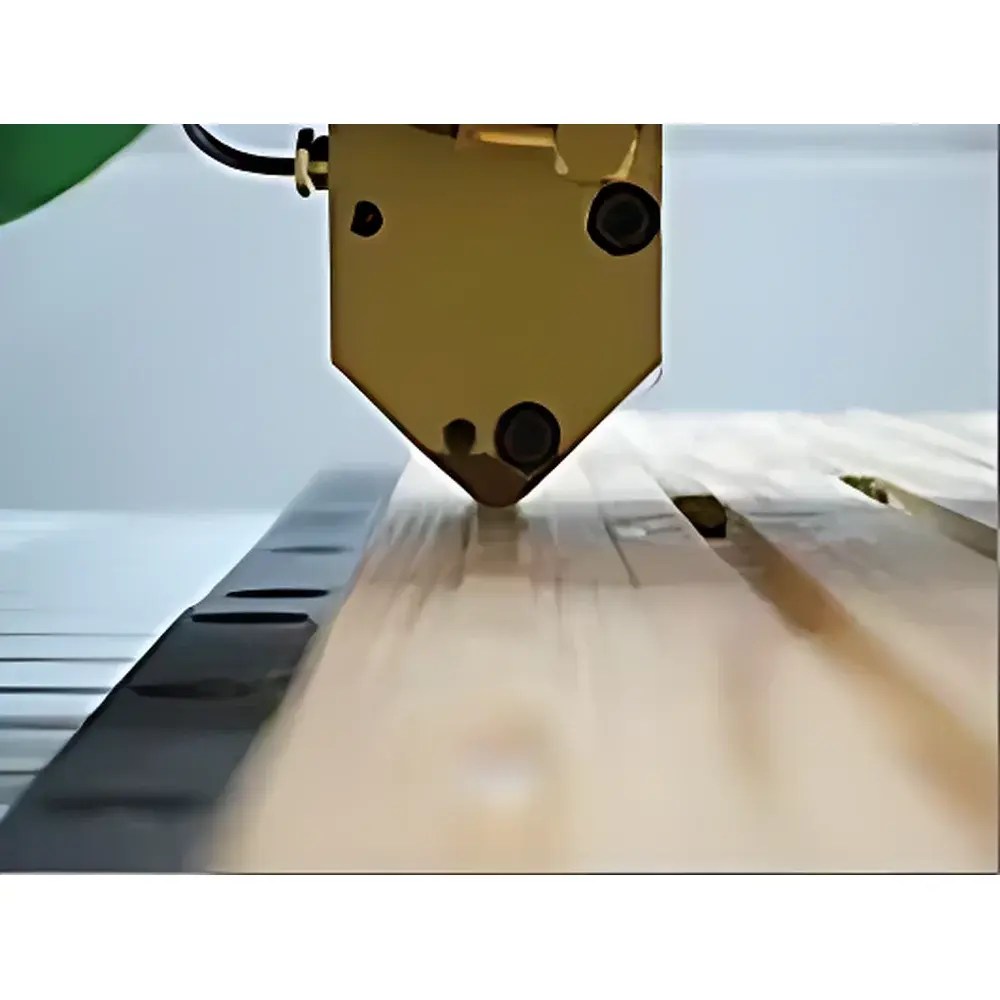
Rinntech LIGNOSTATION Tree-Ring Analysis Workstation
| Brand | Rinntech |
|---|---|
| Origin | Germany |
| Model | LIGNOSTATION |
| Radiation Source | High-Frequency Electromagnetic Sensor (Non-Ionizing) |
| Max Sample Length | 500 mm |
| Spatial Resolution | ≤ 20 µm |
| Imaging Modality | Dual-Mode (Electromagnetic Density Scanning + Optical Micro-Photography) |
| Compliance | CE, RoHS, ISO/IEC 17025-compatible workflow support |
| Preprocessing Integration | Integrated surface trimming and polishing capability |
Overview
The Rinntech LIGNOSTATION Tree-Ring Analysis Workstation is a fully integrated, laboratory-grade platform engineered for high-precision dendrochronological and wood anatomical research. Unlike conventional X-ray densitometry systems, the LIGNOSTATION employs a non-ionizing high-frequency electromagnetic sensor to quantify wood density variations across annual growth rings—eliminating radiation safety protocols, shielding requirements, and regulatory constraints associated with X-ray-based instrumentation. Its core measurement principle relies on differential attenuation of high-frequency electromagnetic waves through varying lignin-cellulose matrix densities, enabling quantitative, calibration-traceable density profiling at ≤20 µm spatial resolution. Coupled with synchronized optical micro-photography via the LignoScop module, the system delivers co-registered structural and density data from the same physical plane—critical for correlating vessel lumen diameter, ray parenchyma distribution, earlywood/latewood transitions, and intra-annual density fluctuations. Designed for both increment cores (up to 500 mm length) and cross-sectional discs, the LIGNOSTATION supports reproducible, operator-independent analysis under controlled environmental conditions, making it suitable for long-term climate reconstruction, forest response modeling, and timber provenance studies.
Key Features
- Non-ionizing high-frequency electromagnetic density sensing—no radiation licensing, no lead shielding, compliant with occupational health and safety directives (EU Directive 2013/35/EU on EMF exposure)
- ≤20 µm spatial resolution across full 500 mm sample length, enabling detection of sub-annual density gradients and micro-anatomical features such as tyloses or resin ducts
- Integrated LignoTrim precision surface preparation unit: motorized, programmable depth control for planar core sectioning and disc surfacing prior to scanning
- Dual-sensor synchronization: simultaneous acquisition of electromagnetic density profiles and optical micrographs (LignoScop), ensuring pixel-to-pixel spatial registration
- Modular architecture: configurable subsystem combinations (e.g., LignoScan-only for density-focused workflows; LignoScop-only for anatomical mapping; full integration for multi-parameter dendroclimatology)
- Compact benchtop footprint with vibration-damped optical table base, optimized for shared lab environments and mobile field-lab deployment
Sample Compatibility & Compliance
The LIGNOSTATION accommodates standard 5 mm increment cores (including ITRDB-compliant sampling protocols), resin-embedded or air-dried cores, and cross-sectional discs up to 500 mm in diameter. All sample holders are CNC-machined aluminum with micrometer-adjustable clamping to minimize mechanical distortion during scanning. The system supports ASTM D143 (Standard Test Methods for Small Clear Specimens of Timber) and ISO 3130 (Wood—Determination of density) measurement traceability when used with certified reference wood standards. Data acquisition workflows align with GLP principles: audit trails, user authentication, electronic signatures, and version-controlled calibration logs are maintained within LignoVision software—enabling compliance with FDA 21 CFR Part 11 where required for regulated environmental forensics or timber certification applications.
Software & Data Management
LignoVision is a dedicated, Windows-based analytical suite supporting raw data ingestion from all LIGNOSTATION modules. It provides automated ring detection (with manual override), inter-series cross-dating (COFECHA-compatible output), radial density profile extraction, vessel lumen area quantification, and spatial autocorrelation analysis. All image and density datasets are stored in vendor-neutral TIFF and CSV formats; metadata embedding follows Dublin Core standards. Batch processing pipelines support ISO/IEC 17025-required uncertainty propagation calculations for density-derived chronologies. Export modules generate FAO-FORIS-compliant reports and Neotoma-ready paleoclimate data packages.
Applications
- Dendroclimatology: Reconstruction of past temperature, precipitation, and drought indices using density–climate transfer functions
- Dendroecology: Quantifying forest responses to CO₂ fertilization, nitrogen deposition, and pest outbreaks via intra-ring density anomalies
- Wood science: Characterizing reaction wood formation, compression wood gradients, and juvenile/mature wood transitions
- Cultural heritage: Non-destructive dating and provenance analysis of historical timber in architectural structures and artifacts
- Forestry certification: Objective verification of growth rate claims in FSC® and PEFC™ chain-of-custody documentation
FAQ
Does the LIGNOSTATION require radiation safety certification or dedicated shielding?
No. It uses a non-ionizing high-frequency electromagnetic sensor compliant with EU EMF Directive 2013/35/EU—no licensing, no shielding, and no dosimetry monitoring required.
Can the system analyze samples with irregular surfaces or bark remnants?
Yes. The integrated LignoTrim module enables precise surface planing immediately prior to scanning, ensuring consistent sensor-sample distance and eliminating topographic artifacts.
Is LignoVision compatible with third-party statistical packages such as R or Python?
Yes. All processed outputs (density curves, vessel metrics, ring boundaries) are exported in open CSV/TIFF formats with documented column headers and coordinate metadata—fully ingestible by dplR, treeclim, and custom Pandas-based workflows.
What calibration standards are recommended for long-term density stability monitoring?
Rinntech supplies NIST-traceable wood density phantoms (sapwood/hardwood composites) with certified attenuation coefficients; annual recalibration is advised per ISO/IEC 17025 clause 7.7.
How is measurement repeatability verified across operators and laboratories?
The system includes a built-in reference core with embedded density steps; inter-laboratory round-robin protocols are supported via LignoVision’s standardized export templates and QC dashboard.
Related Products







