
RJL Microquick 1001CA Particle Cleanliness Analyzer
| Brand | RJL (Angelai) |
|---|---|
| Origin | Germany |
| Manufacturer Type | Authorized Distributor |
| Import Status | Imported |
| Model | Microquick 1001CA |
| Dispersion Method | Dry & Wet |
| Measurement Range | >25 µm |
| Repeatability | <1% |
| Analysis Time | 180 s |
Overview
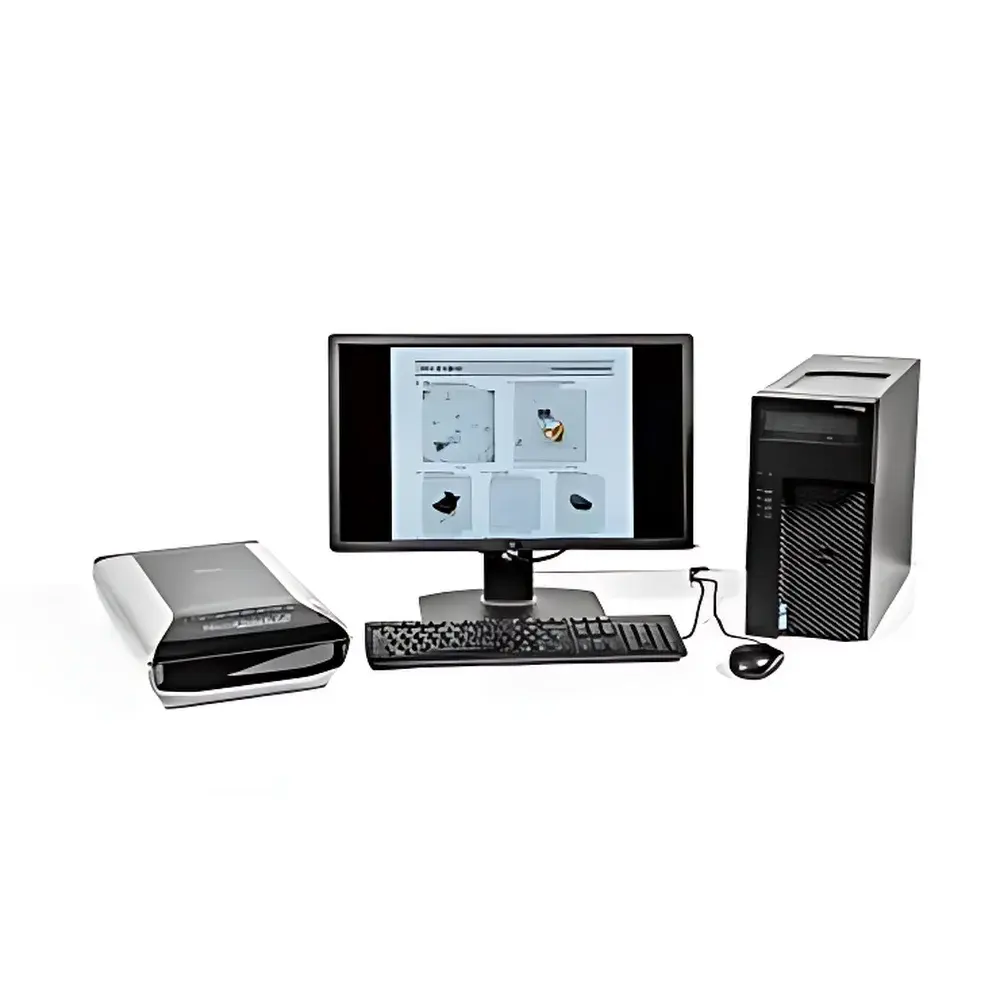
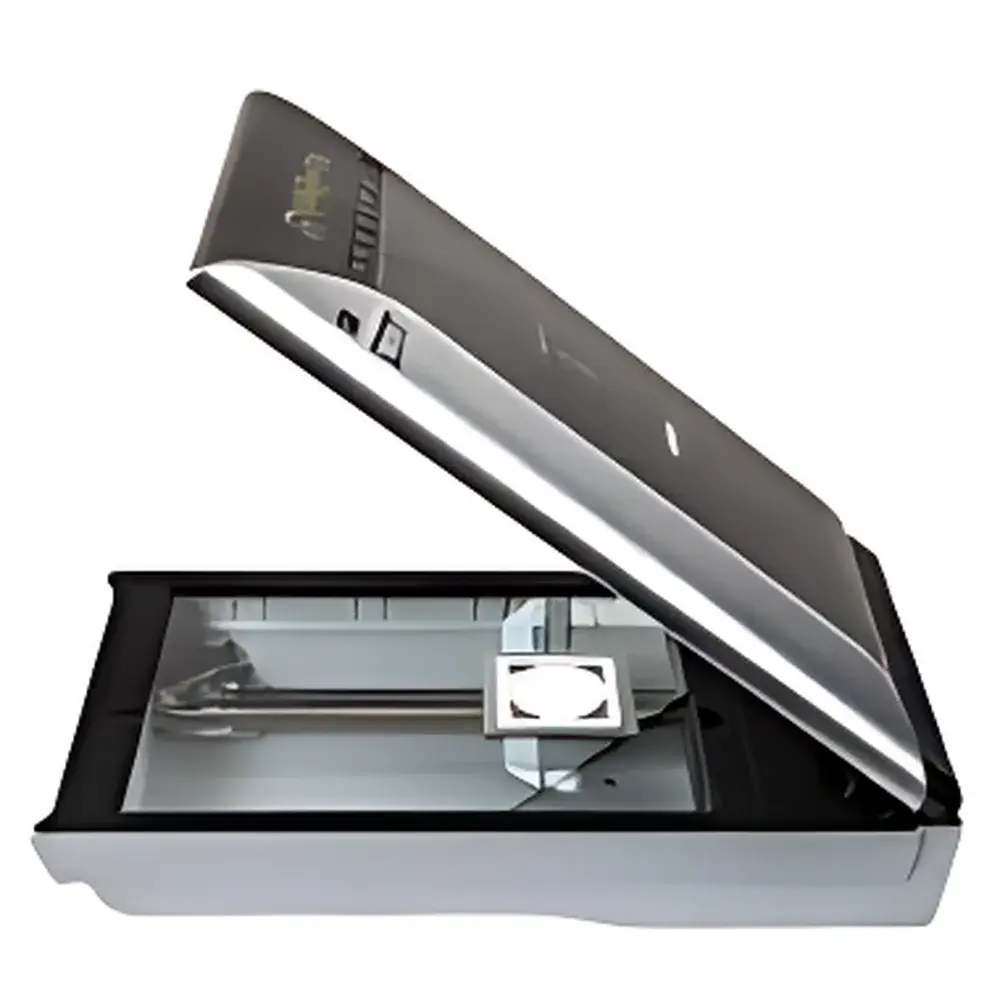
The RJL Microquick 1001CA Particle Cleanliness Analyzer is an automated, high-throughput imaging system engineered for quantitative analysis of particulate contamination on filter membranes—specifically designed to meet the stringent requirements of automotive component cleanliness validation. Unlike conventional optical microscopy systems that rely on stitched tile-based imaging and manual region selection, the Microquick 1001CA employs a precision flatbed reflective scanning architecture combined with calibrated brightfield illumination and pixel-accurate autofocus to capture the entire filtration surface in a single, distortion-free pass. Its core measurement principle is digital image-based particle morphometry: particles are segmented via adaptive thresholding and classified by size (equivalent circular diameter), shape (aspect ratio, convexity, roundness), and grayscale intensity (indicative of material reflectivity or opacity). This approach delivers traceable, operator-independent results aligned with the physical interpretation of contamination defined in ISO 16232:2017, VDA 19.1 (2015), and ISO 4406:2017 standards. The system is not a laser diffraction or dynamic light scattering instrument; it does not infer size distributions from scattering patterns. Instead, it provides direct, metrologically validated visual evidence of contaminant morphology—critical for root-cause failure analysis in high-reliability mechanical and hydraulic systems.
Key Features
- Full-membrane automated scanning: Captures 100% of the filter surface (e.g., 47 mm or 90 mm diameter) without tiling, stitching, or positional interpolation—eliminating edge artifacts and registration errors inherent in mosaic-based microscopes.
- Three-step fully automated workflow: Load filter → Initiate scan → Generate report—no user-defined ROI selection, focus calibration, or threshold tuning required.
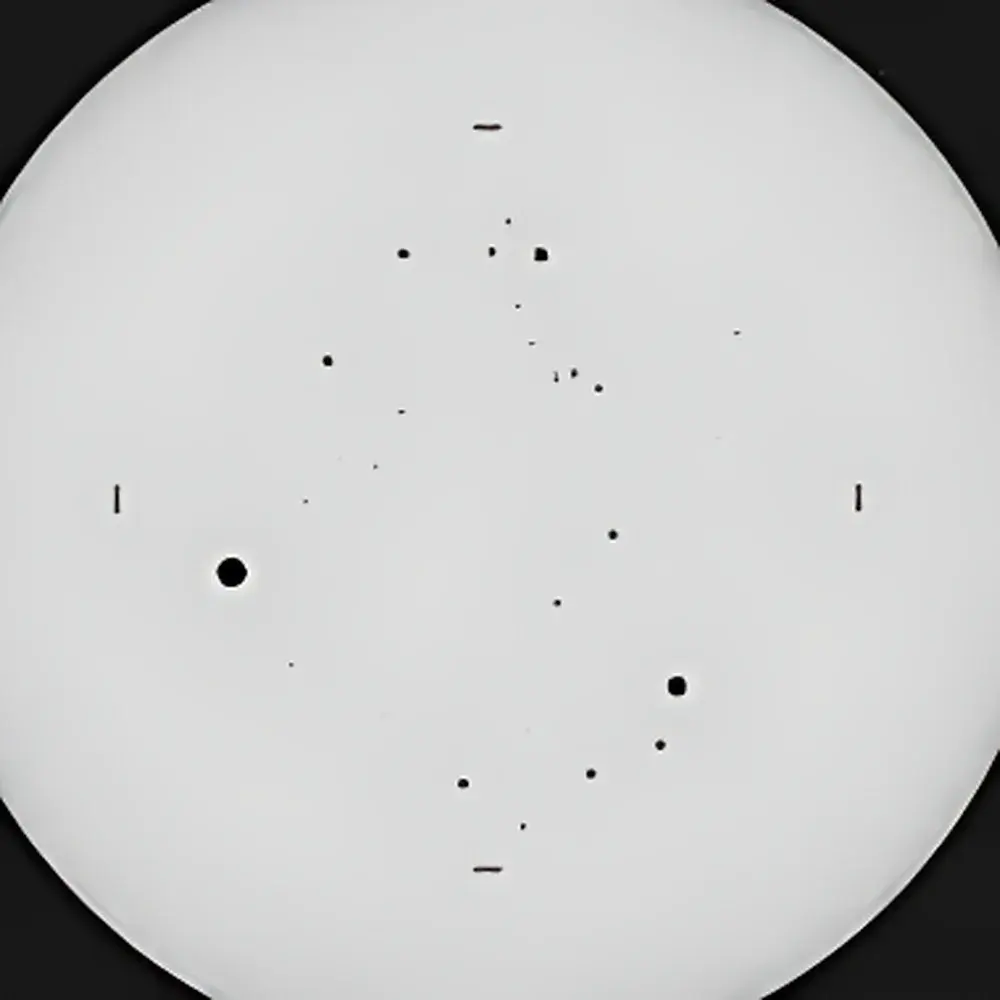
- Traceable metrology: Integrated MicroStandard photolithographic calibration membrane enables daily verification of pixel-to-micron scaling, contrast sensitivity, and detection limit per ISO 16232 Annex D.
- Compliance-ready reporting engine: MicroReporter Series 4 software auto-generates Excel-based reports compliant with VDA 19.1 Annex A and ISO 16232 Annex B, including particle count per size class (≥25 µm, ≥50 µm, ≥100 µm), cumulative distribution, largest-particle image gallery, and audit trail metadata.
- Robust hardware architecture: Industrial-grade reflective flatbed scanner with temperature-stabilized LED illumination, linear CCD array, and motorized Z-axis autofocus ensures long-term repeatability across environmental fluctuations.
Sample Compatibility & Compliance
The Microquick 1001CA accepts standard polycarbonate, mixed cellulose ester (MCE), or polyvinylidene fluoride (PVDF) filter membranes (47 mm or 90 mm diameter) mounted in RJL-supplied rigid frames. It supports post-extraction residues from ultrasonic, pressure-flush, or vacuum-suction cleaning protocols per ISO 16232 Parts C–F. The system conforms to the metrological framework of ISO/IEC 17025:2017 for testing laboratories and supports GLP-compliant operation through timestamped, user-logged audit trails and electronic signature capability in MicroReporter Series 4. All particle classification algorithms are locked and version-controlled; software updates require formal change control documentation per FDA 21 CFR Part 11 Annex 11 guidelines where applicable.
Software & Data Management
MicroReporter Series 4 is a Windows-based application built on .NET Framework with embedded SQLite database for secure local storage of raw images, processed data, and report templates. It features full backward compatibility with prior Microquick versions and exports structured CSV/Excel files for integration into LIMS or SAP QM modules. Each report includes: (i) instrument ID and calibration status, (ii) operator ID and timestamp, (iii) raw scan preview, (iv) particle count histogram binned per ISO 16232 size thresholds, (v) top-10 largest particle thumbnails with annotated dimensions, and (vi) configurable pass/fail logic based on customer-specific cleanliness classes (e.g., “Class 4” per VDA 19.1 Table 3). Audit logs record all parameter modifications, image reprocessing events, and report generation actions—enabling full traceability during regulatory inspections.
Applications
The Microquick 1001CA is deployed in Tier-1 automotive suppliers and OEM quality labs for validation of critical components including fuel injectors, ABS hydraulic valves, transmission synchronizer rings, camshaft bearing surfaces, and EV battery coolant manifolds. Beyond automotive, it serves turbine blade cleaning verification in aerospace MRO facilities, wafer-handling tool residue audits in semiconductor FABs, lubricant wear debris monitoring in power generation gearboxes, and biocompatibility residue screening for implantable device machining processes. Its ability to distinguish metallic vs. non-metallic particles via reflectance analysis supports failure mode attribution—e.g., identifying grinding swarf versus sealing compound fragments in hydraulic pump assemblies.
FAQ
Does the Microquick 1001CA measure particles below 25 µm?
No. Its optical resolution and algorithmic detection threshold are validated for particles ≥25 µm per ISO 16232:2017 Clause 7.2. Sub-25 µm analysis requires electron microscopy or laser diffraction with appropriate sample dispersion.
Can the system be integrated into a networked laboratory environment?
Yes. MicroReporter Series 4 supports UNC path mapping, SQL Server backend migration, and REST API hooks for automated report ingestion into enterprise QA platforms.
Is operator training required to maintain compliance?
Minimal training is needed for routine operation; however, annual competency assessment and documented calibration verification using MicroStandard membranes are required to sustain ISO 16232 conformance.
What filter types are certified for use?
RJL validates performance on Sartorius SM11312 (MCE), Whatman PC filters, and Millipore GVWP (PVDF); alternative membranes require in-house verification per ISO 16232 Annex E.
How is measurement uncertainty quantified?
Uncertainty is derived from Type A (repeatability: <1% RSD over 10 replicate scans) and Type B (calibration standard uncertainty ±0.8 µm at 50 µm, per NIST-traceable MicroStandard certificate) components per GUM (JCGM 100:2008).



