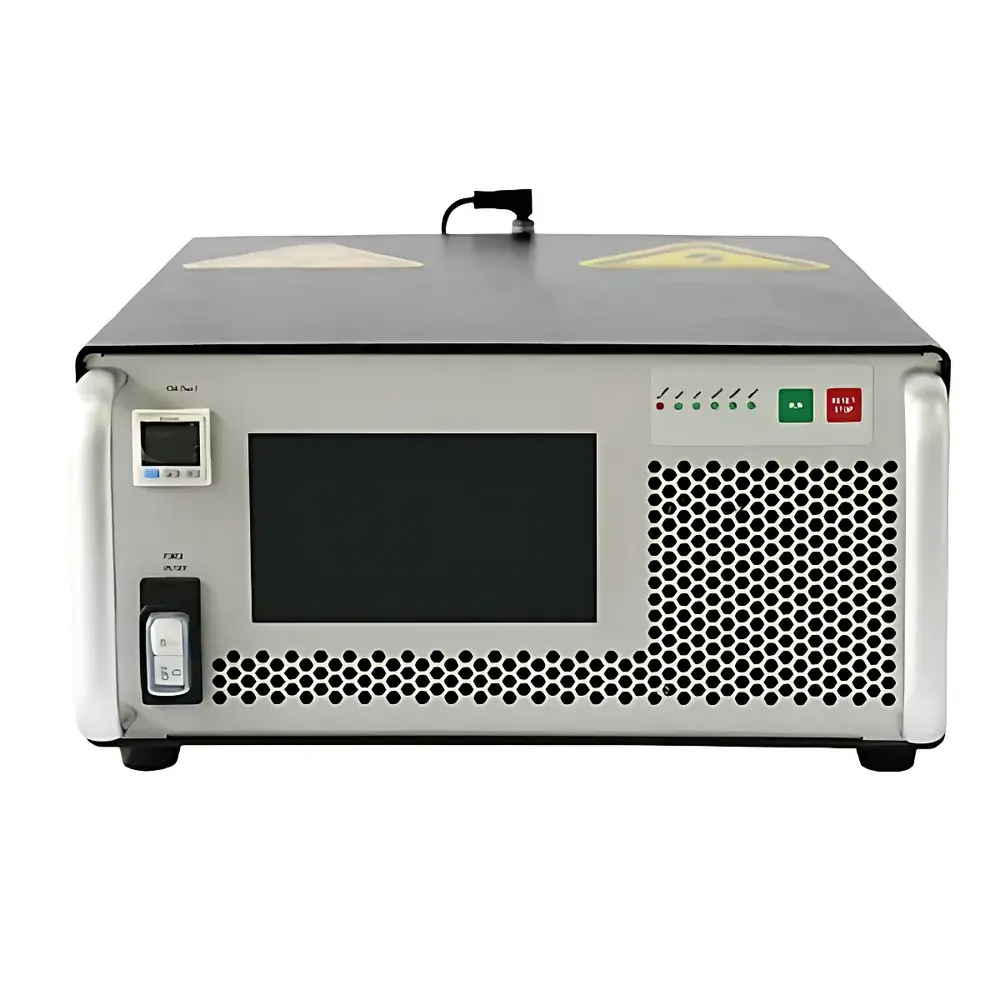
Rocktek RTK-ZYJ01 Piston-Cylinder Rapid-Pressurization Press
| Brand | Rocktek |
|---|---|
| Origin | Hubei, China |
| Manufacturer Type | Authorized Distributor |
| Country of Origin | China |
| Model | RTK-ZYJ01 |
| Pricing | Available Upon Request |
| Maximum Pressure (Piston-Cylinder) | 2.0 GPa |
| Maximum Pressure (Bridgman Anvil) | 5.0 GPa |
| Temperature Range (Piston-Cylinder) | Up to 1600 °C |
| Temperature Range (Bridgman Anvil) | Up to 1000 °C |
| Sample Dimensions (Piston-Cylinder) | Ø4 × 6 mm |
| Sample Dimensions (Bridgman Anvil) | Ø5 × 1.8 mm |
| Pressure Rise Time | ≤20 ms |
| Pressure Ramp Rate (Piston-Cylinder) | 1–2 GPa/20 ms |
| Pressure Ramp Rate (Bridgman Anvil) | 3–10 GPa/20 ms |
Overview
The Rocktek RTK-ZYJ01 Piston-Cylinder Rapid-Pressurization Press is a high-speed, high-pressure materials synthesis and characterization system engineered for dynamic pressure generation under controlled thermal conditions. It operates on a dual-mode architecture: a conventional piston-cylinder (PC) assembly optimized for high-temperature, moderate-pressure experiments (up to 1600 °C / 2.0 GPa), and a Bridgman-type opposed-anvil configuration enabling ultra-high pressures up to 5.0 GPa at temperatures up to 1000 °C. Its defining capability lies in rapid pressurization—leveraging a pre-charged hydraulic accumulator connected via high-response solenoid valves—to achieve pressure transients of 1–10 GPa within ≤20 ms. This performance enables time-resolved studies of phase transitions, metastable phase nucleation, shock-compression analogs, and kinetic-limited solid-state reactions where millisecond-scale pressure fidelity is critical.
Key Features
- Two interchangeable pressure modules: piston-cylinder and Bridgman opposed-anvil, each with dedicated heating and pressure calibration protocols.
- Hydraulic accumulator system with fast-switching solenoid valves ensures reproducible sub-20 ms pressure rise times across both configurations.
- Integrated high-temperature furnace with graphite or Mo-based heaters, compatible with inert or reducing atmospheres (N2, Ar, H2/Ar mixtures) via sealed gas inlet ports.
- Real-time pressure monitoring using calibrated piezoresistive transducers with digital feedback loop control; resolution ≤0.01 GPa in the 0–5 GPa range.
- Robust mechanical frame with reinforced steel housing and precision-ground alignment guides to maintain anvil parallelism and minimize shear stress during rapid loading.
- Modular electrical interface supporting external synchronization (TTL trigger input/output) for integration with laser heating systems, synchrotron X-ray detectors, or ultrafast spectroscopy setups.
Sample Compatibility & Compliance
The RTK-ZYJ01 accommodates standard high-pressure sample assemblies—including NaCl, MgO, or borosilicate glass gaskets—and supports both resistive and laser-heated configurations. Sample geometries are standardized: Ø4 × 6 mm for piston-cylinder operation and Ø5 × 1.8 mm for Bridgman mode, ensuring compatibility with common diamond anvil cell (DAC) and multi-anvil press (MAP) sample protocols. All pressure calibrations follow established standards including the ruby fluorescence method (ISO 17025-accredited reference procedures) and Pt resistance thermometry (ITS-90 traceable). The system meets CE mechanical safety directives (2006/42/EC) and conforms to IEC 61000-6-2/6-4 for electromagnetic compatibility. For laboratory quality assurance, audit trails, user access logs, and parameter versioning are supported in accordance with GLP and ISO/IEC 17025 requirements.
Software & Data Management
The RTK-ZYJ01 is operated via Rocktek’s proprietary ControlSuite™ software, a Windows-based platform compliant with FDA 21 CFR Part 11 for electronic records and signatures. It provides synchronized acquisition of pressure, temperature, time, and external trigger events at up to 10 kHz sampling rate. Data export formats include CSV, HDF5, and MATLAB-compatible .mat files. The software includes built-in pressure ramp profiling, hold-and-relax sequences, and automated calibration curve application. Audit trail functionality logs all parameter modifications, user logins, and system state changes with timestamp and operator ID. Remote diagnostics and firmware updates are supported over secure TLS-encrypted Ethernet connection.
Applications
- Time-resolved in situ X-ray diffraction (XRD) and X-ray absorption spectroscopy (XAS) under dynamic compression.
- Kinetic studies of solid-state phase transformations (e.g., olivine → wadsleyite, quartz → coesite) under non-equilibrium pressure paths.
- Shock-mimetic synthesis of metastable polymorphs (e.g., high-pressure ice phases, superhard boron carbides).
- Calibration and validation of equation-of-state (EOS) models for geophysical and planetary materials.
- High-pressure sintering and densification of ceramic and intermetallic powders with controlled dwell profiles.
- Testing of pressure-sensitive functional materials such as piezoelectrics, ferroelectrics, and topological insulators.
FAQ
What is the maximum achievable pressure in piston-cylinder mode, and how is it verified?
The piston-cylinder module achieves up to 2.0 GPa, verified via in situ ruby fluorescence shift calibrated against the Mao-Bell scale, with uncertainty ±0.03 GPa at 298 K.
Can the system operate under reactive atmospheres such as hydrogen or ammonia?
Yes—gas-tight furnace housings with Swagelok®-type fittings support controlled flow of H2, NH3, CO, or other reactive gases up to 1 bar partial pressure.
Is remote operation and data logging supported for long-duration experiments?
Yes—ControlSuite™ supports unattended 72+ hour runs with automatic file segmentation, disk space management, and email/SNMP alerts upon event thresholds.
Does the system comply with international metrology standards for pressure measurement?
All pressure transducers are factory-calibrated against NIST-traceable deadweight testers; calibration certificates include uncertainty budgets per ISO/IEC 17025.
Are custom sample holders or heating configurations available?
Rocktek offers OEM engineering services for specialized assemblies—including laser-heating optics integration, RF induction coils, and multi-probe electrical transport fixtures—subject to mechanical and thermal feasibility review.
Related Products