
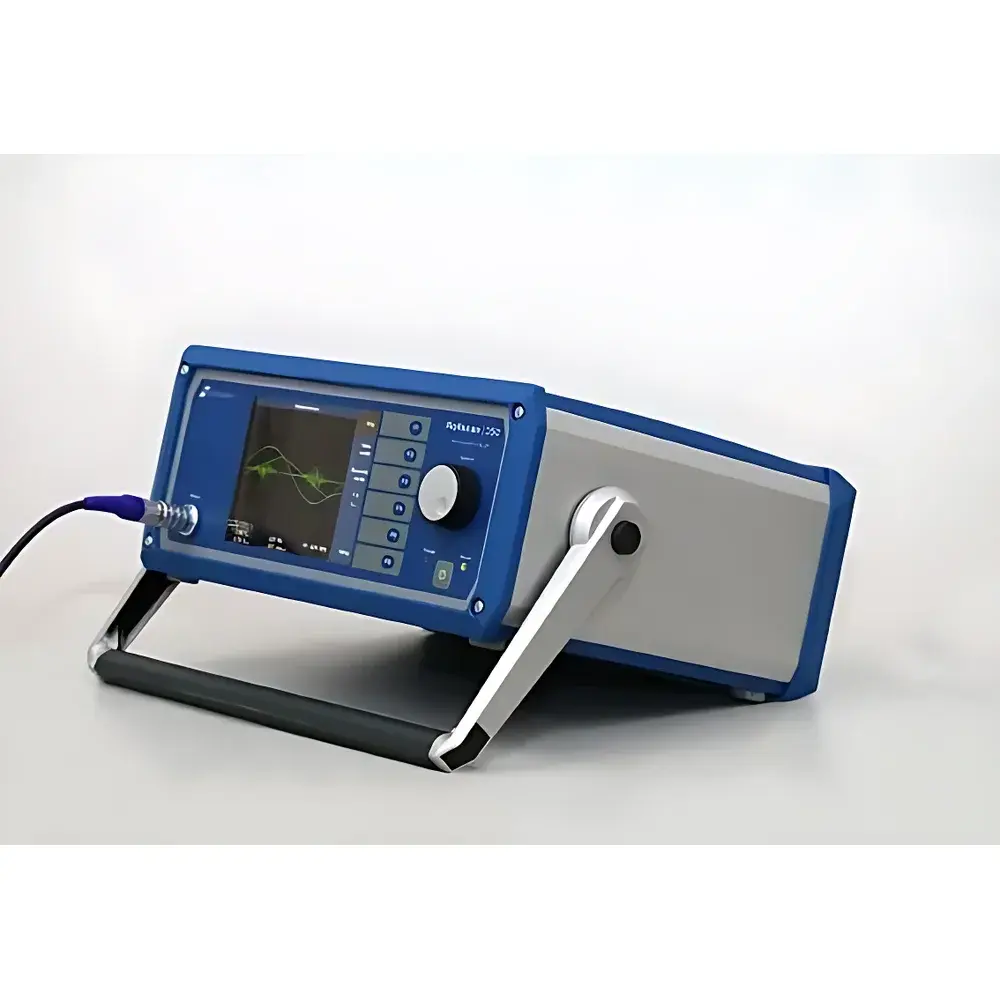
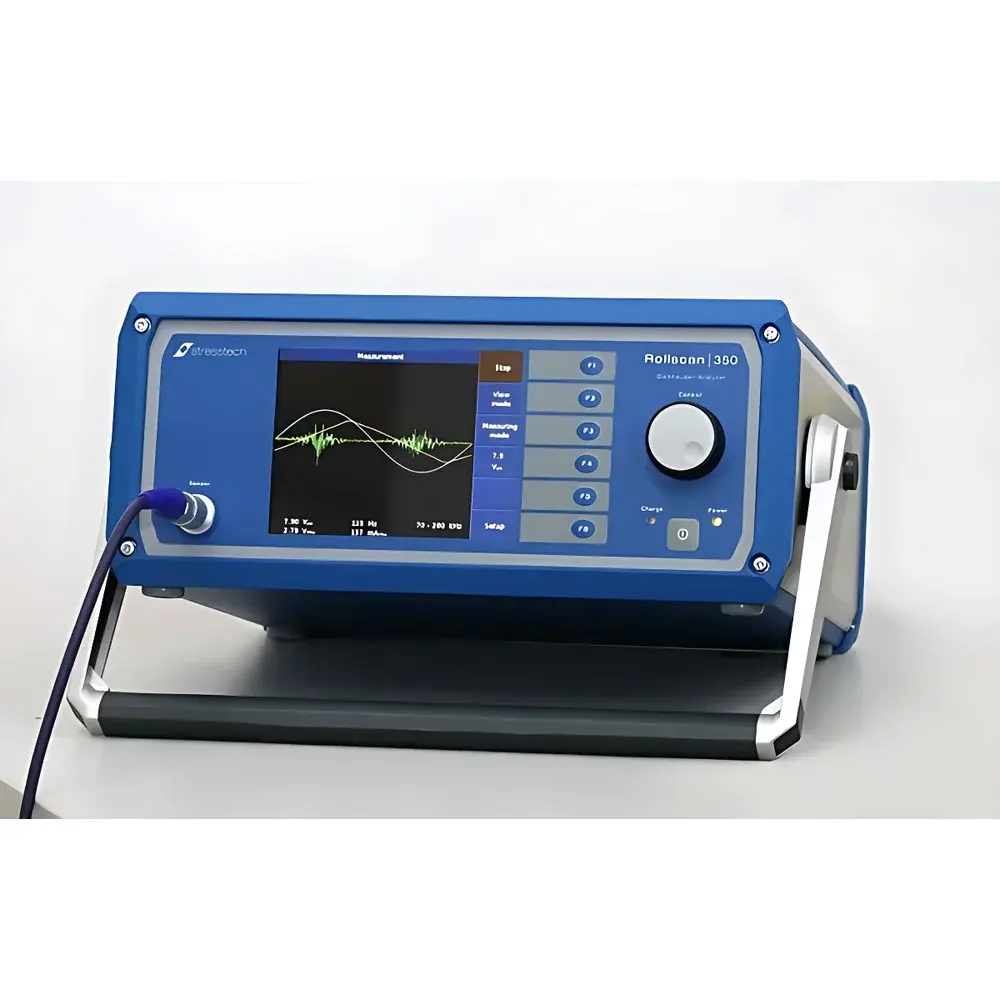
RollScan 300 Magnetic Barkhausen Noise Analyzer by Stresstech Oy
| Brand | Stresstech Oy |
|---|---|
| Origin | Finland |
| Manufacturer Status | Authorized Distributor |
| Origin Category | Imported |
| Model | RollScan 300 |
| Price | Upon Request |
| Power Supply | 90–260 VAC, 49–61 Hz, Single-Phase |
| Inrush Current (Cold Start) | 40 A @ 115 VAC, 80 A @ 230 VAC |
| Power Consumption (Charging Battery) | 150 VA |
| Typical Operating Power | 100 VA |
| Magnetization Frequency Range | 1.0–1000 Hz |
| Magnetization Voltage Range | 0–16 V |
| Signal Analysis Filter Bands | 10–70 kHz, 70–200 kHz, 200–450 kHz |
| Channel Configuration | Single-Channel Standard (Multi-Channel Optional) |
| Sensor Interface | Detachable Pre-Amplified Probes |
| Compatible Materials | Ferritic steels, iron-based alloys, nickel-based superalloys, cobalt-based alloys |
| Signal Processing | Real-Time Digital Signal Processor (DSP) |
Overview
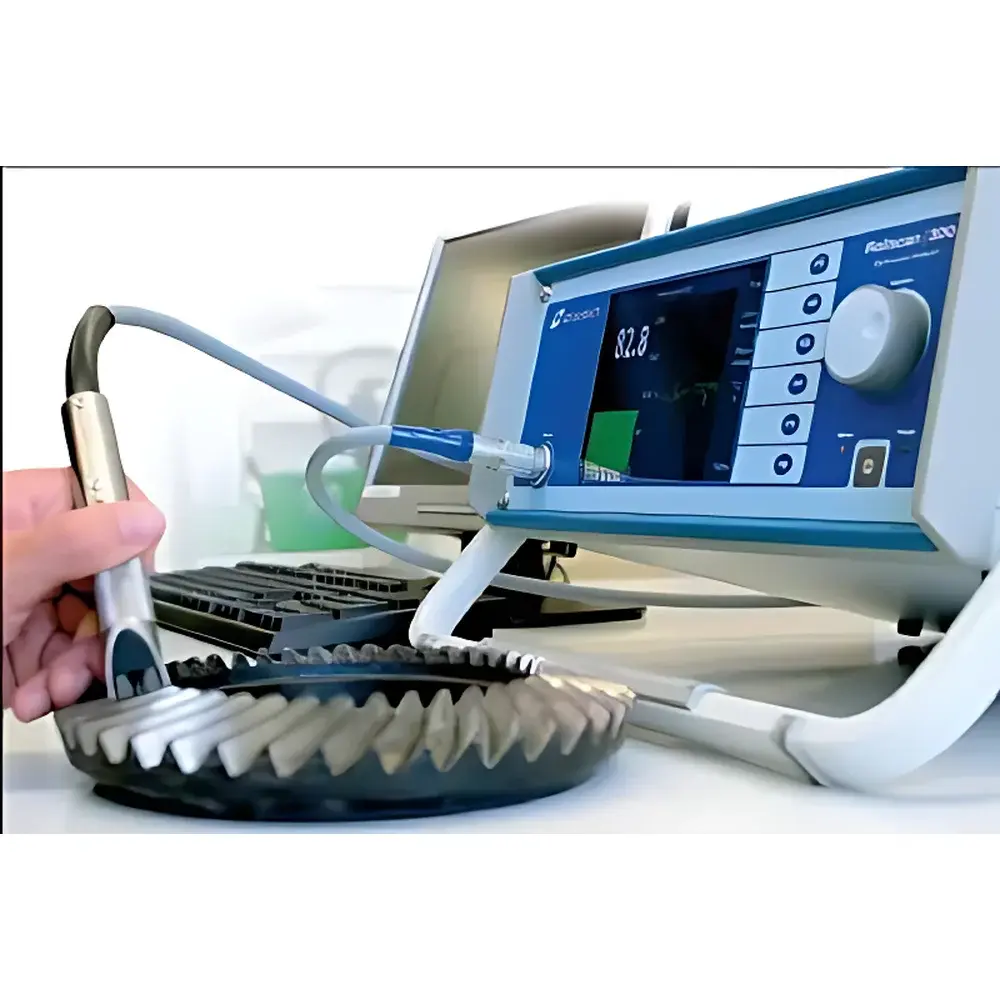
The RollScan 300 Magnetic Barkhausen Noise (MBN) Analyzer by Stresstech Oy is a precision-engineered non-destructive testing (NDT) instrument designed for quantitative assessment of surface and near-surface integrity in ferromagnetic components. It replaces traditional destructive acid etching (acid wash) methods for detecting grinding burns, heat treatment defects, residual stress gradients, and microstructural anomalies—particularly in hardened or case-hardened steel parts. Based on the physical principle of Magnetic Barkhausen Noise emission, the system measures stochastic voltage pulses generated during domain wall motion under controlled cyclic magnetization. These emissions correlate directly with local variations in magnetic permeability, dislocation density, and internal stress states—providing a repeatable, physics-based metric for process-induced damage. Unlike optical or etch-based techniques, MBN evaluation requires no surface preparation, chemical reagents, or post-inspection cleaning, making it ideal for high-throughput production line integration and in-service component monitoring.
Key Features
- Full replacement of acid etching procedures with traceable, operator-independent digital output
- Real-time DSP-based signal acquisition and spectral analysis across three user-selectable frequency bands (10–70 kHz, 70–200 kHz, 200–450 kHz)
- Adjustable magnetization parameters: frequency (1.0–1000 Hz), peak voltage (0–16 V), and waveform shape to optimize sensitivity for specific material conditions
- Modular probe architecture supporting interchangeable pre-amplified sensors—including pencil, shoe, and contour-conforming types—for complex geometries (e.g., gear teeth, cam lobes, bearing races)
- Configurable pass/fail thresholds with audible and visual alarms; integrated data logging synchronized with positional encoders or part ID tags
- Robust industrial enclosure rated IP54; designed for shop-floor environments with electromagnetic noise immunity per EN 61326-1
Sample Compatibility & Compliance
The RollScan 300 is validated for use on ferromagnetic engineering alloys including but not limited to AISI 52100, 100Cr6, 18CrNiMo7-6, Inconel 718, and Stellite 6. It complies with ISO 20959:2019 (“Non-destructive testing — Magnetic Barkhausen noise testing — General principles”) and supports implementation under ASTM E3151-20 (“Standard Guide for Magnetic Barkhausen Noise Evaluation of Surface Integrity”). The system meets essential requirements of the EU Machinery Directive 2006/42/EC and EMC Directive 2014/30/EU. When configured with audit-trail-enabled software and user access controls, it satisfies documentation requirements for GLP and GMP environments, including FDA 21 CFR Part 11 compliance for electronic records and signatures.
Software & Data Management
Stresstech’s proprietary RollScan Studio software provides full control over measurement setup, real-time signal visualization, spectral decomposition, and statistical trend analysis. Data files are stored in vendor-neutral HDF5 format, enabling third-party integration via Python API or MATLAB toolboxes. Each measurement includes embedded metadata: sensor ID, magnetization settings, ambient temperature, operator ID, timestamp, and GPS coordinates (if equipped). Export options include CSV, PDF reports with annotated waveforms, and XML for MES/SPC systems. Automated report generation supports customizable templates aligned with internal quality standards or customer-specific PPAP requirements.
Applications
- Verification of grinding process stability in bearing rings and rolling element surfaces
- Detection of thermal damage in case-hardened gears and transmission shafts following carburizing or induction hardening
- Assessment of residual stress distribution in aircraft landing gear components post-shot peening
- In-process screening of camshafts and crankshafts prior to final machining or assembly
- Root cause analysis of premature fatigue failure in fuel injector nozzles and piston rods
- Qualification of surface integrity for critical automotive and aerospace suppliers under AS9100 Rev D and IATF 16949
FAQ
How does MBN differ from conventional eddy current or ultrasonic testing?
Magnetic Barkhausen Noise specifically targets irreversible domain wall motion linked to plastic deformation and lattice strain—making it uniquely sensitive to subsurface burn damage that may remain invisible to bulk NDT methods.
Can the RollScan 300 be used on coated or painted parts?
Yes—non-contact or lift-off-tolerant probes allow evaluation through thin non-magnetic coatings (<50 µm), though optimal signal-to-noise ratio is achieved on bare metal surfaces.
Is calibration required before each inspection?
The system performs automated self-calibration at startup; traceable reference standards (e.g., Stresstech Calibration Block S1) are recommended for periodic verification per ISO/IEC 17025.
What training is needed to operate the instrument?
A two-day certified operator course covers measurement physics, probe selection, parameter optimization, and interpretation of spectral signatures—certification aligns with EN 473/ISO 9712 Level 2 NDT requirements.
Does the system support automated robotic integration?
Yes—RS-485, Ethernet/IP, and EtherCAT interfaces enable synchronization with CNC machines, gantry robots, and PLC-controlled inspection cells.



