
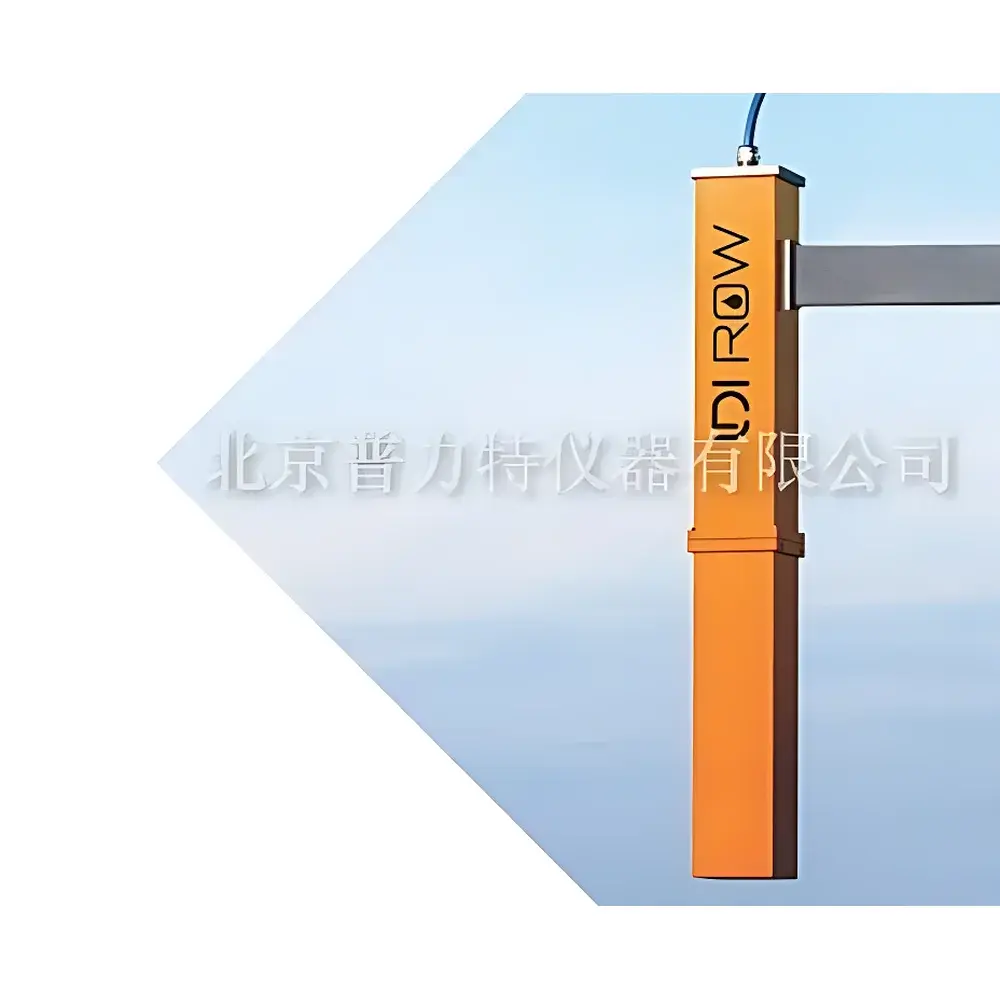
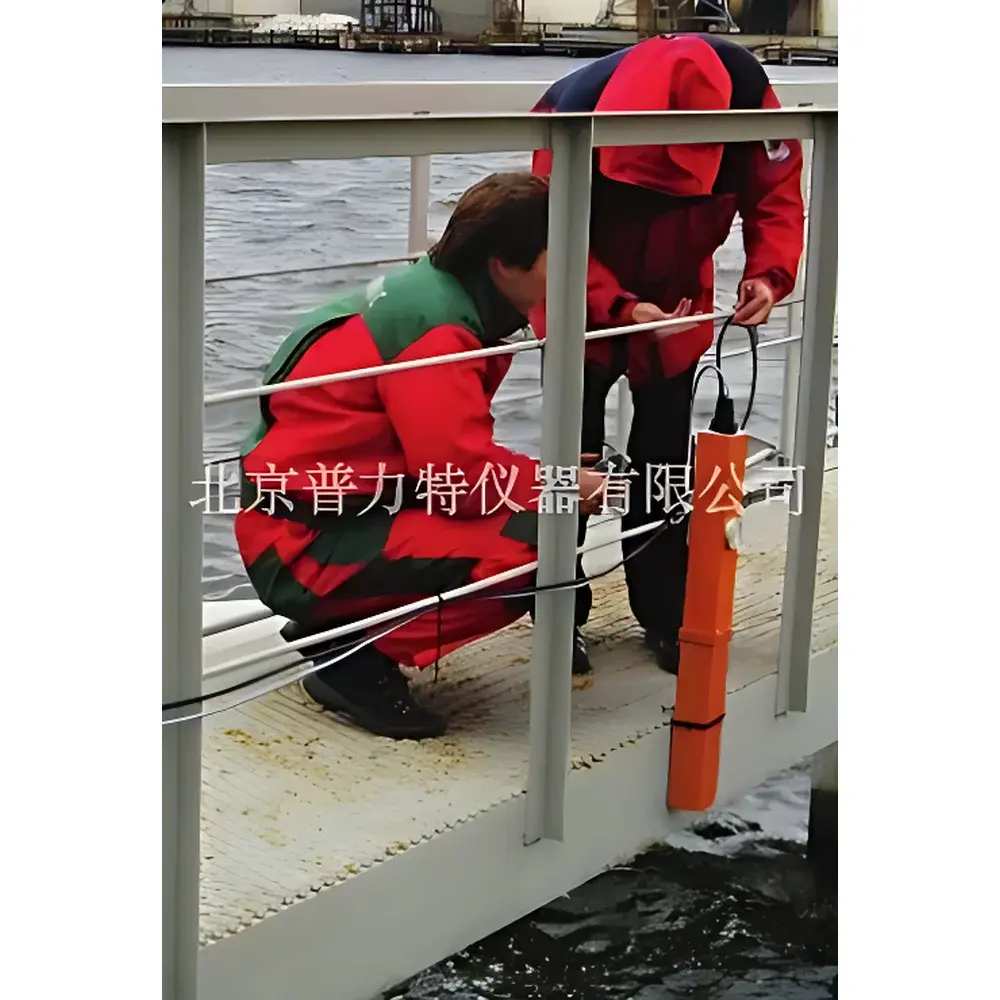
ROW Oil Leak Monitoring Sensor
| Origin | Non-China |
|---|---|
| Manufacturer Type | Distributor |
| Origin Category | Imported |
| Model | ROW |
| Price | Upon Request |
Overview
The ROW Oil Leak Monitoring Sensor is a non-contact, UV-induced fluorescence-based optical detection system engineered for continuous, real-time surveillance of hydrocarbon contamination on water surfaces or terrestrial substrates. Operating on the principle of ultraviolet (UV) pulsed excitation and spectral fluorescence emission analysis, the sensor detects trace oil films as thin as 1 µm by exploiting the intrinsic fluorophore response of petroleum-based and biogenic oils—including mineral oils, lubricants, fuels, and vegetable oils—when illuminated at specific UV wavelengths. Unlike conductive or capacitive sensors, the ROW system requires no physical contact with the monitored medium, eliminating fouling risks and enabling deployment in challenging environments such as open reservoirs, marine berths, drainage channels, or remote industrial perimeters. Its core architecture integrates a high-stability pulsed UV LED source, narrowband optical filtering, and a photodetector array optimized for signal-to-noise ratio in ambient daylight conditions. Designed for unattended operation over extended periods, it delivers reliable early-warning capability aligned with environmental compliance frameworks including US EPA UST guidelines (EPA/530/UST-90/009) and EU Directive 2004/35/EC on environmental liability.
Key Features
- Non-contact optical detection with 1 µm oil film sensitivity on water or land surfaces
- Adjustable mounting height: up to 10 m above surface (O-2300A/O-2300S); 8 m for Exd-certified variant
- Three ruggedized enclosure options: anodized aluminum (IP68), 316L stainless steel (IP68), and ATEX/IECEx Zone 1 explosion-proof housing
- Pressurized nitrogen-filled sealed optics (1.3 atm) to inhibit oxidation and extend optical component lifetime
- Low-power operation (< 2 W DC), compatible with solar panels, battery banks, or 10–30 VDC input; optional AC/DC converter for 110/220 VAC supply
- 5-year rated LED source lifetime under continuous duty cycle
- Advanced embedded firmware with adaptive thresholding algorithms to minimize false positives while maintaining detection integrity across varying ambient light and weather conditions
Sample Compatibility & Compliance
The ROW sensor detects a broad spectrum of hydrocarbons relevant to industrial and environmental monitoring, including but not limited to: automotive engine oil, turbine oil, hydraulic oil, crude oil, marine diesel (MGO/MDO), aviation kerosene (Jet A-1), gasoline (petrol), fuel oil (IFO/IFO 180), biodiesel, and plant-derived oils. It does not respond to water, alcohols, glycols, or non-fluorescent synthetic fluids. All variants comply with CE marking requirements under EN 61000-6-2 (immunity), EN 61000-6-3 (emissions), EN 61326-1 (EMC for measurement equipment), EN 61010-1 (safety), and EN 61000-4 series for electrostatic discharge, surge, and conducted immunity testing. The O-2300 Exd model meets ATEX Directive 2014/34/EU and IECEx certification for use in hazardous areas classified as Zone 1 (gas group IIB, T4). IP68 ingress protection is verified per IEC 60529.
Software & Data Management
The ROW sensor supports multiple integration pathways for operational data acquisition and alarm management. Standard analog output includes 4–20 mA current loop (HART-compatible) and dry-contact relay outputs for PLC interfacing. Digital communication is enabled via RS-232 serial port, RS-485 Modbus RTU, or Ethernet (TCP/IP) for networked SCADA systems. Optional wireless modules support GSM/GPRS and Wi-Fi connectivity, allowing remote configuration, event logging, and SMS/email alerting. Configuration and calibration are performed using the proprietary ROW Configuration Utility—a Windows-based application supporting parameter setup (e.g., alarm thresholds, sampling interval, hysteresis), firmware updates, and diagnostic diagnostics. Audit trails and timestamped event logs meet GLP-aligned record-keeping expectations. No FDA 21 CFR Part 11 compliance is claimed, as the device functions solely as an environmental warning sensor without analytical quantification or regulatory submission functionality.
Applications
- Petroleum storage terminals and refinery perimeter monitoring
- Maritime infrastructure: docks, loading arms, bilge water discharge points, and ballast water treatment zones
- Transportation logistics: fuel depots, rail tank car staging areas, and truck refueling stations
- Power generation facilities: transformer containment sumps, turbine oil leak detection zones
- Water utility assets: intake structures, sedimentation basins, and wastewater treatment plant effluent channels
- Ecologically sensitive sites: wetlands, riverbanks, coastal reserves, and protected aquifer recharge zones
- Mining operations: tailings pond bunds, hydrocarbon handling areas, and mobile equipment maintenance yards
- Agricultural biofuel storage and distribution hubs
FAQ
What types of oil can the ROW sensor detect?
It detects hydrocarbons exhibiting native fluorescence under UV excitation—including mineral oils, lubricants, fuels (gasoline, diesel, jet fuel), crude oil, and vegetable oils—but not non-fluorescent synthetics like polyalkylene glycols or silicone-based fluids.
Does the sensor require regular recalibration?
No routine field recalibration is needed. Factory calibration is stable over the instrument’s service life. Users may adjust alarm thresholds via software to suit site-specific risk profiles.
Can the ROW operate under direct sunlight or rain?
Yes. Its optical design incorporates ambient light rejection filters and weatherproof IP68-rated enclosures with pressurized nitrogen fill, ensuring performance in full-spectrum daylight and heavy precipitation.
Is the sensor suitable for submerged installation?
No. It is strictly a top-down, non-contact surface monitor. Submersion would compromise optical path integrity and void warranty.
How is power failure handled?
When integrated with battery or solar backup, the unit maintains operation during grid outages. Internal watchdog circuitry triggers automatic restart upon power restoration, preserving last-known configuration and alarm state.







