
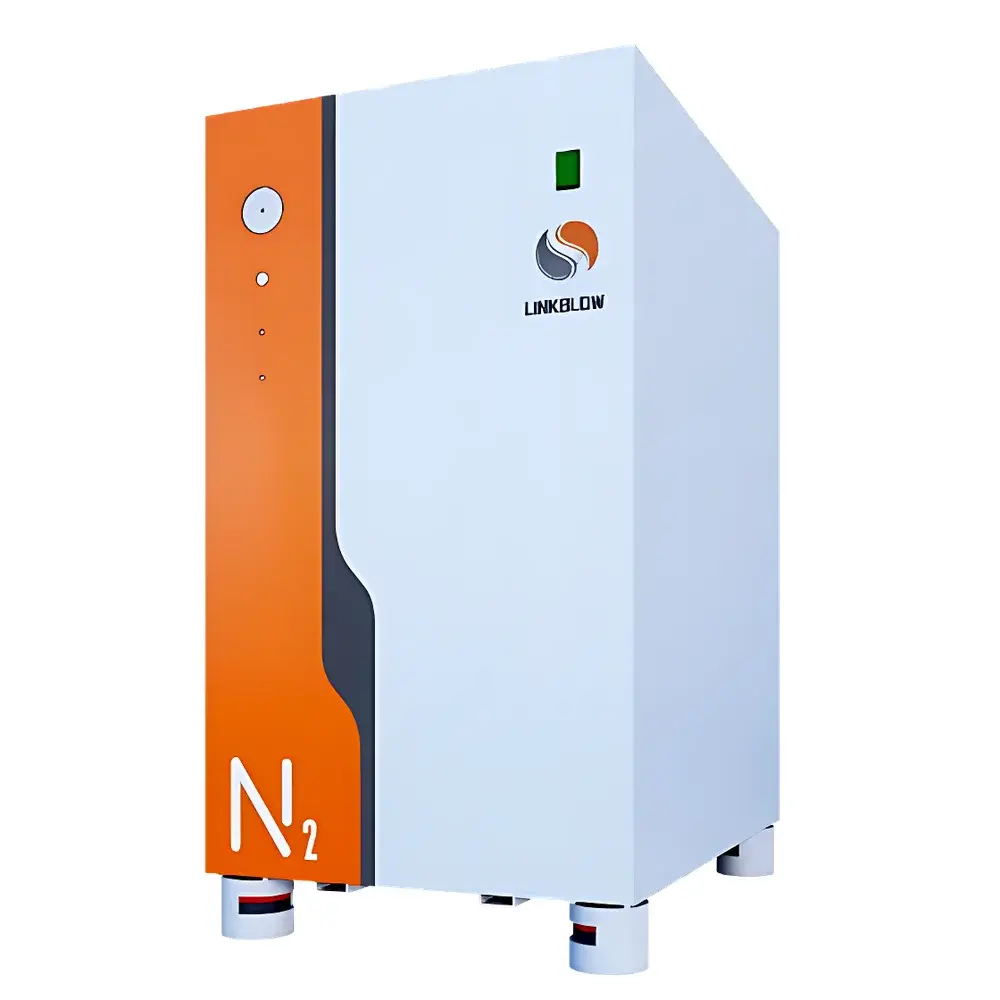
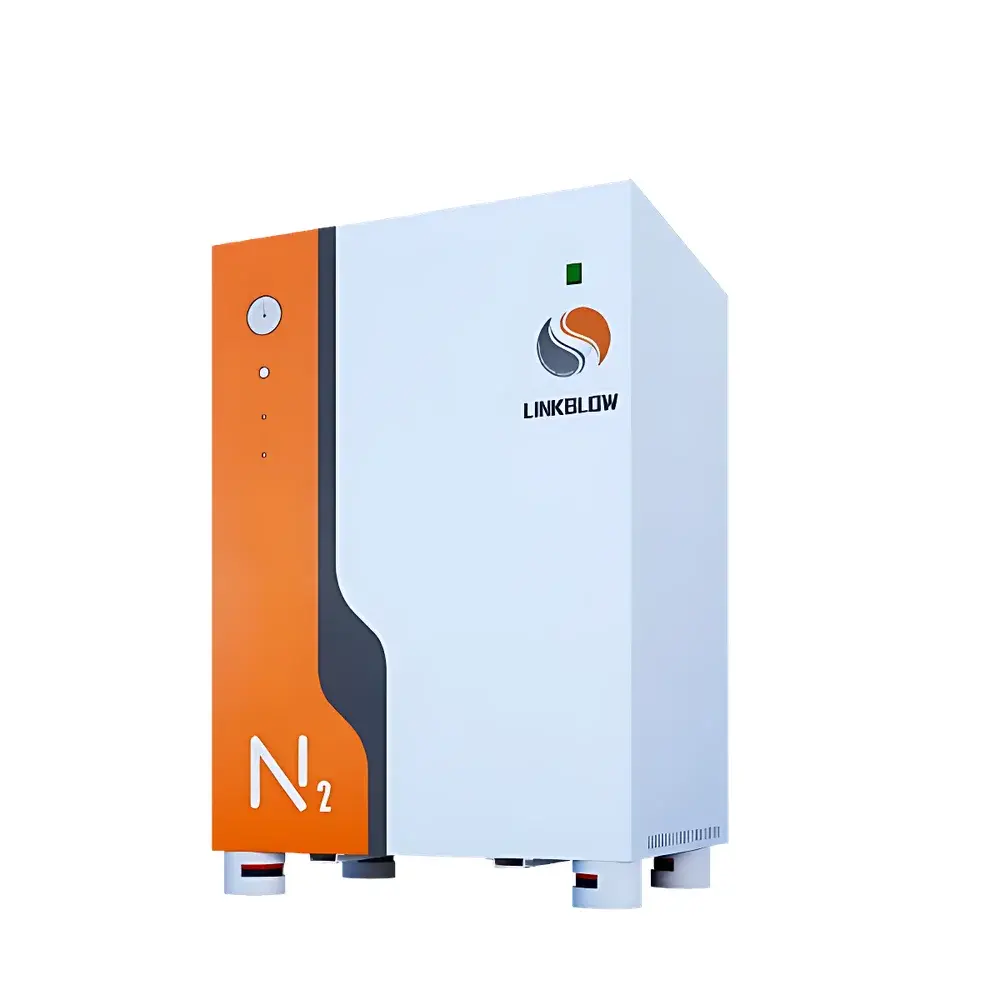
Runrong Instrument N-D Series On-Site Nitrogen Generator for Sample Preparation
| Brand | Runrong Instrument |
|---|---|
| Origin | Shanghai, China |
| Model | N-D Series |
| Nitrogen Generation Principle | Membrane Separation (MEM) |
| Output Flow Rate | 0–130 L/min at 5 kgf (72.5 psi) |
| Output Pressure | 0–100 psi |
| Nitrogen Dew Point | < –40 °C |
| Configuration | Integrated Air Compressor + Dual-Stage Purification |
| Output Options | Single or Multi-Channel Nitrogen |
Overview
The Runrong Instrument N-D Series On-Site Nitrogen Generator is an engineered solution for laboratories requiring reliable, continuous, and high-purity nitrogen gas directly at the point of use—specifically tailored for sample preparation workflows. Utilizing membrane separation (MEM) technology, the system separates nitrogen from compressed ambient air by exploiting differential permeation rates of oxygen, water vapor, and other gases through selective polymeric membranes. This principle delivers dry, oil-free nitrogen with consistent purity (>99.5% N₂ typical under rated flow conditions) without cryogenic cooling or pressure swing adsorption (PSA) complexity. Designed as an integrated unit—including a built-in air compressor and dual-stage filtration—the N-D Series eliminates dependency on high-pressure cylinders or external compressors, reducing operational risk, logistical overhead, and contamination potential in sensitive evaporation and concentration applications.
Key Features
- Integrated architecture: Self-contained air compression, pre-filtration, membrane separation, and post-drying stages in a single footprint—no external air supply or ancillary drying units required.
- Dual-stage purification: Particulate removal (0.01 µm coalescing filter) followed by activated carbon and desiccant stages ensures low hydrocarbon content and dew point stability below –40 °C.
- Scalable flow delivery: Adjustable output from 0 to 130 L/min at 5 kgf (72.5 psi), with stable pressure regulation up to 100 psi—enabling compatibility with multi-channel parallel concentrators and high-throughput nitrogen blow-down systems.
- Multi-output flexibility: Configurable for single or multiple independent nitrogen outlets; optional dual-stream configuration supports simultaneous delivery of nitrogen and instrument-grade compressed air for auxiliary lab equipment.
- Robust industrial design: CE-compliant electrical safety, IP54-rated enclosure for dust and splash resistance, and vibration-damped mounting for continuous operation in shared laboratory environments.
Sample Compatibility & Compliance
The N-D Series is validated for seamless integration with leading brands of nitrogen-driven sample preparation instruments—including but not limited to Biotage® TurboVap®, Thermo Fisher Scientific™ Reacti-Therm™, Genevac™ miVac, and various OEM parallel concentrators and nitrogen evaporators. All configurations meet ISO 8573-1:2010 Class 2.2.1 for compressed air quality (solid particles ≤ 0.1 µm, dew point ≤ –40 °C, oil content ≤ 0.01 mg/m³), ensuring compatibility with GLP- and GMP-regulated workflows where gas purity documentation is required. While not certified to FDA 21 CFR Part 11 out-of-the-box, the system supports audit-trail-ready operation when paired with compliant laboratory information management systems (LIMS) via analog 4–20 mA or digital RS485 output options (available upon request).
Software & Data Management
The N-D Series operates via an embedded microcontroller with real-time monitoring of inlet pressure, membrane stack temperature, outlet flow, and dew point status. A front-panel LCD display provides immediate access to operational parameters and fault diagnostics (e.g., filter saturation, pressure loss, thermal overload). For centralized lab infrastructure, optional Modbus RTU communication enables integration into building management systems (BMS) or facility-wide gas monitoring platforms. All operational logs—including runtime hours, maintenance alerts, and pressure/flow trend history—are timestamped and exportable via USB interface in CSV format, supporting internal QA/QC record retention per ISO/IEC 17025 clause 7.5.2.
Applications
- Nitrogen blow-down for solvent evaporation in environmental, food, and clinical sample prep (e.g., pesticide residue analysis, fatty acid methyl ester isolation).
- Gas supply for automated parallel concentrators performing simultaneous evaporation across 12–96 sample positions.
- Inert blanketing during derivatization or light-sensitive compound handling prior to GC or LC injection.
- Carrier or purge gas for headspace samplers, thermal desorption units, and solid-phase extraction manifolds.
- Compressed air feed for pneumatic actuators in automated liquid handlers where oil-free, low-dew-point air is mandated.
FAQ
What nitrogen purity can be expected across the full flow range?
Purity remains ≥99.5% N₂ at flows up to 100 L/min; above this, purity decreases gradually due to membrane saturation—consult flow-vs.-purity curves in the technical datasheet for application-specific validation.
Is routine maintenance required—and what does it entail?
Yes: Pre-filters require replacement every 2,000 operating hours; membrane modules are rated for ≥15,000 hours under clean-air feed conditions. Full maintenance schedule and OEM spare parts list are provided in the user manual.
Can the unit be installed in a fume hood or confined space?
No—adequate ventilation and minimum 30 cm clearance around all sides are mandatory for heat dissipation and compressor airflow. Ambient temperature must remain between 10–35 °C.
Does the system support remote monitoring via Ethernet or Wi-Fi?
Standard configuration includes RS485/Modbus; Ethernet or Wi-Fi gateways are available as field-installable add-ons for enterprise network integration.
How is compliance with ISO 8573-1 verified during installation?
Runrong provides factory calibration certificates traceable to NIM (National Institute of Metrology, China); on-site verification requires third-party dew point and particle counters per ISO 8573-1 Annex B protocols.



