
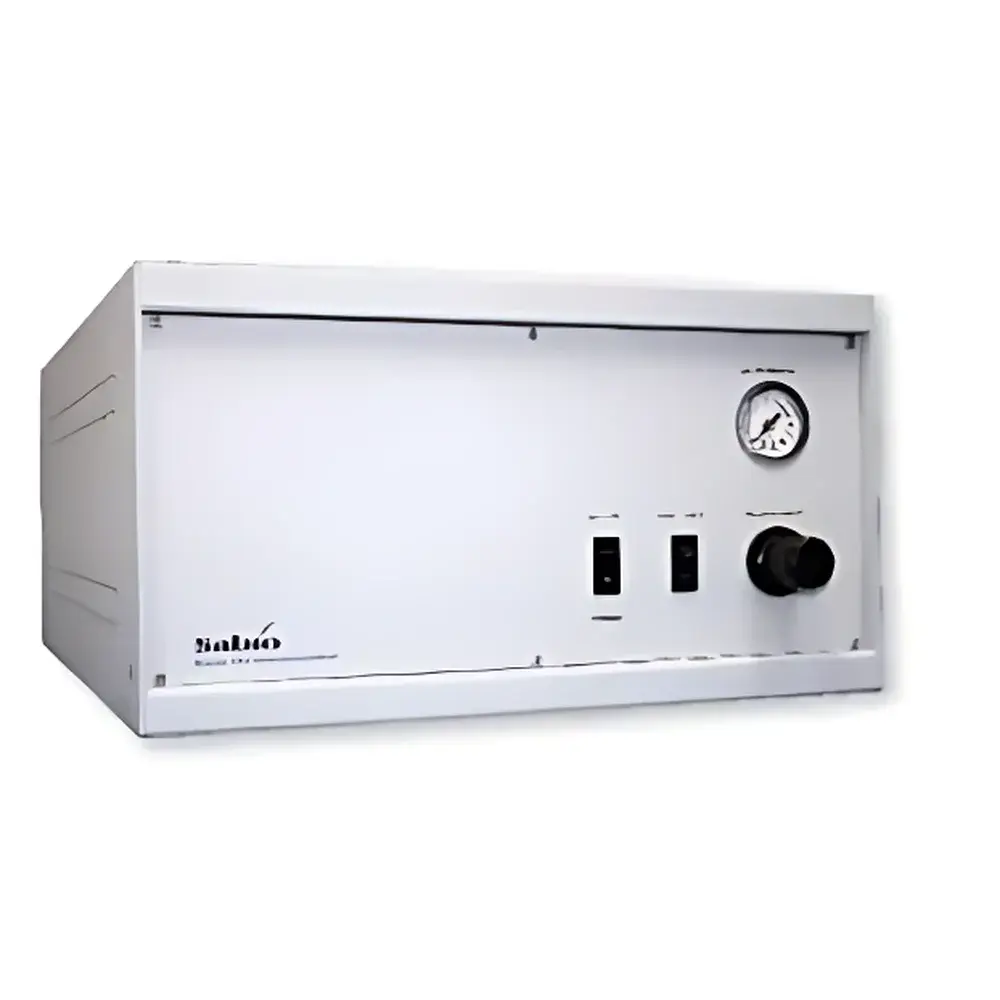
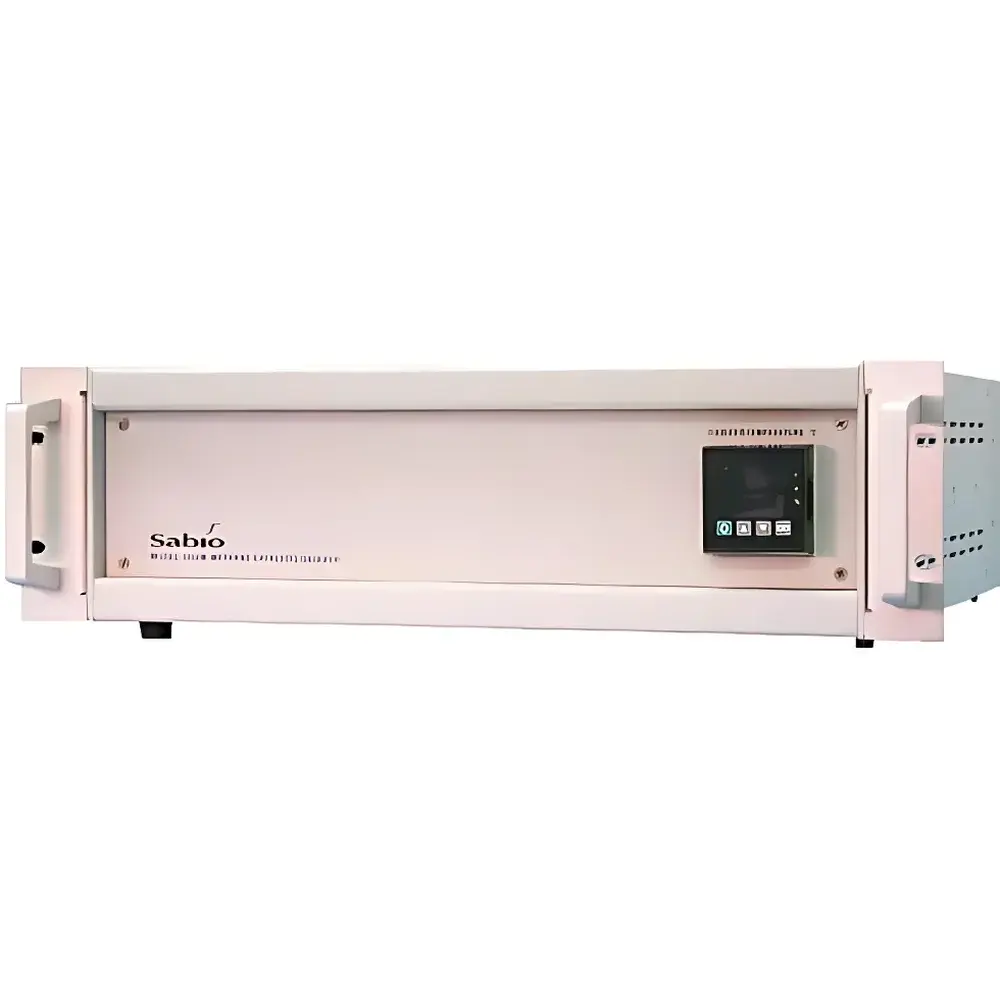
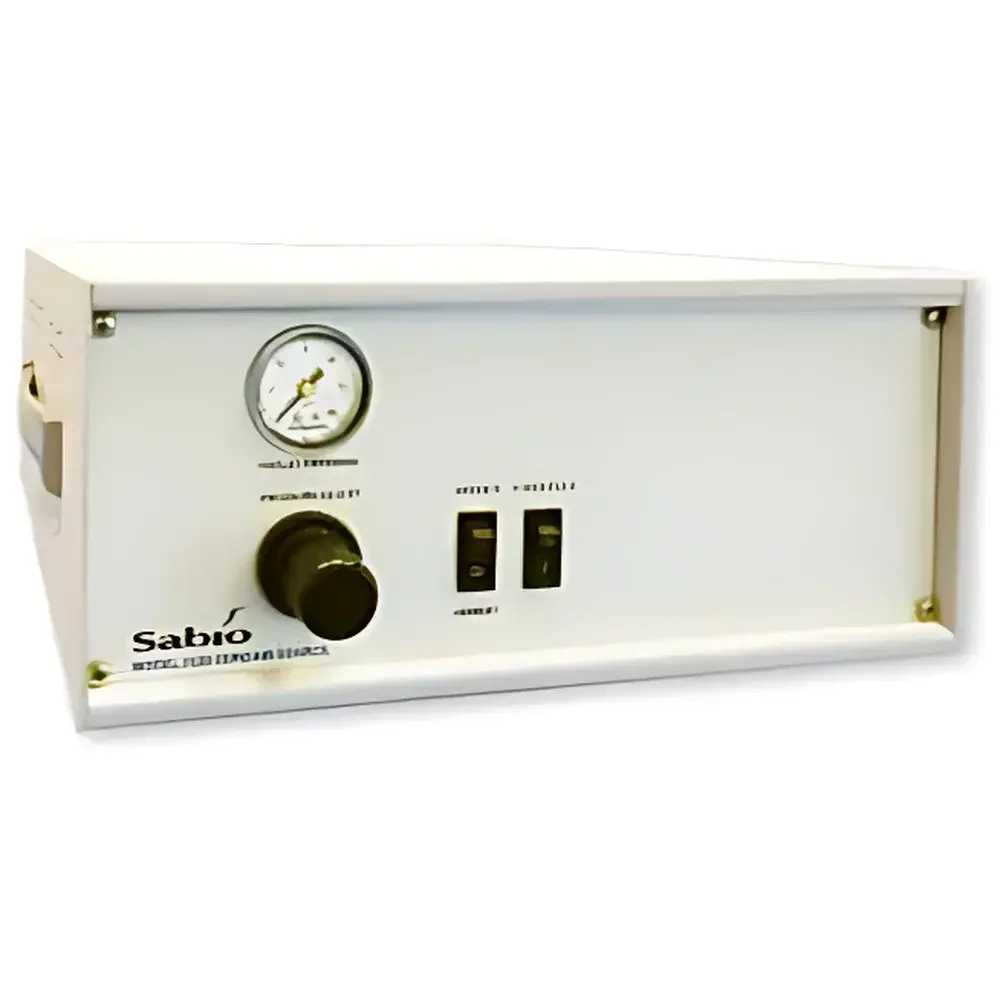
Sabio Model 1001 Zero Air Generator
| Brand | Sabio |
|---|---|
| Origin | USA |
| Manufacturer Type | Authorized Distributor |
| Origin Category | Imported |
| Model | 1001 |
| Output Flow | 22 SLPM at 25 psi |
| Condensate Tank Capacity | 3.4 L |
| Compression Technology | Brushless, Oil-Free Compressor |
| Purification Media | Catalytic beds for NO, NO₂, SO₂, H₂S, and O₃ removal |
| Zero Air Purity | NO, NO₂, O₃, H₂S, SO₂ < 0.5 ppb |
| Optional Methane Catalytic Furnace (Model 1000M) | Microprocessor-controlled proportional heating |
| Dimensions | 13.3 cm H × 48.3 cm W × 38.1 cm D |
| Input Power | 98–132 VAC (optional 196–264 VAC), 360 VA, 50/60 Hz |
| Post-Catalysis Purity | CO < 5 ppb, HC < 0.20 ppb |
| Model 2020 Variant | 10 SLPM at 20 psig |
Overview
The Sabio Model 1001 Zero Air Generator is an engineered solution for laboratories and environmental monitoring facilities requiring ultra-pure, hydrocarbon- and reactive-gas-free air as a calibration or carrier gas. It operates on a multi-stage purification principle: ambient air is first compressed using a brushless, oil-free rotary vane compressor to ensure zero lubricant contamination; then passed through a refrigerated condenser (3.4 L capacity) followed by integrated desiccant drying; finally, catalytic conversion media selectively oxidize and remove trace nitrogen oxides (NO, NO₂), sulfur dioxide (SO₂), hydrogen sulfide (H₂S), and ozone (O₃). The resulting zero air meets stringent analytical requirements for photometric ozone analyzers, chemiluminescent NOₓ detectors, FTIR gas cells, and GC carrier gas applications where baseline stability and interference-free response are critical. Its design complies with EPA Method TO-14A, ASTM D6196, and ISO 8573-1 Class 0 (for particulates, water, and oil) when operated within specified ambient conditions.
Key Features
- Brushless, maintenance-free oil-free compressor ensures long-term reliability and eliminates risk of hydrocarbon carryover.
- Integrated 3.4 L condensate reservoir with both automatic and manual drain options for flexible lab integration.
- Dual-stage purification architecture: refrigerative condensation + desiccant drying + catalytic oxidation — optimized for sub-ppb contaminant removal.
- Front-access service panel with quick-release fittings for routine media replacement and system validation.
- Optional Model 1000M methane catalytic furnace enables further reduction of residual CO and hydrocarbons to ≤5 ppb and ≤0.20 ppb respectively, meeting US EPA Method 21 and EN 14625 trace-level specifications.
- Robust front-panel interface includes pressure gauge, precision regulator, and dedicated purge switch for instrument start-up and system conditioning.
Sample Compatibility & Compliance
The Model 1001 delivers zero air compatible with all major regulatory-grade gas analyzers, including Thermo Fisher Scientific 42i/43i series, Teledyne API 200/400 series, Horiba APNA-370, and Siemens Ultramat 23. Its output purity satisfies the zero-air criteria defined in US EPA 40 CFR Part 53 (for reference method equivalency testing), ISO 12039 (for flue gas analysis), and ASTM D5197 (for ambient air VOC sampling). When equipped with certified catalytic modules and operated under documented SOPs, the system supports GLP-compliant calibration workflows and is routinely validated per IQ/OQ protocols during laboratory accreditation audits (e.g., ISO/IEC 17025).
Software & Data Management
While the Model 1001 operates as a standalone hardware system, its performance parameters—including outlet pressure, flow rate (via optional inline mass flow sensor), and cumulative runtime—are accessible via analog 4–20 mA outputs and dry-contact status relays. These signals integrate seamlessly with building management systems (BMS) or centralized lab data acquisition platforms such as LabVIEW, DeltaV, or Ignition SCADA. For full auditability, users may log operational events (e.g., condensate drain cycles, media replacement dates) in accordance with FDA 21 CFR Part 11 requirements using external electronic lab notebooks (ELN) or LIMS modules configured for instrument metadata tracking.
Applications
- Calibration and zero-span verification of ambient air quality monitors (O₃, NOₓ, SO₂, CO).
- Carrier and purge gas for gas chromatography (GC) and GC-MS systems requiring ultra-low background hydrocarbon levels.
- Baseline reference gas for Fourier-transform infrared (FTIR) spectroscopy and cavity ring-down spectroscopy (CRDS) platforms.
- Zero air supply for cleanroom particle counters and airborne molecular contamination (AMC) monitoring.
- Support gas for catalytic converter efficiency testing and engine emissions R&D per SAE J1149 and ISO 8716 standards.
FAQ
What is the typical service interval for catalytic media cartridges?
Catalytic beds require replacement every 12–18 months under continuous operation at rated flow; frequency increases with high ambient humidity or elevated NOₓ/SO₂ concentrations.
Can the Model 1001 be integrated into a central gas distribution system?
Yes — it features standard 1/4″ NPT inlet/outlet ports and is compatible with stainless steel or electropolished tubing; pressure regulation and particulate filtration must be added upstream of branch points.
Does the unit include validation documentation for ISO/IEC 17025 compliance?
Sabio provides factory test reports (including pre- and post-purification gas chromatograms) and a Certificate of Conformance; full IQ/OQ documentation packages are available upon request.
Is the Model 1001 suitable for use in explosion-hazardous areas?
No — it is rated for general laboratory use only (Class I, Division 2 not applicable); ATEX or IECEx-certified variants are not offered.
How does ambient temperature affect dew point performance?
At 25°C ambient, the integrated permeation dryer achieves ≤−40°C dew point; performance degrades above 35°C ambient unless supplemental cooling is provided.



