
Sable CA-10 Multifunctional Automated Plant Respirometry System
| Brand | Sable |
|---|---|
| Origin | USA |
| Manufacturer Type | Authorized Distributor |
| Product Category | Imported Instrument |
| Model | CA-10 |
| Pricing | Upon Request |
Overview
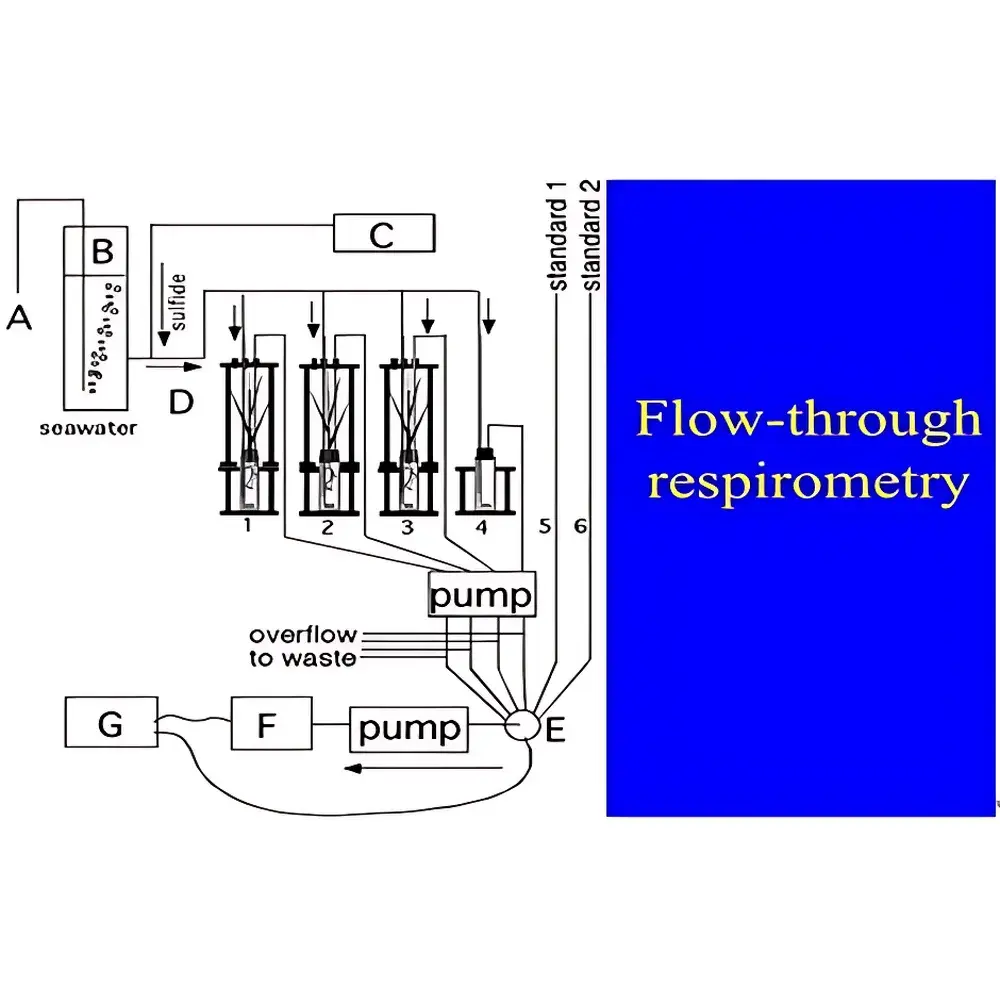
The Sable CA-10 Multifunctional Automated Plant Respirometry System is an integrated, modular platform engineered for high-precision, real-time quantification of respiratory gas exchange (O₂ consumption, CO₂ evolution) and water vapor flux in plant tissues across developmental stages and environmental conditions. Based on dual-beam non-dispersive infrared (NDIR) CO₂ detection, paramagnetic or fuel-cell–based O₂ analysis, and chilled-mirror or capacitive RH sensing, the system implements closed-chamber, open-flow, and flow-injection respirometry protocols—enabling both net photosynthetic rate (Anet) and dark respiration rate (Rd) measurements with sub-second temporal resolution. Its architecture supports concurrent multi-parameter acquisition (CO₂, O₂, H₂O, temperature, pressure, flow), essential for calculating metabolic quotients (RQ), respiratory substrate utilization, and mitochondrial electron transport efficiency. Designed for rigorous plant physiology and postharvest science, the CA-10 meets foundational requirements for GLP-compliant experimental workflows and aligns with ASTM E1379 (Standard Guide for Respirometric Measurement of Plant Tissue Metabolism) and ISO 14855-1 (Determination of ultimate aerobic biodegradability).
Key Features
- Modular sensor architecture: Interchangeable CO₂ (CA-10), O₂ (FC-10), and H₂O (RH-300) analyzers—each featuring built-in temperature/pressure compensation, 16-bit analog outputs, and digital noise filtering (0.2–50 s adjustable)
- Multi-mode gas handling: Configurable for closed-system static accumulation, open-flow dynamic measurement (5–2000 mL/min), or flow-injection analysis (<15 s per sample), minimizing lag time and enabling high-throughput screening
- Scalable chamber integration: Compatible with borosilicate micro-chambers (0.5–1.0 mL), custom-sized cylindrical chambers (up to 320 L), and whole-plant enclosures—validated for root, leaf, fruit, seed, tuber, and intact seedling assays
- Automated multi-channel sampling: 8-channel gas switcher (expandable to 32 channels) with baseline referencing, programmable sequencing, and 10 Hz data logging synchronized to UI-3 data acquisition unit
- Real-time environmental control: Integrated temperature and barometric pressure monitoring (0–60 °C ±0.001 °C; 30–110 kPa ±0.0001 kPa) ensures stoichiometric correction of gas concentration data per ideal gas law
- Extensible ecosystem: Optional integration with FluorCam chlorophyll fluorescence imaging, Specim hyperspectral reflectance, and thermal-RGB phenotyping modules for correlative physiological assessment
Sample Compatibility & Compliance
The CA-10 system accommodates diverse biological matrices without modification: excised roots, detached leaves, intact seedlings, harvested fruits (e.g., avocado, blueberry, peach), tubers (potato, onion), and desiccation-tolerant storage organs (e.g., ranunculus corms). It has been validated in peer-reviewed studies for compliance with USDA-ARS postharvest protocol standards and EFSA guidance on respiration-based shelf-life modeling. All analog signal paths meet IEC 61000-4-3 EMC immunity requirements. Data integrity adheres to ALCOA+ principles (Attributable, Legible, Contemporaneous, Original, Accurate, Complete, Consistent, Enduring, Available); audit trails, electronic signatures, and user-access controls are implementable via optional FDA 21 CFR Part 11–compliant software extensions.
Software & Data Management
Acquisition and analysis are managed through Sable’s proprietary ExpeData v5.x suite, supporting real-time visualization, batch processing, and export to CSV, HDF5, or MATLAB-compatible formats. The software enables automated calculation of Rd, Anet, intercellular CO₂ concentration (Ci), stomatal conductance (gs), and respiratory quotient (RQ = V̇CO₂/V̇O₂). Raw sensor outputs are timestamped with microsecond precision, and all calibration events (span, zero, linearity checks) are logged with operator ID and environmental metadata. Exported datasets include embedded units, uncertainty propagation flags, and traceable NIST-traceable calibration certificates for CO₂ and O₂ sensors. Data backups follow ISO/IEC 27001–aligned encryption and retention policies.
Applications
- Postharvest physiology: Quantifying temperature- and humidity-dependent respiration kinetics in horticultural commodities (e.g., asparagus spear senescence, blueberry chilling injury, flat peach dormancy break)
- Root metabolism: Assessing alternative oxidase (AOX) pathway activation under abiotic stress (e.g., selenite exposure in Brassica napus)
- Seed viability testing: Monitoring O₂ depletion rates in stored seeds as predictive biomarkers of germination capacity
- Crop improvement programs: Screening germplasm for low-respiration phenotypes linked to extended shelf life or drought resilience
- Eco-physiological modeling: Parameterizing Arrhenius-type Q₁₀ equations and Michaelis-Menten–derived substrate affinity constants for mitochondrial enzymes
- Cross-species comparative respirometry: Standardized measurement of RQ shifts during transition from carbohydrate to lipid oxidation in oilseed tissues
FAQ
Can the CA-10 measure both photosynthesis and respiration in the same experimental run?
Yes—by integrating light-controlled chamber illumination with simultaneous CO₂/O₂/H₂O monitoring, the system captures light-response curves (A/Ci, A/Q) and dark-adapted respiration in a single protocol.
Is flow-injection respirometry compatible with small arthropod or microbial samples?
Yes—when paired with the optional differential O₂ analyzer (0–100% range, 0.0001% resolution) and micro-chambers (0.5 mL), it achieves reliable metabolic rates for Drosophila, mites, and fungal mycelia.
Does the system support long-term unattended operation?
Yes—robust thermal management, low-drift sensor electronics (72 h continuous logging without manual intervention.
Are calibration gases and service documentation supplied with the system?
Yes—NIST-traceable CO₂ (0%, 1%, 5%, 15%) and O₂ (0%, 21%, 100%) standards are included, along with full technical manuals, SOP templates, and ISO 17025–aligned calibration reports.
Can third-party environmental controllers (e.g., climate chambers) be synchronized with the CA-10?
Yes—via TTL-triggered I/O ports and Modbus TCP/IP interface, enabling closed-loop control of chamber T/RH during respirometric assays.



