
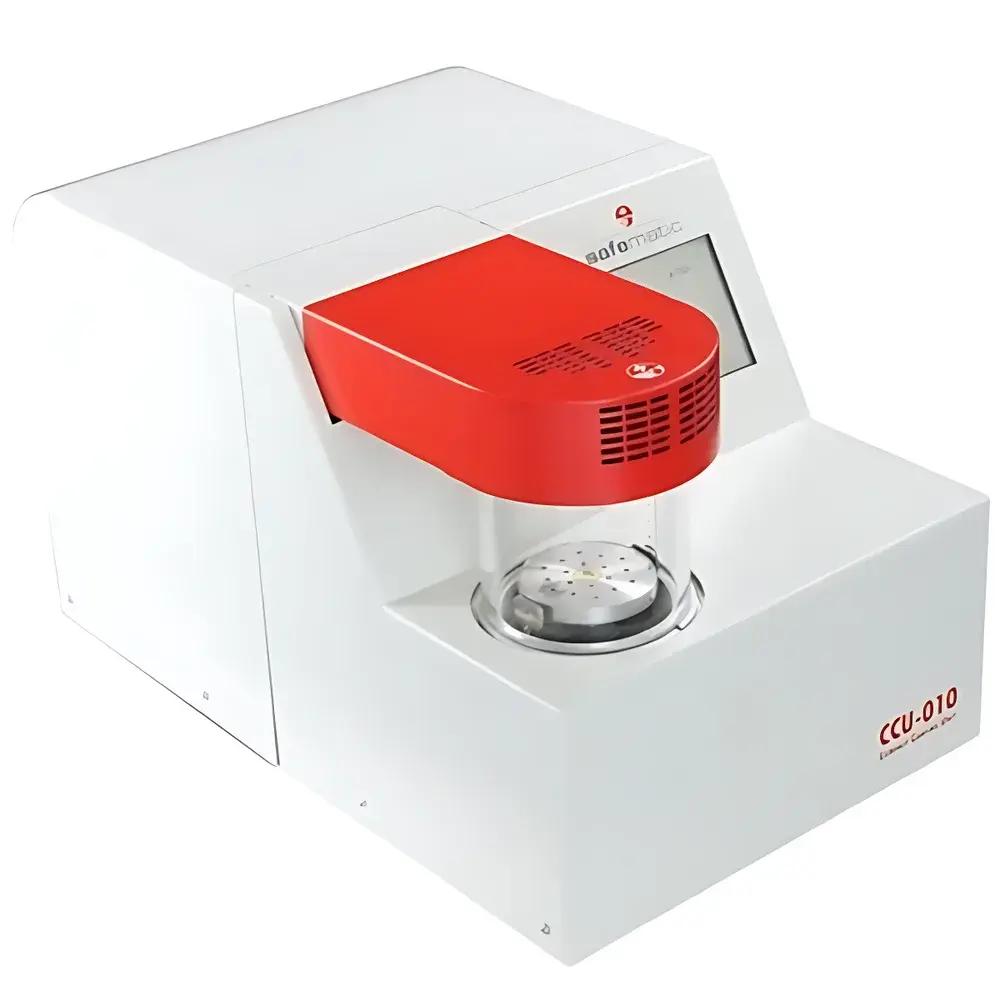
Safematic CCU-010 LV Integrated Ion Sputtering and Carbon Evaporation Coater
| Brand | Safematic |
|---|---|
| Origin | Switzerland |
| Model | CCU-010 LV |
| Instrument Type | Benchtop Coating System |
| Secondary Electron Image Resolution | 3–8 nm |
| Maximum Magnification | <100,000× |
| Accelerating Voltage | 0.5–30 kV |
| Sample Stage | ≥60 mm diameter, height-adjustable, tilt-capable, optional planetary or rotation stage |
Overview
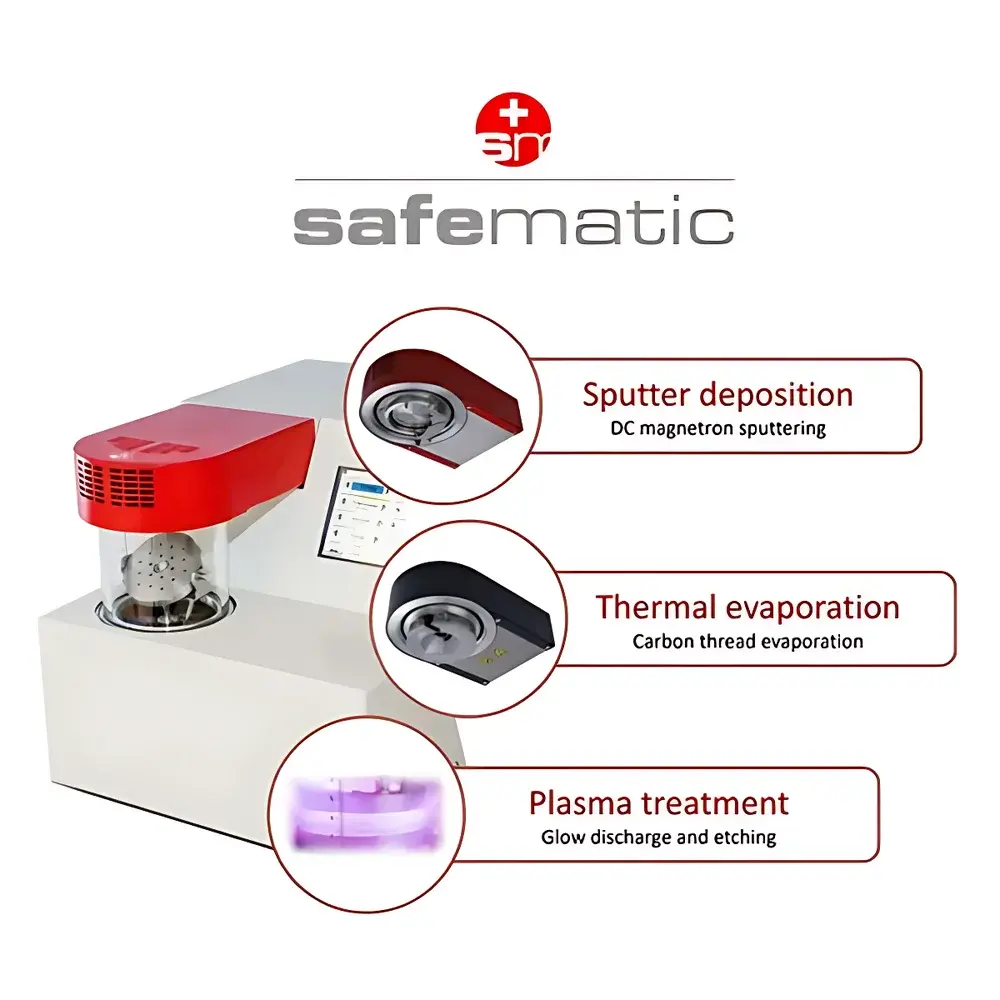
The Safematic CCU-010 LV is a benchtop-integrated coater engineered for high-fidelity sample preparation in scanning electron microscopy (SEM) and energy-dispersive X-ray spectroscopy (EDX). It combines ion sputtering, carbon evaporation, and plasma treatment within a single vacuum chamber—enabling sequential or standalone surface modification without venting. Its core architecture follows the principles of magnetron sputtering (for conductive metal films such as Au, Pt, Cr, or Ir) and resistive thermal evaporation (for amorphous carbon films), both governed by precise vacuum process control. Designed for routine EM labs requiring reproducible conductivity enhancement, charge dissipation, and substrate stabilization, the CCU-010 LV operates under low-vacuum conditions (base pressure typically ≤5 × 10⁻² mbar with rotary pump), with modular upgrade paths to high-vacuum configurations (e.g., CCU-010 HV with turbomolecular pumping). All functional modules—including SP-010/SP-011 sputter heads, CT-010 carbon evaporator, GD-010 glow discharge unit, and ET-010 plasma etcher—are mechanically and electrically interoperable via standardized flange interfaces and vacuum-tight insertion mechanisms.
Key Features
- Modular “plug-and-play” design: Interchangeable sputtering (SP-010 or SP-011) and carbon evaporation (CT-010) modules enable rapid reconfiguration between metal coating and carbon film deposition—eliminating cross-contamination risks.
- Dual-position quartz crystal microbalance (QCM): Real-time thickness monitoring at two independent locations accommodates variable sample geometries and ensures uniformity across substrates up to 60 mm in diameter.
- Active-cooled sputter heads: SP-010 features optimized magnetron geometry for fine-grain noble metal deposition; SP-011 supports higher power density and broader target material compatibility (including oxides and alloys) for thicker, denser films.
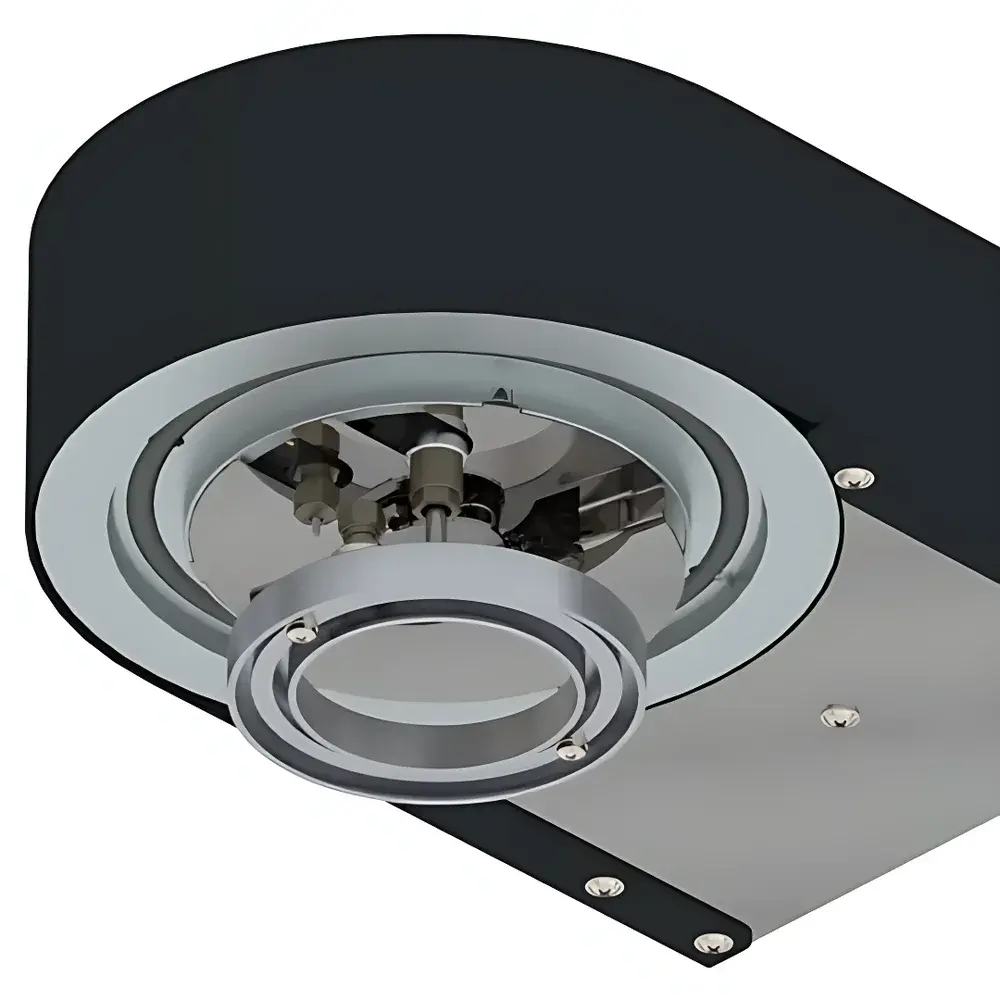
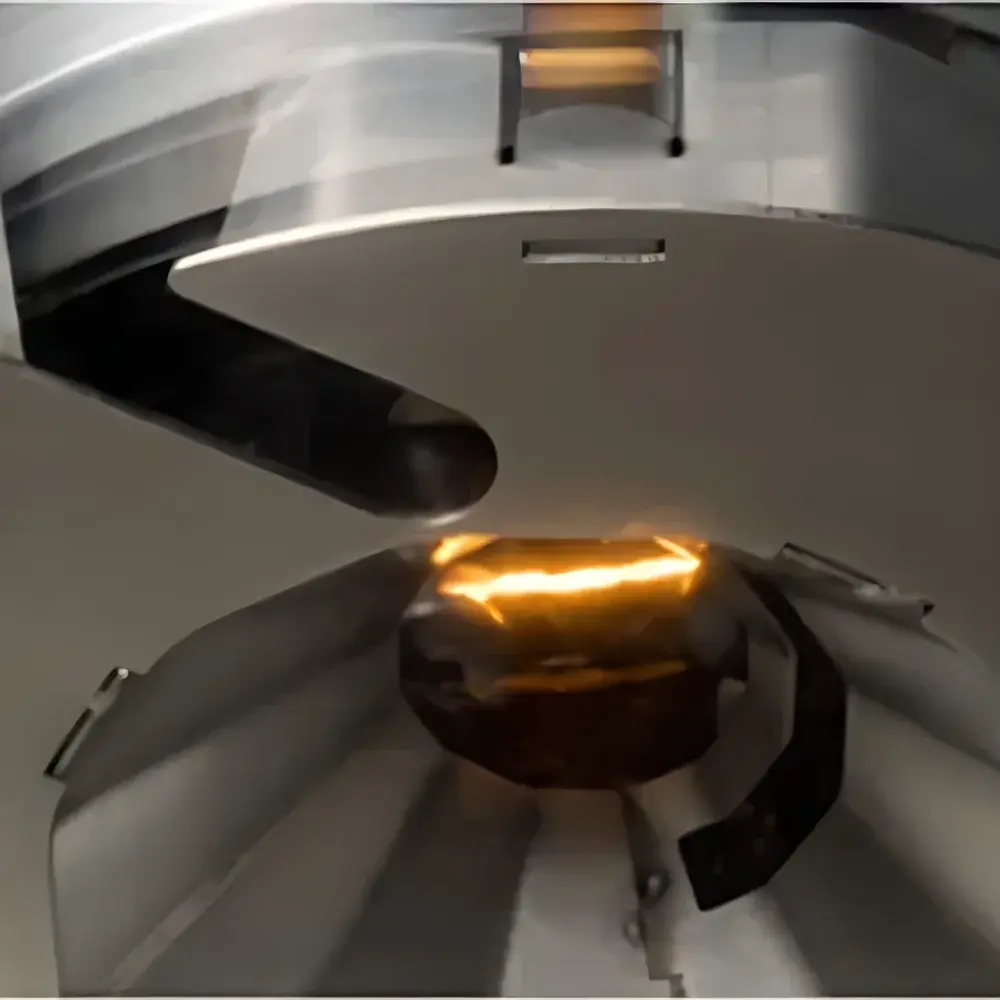
- Automated carbon feed system: CT-010 employs a proprietary European-engineered carbon filament spool mechanism enabling >30 consecutive depositions without manual intervention—ideal for high-throughput labs.
- Integrated plasma processing: GD-010 glow discharge and ET-010 plasma etch units operate sequentially within the same vacuum cycle using air, Ar, O₂, or N₂—enabling hydrophilization of carbon films or pre-deposition surface cleaning.
- Intelligent power management: Pulse-controlled evaporation, automatic shutter sequencing, and real-time current/voltage feedback prevent arcing and ensure layer homogeneity—even on temperature-sensitive biological or polymeric specimens.
Sample Compatibility & Compliance
The CCU-010 LV accommodates standard SEM stubs, planchets, TEM grids, and custom substrates up to 60 mm in diameter. Its height-adjustable and tilt-capable stage supports angled deposition for shadowing applications, while optional planetary or rotation stages enhance film uniformity on irregular topographies. Vacuum integrity complies with ISO 27427 (vacuum equipment safety) and EN 61000-6-3 (EMC emissions). When operated with Coating-LAB software and RC-010 remote control suite, the system supports audit trails, user-level access control, and parameter logging—facilitating adherence to GLP and ISO/IEC 17025 documentation requirements. Optional integration with glovebox environments (via RC-010) satisfies inert-atmosphere sample handling protocols per ASTM E2937-22.
Software & Data Management
Coating-LAB is a Windows-based PC application providing full instrument control, real-time process visualization, and traceable data export. It displays synchronized curves for chamber pressure, sputter current/voltage, evaporation rate, and QCM-derived thickness (in nm), updated at 100 ms intervals. All parameters—including gas flow rates, shutter timing, and plasma exposure duration—are stored with timestamps and operator IDs. Export formats include CSV, Excel (.xlsx), PNG, and PDF for report generation. RC-010 extends functionality to glovebox-integrated workflows, supporting recipe-driven automation, remote diagnostics, and multi-user credential management. Software updates are delivered via secure HTTPS channels and validated against SHA-256 checksums—ensuring compliance with FDA 21 CFR Part 11 electronic record integrity standards.
Applications
- SEM sample preparation: Conductive Au/Pt sputtering for non-conductive biological tissues, ceramics, and polymers; Cr/Ir coatings for high-resolution imaging at low kV.
- TEM grid support films: Uniform amorphous carbon films deposited via CT-010 for cryo-EM specimen stabilization and electron transparency.
- Surface functionalization: Glow discharge treatment of carbon films to increase wettability for subsequent antibody labeling or nanomaterial anchoring.
- Plasma-assisted cleaning: Pre-sputter argon etching to remove organic contaminants from semiconductor wafers or MEMS devices prior to metallization.
- Failure analysis: Sequential carbon coating + plasma oxidation to reveal subsurface delamination or interfacial voids in packaged ICs.
- Glovebox-compatible metallization: Inert-atmosphere deposition of oxygen-sensitive metals (e.g., Ti, Al) on battery electrode materials without oxide formation.
FAQ
Can the CCU-010 LV be upgraded to high vacuum?
Yes—the base LV configuration supports field retrofitting with a turbomolecular pump and associated gauging, enabling base pressures down to 1 × 10⁻⁶ mbar for ultra-thin film applications.
Is the CT-010 carbon module compatible with other Safematic coaters?
No—CT-010 is mechanically and electronically specific to the CCU-010 platform due to its integrated spool drive interface and QCM synchronization logic.
What vacuum pumps are required for standard operation?
A two-stage rotary vane pump (≥4 m³/h) is sufficient for LV mode; optional turbomolecular pumping requires a dedicated backing pump and controller interface.
Does the system support automated recipe execution?
Yes—Coating-LAB and RC-010 allow creation, versioning, and recall of complete process sequences including vacuum ramping, gas dosing, power modulation, and endpoint detection.
How is cross-contamination prevented between sputtering and carbon evaporation?
Physical separation is achieved through dedicated module cavities, isolated vacuum pathways, and purge cycles between operations—validated by residual gas analysis (RGA) during commissioning.




