
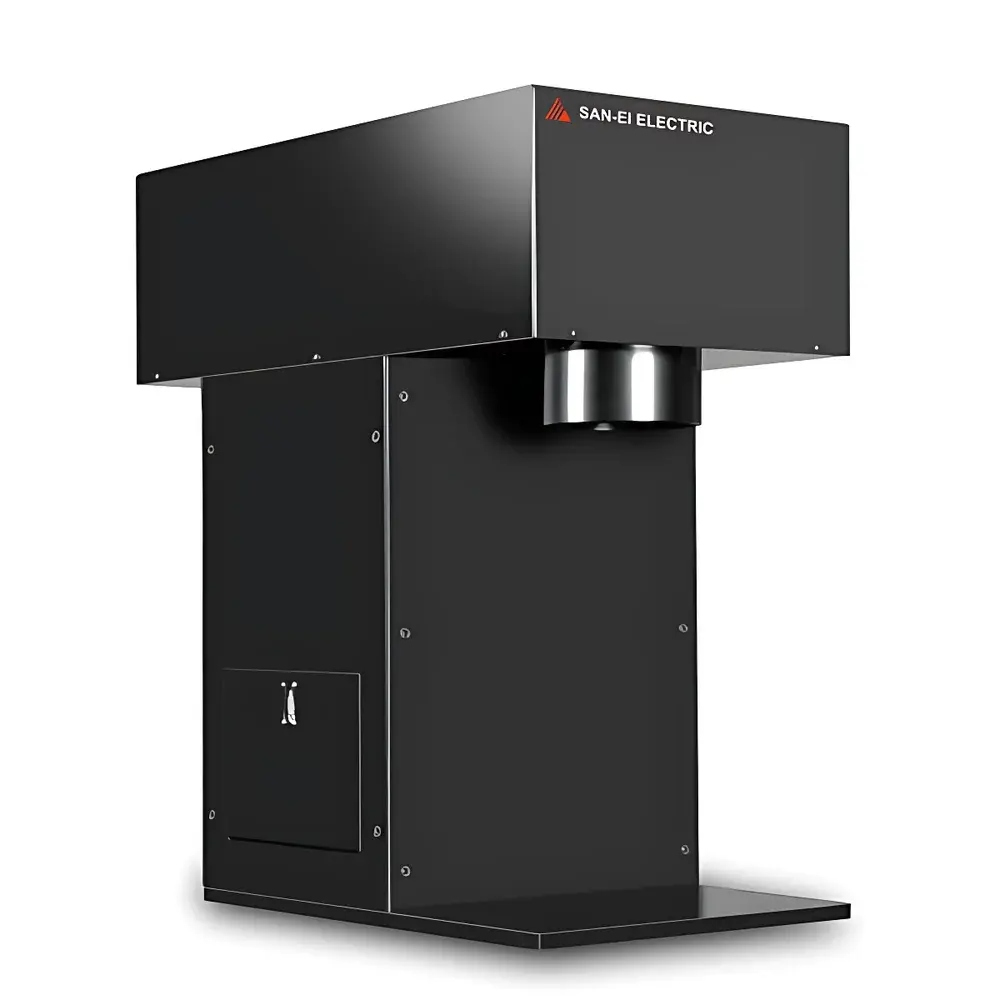
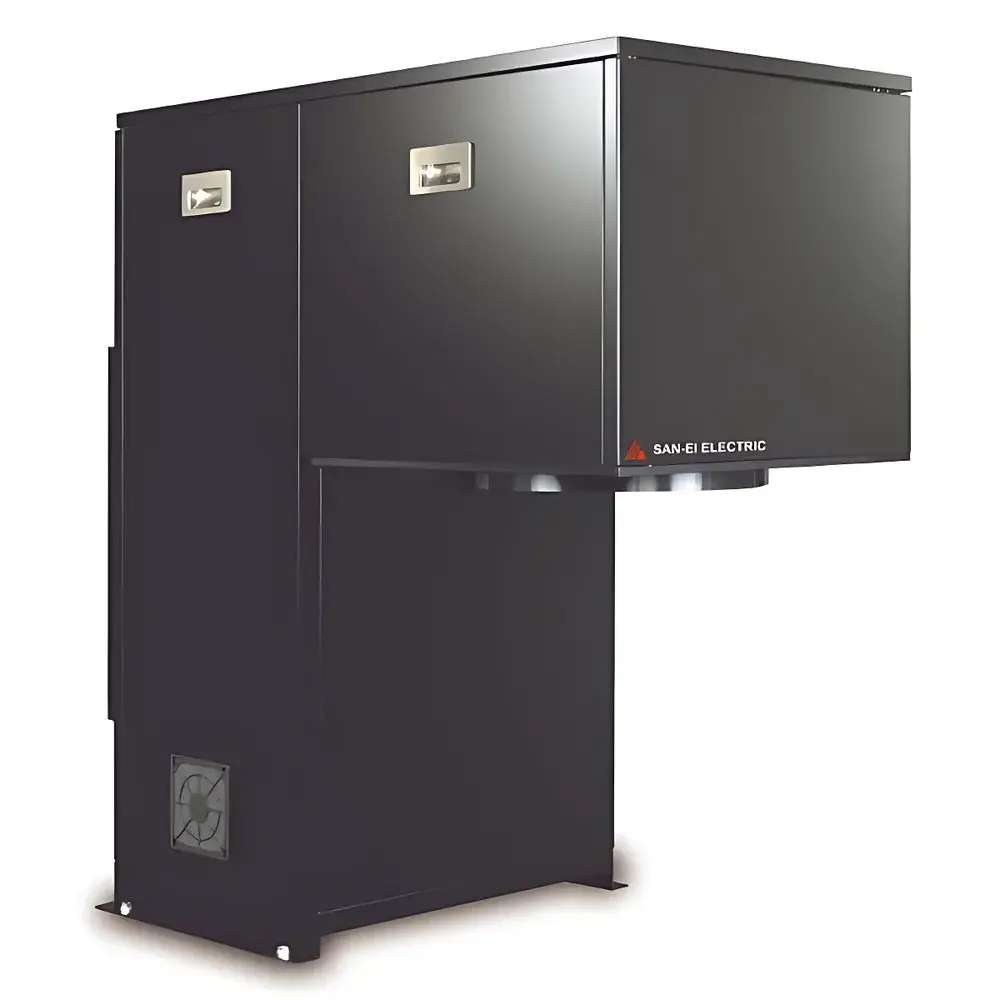
SAN-EI XHS-50S1 Dual-Lamp Spectrally Tunable Solar Simulator
| Brand | SAN-EI |
|---|---|
| Origin | Japan |
| Model | XHS-50S1 |
| Illumination Mode | Steady-State |
| Spectral Range | 300–1800 nm |
| Spectral Mismatch | < ±10% (Factory Standard ≤ ±5%) |
| Spatial Non-Uniformity | < 2% (Class A) |
| Temporal Instability | < 1% (Class A+) |
| Effective Irradiation Area Options | 50 × 50 mm, 80 × 80 mm, 100 × 100 mm, 220 × 220 mm, 300 × 300 mm |
| Spectral Adjustment Capability | Yes |
| AM0 Extension Support | Yes |
| Intensity Tuning Range | ±30% |
| Compliance | IEC 60904-9:2020, JIS C 8912:2005, ASTM E927-05 |
Overview
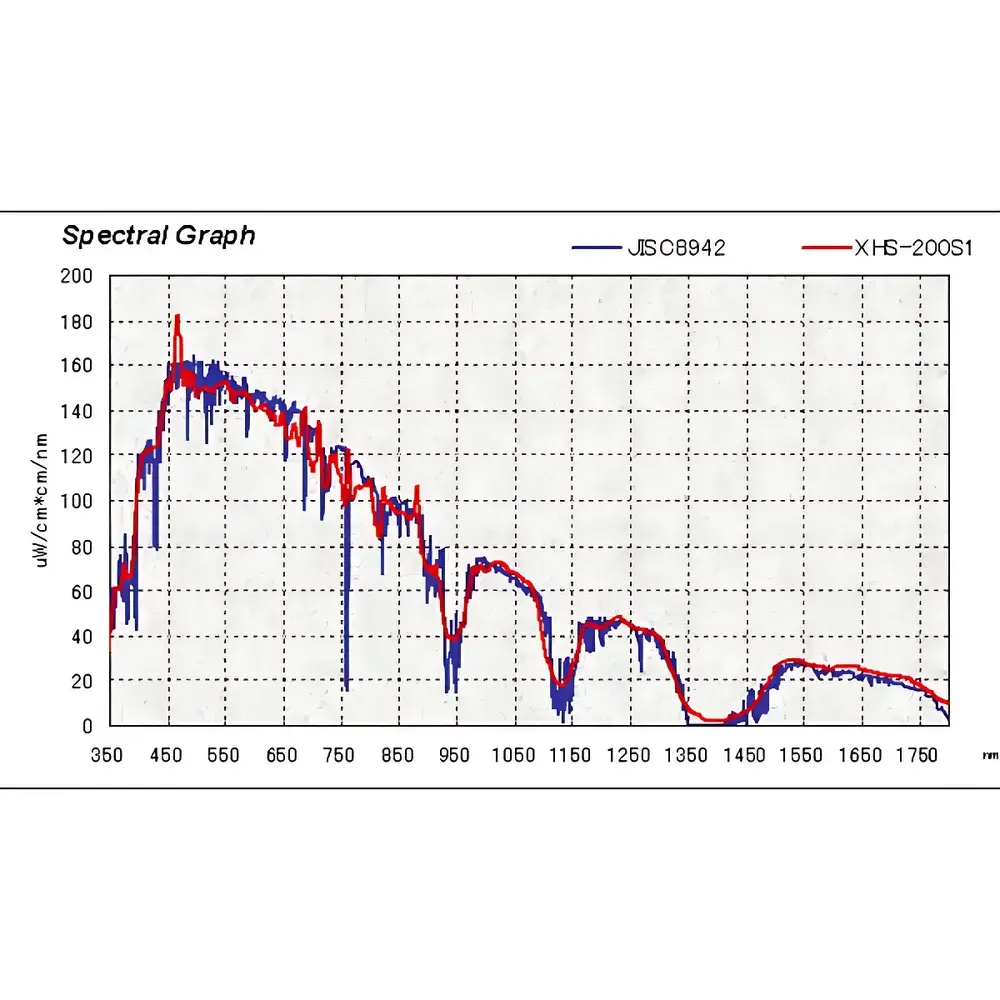
The SAN-EI XHS-50S1 Dual-Lamp Spectrally Tunable Solar Simulator is an engineered solution for high-fidelity photovoltaic (PV) device characterization under standardized terrestrial and extraterrestrial illumination conditions. Unlike conventional single-lamp xenon-based simulators, the XHS-50S1 employs a dual-light-source architecture—comprising two independently controlled, spectrally complementary lamps—to achieve superior spectral fidelity across the full 300–1800 nm range. This design directly addresses the fundamental limitation of spectral mismatch in multi-junction and tandem solar cells, where subcell absorption bands (e.g., bottom-cell response beyond 700 nm) are poorly reproduced by monolithic broadband sources. The system operates in steady-state mode, delivering stable irradiance with temporal instability < 1% (Class A+ per IEC 60904-9:2020), and supports both AM1.5G and extended AM0 spectral profiles. Its optical architecture enables precise intensity tuning (±30%) and real-time spectral adjustment—critical for calibrating reference cells, validating spectral response models, and conducting bias-dependent quantum efficiency measurements.
Key Features
- Dual-lamp, dual-optical-path configuration optimized for spectral fidelity across 300–1800 nm
- Spectral mismatch < ±10% against AM1.5G reference (factory calibrated to ≤ ±5%, Class A+)
- Spatial non-uniformity < 2% over user-selectable active areas (50 × 50 mm up to 300 × 300 mm)
- Compliance with international PV testing standards: IEC 60904-9:2020, ASTM E927-05, and JIS C 8912:2005
- Integrated AM0 spectral extension capability for space-cell qualification and concentrator PV validation
- Adjustable irradiance output with ±30% fine-tuning resolution, enabling controlled light-bias experiments
- Modular optical interface supporting interchangeable filters, collimators, and beam homogenizers
Sample Compatibility & Compliance
The XHS-50S1 accommodates a broad spectrum of photovoltaic technologies—including single-junction Si, thin-film CdTe and CIGS, dye-sensitized (DSSC), organic/polymer, perovskite, and multi-terminal tandem devices—without requiring hardware reconfiguration. Its uniform irradiance field and low spectral mismatch ensure traceable, inter-laboratory comparable IV measurements per ISO/IEC 17025 requirements. For regulated environments, the system supports GLP/GMP-aligned workflows when paired with compliant data acquisition hardware (e.g., Keithley 2400/2600 Series SourceMeter units with audit-trail logging). Certified reference cells (20 × 20 mm, monocrystalline Si, KG5/KG2/quartz window options) are available with NIST-traceable calibration certificates issued by accredited PV metrology institutions. All optical components meet RoHS and REACH material compliance standards.
Software & Data Management
The optional professional IV test software provides full IEC 60904-1 and -3 compliant measurement automation. Core functions include forward/reverse sweep I-V and P-V curve acquisition, Jsc, Voc, FF, η, Rs, and Rsh extraction; real-time I-t monitoring; bias-stability assessment; maximum power point tracking (MPPT); and repeatability analysis across ≥100 consecutive scans. The software implements configurable scan rates (10 ms–10 s/point), dark-current subtraction protocols, and integrated light-intensity calibration routines traceable to primary standard cells. Data export conforms to IEEE 1547.13 and PVsyst-compatible CSV formats. When deployed with 21 CFR Part 11-compliant hardware (e.g., timestamped digital signatures, role-based access control), the platform satisfies FDA-regulated R&D documentation requirements.
Applications
- Quantitative performance evaluation of perovskite/silicon and all-perovskite tandem solar cells
- External quantum efficiency (EQE) mapping and spectral response deconvolution
- Light-soaking and operational stability testing under controlled spectral bias
- Calibration of reference cells and secondary standards in national metrology institutes
- Development and validation of spectral correction algorithms for multi-junction device modeling
- Accelerated aging studies under AM0-equivalent irradiance for space photovoltaics
- Research into carrier recombination dynamics via time-resolved photocurrent analysis
FAQ
Why is a dual-lamp architecture necessary for tandem solar cell testing?
Single-lamp simulators exhibit inherent spectral distortion beyond 700 nm—often showing spurious peaks and valleys—even when rated Class A or A+. This compromises accuracy in measuring bottom-cell photocurrent in perovskite/Si or III-V/Si tandems. The XHS-50S1’s dual-source design eliminates this artifact by separately optimizing short- and long-wavelength contributions.
Does the XHS-50S1 support automated spectral recalibration?
Yes—the system integrates with calibrated spectroradiometers (e.g., Ocean Insight QE Pro) via USB/RS232; spectral validation reports include deviation plots referenced to NREL AM1.5G and ASTM G173-03 datasets.
Can the simulator be integrated into a glovebox environment?
Standard configurations include vacuum-compatible feedthroughs and optional nitrogen-purged optical paths; custom port flanges (CF-35/CF-63) are available for inert-atmosphere integration.
What level of traceability is provided for intensity calibration?
Each unit ships with a factory spectral irradiance map (300–1800 nm, 1 nm resolution) and a NIST-traceable reference cell certificate; on-site recalibration services are offered annually through SAN-EI’s ISO/IEC 17025-accredited service centers in Tokyo and Singapore.






