
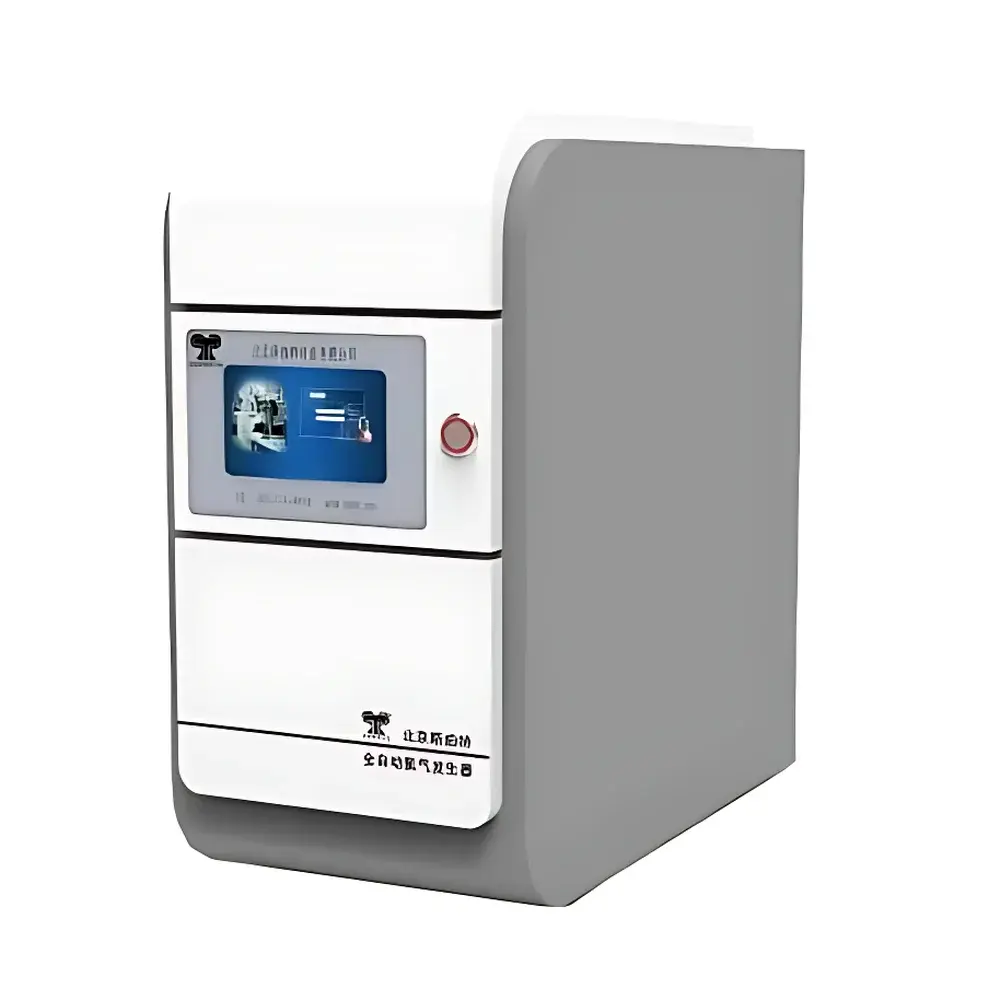
Saprete HG-3 Pure Water Electrolytic Hydrogen Generator
| Brand | Saprete |
|---|---|
| Model | HG-3 |
| Gas Generation Principle | Pure Water Electrolysis |
| Output Flow Rate | 0–300 mL/min |
| Output Pressure | 0–0.3 MPa (max 0.7 MPa for short-term operation) |
| Hydrogen Purity | 99.999% (ultra-high purity, stable over time) |
| Power Consumption | 500 W |
| Electrolyte | Deionized water only |
| Cooling | Integrated temperature-controlled electrolyzer with real-time thermal monitoring |
| Gas Conditioning | External desiccant cartridge |
| Optional Accessories | Water quality sensor module, electronic moisture removal & desiccant regeneration unit |
Overview
The Saprete HG-3 is a laboratory-grade, pure water electrolytic hydrogen generator engineered for continuous, on-demand production of ultra-high-purity hydrogen (99.999%) without the use of caustic electrolytes or compressed gas cylinders. Unlike alkaline or PEM-based systems requiring KOH solution or precious-metal catalysts, the HG-3 employs a proprietary zero-additive electrolysis process—relying exclusively on deionized water (resistivity ≥ 15 MΩ·cm) as both reactant and electrolyte. This eliminates corrosion risks, reduces maintenance intervals, and ensures long-term operational stability under GLP-compliant analytical workflows. Designed for integration with gas chromatography (GC), GC-MS, and other hydrogen-dependent instrumentation, the HG-3 delivers precise, pressure-regulated flow across its full 0–300 mL/min range, with dynamic load-following control that modulates electrolysis current in response to downstream demand—minimizing thermal stress on the cell stack and extending service life beyond 10,000 operating hours.
Key Features
- Pure water electrolysis architecture: No KOH, no membranes, no consumable electrolytes—only DI water input required.
- Intelligent thermal management: Integrated Pt100 temperature sensor and PID-controlled heating/cooling loop maintains optimal electrolyzer temperature (65–75°C), preventing thermal runaway and ensuring consistent gas yield.
- Dynamic flow-pressure regulation: Closed-loop feedback system continuously monitors outlet pressure and flow rate; adjusts electrolysis current in real time to maintain setpoint stability within ±1.5% of target flow.
- Buffered gas delivery: Internal stainless-steel buffer volume dampens pulsation and suppresses transient flow fluctuations—critical for sensitive GC carrier-gas applications.
- Real-time digital monitoring: Front-panel OLED display shows instantaneous H₂ flow (mL/min), outlet pressure (MPa), cell temperature (°C), and system status codes.
- Modular drying system: Removable external desiccant cartridge (indicating silica gel or molecular sieve) enables tool-free replacement without system shutdown or gas purge.
- Expandable architecture: Optional water quality sensor module provides conductivity/resistivity readout at inlet; optional electronic moisture remover integrates automatic desiccant regeneration via periodic thermal cycling.
Sample Compatibility & Compliance
The HG-3 is compatible with all major GC manufacturers’ hydrogen requirements—including Agilent, Thermo Fisher, Shimadzu, PerkinElmer, and Waters—meeting ASTM D4057 and ISO 8573-1:2010 Class 1 compressed air purity equivalency for hydrogen carrier gas. Its 99.999% purity complies with USP residual solvent testing thresholds and satisfies ICH Q5C stability-indicating method criteria. The system operates within Class II electrical safety standards (IEC 61010-1), carries CE marking for EMC and LVD directives, and supports 21 CFR Part 11–compliant data logging when paired with Saprete’s optional PC interface software (HG-Link v3.2). All wetted materials—316L stainless steel electrolyzer chamber, PTFE-sealed fittings, and borosilicate glass water reservoir—are certified non-reactive per USP Class VI and ISO 10993-5 biocompatibility guidelines.
Software & Data Management
The HG-3 supports RS-232 and USB-C digital interfaces for bidirectional communication with host PCs or LIMS platforms. Saprete’s HG-Link software provides real-time telemetry logging (flow, pressure, temperature, runtime), configurable alarm thresholds (e.g., low water level, high temperature, desiccant saturation), and automated event reporting compliant with ALCOA+ principles (Attributable, Legible, Contemporaneous, Original, Accurate, Complete, Consistent, Enduring, Available). Audit trail functionality records all parameter changes, user logins, and system resets with timestamped digital signatures—enabling full traceability during FDA or EMA inspections. Raw data exports to CSV or XML formats support integration into LabWare, STARLIMS, or custom Python-based QC dashboards.
Applications
- Carrier gas supply for capillary GC and GC-MS analysis of volatile organic compounds (VOCs), residual solvents, and environmental pollutants.
- Fuel gas for flame ionization detectors (FID) and thermal conductivity detectors (TCD) requiring stable, low-part-per-trillion oxygen/moisture content.
- Hydrogenation reaction feedstock in benchtop catalytic reactors where cylinder-derived H₂ poses explosion risk or purity inconsistency.
- Calibration gas generation for hydrogen sensors and leak detection systems in semiconductor cleanrooms and battery R&D labs.
- On-site refueling for portable hydrogen fuel cells used in field-deployable analytical instrumentation.
FAQ
What type of water must be used with the HG-3?
Deionized water with resistivity ≥ 15 MΩ·cm and total organic carbon (TOC) < 5 ppb is mandatory. Tap water, distilled water, or reverse-osmosis-only water will cause rapid electrode fouling and void warranty.
Can the HG-3 operate unattended overnight?
Yes—the system features automatic dry-run shutdown, overpressure relief (0.7 MPa mechanical burst disk), and temperature-fail-safe cutoff. Continuous 24/7 operation is validated per IEC 60068-2-64 vibration testing.
How often does the desiccant require replacement?
Under typical GC carrier-gas usage (20–30 mL/min), external desiccant lasts 6–9 months; frequency increases with higher flow rates or ambient humidity >60% RH.
Is the HG-3 compatible with hydrogen sensors requiring zero-air background calibration?
Yes—its 99.999% purity includes <100 ppb O₂, <1 ppm H₂O, and <50 ppb total hydrocarbons, meeting ASTM D6299 precision requirements for sensor baseline validation.
Does the HG-3 support remote monitoring via Ethernet or Wi-Fi?
Not natively—but third-party Modbus TCP gateways can be integrated via RS-232-to-Ethernet converters for SCADA-level supervision in centralized lab infrastructure.



