
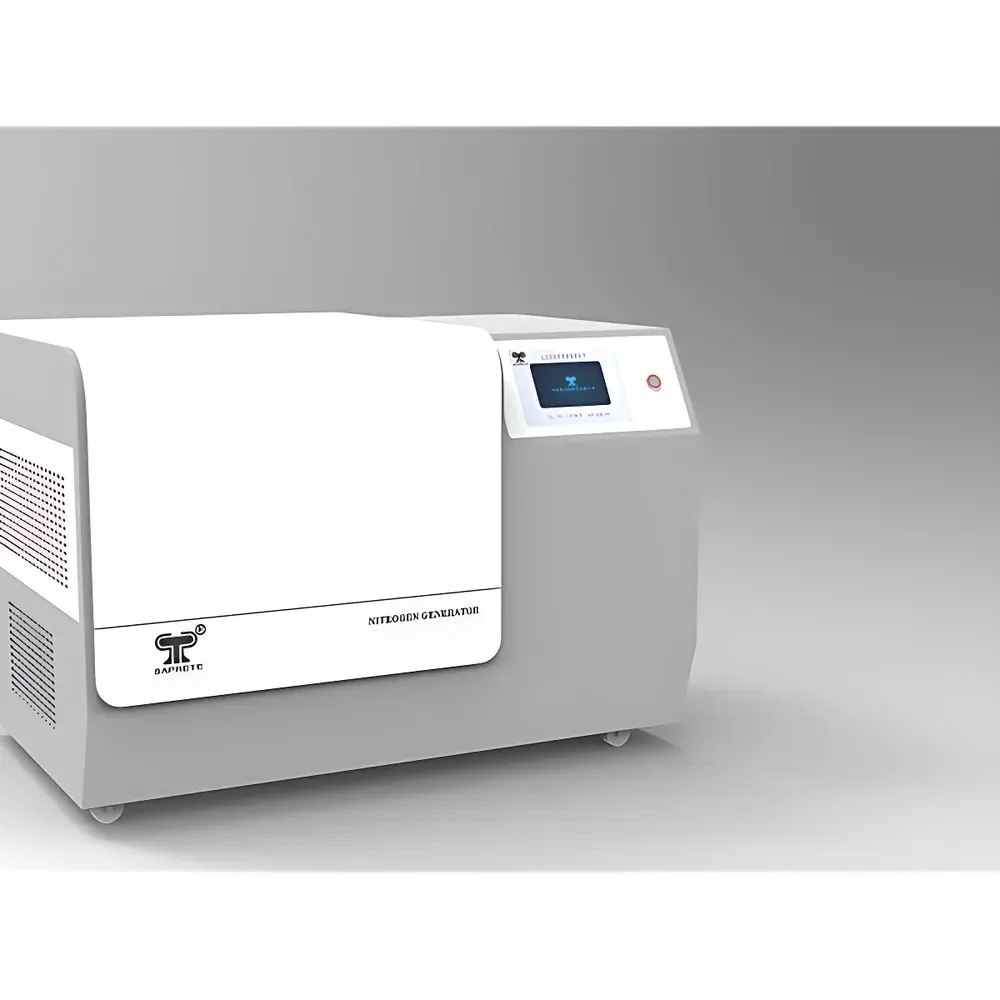
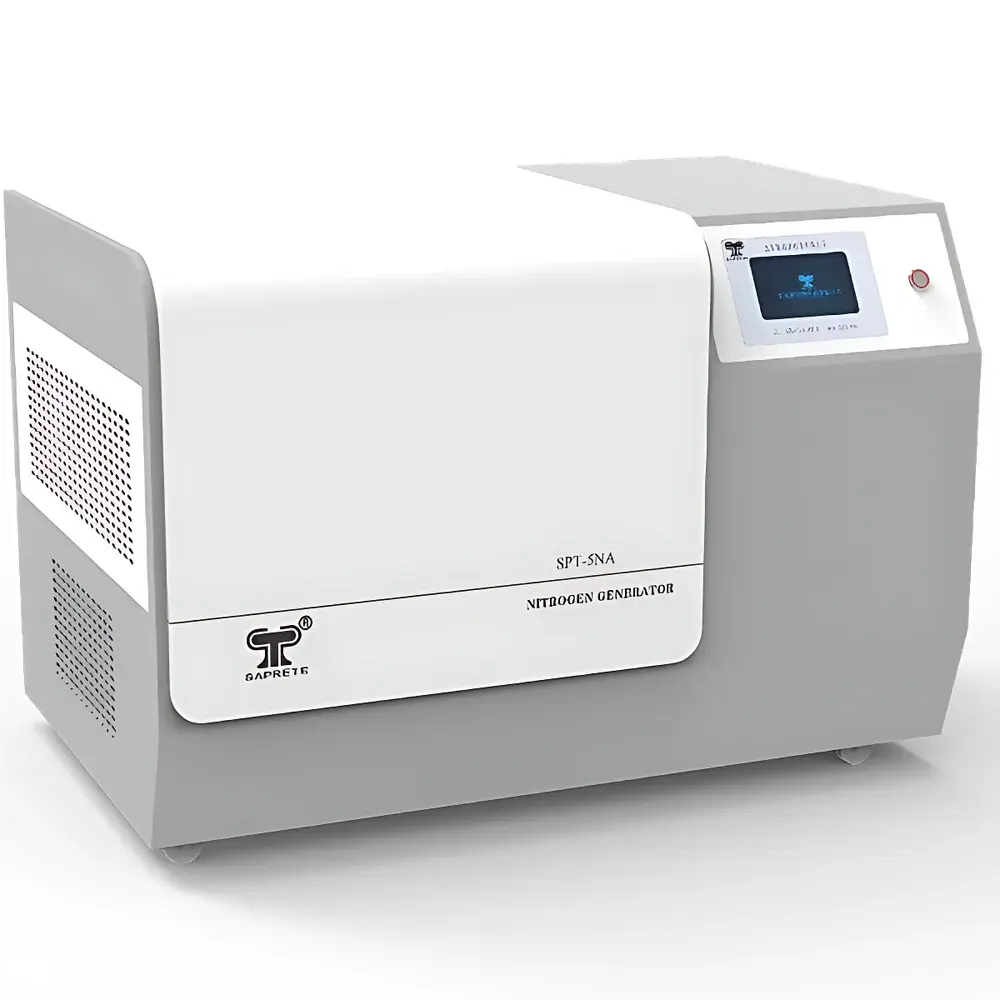
Saprete SPT-N Dedicated Nitrogen Generator for LC-MS
| Brand | Saprete |
|---|---|
| Model | SPT-N |
| Type | Membrane-Based Nitrogen Generator |
| Origin | Beijing, China |
| Manufacturer | Saprete (OEM/ODM Capable) |
| Output Flow Rate | Configurable (Standard Range: 5–30 L/min) |
| Output Pressure | 0–0.7 MPa (adjustable, regulated) |
| Nitrogen Purity | ≥99.9% v/v (N₂) |
| Dew Point | −55 °C (at 0.7 MPa) |
| Filtration | Four-Stage Particulate & Coalescing Filter System |
| Integrated Air Compressor | Oil-free, brushless DC motor |
| Auto-Drying | Desiccant-assisted moisture removal |
| Control Interface | Digital LED panel with pressure/purity status indicators |
| Compliance | CE-marked |
| compatible with ISO 8573-1 Class 2 | 2:2 compressed air quality requirements for LC-MS gas supply |
Overview
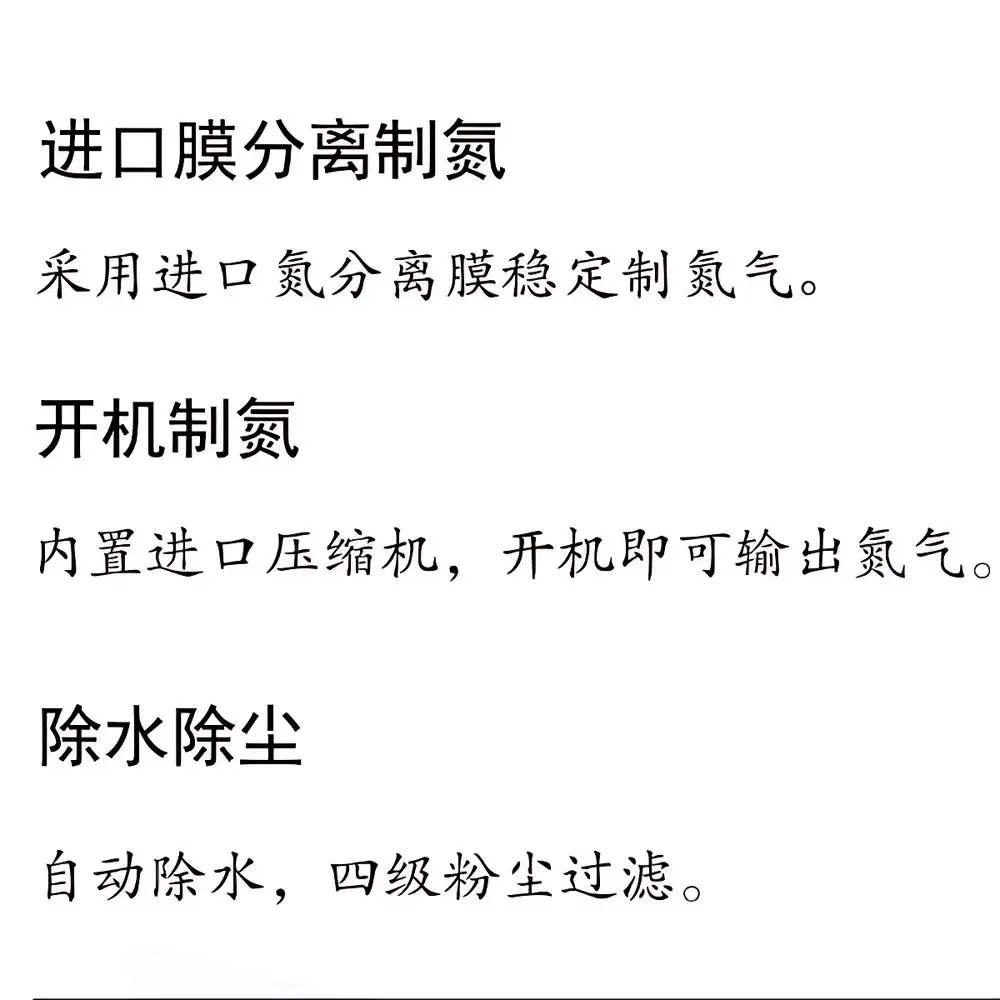
The Saprete SPT-N Dedicated Nitrogen Generator is an engineered solution designed specifically to support high-sensitivity liquid chromatography–mass spectrometry (LC-MS) and gas chromatography–mass spectrometry (GC-MS) systems requiring a continuous, on-demand supply of high-purity nitrogen gas. It employs advanced polymeric membrane separation technology—sourced from globally certified suppliers—to selectively permeate oxygen, carbon dioxide, water vapor, and trace hydrocarbons while retaining nitrogen molecules. This principle relies on differential gas solubility and diffusivity across asymmetric hollow-fiber membranes, enabling stable, pressure-driven nitrogen enrichment without chemical consumables or cryogenic processes. Unlike PSA-based generators, the SPT-N delivers immediate nitrogen output upon startup (<60 seconds to reach specification), eliminating warm-up delays critical in high-throughput analytical laboratories. Its compact, integrated architecture—including an oil-free scroll compressor, multi-stage filtration, and desiccant-assisted drying—ensures consistent delivery of nitrogen meeting ASTM D6345 and ISO 8573-1 Class 2:2:2 specifications for instrumental gas purity.
Key Features
- Immediate nitrogen generation: Achieves ≥99.9% N₂ purity within one minute of power-on—no pre-purge or stabilization time required.
- Imported high-selectivity hollow-fiber membrane modules: Engineered for long-term stability under continuous operation (>15,000 hours MTBF).
- Four-stage integrated filtration: Includes particulate (0.01 µm), coalescing, activated carbon, and desiccant stages to remove oil aerosols, submicron dust, VOCs, and moisture down to −55 °C dew point.
- Digital control system with real-time monitoring: Displays outlet pressure, flow rate (via calibrated thermal mass flow sensor), and system status; supports RS-485 Modbus RTU for remote integration.
- Self-contained oil-free air compression: Brushless DC-driven scroll compressor ensures low vibration, minimal heat generation, and compliance with ISO 8573-1 Class 0 for oil content (<0.01 mg/m³).
- Modular design for serviceability: Membrane cartridges and filter elements are field-replaceable without tools; maintenance intervals specified per ISO 1217 Annex C.
Sample Compatibility & Compliance
The SPT-N is validated for use with electrospray ionization (ESI), atmospheric pressure chemical ionization (APCI), and heated electrospray ionization (HESI) sources in LC-MS platforms from Thermo Fisher Scientific, Waters, Agilent, Shimadzu, and SCIEX. Its nitrogen output meets the gas quality requirements defined in USP Residual Solvents and ICH Q5C for biopharmaceutical characterization workflows. The generator complies with EN 61000-6-3 (EMC) and EN 61000-6-2 (immunity), and its electrical safety conforms to IEC 61010-1 for laboratory equipment. When deployed in GLP/GMP-regulated environments, audit trails can be generated via optional Ethernet-enabled data logging (IEC 62304-compliant firmware).
Software & Data Management
While the SPT-N operates as a standalone unit, its digital interface supports seamless integration into centralized lab infrastructure. Optional Saprete LabLink™ software enables remote monitoring of runtime hours, filter life estimation, pressure decay diagnostics, and alarm history (e.g., low inlet pressure, high dew point). All operational logs are timestamped and exportable in CSV format for 21 CFR Part 11-compliant record retention when paired with validated electronic signature modules. Firmware updates are delivered via secure HTTPS channel with SHA-256 integrity verification.
Applications
- Nitrogen curtain gas and nebulizing gas for triple quadrupole and Q-TOF mass spectrometers.
- Mobile phase sparging and solvent evaporation in preparative HPLC and LC-MS sample preparation.
- Inert atmosphere maintenance during column storage, standards handling, and reference material dilution.
- Carrier gas supplementation in GC-MS systems where helium conservation is mandated.
- Supporting nitrogen-dependent detectors including nitrogen phosphorus detectors (NPD) and electron capture detectors (ECD).
FAQ
What is the recommended inlet air quality for optimal SPT-N performance?
Ambient air must meet ISO 8573-1 Class 2:2:2 specifications—maximum 0.1 µm particulates, ≤0.1 mg/m³ total oil, and dew point ≤−40 °C prior to entry. An upstream refrigerated dryer is advised in humid climates.
Can the SPT-N be integrated with multiple LC-MS instruments simultaneously?
Yes—when configured with a manifold distribution system and pressure-regulated branch lines, the SPT-N supports up to three LC-MS systems (based on total flow demand ≤25 L/min at 0.6 MPa).
Does the generator require periodic calibration?
No routine calibration is required; however, annual verification of nitrogen purity using a certified electrochemical O₂ analyzer (e.g., Michell XDT-200) is recommended per ISO/IEC 17025 internal quality procedures.
What maintenance intervals apply to the membrane module?
Membrane life is rated for ≥15,000 operating hours under specified inlet conditions; replacement is triggered only upon documented purity drift (>0.1% O₂) confirmed by third-party analysis.
Is the SPT-N compatible with 21 CFR Part 11 requirements?
Out-of-the-box functionality does not include full Part 11 compliance; however, optional LabLink™ with audit trail, role-based access control, and electronic signatures satisfies all three predicate rule criteria when installed and validated per organizational SOPs.



