
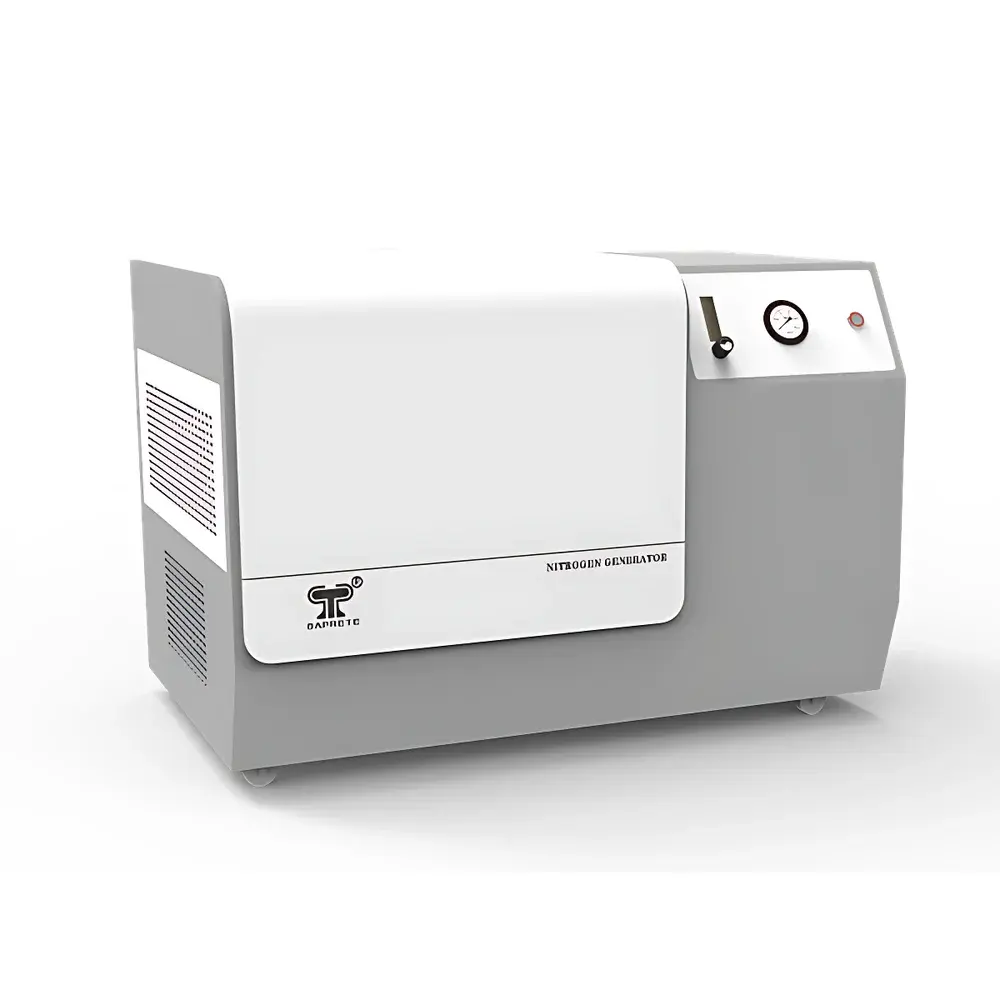
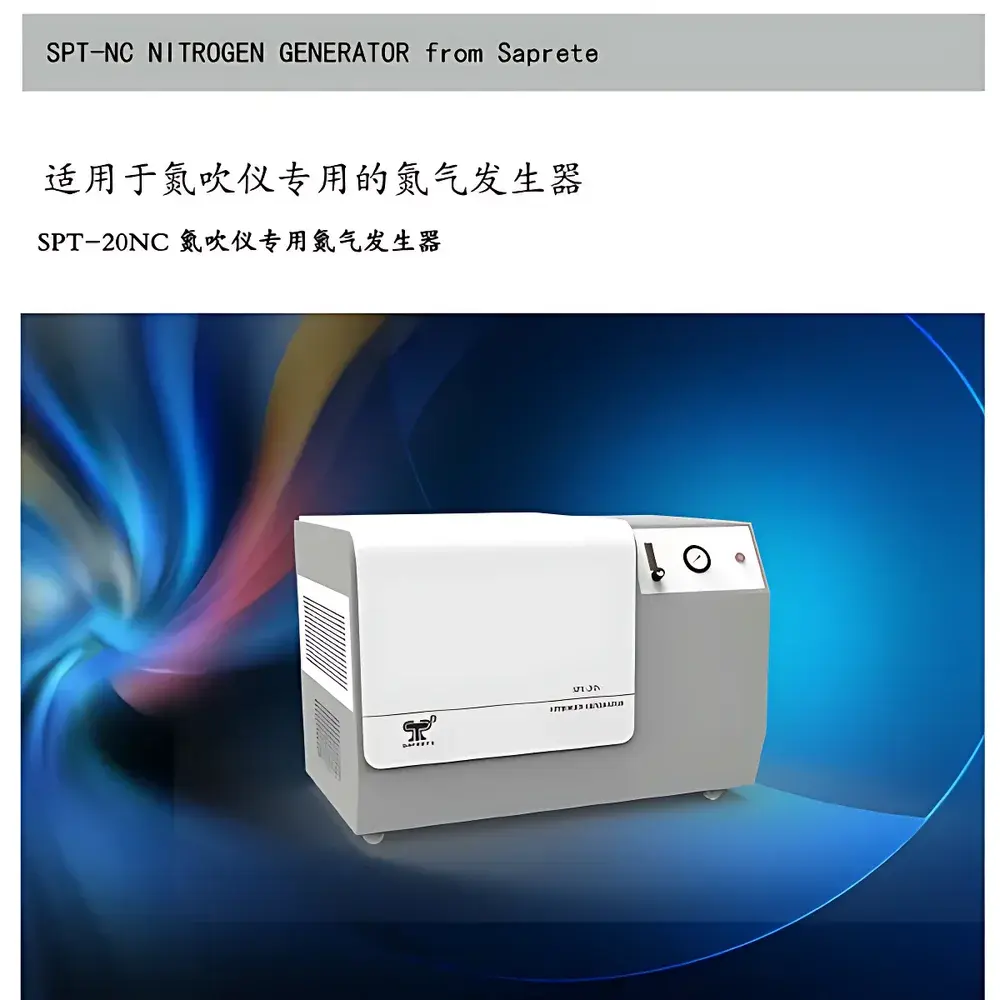
Saprete SPT-NC Dedicated Nitrogen Generator for Nitrogen Evaporators
| Brand | Saprete |
|---|---|
| Origin | Beijing, China |
| Manufacturer Type | Direct Manufacturer |
| Product Category | Domestic |
| Model | SPT-NC |
| Instrument Type | Nitrogen Generator |
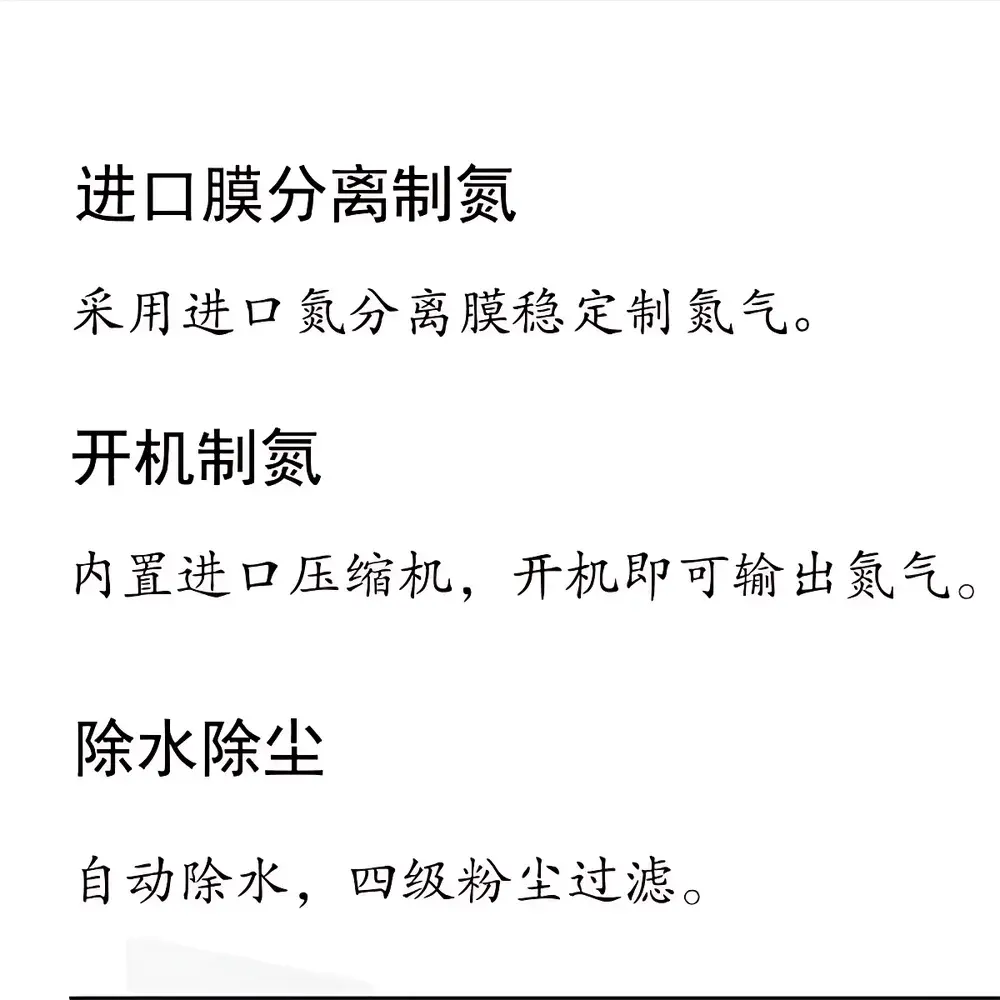
| Nitrogen Generation Principle | Imported Membrane Separation Technology |
| Output Flow Rate | 0–80 L/min |
| Output Pressure | 0–0.7 MPa |
| Nitrogen Purity | 99% |
| Dew Point | −30 °C |
| Filtration Stages | 4-stage particulate and coalescing filtration |
| Integrated Air Compressor | Yes (Imported) |
| Startup Time | Immediate nitrogen generation upon power-on |
| Moisture & Particulate Removal | Built-in automatic desiccant and dust removal |
| Control Interface | Compatible with Saprete nitrogen evaporator series for synchronized operation |
| Compliance | Designed to meet ISO 8573-1 Class 2:2:2 (compressed air quality), supports GLP-compliant lab environments |
Overview
The Saprete SPT-NC Dedicated Nitrogen Generator is an engineered solution designed exclusively to supply high-purity, on-demand nitrogen gas to laboratory nitrogen evaporators—eliminating dependency on high-pressure cylinders or liquid nitrogen dewars. It operates on the principle of membrane-based gas separation, leveraging selective permeability of polymeric hollow-fiber membranes to preferentially allow oxygen, water vapor, and CO₂ to permeate through the membrane wall while retaining nitrogen in the non-permeate stream. This physical separation process requires no chemical consumables, produces zero emissions, and delivers continuous, stable nitrogen flow at user-defined pressure and purity levels. With a rated output of up to 80 L/min at 0.7 MPa and consistent 99% volumetric purity (N₂ balance), the SPT-NC meets the stringent gas quality requirements of quantitative sample concentration workflows—including EPA Method 525.3, AOAC 991.22, and USP chromatographic evaporation protocols.
Key Features
- Immediate start-up nitrogen generation: No warm-up or stabilization delay; nitrogen flows within seconds of system power-on.
- Four-stage integrated filtration: Combines coarse particulate pre-filter, activated carbon adsorption, coalescing filter, and desiccant dryer—ensuring ISO 8573-1 Class 2:2:2 compressed air feed quality prior to membrane entry.
- Imported high-efficiency hollow-fiber membrane module: Engineered for long service life (>15,000 operating hours) and stable performance across variable ambient temperatures (5–35 °C) and humidity conditions.
- Integrated oil-free scroll air compressor: Delivers clean, pulsation-free intake air without lubricant carryover, reducing downstream contamination risk and eliminating need for external air supply.
- Dew point control: Achieves −30 °C pressure dew point (PDP) at full load, preventing condensation in nitrogen delivery lines and ensuring compatibility with cold-trap-equipped evaporators.
- Smart interlock interface: RS-485/Modbus RTU protocol enables bi-directional communication and synchronized operational control with Saprete nitrogen evaporator platforms (e.g., SPT-NE series), including auto-start/stop, flow matching, and fault status relay feedback.
Sample Compatibility & Compliance
The SPT-NC is validated for use with all major nitrogen blow-down instruments requiring ≥99% N₂ purity and ≤−30 °C dew point, including but not limited to Thermo Fisher Reacti-Therm III, Biotage SPE-DEX, and Organomation N-EVAP series. Its gas output complies with ISO 8573-1:2010 Class 2 (solid particles), Class 2 (water), and Class 2 (oil) specifications when operated within rated parameters. The unit’s firmware architecture supports audit trail logging and user-access-level configuration—facilitating alignment with GLP and GMP documentation requirements. While not FDA 21 CFR Part 11 certified out-of-the-box, its data export capability (CSV via USB) and timestamped event logs support retrospective validation per internal SOPs.
Software & Data Management
The SPT-NC features a local LCD interface with real-time display of output pressure, flow rate, membrane inlet temperature, and cumulative runtime. All operational parameters are logged internally with 30-day circular memory (timestamped every 5 minutes). Data export is supported via USB flash drive in CSV format, enabling integration into LIMS or electronic lab notebooks. Optional Ethernet module (SPT-ETH-1) provides HTTP API access for remote monitoring, alarm notification via SMTP, and programmable setpoint scheduling—suitable for centralized facility gas management systems.
Applications
- Routine sample preparation for GC-MS, LC-MS/MS, and ICP-MS analysis where solvent evaporation must avoid oxidation or thermal degradation.
- High-throughput environmental testing labs performing pesticide residue analysis (e.g., QuEChERS workflows) requiring uninterrupted nitrogen supply across multiple evaporator stations.
- Pharmaceutical QC labs conducting residual solvent testing per ICH Q3C guidelines, where moisture-sensitive standards demand ultra-dry carrier gas.
- Academic research facilities deploying automated evaporation arrays for metabolomics or lipidomics sample sets—benefiting from scalable, maintenance-light gas infrastructure.
FAQ
What is the expected service life of the membrane module?
Under typical laboratory operating conditions (8 h/day, ambient RH <60%), the imported membrane stack is rated for ≥15,000 hours of continuous operation with periodic filter replacement every 6 months.
Does the SPT-NC require external cooling or ventilation?
No external cooling is required; the unit incorporates passive heat dissipation and low-noise airflow design—operable in standard lab cabinets with ≥10 cm rear clearance.
Can output pressure be adjusted during operation?
Yes—pressure is continuously adjustable from 0 to 0.7 MPa via front-panel digital regulator with ±0.01 MPa resolution and real-time feedback.
Is calibration traceable to national standards?
Flow and pressure sensors are factory-calibrated against NIST-traceable references; calibration certificates are provided with each unit and valid for 12 months.
How often must filters be replaced?
The four-stage filter assembly requires replacement every 6 months under normal use; replacement kits include calibrated differential pressure indicators for predictive maintenance scheduling.



