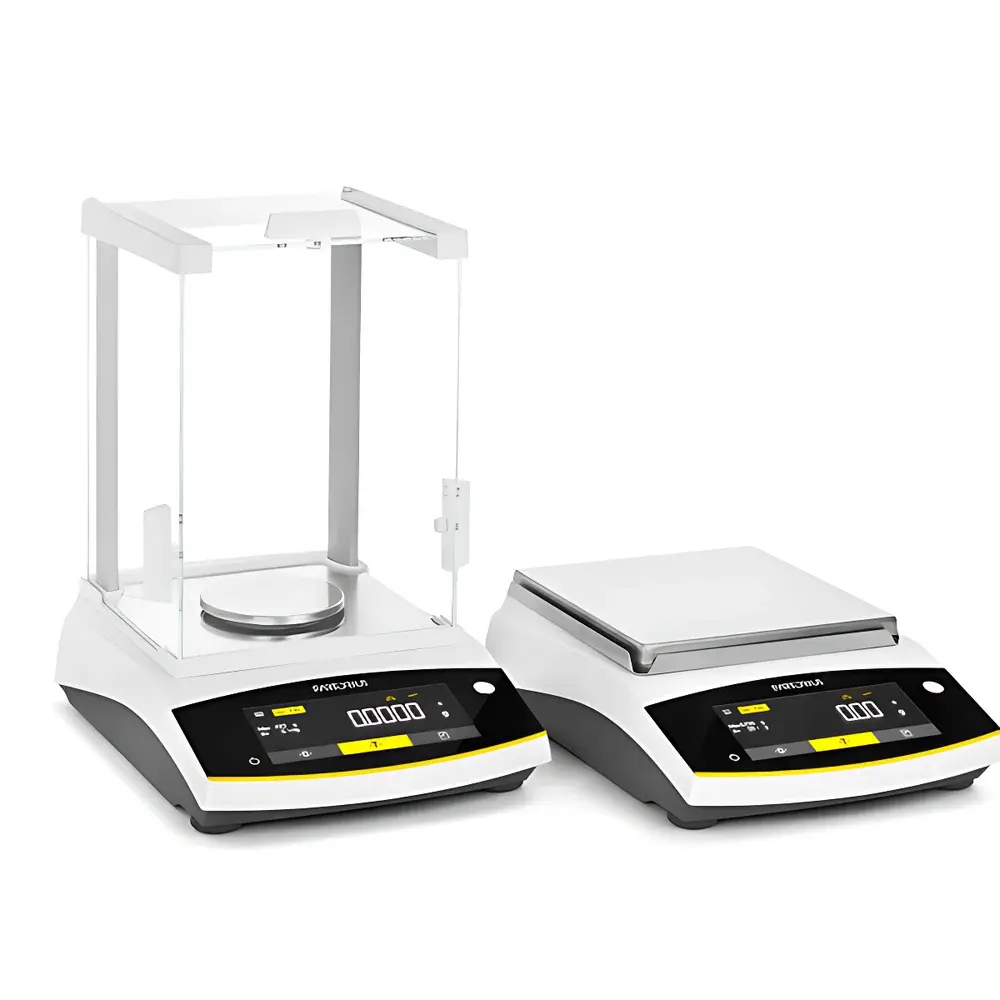
Sartorius BCE223i-1CCN Precision Analytical Balance
| Brand | Sartorius |
|---|---|
| Origin | Shanghai, China |
| Model | BCE223i-1CCN |
| Type | Precision Balance |
| Max Capacity | 220 g |
| Readability | 1 mg |
| Repeatability | ≤ ±1 mg |
| Calibration | Internal (isoCAL) |
| Pan Size | Rectangular |
| Connectivity | USB-C, RS-232 (9-pin) |
| Compliance | GLP/GMP data output, ISO/IEC 17025-aligned operation |
| Applications | Weighing, Counting, Percentage, Density, Statistics, Animal Weighing, Checkweighing, Peak Hold, Unit Conversion, Below-balance weighing |
Overview
The Sartorius BCE223i-1CCN is a high-performance precision analytical balance engineered for laboratories requiring consistent 1 mg readability, robust repeatability (≤ ±1 mg), and full compliance with quality-driven workflows. Built upon Sartorius’ legacy of German engineering excellence—now manufactured in Shanghai under strict global quality control—the BCE223i-1CCN delivers metrological reliability across routine QC, R&D, and production support environments. Its core measurement principle relies on electromagnetic force compensation (EMFC) technology, utilizing Sartorius’ proprietary monolithic sensor architecture to ensure minimal drift, fast stabilization (<2 seconds typical), and immunity to environmental perturbations such as air currents or minor vibrations. The balance operates within a defined capacity range of 0–220 g at 1 mg resolution, making it ideal for applications demanding sub-milligram reproducibility without the complexity or cost of microbalance-class instrumentation.
Key Features
- isoCAL™ fully automatic internal calibration and adjustment—triggered by time intervals or temperature fluctuations (±1.5 °C change), ensuring continuous traceability without manual intervention
- Rectangular stainless-steel weighing pan (180 × 180 mm) with integrated overload protection and chemical-resistant PBT housing components
- Modular draft shield system: fully detachable front/side sliding doors and top-mounted glass panels with anti-static coating to suppress electrostatic interference during low-mass sample handling
- High-contrast LED display combined with intuitive capacitive touchscreen interface supporting 8 preloaded languages (English, German, French, Italian, Spanish, Portuguese, Russian, Polish)
- Dual communication interfaces: industry-standard 9-pin RS-232 (backward-compatible with legacy lab printers and LIMS) and future-proof USB-C for direct PC connectivity and firmware updates
- Integrated security framework: password-protected configuration access, user-level permissions, and audit-trail-ready parameter change logging
Sample Compatibility & Compliance
The BCE223i-1CCN accommodates diverse sample formats—from powders and granules to flasks, crucibles, and irregularly shaped objects—thanks to its spacious weighing chamber and optional below-balance hook for suspended density measurements. Its construction materials (316 stainless steel pan, tempered glass shield, PBT polymer housing) provide resistance to common solvents, acids, and cleaning agents, minimizing cross-contamination risk in multi-user labs. From a regulatory standpoint, the balance supports full GLP and GMP compliance: all weight records include timestamp, operator ID, balance ID, calibration status, and environmental metadata when exported via RS-232 or USB. Data output conforms to 21 CFR Part 11 requirements when used with validated Sartorius LabX® software (optional), including electronic signatures, audit trails, and secure archiving.
Software & Data Management
While standalone operation requires no external software, the BCE223i-1CCN is natively compatible with Sartorius LabX® — a scalable laboratory software platform enabling centralized instrument management, SOP-driven workflows, and automated report generation. All 12 built-in applications—including parts counting, percentage weighing, statistical analysis, animal weighing, and density determination—generate structured output files (.csv, .txt) with embedded metadata required for ISO/IEC 17025 accreditation. User-defined data export intervals (1–999 s), auto-print triggers, and configurable header fields ensure seamless integration into existing LIMS or ELN systems. Internal memory stores up to 1,000 weight records with timestamps, accessible via USB export for offline review or QA verification.
Applications
This balance serves as a foundational tool across pharmaceutical formulation labs (active ingredient dispensing per USP ), chemical synthesis (reagent mass verification), food quality control (moisture loss tracking), academic research (sample preparation for HPLC or ICP-MS), and contract manufacturing organizations (CMOs) performing batch release testing. Its 220 g capacity and 1 mg resolution make it especially suited for volumetric flask filling, tablet weight uniformity checks (per USP ), catalyst loading in catalysis studies, and gravimetric standard preparation for calibration reference materials. The optional density kit enables solid/liquid density determination per ASTM D792 and ISO 1183 standards using Archimedean principles.
FAQ
Does the BCE223i-1CCN meet ISO/IEC 17025 requirements for accredited testing laboratories?
Yes—when operated with documented procedures, isoCAL-trigger logs, and traceable calibration certificates, its performance characteristics (repeatability, linearity, eccentricity) satisfy Clause 6.4.6 and Annex A.2 of ISO/IEC 17025:2017.
Is external calibration required if isoCAL is enabled?
Periodic external verification using certified weights is still recommended per ISO 17025 and internal SOPs; isoCAL maintains accuracy between verifications but does not replace formal metrological validation.
Can the balance be integrated into a networked lab environment?
Yes—via RS-232 or USB-C, it supports bidirectional communication with LabX®, custom Python scripts, or third-party SCADA systems using ASCII-based command protocols (SICS protocol compliant).
What is the warranty coverage and service support structure?
Sartorius provides a 2-year limited warranty covering parts and labor; extended service plans and on-site preventive maintenance contracts are available through authorized Sartorius Service Centers in APAC.
How is temperature-induced drift compensated?
The balance continuously monitors internal temperature gradients and automatically initiates isoCAL recalibration when deviations exceed ±1.5 °C from the last calibration point—ensuring long-term stability across typical lab ambient ranges (10–30 °C).