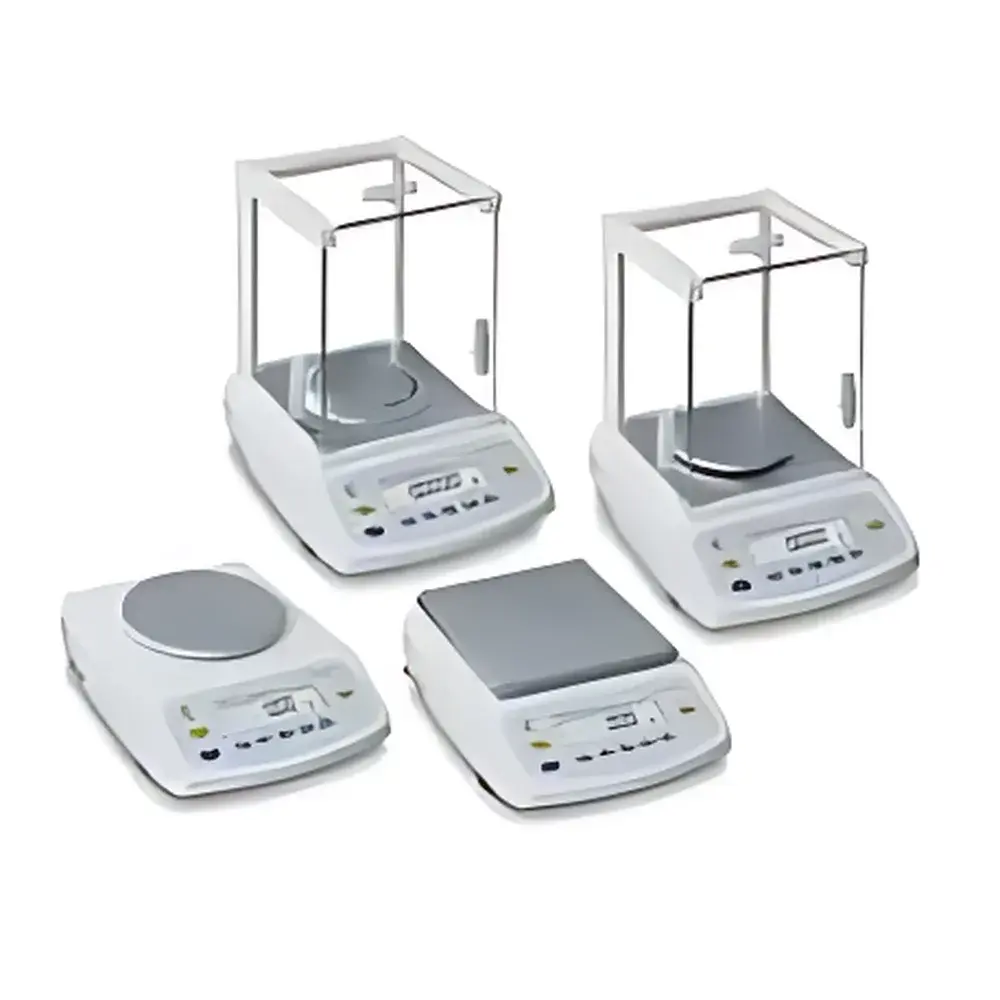
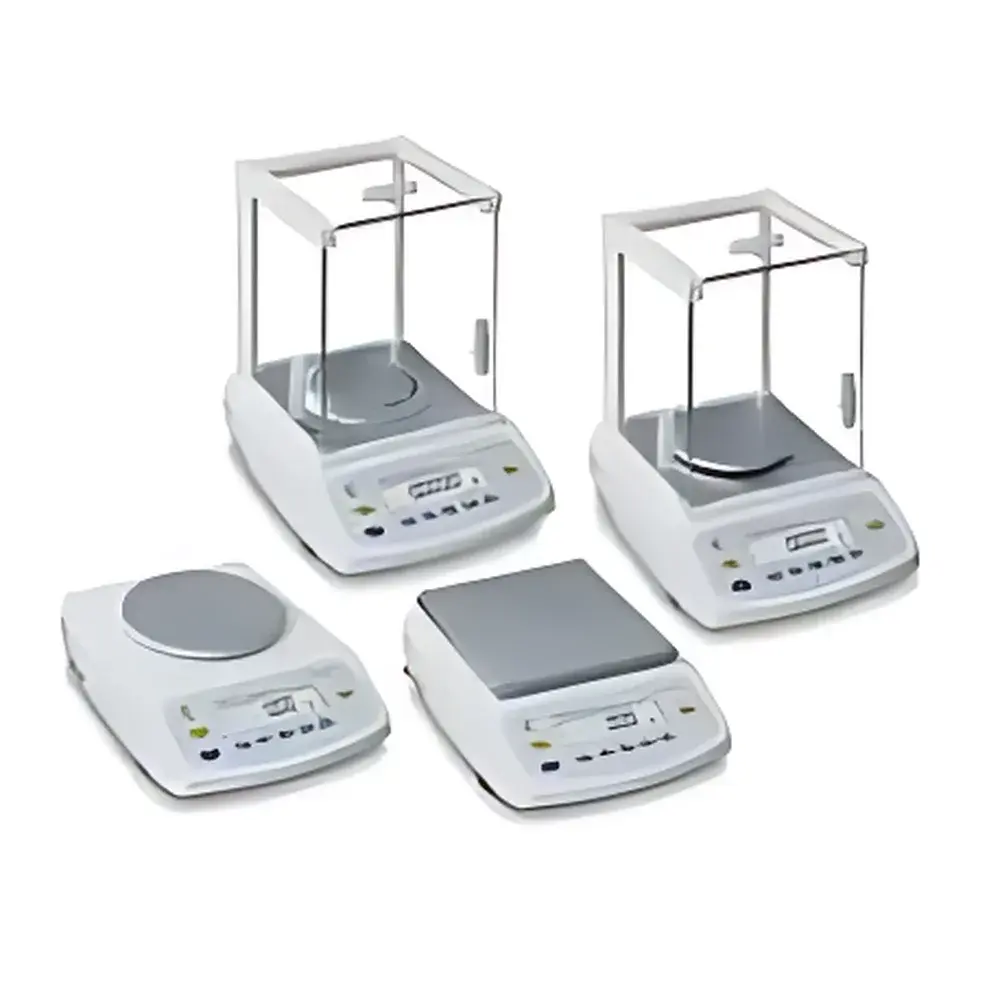
Sartorius BSA124S/BSA224S and BSA124S-CW/BSA224S-CW Analytical Balances
| Brand | Sartorius |
|---|---|
| Origin | Germany |
| Model | BSA124S / BSA224S / BSA124S-CW / BSA224S-CW |
| Maximum Capacity | 120 g or 220 g |
| Readability | 0.1 mg |
| Calibration | External (BSA models) or Internal Motor-Driven (BSA-CW models) |
| Repeatability | ±0.1 mg |
| Display | Backlit LCD with 15 mm high characters |
| Level Indicator | Integrated adjacent to display |
| Weighing Pan Diameter | Ø 90 mm |
| Interface | RS232 bidirectional |
| Compliance | ISO/IEC 17025, GLP/GMP data traceability support (with optional printer or PC connection) |
| Built-in Applications | Percentage weighing, net weight summation, animal/dynamic weighing, unit conversion, arithmetic calculation (×, ÷) |
Overview
The Sartorius BSA series analytical balances — including the BSA124S, BSA224S, BSA124S-CW, and BSA224S-CW — are precision mass measurement instruments engineered for routine laboratory applications requiring resolution down to 0.1 mg (100 µg). Designed and manufactured in Germany, these balances operate on electromagnetic force compensation (EMFC) principle, ensuring high reproducibility, minimal drift, and long-term stability under variable environmental conditions. The BSA platform integrates advanced digital signal processing algorithms that actively compensate for temperature fluctuations, air currents, and mechanical vibration — enabling reliable results even without climate-controlled environments. Unlike gravimetric systems relying on mechanical levers or strain gauges, EMFC-based balances deliver inherently linear response across the full weighing range, eliminating the need for linearity correction tables in standard operation.
Key Features
- High-speed stabilization: Optimized microprocessor control reduces settling time to ≤2 seconds for stable readings at full capacity, enhancing throughput in high-volume QC workflows.
- Ergonomic user interface: Large backlit LCD display (15 mm character height) with intuitive icon-driven navigation and multilingual prompts (English default); integrated bubble level positioned adjacent to the screen enables rapid verification of leveling prior to calibration or critical weighing.
- Robust mechanical architecture: Stainless steel weighing pan (Ø 90 mm), draft shield-compatible design, and reinforced base minimize sensitivity to bench vibrations and lateral forces.
- Calibration flexibility: Standard BSA models support external calibration using certified weights; BSA-CW variants feature motorized internal calibration with built-in reference masses — activated via single-key press, eliminating manual handling and reducing calibration-induced uncertainty.
- GLP-compliant data handling: All models support timestamped event logging (e.g., calibration, zeroing, parameter changes) when connected to a Sartorius YDP03-0CE printer or PC via RS232. Audit trails meet requirements for 21 CFR Part 11–aligned environments when paired with validated software.
Sample Compatibility & Compliance
The BSA series accommodates solid, granular, and low-viscosity liquid samples within standard laboratory containers. Its open-frame design permits integration with anti-static ionizers (optional accessory) for electrostatic-prone powders. The balance complies with international metrological standards including OIML R 76-1 (2006) for non-automatic weighing instruments and supports traceable calibration per ISO/IEC 17025. While not pre-certified for regulatory submission out-of-the-box, its documented repeatability (±0.1 mg), linearity performance (<±0.001% of capacity), and temperature coefficient (<2 ppm/°C) align with typical acceptance criteria for Class I analytical balances under USP and Ph. Eur. 2.1.6. Full validation documentation (IQ/OQ/PQ protocols) is available upon request for GxP-regulated installations.
Software & Data Management
Native RS232 communication enables direct data transfer to LIMS, ELN, or spreadsheet applications using ASCII protocol. Optional Sartorius LabX Lite software provides automated report generation, statistical process control (SPC) charts, and electronic signature support for regulated environments. When interfaced with a YDP03-0CE thermal printer, the balance outputs GLP-compliant printouts containing sample ID, operator name, date/time stamp, gross/net/tare values, calibration status, and environmental metadata (if external sensors are connected). All data exports include checksums and are structured to support CSV or XML parsing for downstream analysis.
Applications
- Quantitative preparation of reference standards and working solutions in pharmaceutical QC labs.
- Gravimetric analysis of catalysts, polymers, and fine chemicals in R&D settings.
- Weight-based formulation of excipients and active pharmaceutical ingredients (APIs) under cGMP.
- Moisture content determination via loss-on-drying (LOD) when coupled with a halogen moisture analyzer.
- Dynamic weighing of live specimens (e.g., small rodents, insects) with real-time averaging to suppress motion artifacts.
- Percentage composition verification in alloy and composite material testing.
FAQ
What is the difference between BSA and BSA-CW models?
The BSA-CW variants integrate a motor-driven internal calibration mechanism with traceable reference masses, enabling one-touch calibration without external weights. Standard BSA models require manual external calibration using certified砝码.
Is ISO/IEC 17025 calibration certificate included?
No — factory calibration certificates are provided; accredited calibration per ISO/IEC 17025 must be arranged separately through an authorized Sartorius service partner or third-party lab.
Can the balance be used in a fume hood?
Yes, but only with appropriate draft shield configuration and after verifying stable air flow conditions; unshielded operation inside hoods is not recommended due to turbulence-induced instability.
Does it support connectivity to modern Windows/macOS systems?
Yes, via RS232-to-USB adapters compatible with standard CDC ACM drivers; native USB interface is not available on this generation.
What maintenance intervals are recommended?
Daily verification with check weight, weekly cleaning of pan and housing, annual preventive maintenance by certified technician — as outlined in the Sartorius Service Manual BSA-EN v3.2.