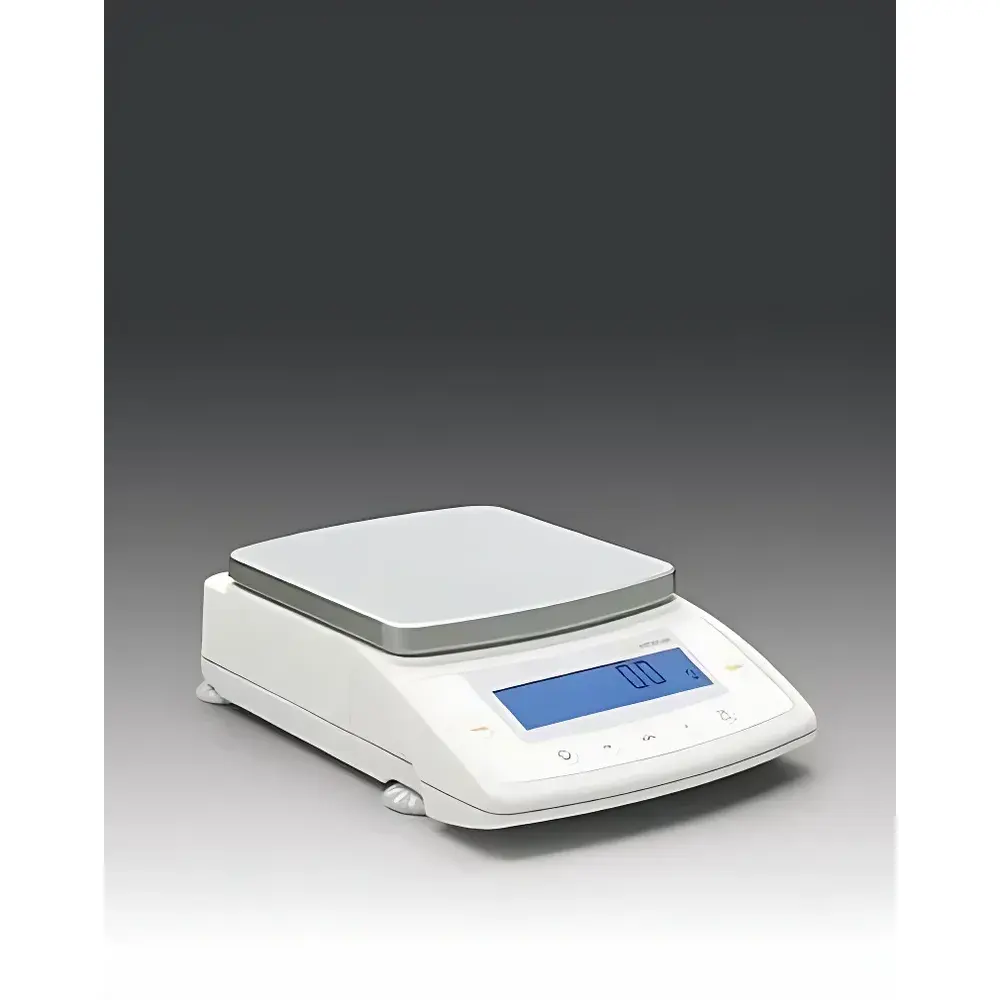
Sartorius CPA5201 Precision Balance
| Brand | Sartorius |
|---|---|
| Origin | Germany |
| Model | CPA5201 |
| Readability | 0.1 g |
| Capacity | 5200 g |
| Calibration | Internal, isoCAL |
| Repeatability | ≤ ±0.1 g |
| Linearity | ≤ ±0.2 g |
| Pan Size | 190 × 204 mm |
| Display | Backlit LCD (digit height: 16 mm) |
| Interface | RS-232C |
| Compliance | ISO/GLP documentation support |
| Optional Accessories | YDP03-0CE or YDP20-0CE printers, PC connectivity |
Overview
The Sartorius CPA5201 Precision Balance is an entry-level yet rigorously engineered laboratory balance designed for routine mass measurement tasks requiring high repeatability and long-term stability in quality-controlled environments. Built upon Sartorius’ monolithic weighing sensor architecture—patented for minimal mechanical hysteresis and thermal drift—the CPA5201 delivers consistent performance across variable ambient conditions. Its operating principle relies on electromagnetic force compensation (EMFC), where the restoring force required to maintain zero displacement of the load receptor is precisely measured and converted into a digital mass reading. With a capacity of 5200 g and readability of 0.1 g, the CPA5201 is optimized for applications such as sample preparation, formulation checks, bulk material dispensing, and intermediate QC verification in pharmaceutical, chemical, food, and academic laboratories. The balance meets fundamental metrological requirements defined in OIML R76 and is validated for use under ISO/IEC 17025-accredited testing workflows.
Key Features
- Internal motor-driven calibration via isoCAL technology—fully automated, temperature-compensated, and traceable to national standards without manual intervention
- Monolithic sensor design ensuring superior shock resistance, low creep, and minimal warm-up time (< 30 minutes to full specification)
- Backlit LCD display with 16 mm digit height for rapid visual verification under varying lighting conditions, including fume hood or glove box environments
- RS-232C serial interface supporting bidirectional communication with PCs, LIMS, or peripheral devices (e.g., label printers, data loggers)
- Built-in application modes: percentage weighing, parts counting, animal/dynamic weighing, net/gross/tare management, and unit conversion (g, oz, ct, dwt, etc.)
- Robust stainless-steel pan (190 × 204 mm) mounted on a rigid aluminum housing, rated for continuous operation in ISO Class 5–7 cleanrooms
- GLP-compliant data output with time/date stamp, operator ID field, and result verification flags when connected to optional YDP20-0CE thermal printer or Sartorius LabX software
Sample Compatibility & Compliance
The CPA5201 accommodates a broad range of sample types—including powders, granules, liquids in containers, and small solid objects—within its 190 × 204 mm weighing pan. Its draft shield compatibility (sold separately) enables stable measurements of low-density or volatile samples. From a regulatory standpoint, the balance supports audit-ready documentation per ISO 9001, ISO/IEC 17025, and FDA 21 CFR Part 11 when integrated with Sartorius LabX or certified third-party data capture systems. All internal calibration events are logged with timestamps and user identification (where enabled), fulfilling core GLP record-keeping expectations. While not intrinsically rated for hazardous locations, it complies with EN 61326-1 (EMC) and EN 61010-1 (safety) for general laboratory use.
Software & Data Management
Data integrity is maintained through standardized ASCII protocol over RS-232C, enabling seamless integration with laboratory information management systems (LIMS), electronic lab notebooks (ELN), and enterprise resource planning (ERP) platforms. When paired with the optional YDP20-0CE printer, the CPA5201 generates hard-copy records containing weight value, units, tare status, calibration timestamp, and environmental metadata (if external sensors are interfaced). For centralized control, Sartorius LabX software provides remote configuration, automated report generation, and electronic signature capability—supporting 21 CFR Part 11 compliance through role-based access, audit trail logging, and encrypted data storage. The balance itself stores no historical weight data internally; all records reside externally to ensure traceability and prevent tampering.
Applications
- Pharmaceutical: Excipient and API dispensing verification prior to blending; batch release weight checks against SOP-defined tolerances
- Chemical: Preparation of molar solutions, catalyst dosing, and reaction mixture mass tracking
- Food & Beverage: Portion control validation, ingredient reconciliation, and shelf-life study sample preparation
- Academic Research: Teaching labs requiring robust, low-maintenance balances for introductory analytical techniques
- Quality Control: In-process checks for packaging fill weight, tablet mass uniformity screening (pre-HPLC stage), and raw material receipt inspection
FAQ
Does the CPA5201 support external calibration with certified weights?
Yes—while isoCAL provides fully automated internal calibration, the balance also accepts external calibration using Class M2 or better weights via the dedicated calibration mode.
Is the RS-232C interface compatible with modern Windows/macOS systems?
Yes—using a standard USB-to-serial adapter (e.g., FTDI chipset), the interface functions reliably with current OS versions and common terminal emulators or custom Python/Node.js scripts.
Can the CPA5201 be used in a regulated GMP environment?
It meets foundational hardware requirements for GMP; however, full compliance requires documented installation qualification (IQ), operational qualification (OQ), and integration with a validated software layer such as LabX.
What is the warm-up time before reaching full accuracy specifications?
The balance achieves specified repeatability and linearity within 30 minutes of power-on under stable ambient conditions (20–25 °C, < 60 % RH).
Is the display readable under UV light or in darkroom conditions?
Yes—the high-brightness LED backlight ensures legibility even in low-illumination settings typical of radiopharmaceutical or photobiology labs.