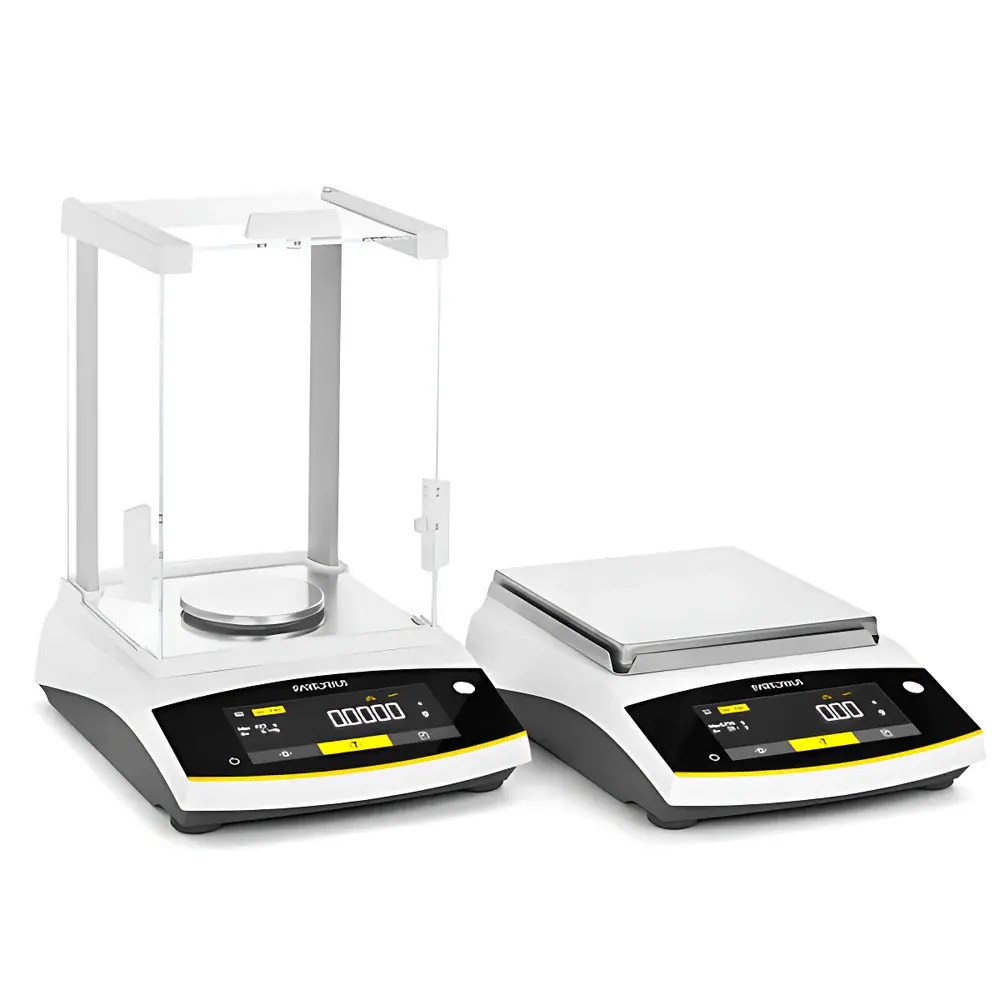
Sartorius Entris® II BCE224-1CCN Analytical Balance (0.1 mg readability)
| Brand | Sartorius |
|---|---|
| Origin | Shanghai, China |
| Manufacturer Type | Authorized Distributor |
| Product Category | Domestic |
| Model | BCE224-1CCN |
| Instrument Type | Analytical Balance |
| Maximum Capacity | 220 g |
| Readability | 0.1 mg |
| Repeatability | ≤ ±0.1 mg |
| Calibration | External |
| Pan Dimensions | Rectangular |
| Operating Environment | ISO 17025-compliant labs, GLP/GMP environments |
| Compliance | ISO/IEC 17025, USP <41>, ASTM E898, FDA 21 CFR Part 11 (with optional software) |
Overview
The Sartorius Entris® II BCE224-1CCN is a high-precision analytical balance engineered for routine and regulated laboratory applications requiring 0.1 mg readability and metrological reliability. Built upon Sartorius’ legacy of German precision engineering—refined over nearly 150 years—the BCE224-1CCN integrates the proprietary SuperMono® single-body sensor technology to deliver exceptional linearity, long-term stability, and minimal drift under variable thermal conditions. Its measurement principle relies on electromagnetic force compensation (EMFC), where the restoring force required to maintain equilibrium is precisely quantified and converted into mass output with traceable accuracy. Designed for ISO/IEC 17025-accredited laboratories and compliant with pharmacopeial standards including USP and , this balance supports critical workflows in quality control, formulation development, reference standard preparation, and raw material verification.
Key Features
- SuperMono® single-body electromagnetic force compensation sensor for superior repeatability (≤ ±0.1 mg) and load-cell immunity to mechanical stress or aging effects
- Rectangular stainless-steel weighing pan (120 × 120 mm) with integrated overload protection and optimized geometry for voluminous containers
- Full-removable, electrostatic-dissipative draft shield with side-sliding and top-hinged doors—designed to minimize static-induced errors and facilitate rapid cleaning
- ISO CAL–enabled automatic internal calibration system (time- and temperature-triggered), ensuring continuous traceability without manual intervention
- LED-backlit capacitive touchscreen interface with intuitive icon-based navigation and real-time visual feedback
- Chemically resistant housing constructed from PBT polymer, stainless steel, and coated borosilicate glass—validated for repeated exposure to solvents, acids, and bases
- Integrated “@start” self-diagnostic routine executed at power-on, verifying sensor integrity, zero stability, and environmental readiness
Sample Compatibility & Compliance
The BCE224-1CCN accommodates diverse sample forms—including powders, granules, liquids in tared vessels, and small solid components—within its 220 g capacity and spacious weighing chamber (H × W × D: 220 × 170 × 190 mm). Its downward hook enables density determination and below-balance weighing of magnetic or volatile samples. The balance meets ISO 9001 manufacturing requirements and is validated per GxP guidelines: built-in audit trail (with optional Sartorius LabX® software), user access levels with password protection (up to 10 configurable profiles), and GLP/GMP-compliant printouts featuring date/time stamps, operator ID, balance ID, calibration status, and environmental metadata. All firmware and calibration records are stored internally with tamper-evident timestamps aligned with 21 CFR Part 11 requirements.
Software & Data Management
Data export adheres to regulatory data integrity principles. Native USB-C and RS-232 (9-pin) interfaces support bidirectional communication with LIMS, ELN, and ERP systems. Output formats include ASCII, CSV, and Sartorius-specific .sbl files—with customizable time-stamped intervals (100 ms to 60 s). Twelve preconfigured applications (e.g., statistics, parts counting, percentage weighing, density determination, animal weighing, peak hold) generate fully traceable reports. Optional LabX® software provides full electronic record management: automated SOP enforcement, electronic signatures, version-controlled method templates, and secure cloud backup with role-based permissions. All printed outputs comply with GLP documentation standards—including mandatory fields such as balance serial number, calibration due date, and uncertainty statement.
Applications
This balance serves core functions across pharmaceutical QC labs (e.g., assay standardization, excipient blending verification), academic research (gravimetric analysis, catalyst loading, stoichiometric synthesis), food safety testing (moisture content by loss-on-drying), and materials science (powder density profiling, coating mass uniformity). Its high repeatability and low minimum weight (100 mg at k = 2) make it suitable for USP -compliant weighing of potent actives. The density application supports dual-weighing protocols using air and immersion fluids; the statistics mode calculates mean, SD, RSD, min/max, and confidence intervals directly on-device—eliminating post-processing errors.
FAQ
What is the minimum weight for compliant weighing according to USP <41>?
The minimum weight is calculated as 10 × standard deviation of repeatability (SD). With a repeatability of ≤ ±0.1 mg, the minimum weight is 100 mg at k = 2, verified under standard operating conditions.
Does the BCE224-1CCN support internal calibration without external weights?
No—it features isoCAL for automatic adjustment but requires external calibration with certified weights for initial verification and periodic compliance checks per ISO/IEC 17025.
Can the balance be integrated into a networked lab environment?
Yes—via USB-C or RS-232, with native support for Sartorius LabX®, Thermo Fisher SampleManager™, and custom Python/Node.js API integrations using documented ASCII command sets.
Is the draft shield certified for static-sensitive environments?
Yes—the coated glass panels and conductive base dissipate surface charges to <100 V, reducing electrostatic interference per IEC 61340-5-1 recommendations.
How often does the @start self-test execute?
It runs automatically at every power-up and may be triggered manually via the touchscreen; results are logged with timestamp and pass/fail status in the internal event history.