
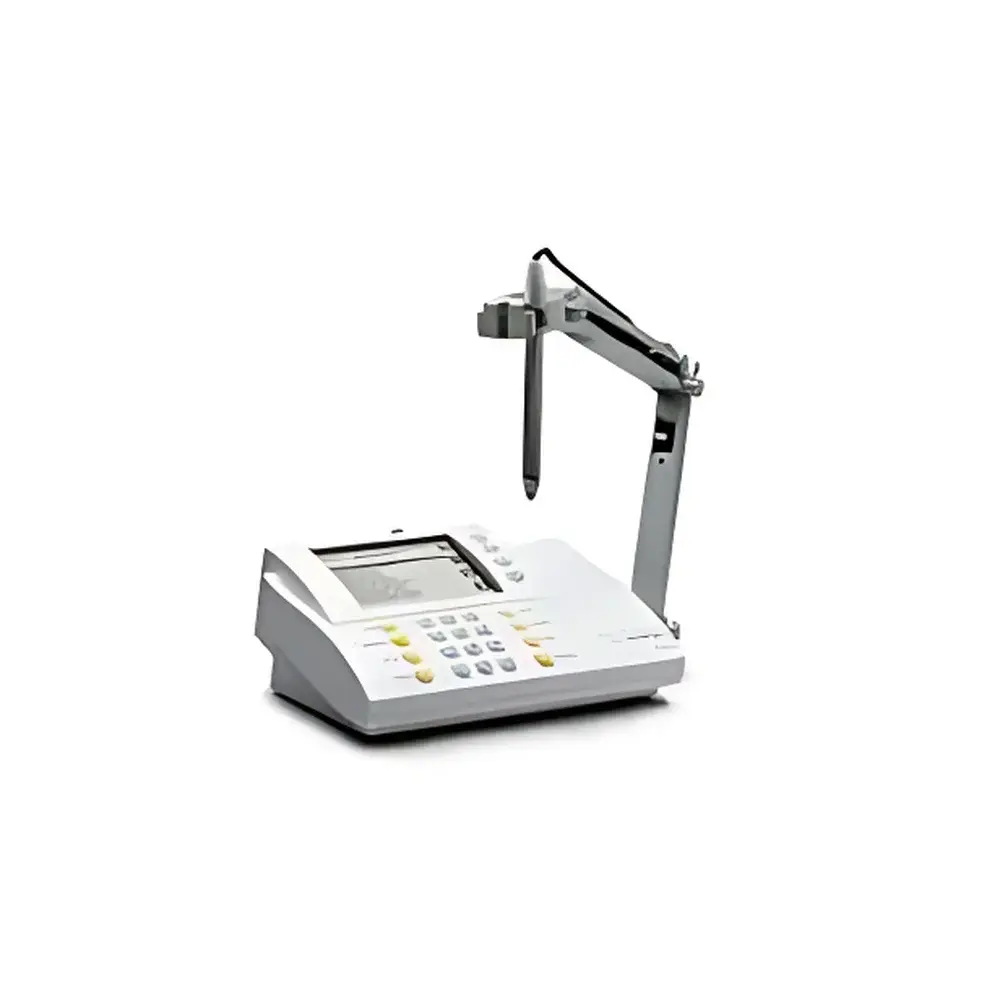
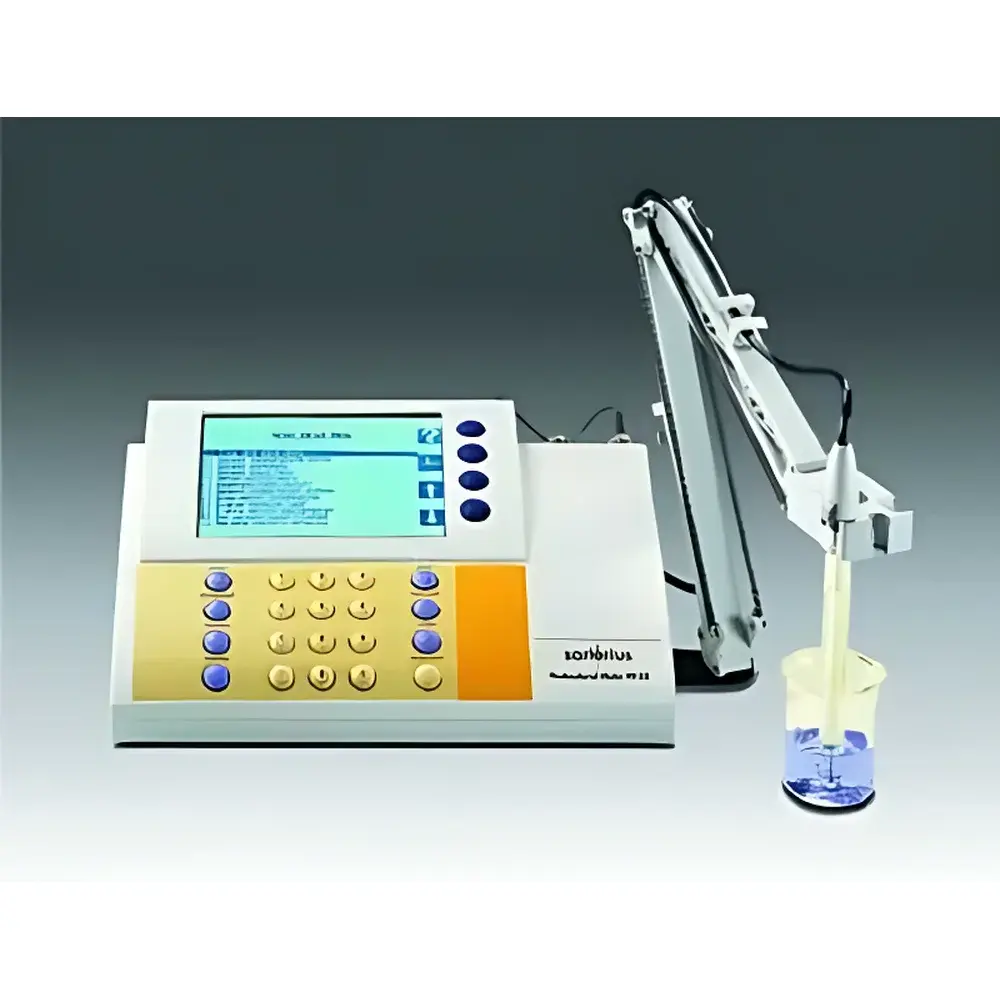
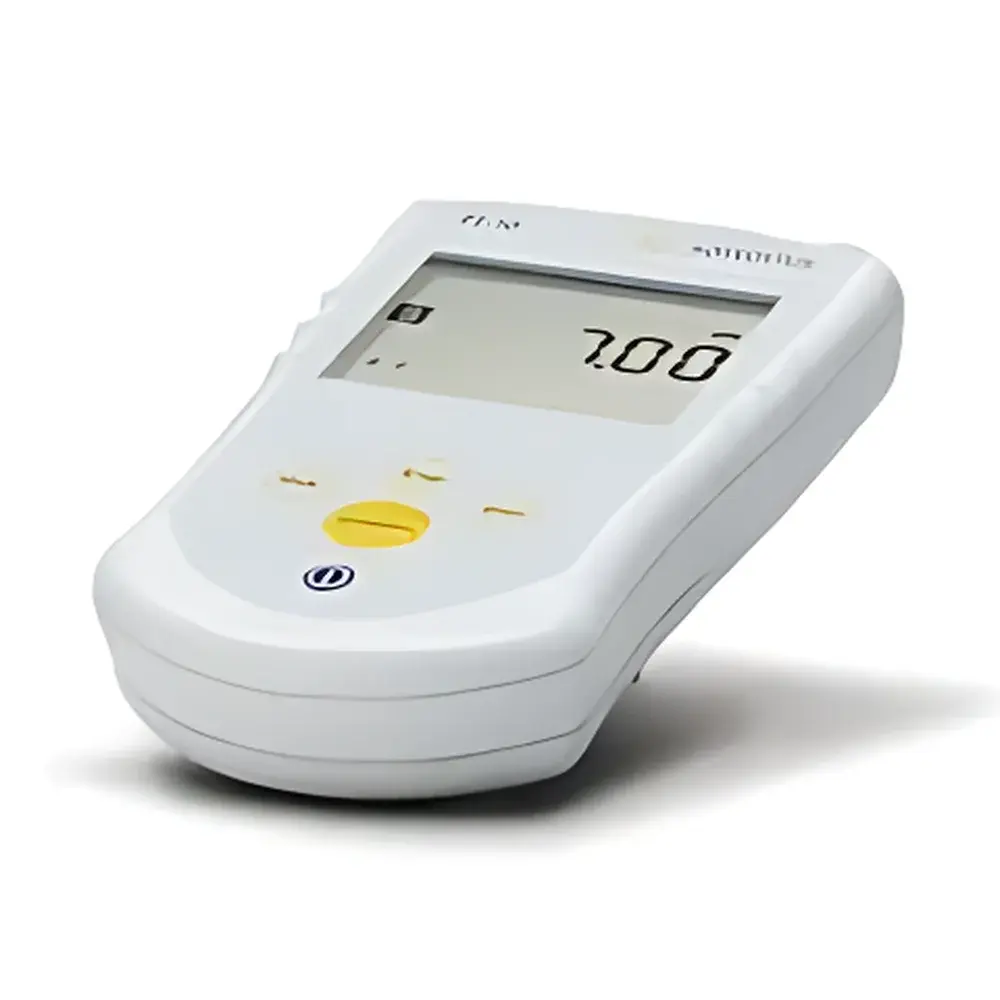
Sartorius PP-15-P11 Professional pH/Redox/Temperature Meter
| Brand | Sartorius |
|---|---|
| Origin | Germany |
| Model | PP-15-P11 |
| pH Range | –2.000 to +20.000 |
| Measurement Modes | pH, mV, °C/°F |
| Electrode Interface | BNC + Pt1000 RTD |
| Calibration Points | Up to 3-point with auto-buffer recognition (16–22 buffers) |
| Temperature Compensation | Automatic (ATC) |
| Data Storage | Internal logging (DocuMeter variants only) |
| Compliance | GLP-compliant documentation (Docu-pH+), ISO/IEC 17025-aligned operation |
| Warranty | 24 months |
Overview
The Sartorius PP-15-P11 is a high-precision benchtop pH, redox (mV), and temperature meter engineered for routine and regulated laboratory applications in quality control, pharmaceutical development, and academic research. Based on potentiometric measurement principles—where the potential difference between a glass pH electrode and a reference electrode is converted into a calibrated pH value—the PP-15-P11 delivers traceable, reproducible results across an extended range of –2.000 to +20.000 pH. Its architecture integrates a high-impedance input amplifier (>1013 Ω), low-drift analog-to-digital conversion, and real-time thermal compensation via integrated Pt1000 RTD sensing. Designed and manufactured in Germany, the instrument meets stringent requirements for metrological stability under varying ambient conditions and supports method validation in accordance with ISO 17025 and USP .
Key Features
- Extended pH measurement range from –2.000 to +20.000 with 0.001 pH resolution and ±0.002 pH accuracy (at 25 °C, using certified buffers)
- Automatic temperature compensation (ATC) using a built-in Pt1000 sensor or external probe; supports both °C and °F display
- Intelligent 3-point calibration with automatic buffer recognition for 16–22 standard IUPAC and DIN buffers (e.g., pH 1.68, 4.01, 7.00, 10.01, 12.45)
- Simultaneous on-screen display of pH, mV, and temperature values—no mode switching required
- Real-time electrode diagnostics: detects asymmetry potential, slope deviation (>95% typical), and high-resistance faults before measurement
- User-configurable minimum measurement duration (1–60 seconds) to accommodate slow-response electrodes or viscous samples
- GLP-ready audit trail functionality in Docu-pH+ variant (RS232 interface, timestamped data export, user ID assignment)
- Dedicated PY-P11 combination pH electrode included—optimized for low-sodium error, fast response, and long-term stability in aqueous and semi-aqueous matrices
Sample Compatibility & Compliance
The PP-15-P11 accommodates a broad spectrum of sample types including aqueous solutions, buffers, cell culture media, fermentation broths, and weakly conductive organic-aqueous mixtures. Its high-input-impedance circuitry minimizes loading errors when measuring low-conductivity samples (<100 µS/cm). The PY-P11 electrode features a double-junction reference system with polymer gel electrolyte, reducing contamination risk in proteins, sulfides, or Ag+-containing solutions. All calibration and measurement procedures align with ASTM D1293 (pH of water), ISO 3696 (water for analytical use), and EP/USP general chapters and . The instrument’s firmware supports electronic signature capability and full audit trail generation—essential for FDA 21 CFR Part 11 compliance in regulated environments.
Software & Data Management
While the base PP-15-P11 operates as a standalone meter, its Docu-pH+ counterpart enables direct RS232 connectivity to LIMS or ELN platforms. Data output includes measurement timestamp, operator ID, electrode serial number, calibration history, slope/mV offset, and raw sensor signals. Export formats include CSV and TXT, compatible with Microsoft Excel, LabArchives, and Veeva Vault. Firmware updates are performed via USB port using Sartorius’ validated Metrology Suite software—each release accompanied by a formal change control record and verification protocol per ISO 13485.
Applications
- Pharmaceutical QC testing of injectables, oral suspensions, and excipient solutions per USP monographs
- pH monitoring during bioreactor runs and downstream purification steps (e.g., ion exchange chromatography equilibration)
- Validation of cleaning-in-place (CIP) rinse endpoints in GMP manufacturing suites
- Environmental analysis of acid mine drainage and alkaline industrial effluents
- Academic electrochemistry labs requiring stable redox potential referencing against Ag/AgCl
- Food & beverage R&D for shelf-life modeling of fermented products (yogurt, kombucha, sourdough starters)
FAQ
What electrode is supplied with the PP-15-P11?
The system ships with the PY-P11 triple-junction, refillable pH electrode featuring a low-resistance glass membrane and polymer-gel KCl reference electrolyte—optimized for stability in complex biological and high-protein matrices.
Does the PP-15-P11 support conductivity or ion concentration measurements?
No—the PP-15-P11 is dedicated to pH, mV, and temperature. For combined pH/conductivity/ion analysis, consider the PP-20-P11 or PP-50-P11 models.
Can calibration data be exported or backed up?
Calibration records are stored internally and viewable on-screen. Full traceability—including timestamps and operator IDs—requires the Docu-pH+ model with RS232 output.
Is the instrument suitable for non-aqueous titrations?
Yes—when used with appropriate non-aqueous electrodes (e.g., Sartorius PY-21) and solvent-compatible calibration buffers, the PP-15-P11 supports ethanol/water and acetonitrile-based systems per ISO 17025 Annex C guidelines.
How often should the PY-P11 electrode be maintained?
Daily rinsing with deionized water is recommended; storage in 3 M KCl solution prevents junction clogging. Electrode performance should be verified before each critical measurement series using two-point calibration check standards.






