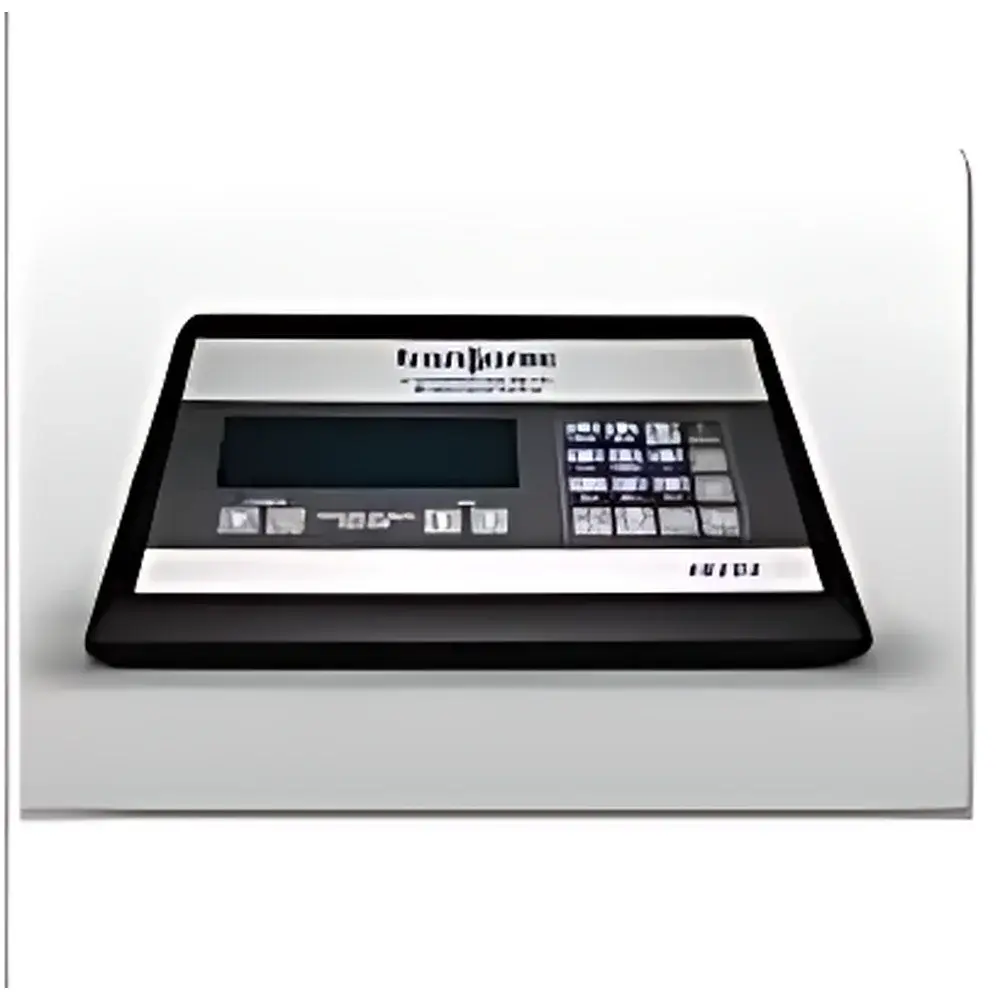
Scisense FV892 Pressure–Volume Controller
| Origin | USA |
|---|---|
| Manufacturer Type | Distributor |
| Origin Category | Imported |
| Model | Scisense FV892 |
| Pricing | Upon Request |
| Pressure Output | 1 V/100 mmHg (custom output ranges available) |
| Power Supply | External AC adapter, ±12 VDC |
| Dimensions (H × W × L) | 16.8 cm × 22.6 cm × 6.9 cm |
| Calibration Control | 10-position output gain switch |
| Catheter Cable Length Options | 91 cm or 152 cm |
| Output Interface | Standard BNC analog output |
Overview
The Scisense FV892 Pressure–Volume Controller is an engineered signal conditioning and control module designed exclusively for use with Scisense micro-manometer–based pressure–volume (P–V) catheters in preclinical cardiovascular research. It serves as the interface between miniature conductance or pressure-sensing catheters and third-party data acquisition systems, enabling synchronized, high-fidelity recording of intracardiac pressure and volume signals. The device operates on the principle of analog signal amplification, linear scaling, and stable DC-coupled output—critical for preserving low-frequency physiological transients (e.g., diastolic filling dynamics) and minimizing phase shift across the cardiac cycle. Its architecture supports real-time, artifact-free acquisition essential for deriving load-independent indices such as end-systolic elastance (Ees) and preload recruitable stroke work (PRSW), widely used in mechanistic studies of myocardial contractility and ventricular–vascular coupling.
Key Features
- Optimized signal conditioning for Scisense’s proprietary micro-manometer and conductance catheters, ensuring minimal noise floor ( 100 dB at 60 Hz)
- Linear, calibrated pressure output of 1 V per 100 mmHg (default), with selectable gain via a precision 10-position rotary switch—supporting custom scaling for extended or reduced pressure ranges (e.g., pulmonary artery or fetal applications)
- Stable ±12 VDC power regulation with internal filtering to suppress switching artifacts from external AC adapters, maintaining signal integrity under variable laboratory electrical loads
- Compact benchtop form factor (16.8 × 22.6 × 6.9 cm) designed for integration into constrained electrophysiology or Langendorff rig setups without compromising airflow or cable management
- BNC analog output compliant with IEEE 1057 and IEC 60601-2-27 safety standards—enabling direct connection to commercial DAQ systems including ADInstruments PowerLab, National Instruments PXI, and Spike2 (CED)
- Interchangeable catheter cables (91 cm or 152 cm) with gold-plated, low-capacitance coaxial connectors to preserve signal bandwidth up to 1 kHz (–3 dB point), suitable for murine through porcine models
Sample Compatibility & Compliance
The FV892 is validated for use with Scisense’s full line of solid-state pressure–volume catheters—including 1.4F, 1.9F, and 2.8F configurations—for acute in vivo rodent, rabbit, and large-animal preparations. It complies with ISO 13485:2016 requirements for design control documentation and undergoes factory calibration traceable to NIST-certified pressure standards. While not intended for human clinical use, its electrical safety design meets IEC 61010-1 (2012) for laboratory measurement equipment. The analog output path is fully isolated from mains ground, eliminating ground loops during multi-channel recordings involving ECG, LV dP/dt, or impedance plethysmography.
Software & Data Management
As a hardware signal conditioner, the FV892 does not include embedded firmware or onboard storage. All data logging, time synchronization, and post-processing are performed externally using host DAQ software. When paired with FDA 21 CFR Part 11–compliant platforms (e.g., LabChart 8 with Audit Trail Module or DIAdem with validation packages), the system supports GLP/GMP-aligned workflows—including electronic signatures, version-controlled calibration logs, and immutable raw-data archiving. Export formats include ASCII, HDF5, and TDMS—facilitating interoperability with MATLAB, Python (via PyDAW or nptdms), and R-based cardiovascular modeling pipelines.
Applications
- Preclinical assessment of left ventricular systolic and diastolic function in genetically modified mouse models of heart failure
- Evaluation of acute pharmacologic responses (e.g., β-adrenergic stimulation, calcium sensitizers) under controlled loading conditions
- Validation of computational hemodynamic models requiring simultaneous, phase-matched P–V loop acquisition
- Training and methodology standardization in core cardiovascular phenotyping facilities accredited by AALAC or AAALAC International
- Integration into closed-loop experimental paradigms where real-time pressure feedback modulates perfusion pressure in ex vivo heart preparations
FAQ
Is the FV892 compatible with non-Scisense pressure catheters?
No—the FV892 is electrically and mechanically optimized for Scisense’s proprietary micro-manometer sensor architecture and conductance field geometry. Interfacing with third-party catheters may result in incorrect scaling, thermal drift, or signal saturation due to mismatched impedance and excitation requirements.
Does the unit require recalibration between experiments?
Factory calibration is stable over time and temperature; however, daily zero-reference verification using atmospheric pressure is recommended prior to each acute preparation, per ASTM F2086–22 guidelines for invasive cardiovascular instrumentation.
Can the output be digitized at >1 kHz sampling rates?
Yes—provided the connected DAQ system supports anti-aliasing filtering and has sufficient analog bandwidth (>2 kHz), the BNC output preserves fidelity up to 1 kHz, enabling high-resolution loop morphometry and derivative-based metrics (e.g., dP/dtmax, τ).