
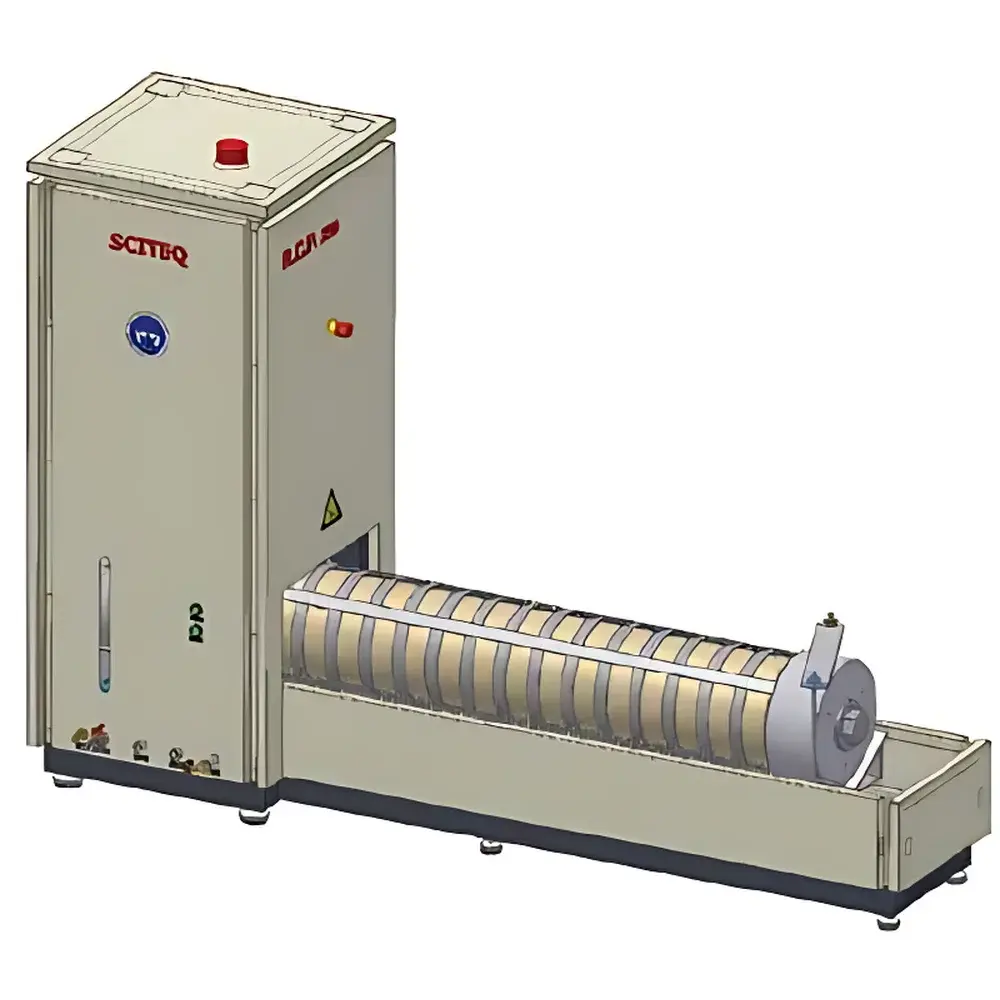
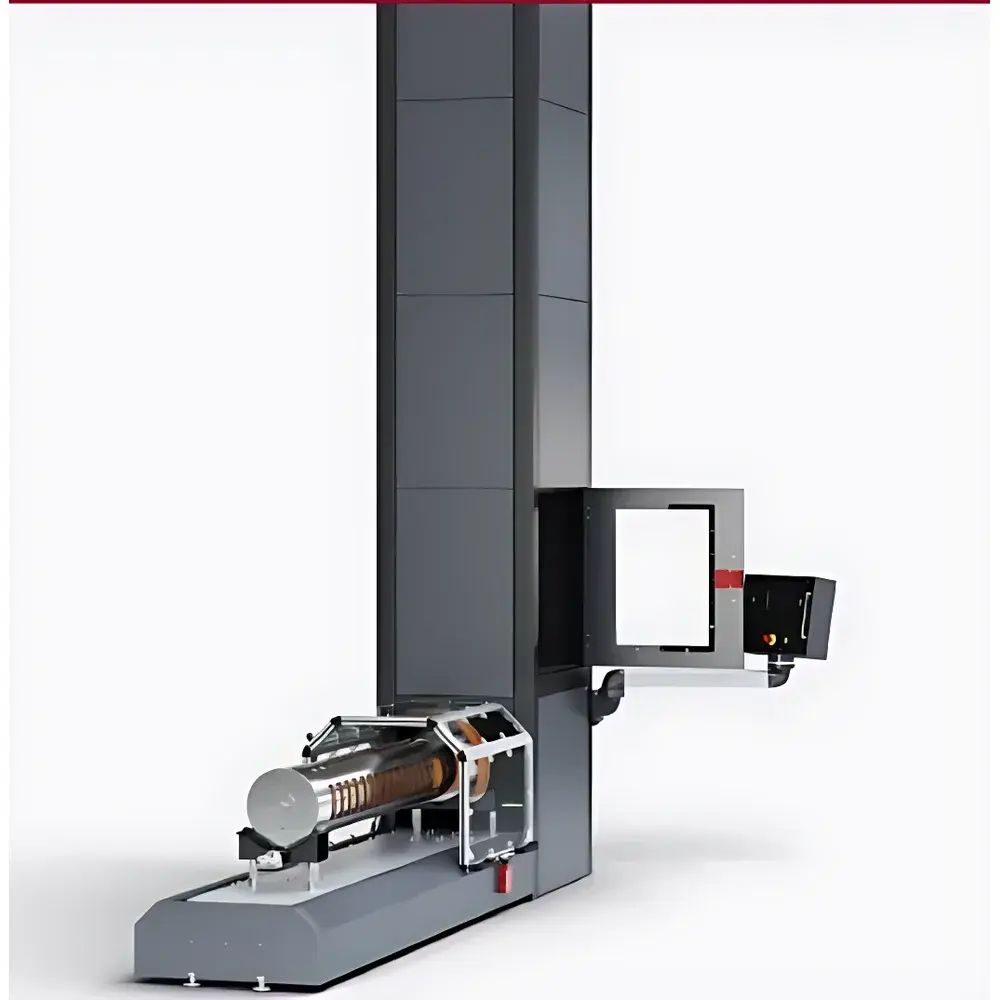
Sciteq RCP Rapid Crack Propagation Tester for Pipes
| Brand | Sciteq |
|---|---|
| Origin | Denmark |
| Model | RCP |
| Standard Compliance | ISO 13477 |
| Test Principle | Static Pressurized Impact Initiation of Brittle Fracture in Thermoplastic Pipes |
| Application Scope | Critical Temperature (T<sub>c</sub>) Determination for Rapid Crack Propagation in PE, PP, and Other Pressure Pipes |
Overview
The Sciteq RCP Rapid Crack Propagation Tester is an engineered solution for determining the critical temperature (Tc) at which thermoplastic pressure pipes—primarily polyethylene (PE) and polypropylene (PP)—undergo unstable, self-sustaining crack propagation under static internal pressure. Designed in strict accordance with ISO 13477 (“Plastics pipes and fittings — Determination of the resistance to rapid crack propagation — Small-scale steady-state test”), the RCP system implements a controlled, single-point mechanical impact on a pre-notched pipe specimen held at constant internal pressure and precisely regulated temperature. Unlike dynamic or full-scale testing methods, the RCP test operates in the small-scale steady-state regime, enabling reproducible evaluation of fracture resistance across standardized SDR (Standard Dimension Ratio) configurations without requiring full-length pipe sections. The instrument’s core function is to identify the threshold temperature below which a propagating crack will arrest and above which it will continue unimpeded—data essential for material qualification, pipeline design validation, and regulatory compliance in gas distribution and water supply infrastructure.
Key Features
- ISO 13477-compliant static pressurized impact methodology with calibrated energy delivery via high-pressure pneumatic cylinder
- Dedicated modular safety cage system, dimensionally matched to common pipe diameters (e.g., DN 63–DN 315), providing full containment during rupture events
- Integrated pressure-buffering internal baffle plate that prevents premature pressure decay prior to crack initiation, ensuring consistent stress state at the notch tip
- Quick-change end-cap and sealing assembly enabling seamless transition between different pipe diameters and SDR values
- Real-time digital display of test parameters: internal pressure (bar), test temperature (°C), and elapsed time
- Tooling kit includes precision notching cutter, alignment spacers, safety cage shims, and pressure-dampening buffer plates—all traceable and dimensionally certified per ISO 13477 Annex B
- Robust structural frame with vibration-damped mounting and fail-safe interlocks preventing actuation unless safety cage is fully engaged
Sample Compatibility & Compliance
The Sciteq RCP accommodates standard thermoplastic pipe specimens conforming to ISO 4427 (PE pipes for water supply), ISO 4437 (PE pipes for gas supply), and ISO 15494 (PP-H/PP-B pipes). Specimens must be cut from production-grade pipe, conditioned per ISO 291 (23 °C, 50% RH, ≥48 h), and notched using the supplied cutter to achieve a depth tolerance of ±0.1 mm as specified in ISO 13477 Clause 6.3. Each test configuration is validated for specific SDR ranges (e.g., SDR 11, SDR 17, SDR 26), with corresponding tooling and safety cage geometry. The system supports test temperatures from −20 °C to +40 °C (±0.5 °C stability) and pressures up to 20 bar, fully covering the operational envelope required for PE100 and PE100-RC grade qualification. All hardware components are CE-marked and designed to meet EN ISO 12100 (risk assessment) and EN 61000-6-2/6-4 (EMC immunity/emission) requirements.
Software & Data Management
While the RCP operates as a stand-alone benchtop instrument with analog/digital hybrid control, its test execution and parameter logging support full integration into laboratory quality management systems. Pressure and temperature readings are captured via calibrated transducers with 0.1 bar and 0.1 °C resolution, respectively, and output as ASCII-formatted timestamped logs compatible with LIMS import. Optional USB data logger modules provide audit-trail-ready records compliant with FDA 21 CFR Part 11 when paired with electronic signature-enabled software platforms. All calibration certificates—including pressure transducer NIST-traceable verification and temperature sensor PT100 calibration—are provided with initial commissioning and maintained per ISO/IEC 17025 requirements. Test reports generated manually or via external spreadsheet templates include mandatory fields per ISO 13477 Annex D: specimen ID, SDR, test temperature, applied pressure, crack arrest/propagation outcome, and operator signature.
Applications
- Material development labs evaluating new PE resin formulations for improved rapid crack propagation resistance
- Independent certification bodies performing third-party type testing per EN 1555 (gas) and EN 12201 (water) standards
- Manufacturers conducting routine quality control on extruded pipe batches prior to release
- Research institutions studying fracture mechanics of polymeric pipelines under sub-zero service conditions
- Regulatory agencies verifying compliance with national pipeline safety directives (e.g., UK HSE, German DVGW, US PHMSA)
FAQ
What is the minimum specimen length required for the RCP test?
Per ISO 13477, the minimum test specimen length is 300 mm, with a recommended length of 400–500 mm to ensure stable crack propagation behavior and minimize end effects.
Can the RCP system be used for non-thermoplastic pipes such as PVC or multilayer composites?
No—the RCP test method and Sciteq RCP hardware are specifically validated for ductile thermoplastics exhibiting stable-to-unstable transition behavior (e.g., PE, PP). PVC and rigid composites require alternative test protocols such as ISO 13478 or ASTM F2023.
Is operator training included with system installation?
Yes—Sciteq provides on-site commissioning and hands-on operator training covering safe handling, tooling setup, notch preparation, pressure calibration, and interpretation of Tc results in line with ISO 13477 Annex E.
How frequently must the pressure transducer be recalibrated?
Annual recalibration is recommended; however, users must perform functional verification before each test series using the built-in zero-pressure and reference-pressure check points.
Does the RCP system support automated data export to Excel or CSV formats?
Yes—via optional USB data logger module with configurable sampling interval (1–10 Hz) and direct file export to FAT32-formatted USB drives.



