
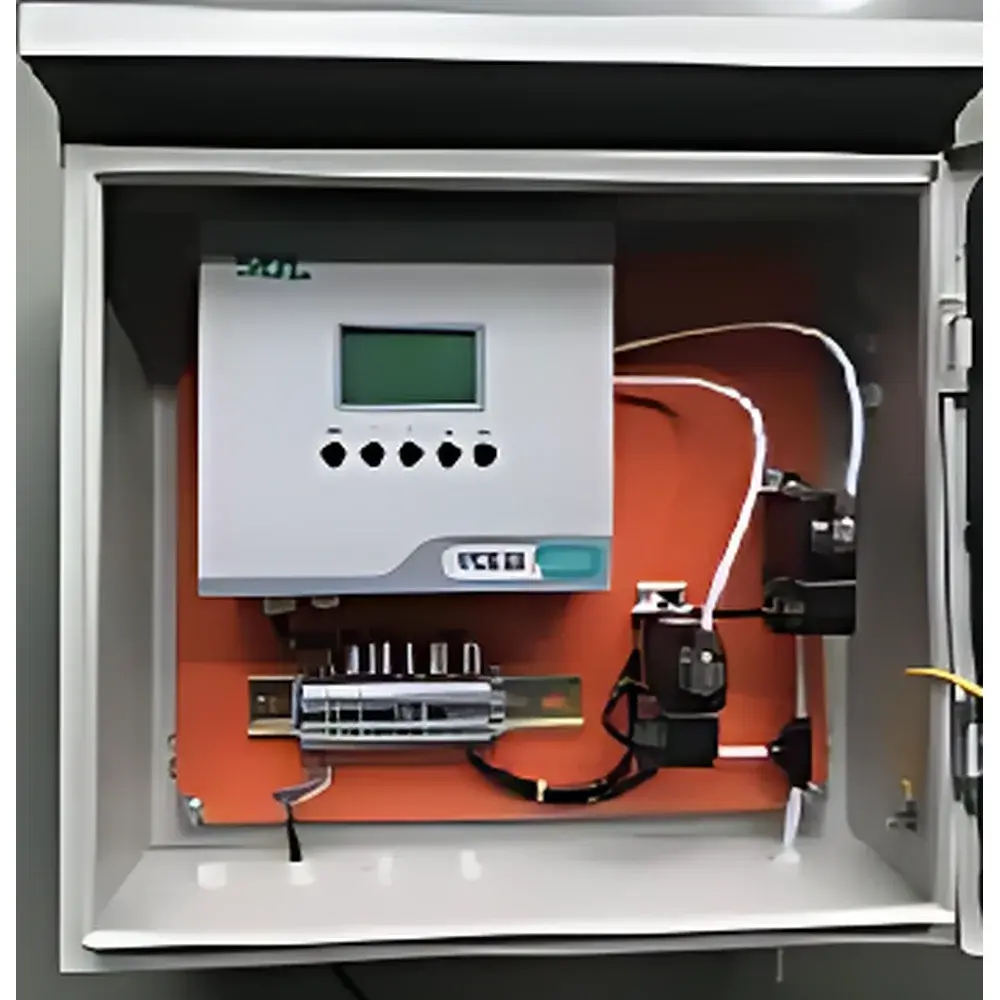
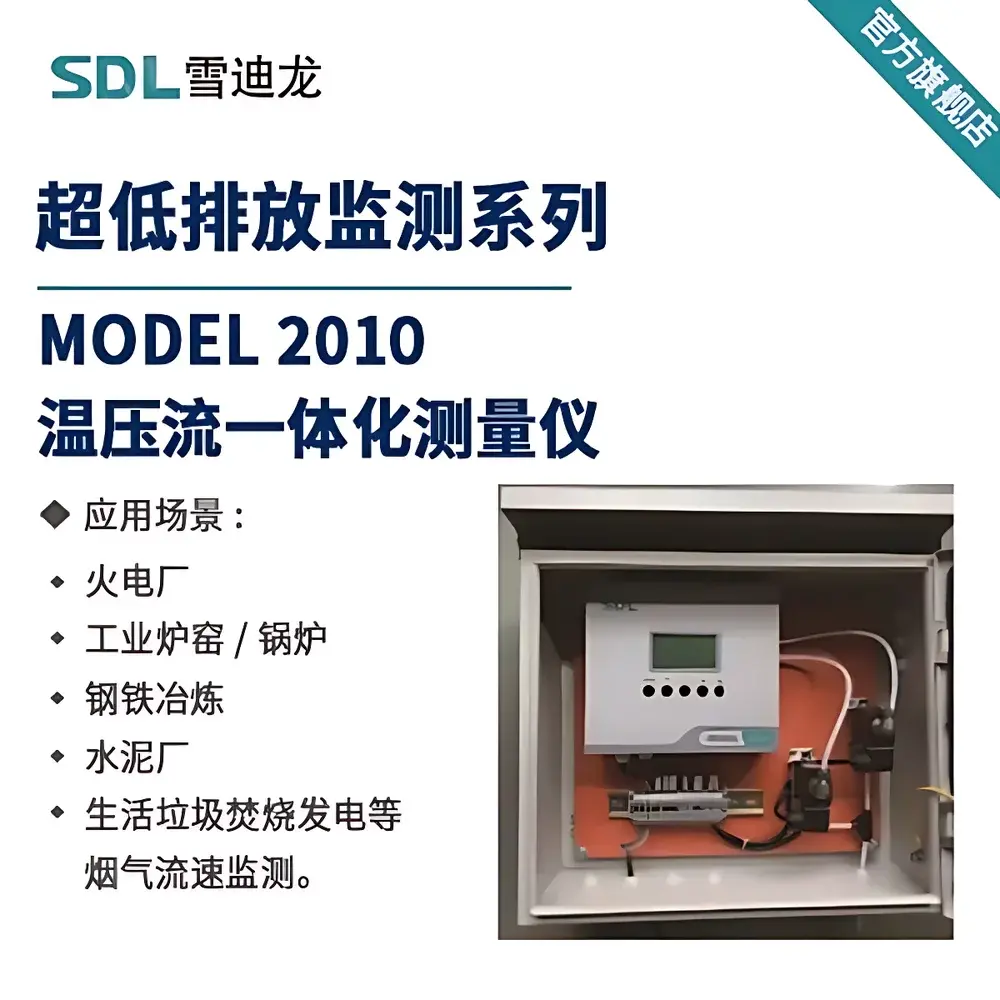
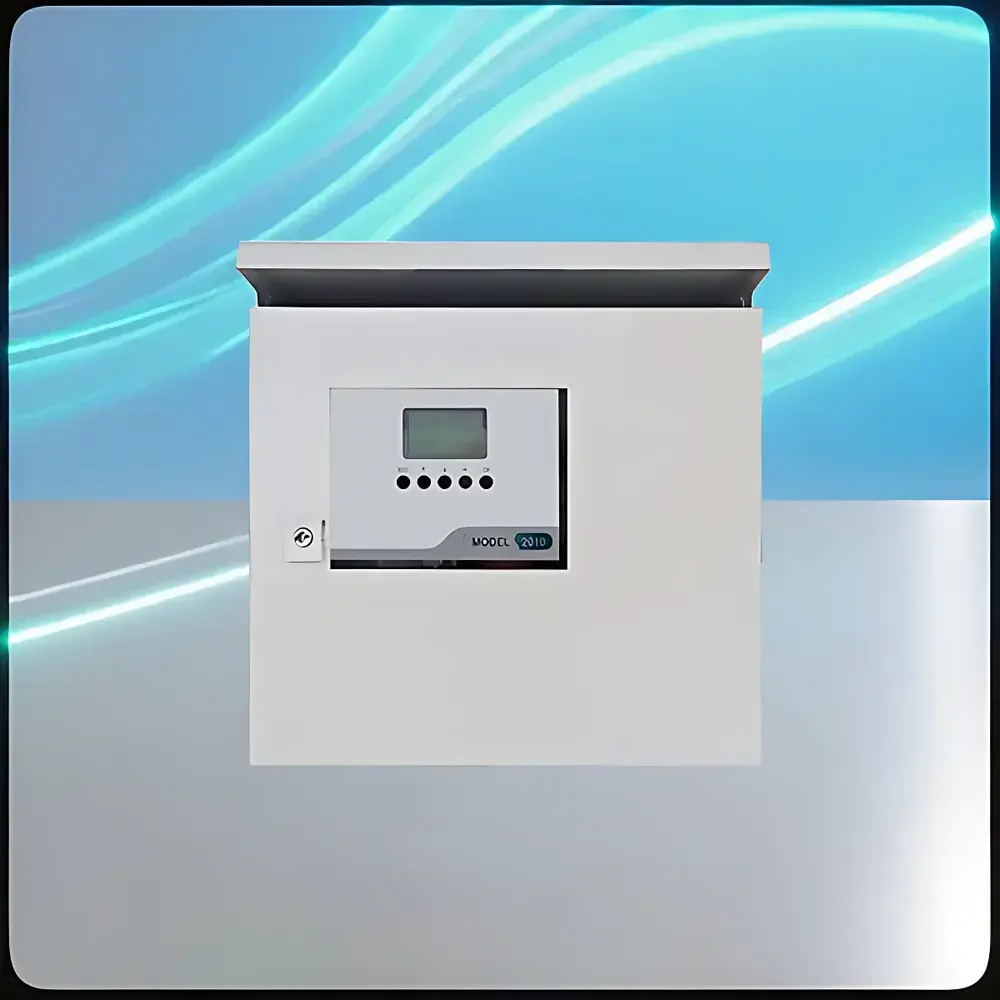
SDL MODEL 2010 Integrated Temperature-Pressure-Velocity Monitor for Flue Gas Applications
| Brand | SDL |
|---|---|
| Origin | Beijing, China |
| Manufacturer Type | Original Equipment Manufacturer (OEM) |
| Country of Manufacture | China |
| Model | MODEL 2010 |
| Price | USD 14,000 (approx.) |
Overview
The SDL MODEL 2010 Integrated Temperature-Pressure-Velocity Monitor is an industrial-grade, in-situ flue gas flow measurement system engineered for continuous, long-term operation in demanding combustion exhaust environments. It implements a robust tri-parameter sensing architecture—simultaneously acquiring static temperature (via Pt100-class platinum resistance thermometer), static and dynamic pressure (via high-stability differential pressure transducers), and volumetric flow velocity (via S-type Pitot tube with differential pressure-based calculation)—all within a single, compact probe assembly. The device operates on the fundamental principle of ISO 5167-compliant differential pressure flow measurement, where velocity is derived from the square root of the measured ΔP across the Pitot tube, corrected in real time using concurrent temperature and static pressure inputs to compute actual volumetric flow and standardized (e.g., Nm³/h) flow rates. Designed specifically for stack and duct applications, it meets structural and functional requirements outlined in HJ 75–2017 and HJ 76–2017 (Chinese Technical Specifications for Continuous Emission Monitoring Systems), and aligns with key elements of EN 15267-3, ASTM D6784-22 (Standard Test Method for Elemental, Organic, and Isotopic Analysis of Combustion Gases), and EPA Method 2 (Velocity Traverse Measurements).
Key Features
- Integrated S-type Pitot tube probe with dual-chamber differential pressure sensing—optimized for high-dust, high-moisture, and mildly corrosive flue gas streams (up to 200 °C continuous duty, with optional extended-range thermal shielding)
- Real-time, on-board temperature and static pressure compensation algorithm—applies ideal gas law corrections to raw ΔP signals, enabling accurate conversion to standard-cubic-flow units without external SCADA dependency
- Automated purge/anti-clogging system—programmable nitrogen or instrument air back-blow sequence prevents particulate accumulation in pressure ports and thermowell passages
- Modular signal conditioning electronics housed in IP65-rated, explosion-proof (Ex d IIB T4) enclosure—supports 4–20 mA analog outputs for each parameter (T, P, V) plus Modbus RTU over RS-485
- Field-configurable calibration modes—including manual zero/span adjustment and automated multi-point verification routines traceable to NIST-certified reference standards
- Compact, low-profile probe design (≤Φ80 mm × 1200 mm insertion length)—minimizes duct intrusion, reduces flow disturbance, and simplifies retrofit installation in constrained access locations
Sample Compatibility & Compliance
The MODEL 2010 is validated for use with flue gases containing particulate loadings up to 50 g/Nm³, SO₂ concentrations ≤2000 ppm, NOₓ ≤1000 ppm, and O₂ content 0–21% vol. It is not intended for use in explosive atmospheres exceeding Group IIB or with halogenated or highly oxidizing acid gases (e.g., Cl₂, HF) above threshold corrosion limits. Compliance documentation includes factory calibration certificates per ISO/IEC 17025:2017 (accredited by CNAS), CE marking under the EU Measuring Instruments Directive (MID 2014/32/EU Annex MI-004 for flow meters), and conformity to GB/T 16157–1996 (Determination of Exhaust Gas Flow Rate in Stationary Sources). All firmware and configuration logs support GLP/GMP audit trails when integrated with compliant DCS/EMS platforms.
Software & Data Management
Local configuration and diagnostics are performed via an embedded web interface (HTTPS-enabled) accessible through standard Ethernet. The onboard firmware supports data logging at user-defined intervals (1–600 seconds), with internal storage for ≥30 days of 1-second sampled data. Raw and compensated outputs are exportable in CSV format via USB or FTP. For enterprise integration, the device provides native OPC UA server functionality (compliant with OPC Foundation Part 1–100 specification) and supports secure TLS 1.2 communication with central CEMS databases. Audit trail records—including calibration events, purge cycles, and parameter modifications—are timestamped, digitally signed, and retain full traceability per FDA 21 CFR Part 11 requirements when deployed in regulated pharmaceutical or waste-to-energy facilities.
Applications
- Continuous monitoring of flue gas velocity in coal-fired, biomass, and natural gas power plant stacks for mass emission rate calculations (CO₂, NOₓ, SO₂)
- Performance verification of selective catalytic reduction (SCR) and electrostatic precipitator (ESP) systems in steelmaking and cement kiln exhaust ducts
- Combustion efficiency optimization in municipal solid waste (MSW) incinerators and hazardous waste treatment facilities
- Regulatory compliance reporting under China’s “Ultra-Low Emission” policy (GB 13223–2011) and EU Industrial Emissions Directive (IED 2010/75/EU)
- Baseline characterization and periodic verification of CEMS installations during QA/QC audits and third-party certification (e.g., TÜV, SGS)
FAQ
What flue gas conditions is the MODEL 2010 rated for?
It is designed for continuous operation in flue gases up to 200 °C, with particulate concentrations ≤50 g/Nm³ and moderate acidity (pH > 2 in condensed phase). Optional ceramic-coated probes extend suitability to 300 °C.
Does it support remote calibration verification?
Yes—via Modbus or OPC UA, users can initiate automated zero-check sequences and retrieve diagnostic flags indicating port clogging, sensor drift, or thermal overload.
Is the device certified for use in hazardous areas?
The standard enclosure carries Ex d IIB T4 certification (IEC 60079-1); ATEX and IECEx variants are available upon request with custom certification documentation.
How is temperature-pressure-velocity data synchronized?
All three sensors share a common sampling clock and are processed within a single FPGA-based acquisition module, ensuring sub-millisecond temporal alignment for dynamic flow analysis.
Can it interface with existing CEMS platforms?
Yes—4–20 mA analog outputs, Modbus RTU, and OPC UA protocols ensure seamless integration with Siemens Desigo, Honeywell Experion, Yokogawa CENTUM VP, and most major CEMS vendors’ host systems.







