
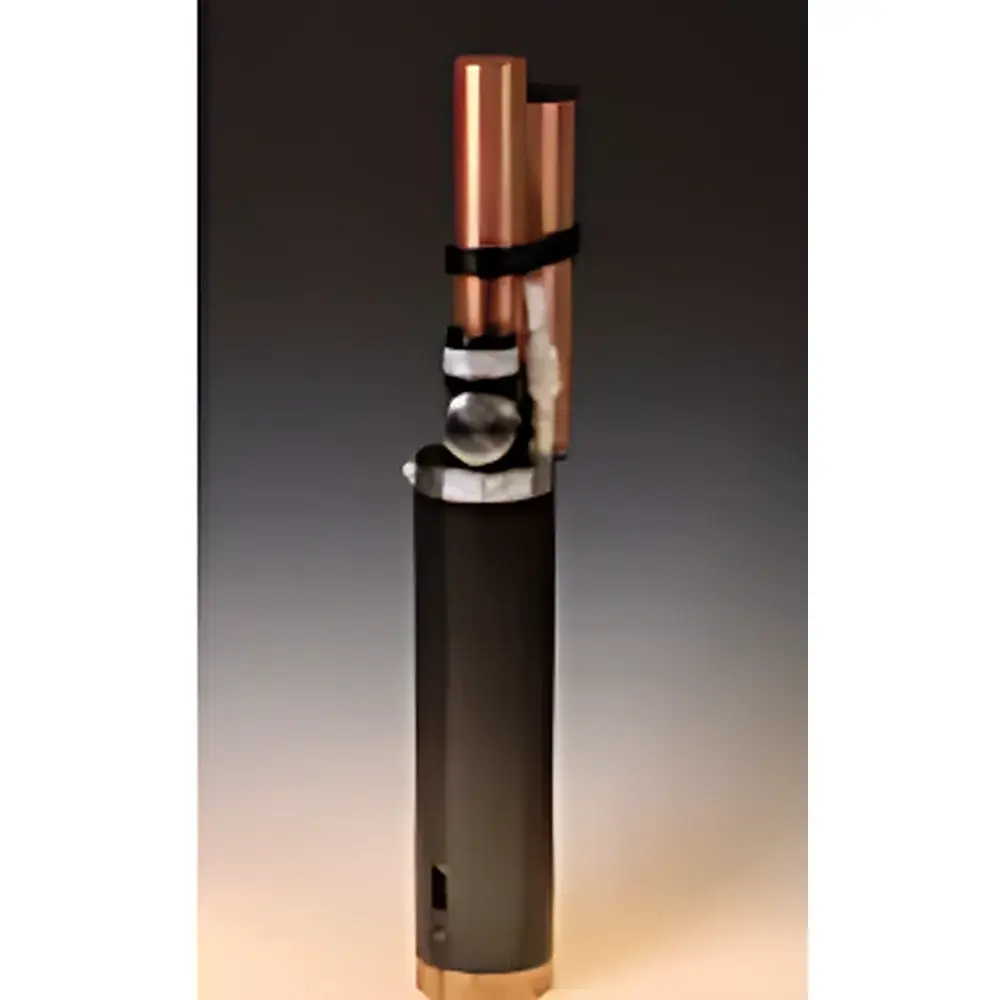
Sea-Bird Scientific WQMX Coastal Water Quality Monitoring System
| Brand | Sea-Bird Scientific |
|---|---|
| Manufacturer Origin | USA |
| Model | WQMX |
| Sensor Integration | CTD + FLNTU + DO + CDOM + Optional PAR/Phycocyanin/Phycoerythrin/pH |
| Depth Rating | 200 m |
| Power Input | 9–16 V DC |
| Communication | RS-232 |
| Sampling Rate | 1 Hz |
| Weight (air/water) | 6.25 kg / 1.7 kg |
| Biofouling Resistance | 3–6 months continuous deployment |
| Compliance | ASTM D888, ISO 5814, USP <643>, EPA Method 4500-O, GLP/GMP-ready data logging |
Overview
The Sea-Bird Scientific WQMX Coastal Water Quality Monitoring System is an integrated, multi-parameter in-situ sensor platform engineered for long-term, unattended operation in high-biomass coastal and estuarine environments. Built upon the synergistic integration of Sea-Bird’s precision CTD architecture and Wetlabs’ advanced optical sensing technology, the WQMX delivers synchronized, co-located measurements of physical, chemical, and optical water quality parameters under demanding field conditions. Its operational principle relies on pump-controlled flow-through measurement geometry—ensuring consistent water mass exposure across all sensors while eliminating photic stimulation that promotes biofilm growth. This design enables robust, high-fidelity time-series data acquisition critical for biogeochemical cycling studies, hypoxia monitoring, harmful algal bloom (HAB) early warning, and ecosystem-scale nutrient flux modeling.
Key Features
- Pump-driven flow-through CTD module: Ensures uniform water sampling for temperature, conductivity, pressure, and dissolved oxygen—measured in light-shielded tubing to suppress phototrophic biofouling.
- Integrated FLNTU optical package: Simultaneously quantifies chlorophyll-a fluorescence (EX/EM: 470/695 nm), turbidity (700 nm), and colored dissolved organic matter (CDOM) absorption via dual-beam compensation.
- Multi-tiered biofouling mitigation system: Includes BLIS (Bleach Injection System) with user-configurable dosing intervals, SBE anti-fouling hardware kit, copper-brush actuated optical window protection, and electroplated copper housing for passive biocidal surface inhibition.
- High-stability sensor calibration traceability: All primary sensors (CTD, DO, optical) are factory-calibrated against NIST-traceable standards; stability specifications meet or exceed ASTM D888 (DO), ISO 5814 (electrochemical DO), and EPA Method 4500-O (dissolved oxygen).
- Low-power architecture: Draws <100 mA during standby, 350 mA peak during sampling; compatible with solar-battery telemetry buoys and autonomous platforms.
- RS-232 serial interface with ASCII output protocol: Supports direct integration with data loggers (e.g., Campbell CR1000X), IO-Link gateways, and cloud telemetry systems compliant with IEC 61131-3 and MQTT v3.1.1.
Sample Compatibility & Compliance
The WQMX is validated for deployment in brackish to fully marine waters (0–42 PSU), including turbid estuaries, eutrophic bays, river plumes, and stratified fjords. Its optical path design incorporates background interference rejection algorithms to maintain accuracy in optically complex waters (aCDOM up to 5 m−1, TSS >100 mg/L). Regulatory alignment includes support for GLP/GMP audit trails via timestamped, checksum-verified binary data packets; optional firmware enables 21 CFR Part 11-compliant electronic signatures and operator access logs. Sensor outputs conform to ISO/IEC 17025 metrological requirements when used with documented calibration certificates and drift verification protocols.
Software & Data Management
Raw sensor data are output in Sea-Bird’s standardized SBE Data Format (SDF), readable by Seaterm, SBE Data Processing, and open-source tools such as Python’s seabird library. Processed data streams integrate seamlessly with LOBO (Long-term Ocean Biogeochemical Observatory) cloud infrastructure for real-time visualization, anomaly detection, and automated QA/QC flagging per IOCCG Protocols. Internal memory buffers support >30 days of 1-Hz data at full parameter set; external SD card logging extends archival capacity. Firmware updates are performed via serial command-line interface with SHA-256 signature validation to ensure integrity.
Applications
- Long-term biogeochemical observatories (e.g., OceanSITES, GOOS stations)
- Estuarine nutrient loading and hypoxia forecasting
- Chlorophyll-a and CDOM dynamics in coastal upwelling zones
- Regulatory compliance monitoring under EU WFD and US Clean Water Act Section 304(h)
- Validation of satellite ocean color products (e.g., Sentinel-3 OLCI, VIIRS)
- Real-time HAB detection using combined chlorophyll, phycocyanin, and turbidity thresholds
FAQ
What is the maximum recommended deployment duration without maintenance?
Under typical high-productivity coastal conditions, the WQMX achieves 3–6 months of continuous, high-data-quality operation when all anti-fouling subsystems (BLIS, copper brush, SBE hardware kit) are enabled and configured per site-specific biofouling risk assessment.
Can the WQMX be deployed in freshwater systems?
Yes—the CTD and optical sensors operate across 0–42 PSU; however, CDOM and chlorophyll calibration coefficients may require freshwater-specific validation for optimal accuracy in low-salinity, high-DOC environments.
Is PAR or pH measurement available as a factory-integrated option?
PAR (400–700 nm) and pH (glass electrode or ISFET-based) modules are available as plug-in options with dedicated power and signal conditioning; both require separate calibration and are supported in firmware v3.2+.
How is data integrity ensured during extended deployments?
Each data packet includes embedded CRC-16 checksums, UTC timestamps from onboard TCXO oscillator (±0.5 ppm stability), and sensor-specific diagnostic flags (e.g., flow rate deviation, bleach residual voltage, optical window transmittance decay).
Does the WQMX comply with FDA or pharmaceutical water quality standards?
While not certified for USP purified water applications, its dissolved oxygen and conductivity performance meets USP accuracy thresholds; full compliance requires integration into a validated system architecture with documented change control and periodic requalification.
Related Products







