
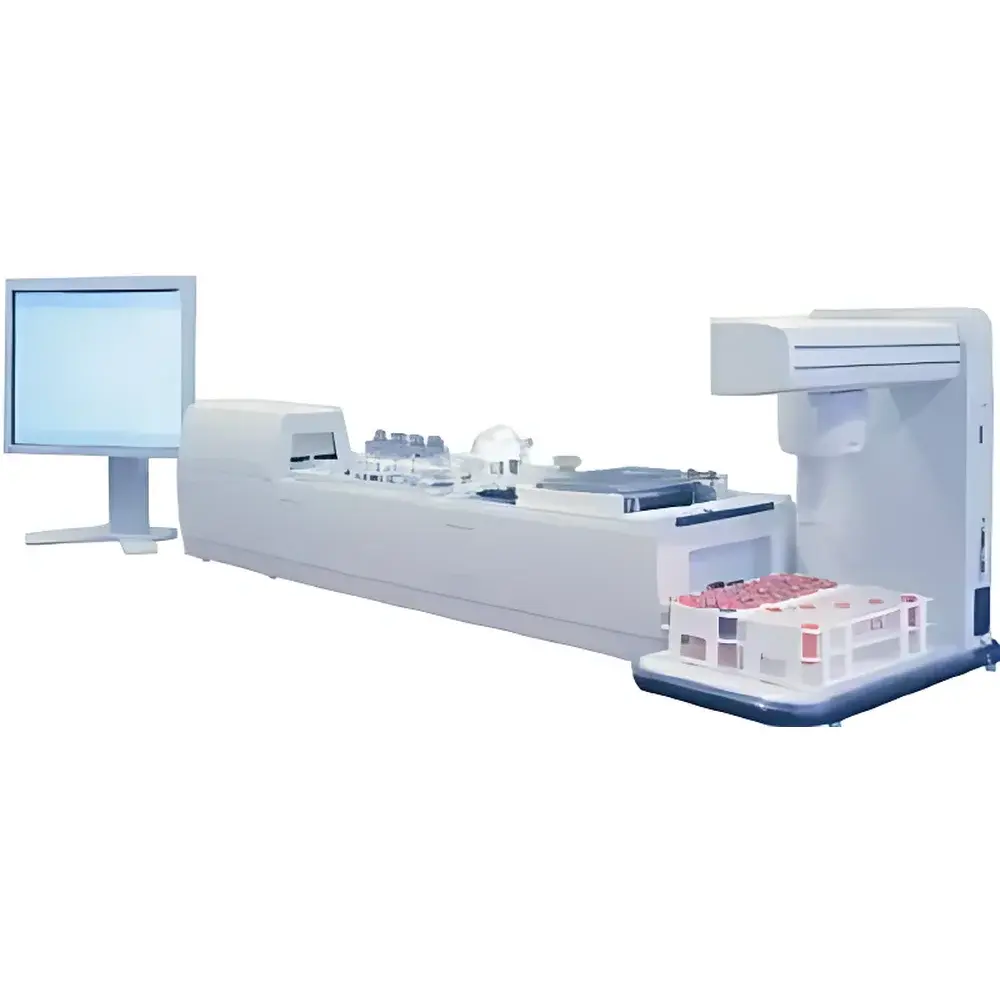
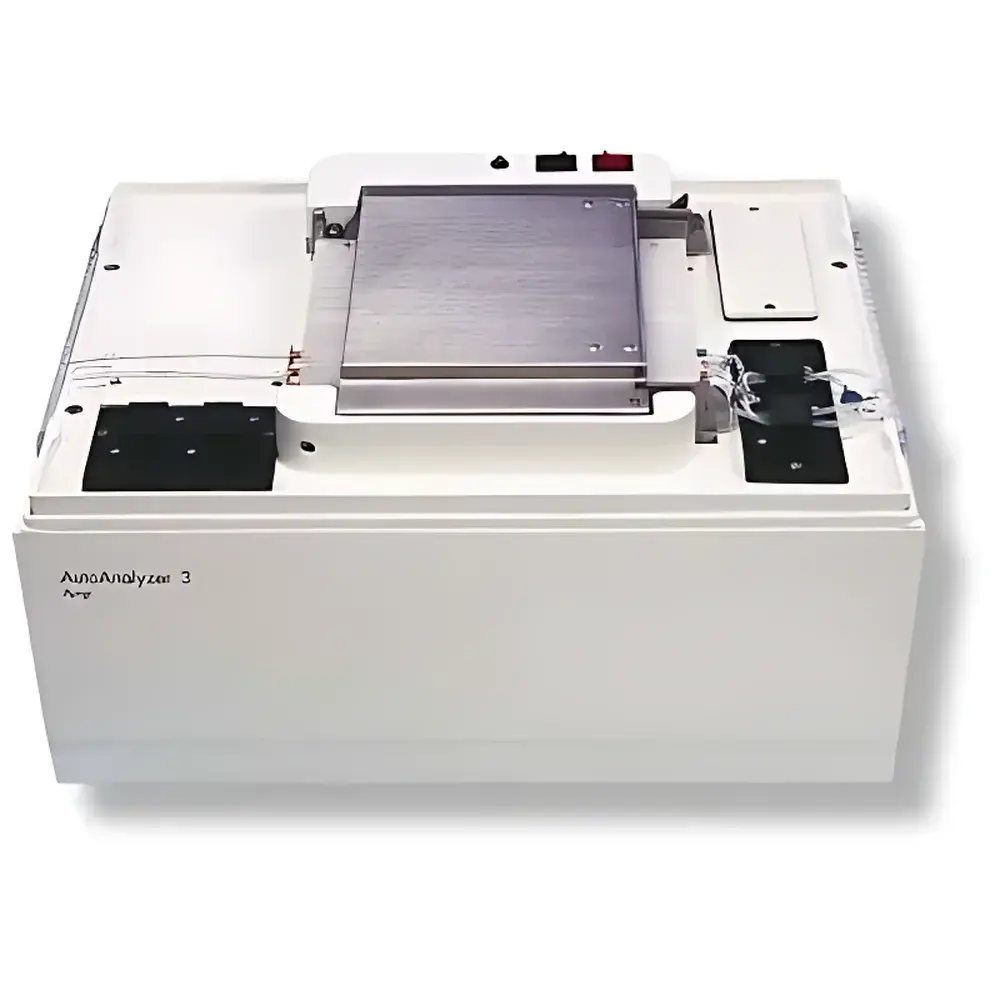
SEAL AA3 Automated Continuous Flow Analyzer
| Brand | SEAL |
|---|---|
| Origin | Germany |
| Model | AA3 |
| Product Type | Continuous Flow Analyzer |
| Wavelength Range | 340–900 nm |
| Sample Capacity | 120 / 180 / 270 positions |
| Reagent Positions | Unlimited |
| Cuvette Path Length | 10 mm, 30 mm, 50 mm |
| Light Source | High-Pressure Krypton Lamp / LED |
Overview
The SEAL AA3 Automated Continuous Flow Analyzer is a high-performance, modular wet-chemistry platform engineered for precision quantitative analysis of liquid samples in environmental, agricultural, food, pharmaceutical, and industrial laboratories. It implements Segmented Flow Analysis (SFA), a well-established continuous flow technique in which discrete sample segments are separated by precisely controlled air bubbles within a continuously flowing carrier stream. This segmentation minimizes dispersion, ensures reproducible reaction kinetics, and enables robust inter-sample isolation—critical for maintaining analytical integrity across high-throughput workflows. The AA3 system operates on the principle of colorimetric, fluorometric, or electrochemical detection following on-line chemical derivatization, digestion, distillation, or dialysis. Its architecture supports full automation from sampling through reagent addition, thermal conditioning, phase separation, and optical detection—delivering trace-level sensitivity, sub-ppb detection limits, and long-term measurement stability validated under ISO/IEC 17025-compliant laboratory practices.
Key Features
- Modular, scalable design supporting 1–8 independent analytical channels—each configurable with dedicated chemistry modules, detectors, and fluidic paths
- High-precision peristaltic pumping system delivering stable, pulse-free flow rates across wide dynamic ranges (0.1–5 mL/min) with <±0.5% volumetric accuracy
- Digital photometer with dual-wavelength capability (340–900 nm), interchangeable cuvettes (10/30/50 mm path lengths), and optional detector integration (flame photometry, ion-selective electrodes, UV-Vis, fluorescence)
- Automated dilution capability via programmable injection valve or syringe-based dilutor—enabling auto-range extension for out-of-calibration samples without manual intervention
- Low reagent consumption (typically 0.5–2.0 mL per analysis), optimized wash protocols reducing carryover to <0.05%, and rapid method switching (<90 seconds between assays)
- Full GLP/GMP compliance support: audit-trail-enabled AACE software, electronic signatures, 21 CFR Part 11–ready configuration, and secure user-role management
Sample Compatibility & Compliance
The AA3 accommodates diverse aqueous matrices—including drinking water, wastewater, seawater, soil extracts, plant digests, dairy products, fermented beverages, animal feed homogenates, pharmaceutical excipients, and industrial process streams. Sample viscosity range: 0.8–3.0 cP; suspended solids content: ≤50 mg/L (pre-filtered). All core methodologies are aligned with internationally recognized standard methods: EPA Methods 353.2, 365.2, 4500-NH3F, 4500-NO3–G; ISO 15681-1/2 (phosphate, nitrate); DIN 38405-D9/D10/D12; AOAC Official Methods™ (e.g., 973.45 for total Kjeldahl nitrogen); and USP for pharmaceutical water testing. System validation documentation includes IQ/OQ/PQ protocols, linearity (R² ≥ 0.9995 over 4–5 orders of magnitude), precision (RSD <1.2% at mid-range), and recovery studies (92–105% across spiked matrices).
Software & Data Management
Control, data acquisition, and reporting are managed exclusively through SEAL’s AACE (Analytical Automation Control Environment) software v6.02 or later. AACE provides real-time chromatogram visualization, automated peak integration using derivative-based algorithms, calibration curve fitting (linear, quadratic, spline), QC flagging (Westgard rules), and customizable report generation compliant with LIMS export formats (ASTM E1384, HL7). Raw data files are stored in encrypted binary format with SHA-256 checksums; all user actions—including method edits, calibration updates, and result overrides—are timestamped and logged with operator ID. Optional add-ons include AACE Connect for remote monitoring, AACE Audit for full 21 CFR Part 11 compliance, and AACE LIMSLink for bidirectional interfacing with major laboratory information management systems.
Applications
The AA3 supports over 700 validated applications spanning regulatory and research domains. Environmental testing includes alkalinity, ammonia-N, COD, chloride, Cr(VI), cyanide, fluoride, hardness, phenol, orthophosphate, nitrate/Nitrite-N, silicate, sulfate, TKN, TKP, DOC, anionic surfactants, Mn, Fe, and volatile acidity. In agronomy and food safety, it quantifies NO₃⁻, PO₄³⁻, NH₄⁺, K⁺, Ca²⁺, Mg²⁺, Na⁺, B, urea, lysine, and starch-derived analytes in soils, plants, feeds, tobacco, dairy, beer, wine, meat, and soft drinks. Industrial applications cover boiler water silica, Cu/Fe trace metals, chlor-alkali electrolyte purity (NaOH, NaOCl, NaClO₃), detergent phosphates/silicates, fertilizer NPK profiles, and antibiotic potency assays. Method flexibility extends to enzymatic, redox, complexometric, and gas-diffusion chemistries—all implemented without hardware modification.
FAQ
What standards does the AA3 comply with for regulatory reporting?
The AA3 meets requirements for EPA, ISO, DIN, AOAC, and USP method execution. Its AACE software supports 21 CFR Part 11 compliance when configured with audit trail, electronic signature, and data integrity modules.
Can the AA3 interface with existing LIMS infrastructure?
Yes—AACE LIMSLink provides native ASTM E1384 and HL7-compliant data exchange; custom API integrations are supported via RESTful web services.
Is method transfer from legacy AutoAnalyzer systems possible?
All AA3 modules maintain mechanical, fluidic, and electrical compatibility with AutoAnalyzer II/III platforms, enabling seamless upgrade paths and re-use of established chemistry manifolds.
How is calibration verification handled during unattended operation?
AACE supports scheduled bracketing standards, multi-point calibration validation, and automatic recalibration triggers based on drift thresholds or QC failure events.
What maintenance intervals are recommended for optimal performance?
Peristaltic pump tubing requires replacement every 3–6 months depending on usage; optical components undergo quarterly intensity checks; full system performance qualification (SPQ) is advised semiannually per ISO/IEC 17025 guidelines.
Related Products





