
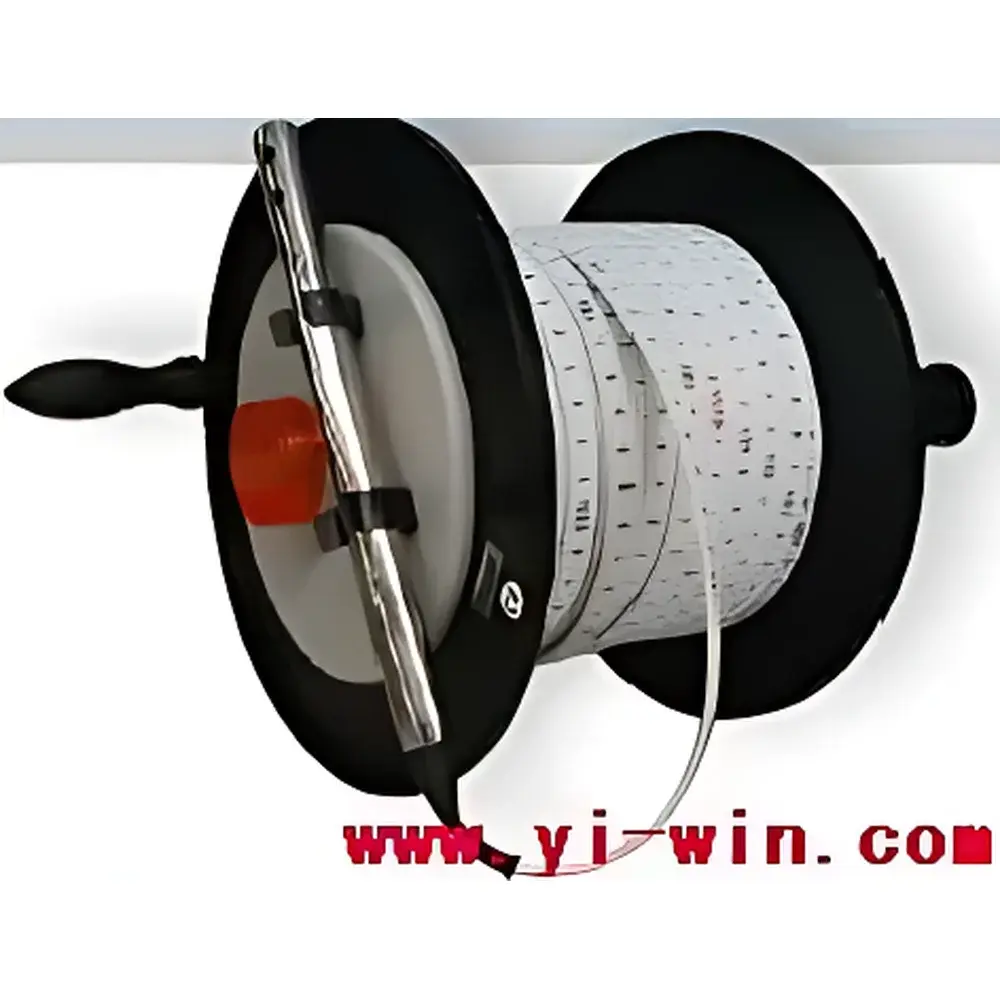
SEBA KLL Series Electronic Water Level Meter
| Brand | SEBA |
|---|---|
| Origin | Germany |
| Model | KLL / KLL-T / KLL-Mini |
| Cable Options | 10–500 m |
| Depth Accuracy | ≤1 cm (up to 300 m) |
| Temperature Accuracy | ±0.10 °C (0–25 °C), ±0.15 °C (0–50 °C) |
| Conductivity Ranges | 4 selectable (20 μS/cm – 50 mS/cm) |
| Power | 6 V DC (KLL/KLL-T, 4 × 1.5 V AA) or 3 V DC (KLL-Mini, 2 × 1.5 V AA) |
| Operating Temp | −15 °C to +50 °C |
| Storage Temp | −40 °C to +80 °C |
| IP Rating | IP68 (probe), IP52 (reel) |
| Probe Diameter | 10–16 mm |
| Display | 8-character LCD (KLL-T) |
| Language Support | English, German, French, Spanish |
| Reel Material | Heat-resistant polymer |
| Frame Material | Anodized aluminum |
| Cable | PE-sheathed dual-steel-core corrosion-resistant cable |
Overview
The SEBA KLL Series Electronic Water Level Meter is a field-deployable, direct-contact resistive water level sensing system engineered for high-reliability groundwater monitoring in wells, piezometers, and open-channel applications. It operates on the principle of electrical conductivity detection: when the stainless-steel probe tip contacts water, a closed circuit forms between the two steel conductors embedded in the polyethylene cable, triggering an audible tone and visual indicator (LED or LCD) to signal precise water surface contact. This method eliminates reliance on pressure transduction or ultrasonic reflection—making it insensitive to water turbidity, air temperature gradients, or surface foam. Designed for long-term environmental monitoring campaigns, the KLL series delivers consistent sub-centimeter depth resolution across variable cable lengths and thermal conditions, with calibration traceability maintained through factory-certified probe geometry and cable resistance characterization.
Key Features
- Three modular configurations: KLL (basic indicator), KLL-T (integrated digital thermometer & conductivity sensor), and KLL-Mini (ultra-portable, lightweight design for shallow-well access)
- Corrosion-resistant dual-steel-core polyethylene cable—tested for long-term immersion in aggressive groundwater chemistries (Cl⁻, SO₄²⁻, H₂S)
- IP68-rated probe housing ensures continuous submersion at depths up to 500 m without seal degradation
- Thermally stable electronics with compensated battery discharge management—enabling >1,000 hours of operation (KLL-T, backlight off) and verified accuracy across −15 °C to +50 °C ambient range
- Multi-range conductivity measurement (four decades: 20 μS/cm to 50 mS/cm) supports salinity profiling and aquifer mixing studies
- Onboard 8-character LCD display (KLL-T) with multilingual menu interface (English, German, French, Spanish) compliant with ISO/IEC 17025 documentation workflows
- Lightweight anodized aluminum support frame and heat-resistant polymer reel—optimized for field portability and repeated deployment in remote locations
Sample Compatibility & Compliance
The KLL series is validated for use in non-aggressive and moderately aggressive aqueous media, including freshwater aquifers, brackish groundwater, and wastewater infiltration monitoring wells. Probe materials (316 stainless steel, PTFE-insulated electrodes, PE cable jacket) meet ASTM D5127 (Standard Guide for Selection of Materials for Groundwater Monitoring Devices) and comply with EU RoHS Directive 2011/65/EU. The KLL-T’s temperature and conductivity modules are factory-calibrated against NIST-traceable reference standards; full calibration certificates are supplied with each unit. While not intrinsically safe for explosive atmospheres, the low-voltage DC design (≤6 V) satisfies IEC 60079-11 requirements for simple apparatus in non-hazardous zones. Data logging and reporting workflows align with EPA Method 9020B (Groundwater Monitoring) and support GLP/GMP audit readiness when paired with SEBA’s optional data export protocols.
Software & Data Management
The KLL series operates as a standalone field instrument with no embedded firmware or cloud connectivity—ensuring data sovereignty and eliminating cybersecurity vulnerabilities inherent in IoT-enabled sensors. All measurements are recorded manually by the operator using standardized field logs (e.g., USGS Form 110-1), with depth, temperature, and conductivity values directly readable from the display. For digital integration, SEBA provides ASCII-compatible export templates for post-processing in Excel, MATLAB, or hydrological modeling platforms (e.g., MODFLOW, GMS). The KLL-T’s multi-language UI facilitates international team deployments and reduces transcription errors during cross-border monitoring programs. Battery voltage diagnostics and self-test routines are accessible via menu navigation, supporting preventive maintenance scheduling per ISO 5725-2 precision validation protocols.
Applications
- Long-term groundwater level trend analysis in regulatory compliance monitoring wells (e.g., RCRA, CERCLA, WFD Article 7)
- Well yield testing and aquifer response characterization during pump tests
- Seasonal water table mapping for hydrogeological modeling and drought assessment
- Salinity intrusion monitoring in coastal aquifers via concurrent depth–conductivity profiling
- Calibration verification of permanent pressure transducers and data loggers
- Academic field research requiring portable, battery-operated, high-resolution manual sounding
FAQ
What is the maximum recommended cable length for sub-centimeter accuracy?
For KLL and KLL-T models, ≤1 cm depth uncertainty is guaranteed up to 300 m cable length under standard calibration conditions (20 °C, 500 Ω/km nominal resistance). At 500 m, typical uncertainty increases to ±1.5 cm due to cumulative cable resistance drift.
Can the KLL-Mini be used in highly conductive seawater?
Yes—the KLL-Mini supports conductivity Range 4 (20–50 mS/cm), covering typical seawater values (≈50 mS/cm at 25 °C, 35 ppt). Electrode polarization effects are minimized by pulsed DC excitation and automatic range switching.
Is the KLL-T suitable for frozen ground conditions?
The probe and cable remain mechanically functional down to −15 °C; however, ice formation inside well casings may impede probe descent. Field practice recommends pre-warming the reel and verifying cable flexibility prior to deployment in sub-zero environments.
Does the device require annual recalibration?
No routine recalibration is mandated. SEBA recommends verification against a certified reference scale every 24 months or after mechanical impact—consistent with ISO/IEC 17025 Clause 7.7.1 for measurement equipment control.
How is probe wear mitigated during repeated abrasion against well casing?
The probe tip features hardened 316 SS with a 60 HRC surface finish and chamfered leading edge. Cable tension control via the ratchet reel prevents lateral scraping, extending service life beyond 5,000 soundings in typical 150-mm PVC casings.







