
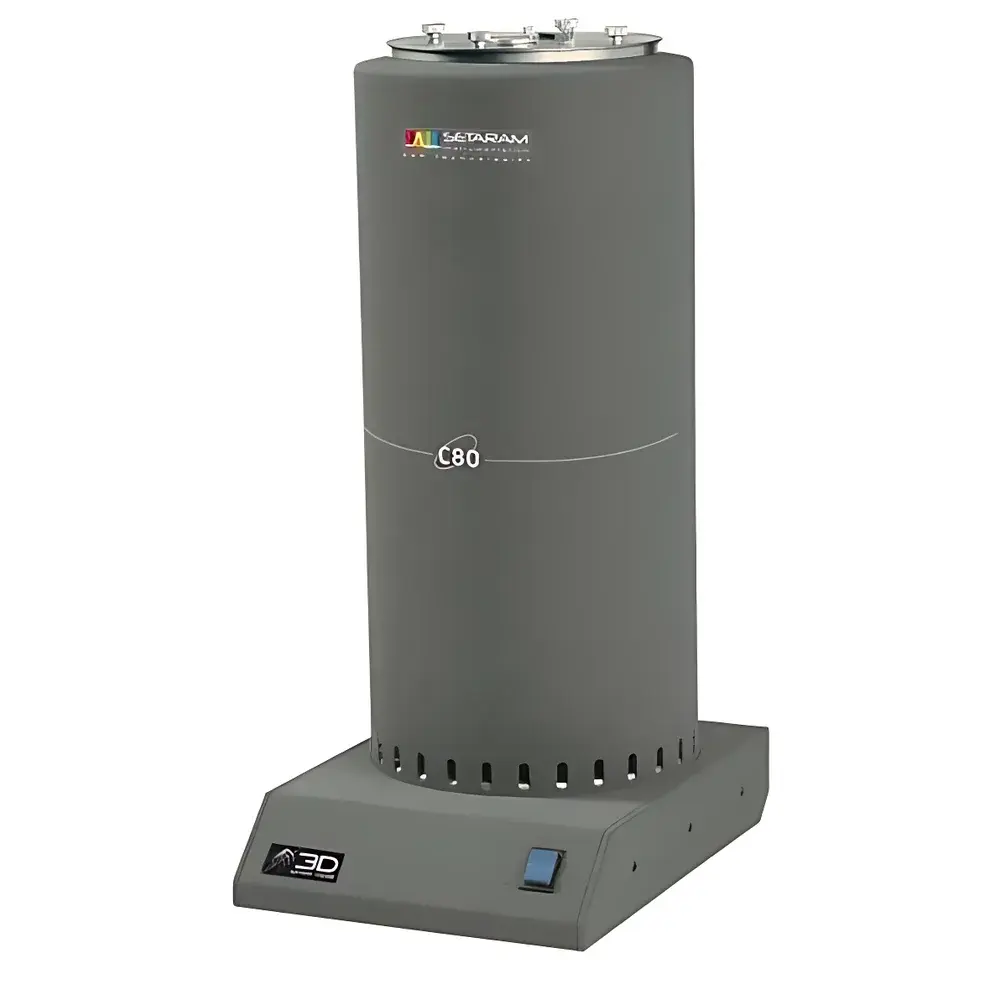
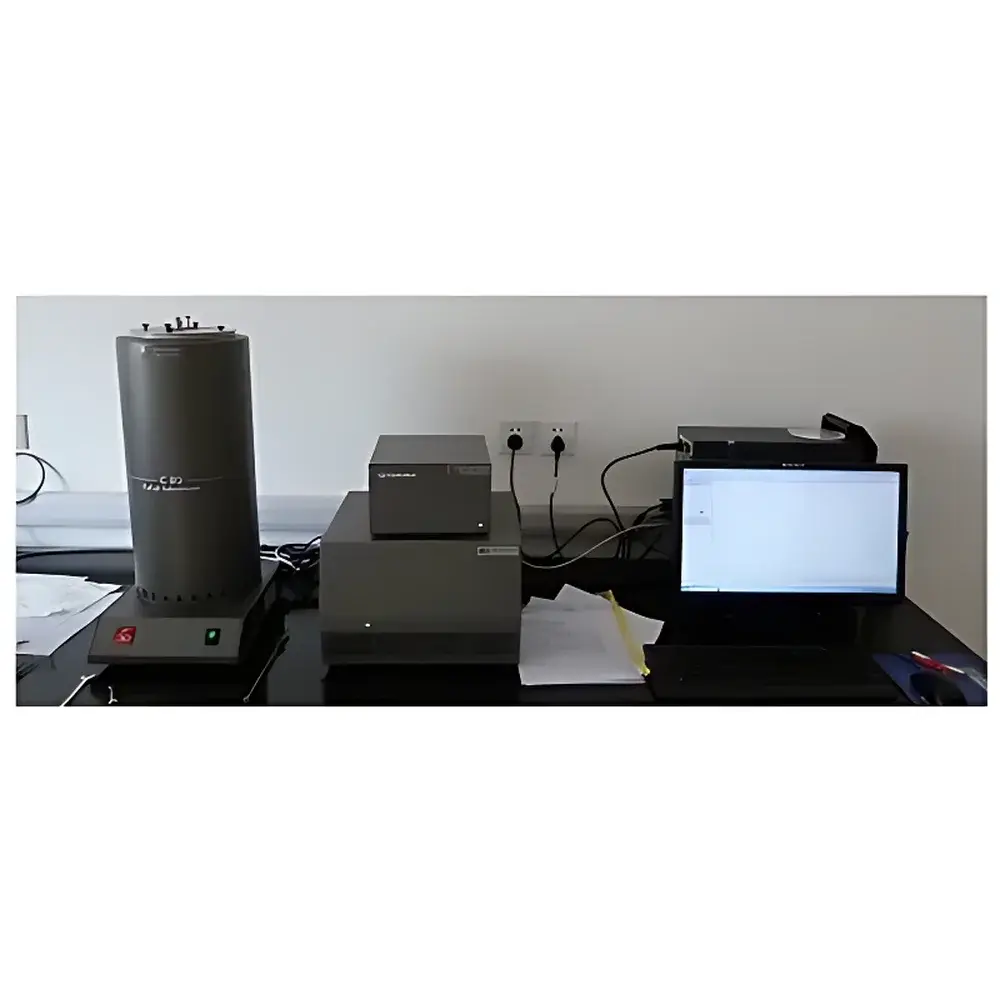
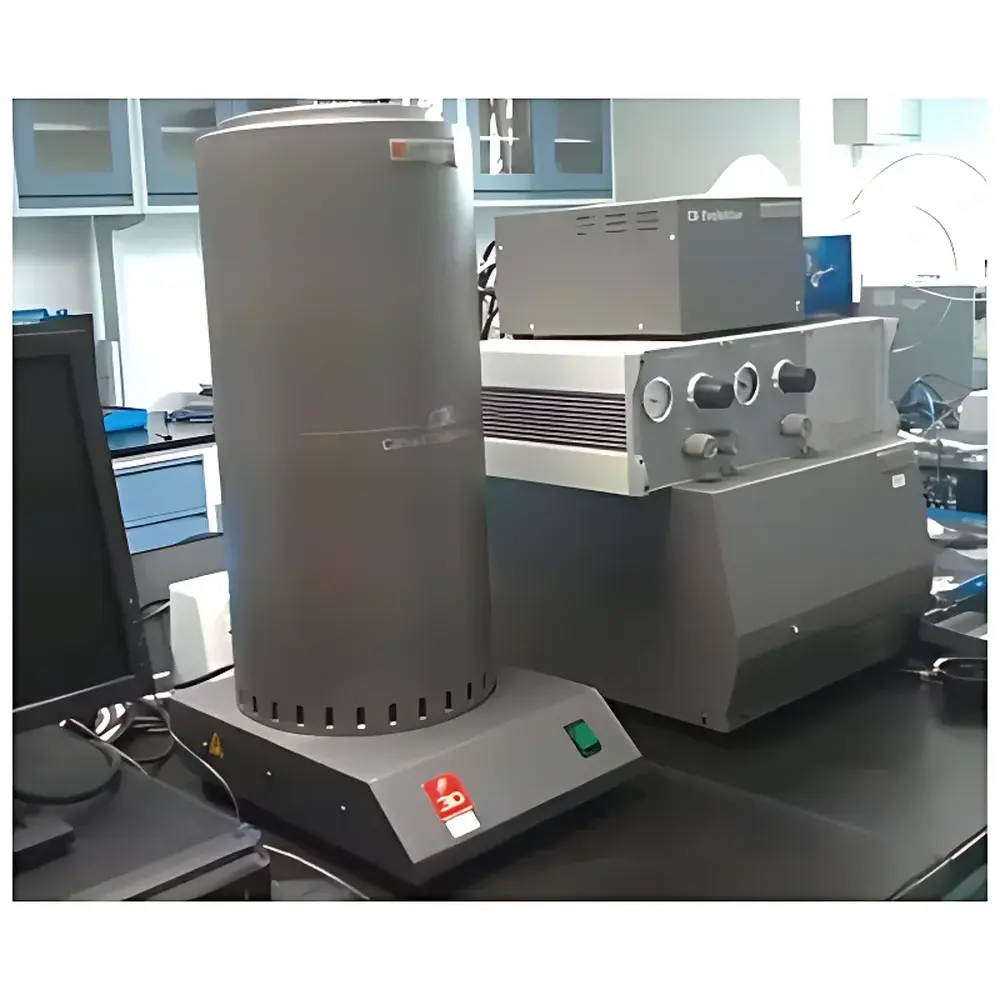
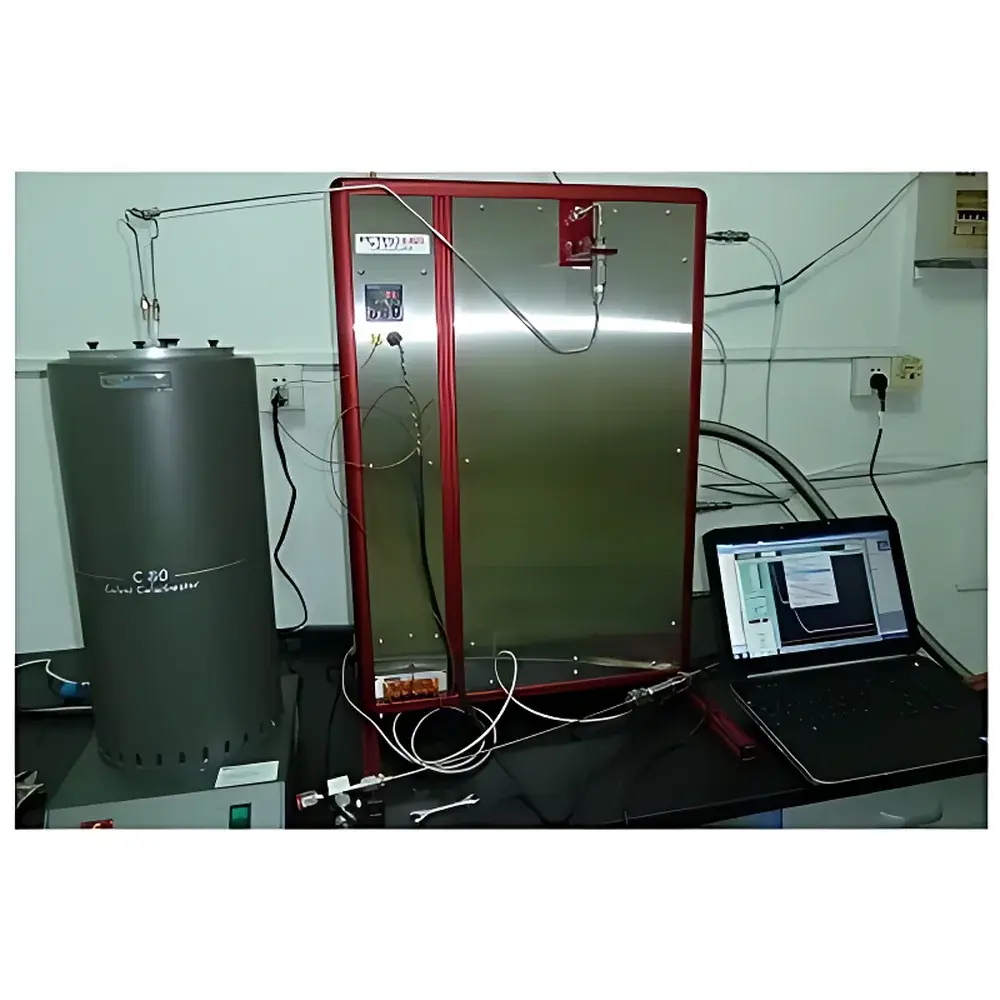
Setaram C80 High-Sensitivity Calvet-Type Microcalorimeter
| Brand | Setaram |
|---|---|
| Origin | France |
| Model | C80 |
| Operating Modes | Isothermal & Scanning |
| Temperature Range | Ambient to 300 °C |
| Heating Rate | 0.001–2 °C/min |
| Temperature Accuracy | ±0.1 °C |
| Temperature Precision | ±0.05 °C |
| Enthalpy Accuracy | ±1% |
| Calorimetric Precision | ±0.1% |
| Heat Flow Resolution | 0.10 µW |
| Maximum Sample Volume | 12.5 mL |
| Cell Materials | Stainless Steel or Hastelloy C |
| Maximum Pressure Rating | 1000 bar |
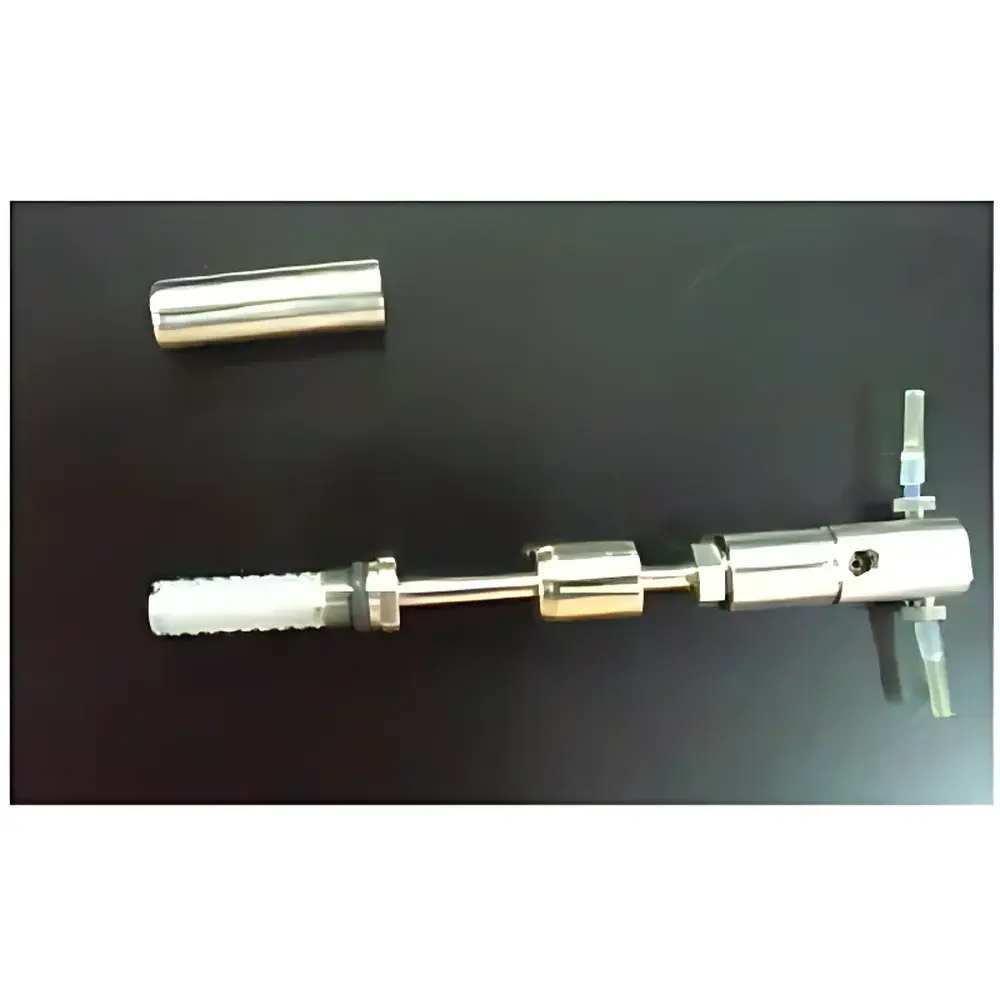
| Cell Types | Ampoule, Flip-Mix, Membrane-Mix, Fluid Circulation, Liquid Heat Capacity, Vacuum, Adsorption, High-Pressure Manometric, Safety Cells |
Overview
The Setaram C80 is a high-sensitivity, Calvet-type microcalorimeter engineered for quantitative thermodynamic and kinetic characterization of physical and chemical processes under controlled thermal and pressure conditions. Unlike conventional differential scanning calorimeters (DSC), the C80 employs a true three-dimensional heat flux sensor (“3D-sensor”) that surrounds the sample cell—capturing radial, axial, and circumferential heat flow vectors simultaneously. This architecture ensures near-ideal adiabaticity and eliminates baseline drift associated with asymmetric thermal coupling, delivering exceptional calorimetric efficiency (>99%) and reproducibility across wide dynamic ranges. The instrument operates in two primary modes: isothermal titration (for reaction enthalpy, binding constants, and kinetics) and temperature-scanning (for phase transitions, decomposition onset, and heat capacity profiling). Its robust mechanical design, coupled with precise temperature control and real-time pressure monitoring, enables rigorous study of exothermic and endothermic phenomena—including catalytic reactions, hydration kinetics, gas adsorption/desorption, and energetic material stability—under industrially relevant conditions.
Key Features
- Calvet 3D-sensor geometry providing full spatial integration of heat flow, ensuring minimal signal loss and superior signal-to-noise ratio
- Dual-mode operation: high-stability isothermal mode (±0.001 °C drift over 24 h) and programmable scanning mode with adjustable heating/cooling rates
- Modular cell system supporting >10 specialized configurations—including flip-mix, membrane-diffusion, fluid-circulation, and safety-rated pressure cells—enabling simulation of multi-phase mixing, dissolution, wetting, and reactive gas–solid contact
- High-pressure capability up to 1000 bar with integrated pressure transducers and leak-tight sealing for process safety evaluation and CO2 sequestration studies
- Large-volume sample compatibility (up to 12.5 mL) without compromising sensitivity—critical for heterogeneous systems such as cement pastes, slurries, and metal hydride powders
- Material-flexible cell construction using corrosion-resistant alloys (Hastelloy C) for aggressive media, including acidic, alkaline, and halogenated environments
- Thermal resolution of 0.10 µW supports low-enthalpy events typical in pharmaceutical crystallization, food matrix transitions, and surface adsorption thermodynamics
Sample Compatibility & Compliance
The C80 accommodates diverse physical states—liquids, gels, suspensions, powders, and solid monoliths—without requiring encapsulation or dilution. Its open-cell architecture permits direct loading and in situ manipulation (e.g., mechanical stirring, sequential reagent injection, or gas purging). All standard cells comply with ISO 11357 (Plastics — Differential Scanning Calorimetry), ASTM E698 (Kinetics of Thermally Unstable Materials), and USP (Microcalorimetry in Pharmaceutical Development). When configured with audit-trail-enabled software and electronic signatures, the system meets FDA 21 CFR Part 11 requirements for regulated environments. Pressure-rated cells are certified per PED 2014/68/EU and ASME BPVC Section VIII Div. 1 for safe operation at extreme conditions.
Software & Data Management
Setaram’s T.A. CALISTO software provides fully integrated instrument control, real-time data acquisition, and advanced thermokinetic modeling. It supports automated method sequencing (e.g., step-isothermal titrations, multi-ramp profiles), baseline correction via polynomial or spline fitting, and export of raw heat flow, temperature, and pressure time-series in ASCII or HDF5 formats. Built-in analysis modules include van’t Hoff and Eyring plots for thermodynamic parameter extraction, isoconversional methods (Friedman, Ozawa-Flynn-Wall) for activation energy mapping, and custom scripting (Python API) for batch processing and LIMS integration. All data files include embedded metadata (user ID, timestamp, calibration history, cell ID), enabling full traceability and GLP/GMP-compliant reporting.
Applications
- Catalysis research: Quantification of reaction enthalpies, turnover frequencies, and deactivation kinetics under realistic feed compositions and pressures
- Cement and concrete science: Real-time monitoring of alite and belite hydration, sulfate–alkali interactions, and admixture efficacy
- Energy materials: Thermodynamic profiling of hydrogen absorption/desorption cycles in metal hydrides and MOFs; thermal runaway screening of battery electrolytes
- CO2 capture systems: Enthalpy of amine–CO2 binding, solvent regeneration energy, and sorbent degradation kinetics
- Energetic materials: Adiabatic time-to-explosion (Texp) prediction, sensitivity to thermal stimuli, and compatibility testing of propellants and explosives
- Pharmaceutical development: Polymorph transition enthalpies, solubility thermodynamics, and excipient–API interaction screening
FAQ
What distinguishes the Calvet 3D-sensor from conventional DSC sensors?
The Calvet design uses concentric cylindrical thermopiles surrounding the sample, capturing heat flow isotropically—whereas DSC relies on differential temperature measurement between sample and reference pans, introducing inherent asymmetry and reduced efficiency.
Can the C80 perform isothermal titrations with liquid reagents?
Yes—via optional motorized syringe pumps and flip-mix or membrane-mix cells, enabling precise, automated addition of reagents under constant temperature and pressure.
Is the C80 compatible with external gas supply and exhaust systems?
Absolutely—the fluid circulation cell and high-pressure manometric cell support continuous gas flow, composition modulation, and online off-gas analysis when interfaced with mass spectrometers or FTIR.
How is calibration performed, and how often is it required?
Calibration is conducted using certified reference materials (e.g., indium, zinc, KCl dissolution) for temperature and enthalpy; heat flow calibration is verified quarterly using electrical calibration heaters built into each cell.
Does the system support remote operation and data review in regulated laboratories?
Yes—CALISTO supports role-based access control, electronic signatures, audit trails, and PDF report generation compliant with 21 CFR Part 11 and Annex 11 requirements.



