
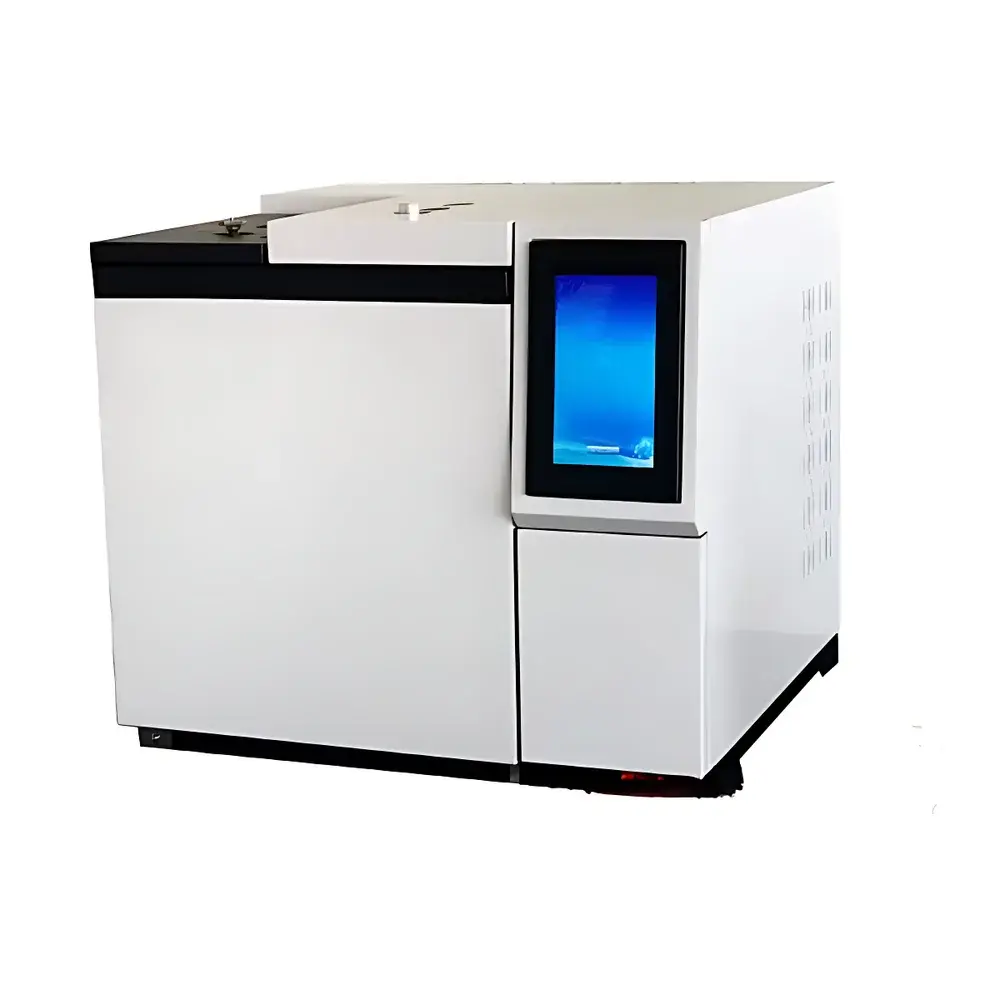
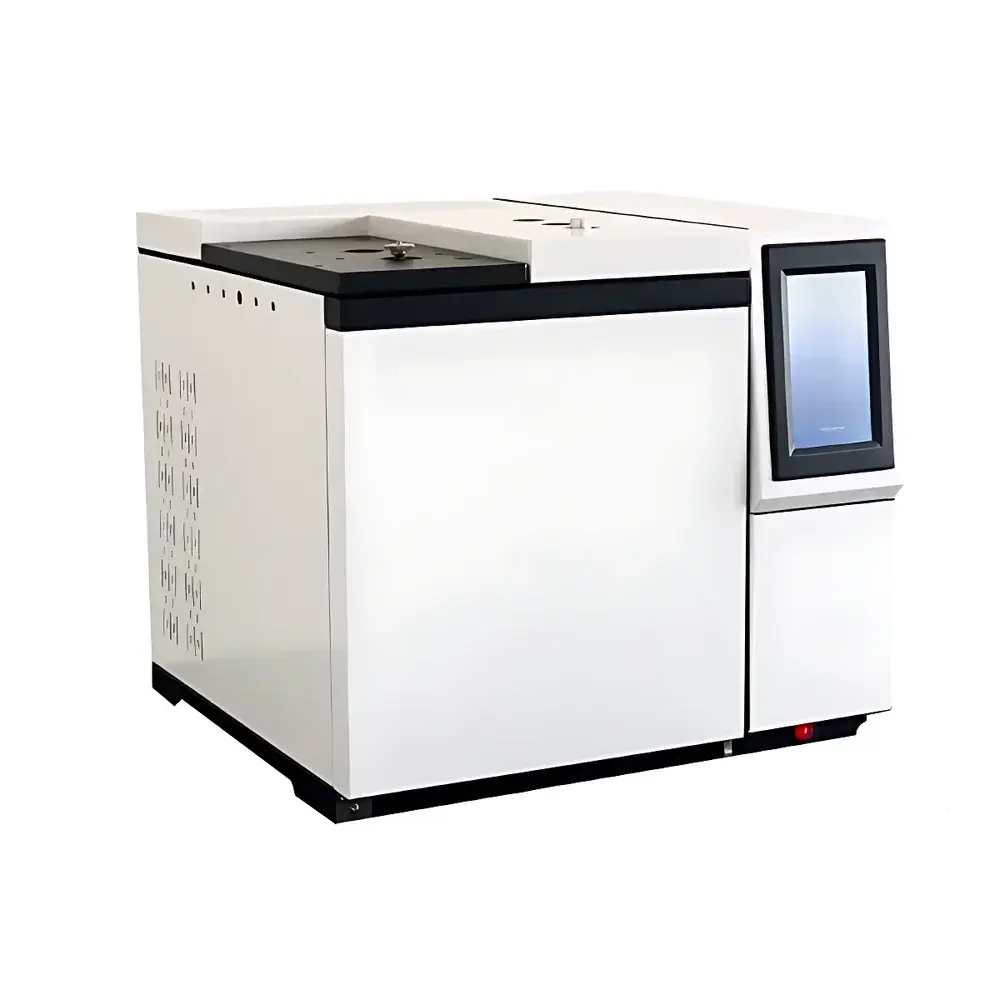
Shandong Luchuang GC-9870 Plus Laboratory Gas Chromatograph
| Brand | Shandong Luchuang |
|---|---|
| Origin | Shandong, China |
| Manufacturer Type | OEM Manufacturer |
| Instrument Type | Laboratory Gas Chromatograph |
| Application Field | Petrochemical Industry |
| Oven Temperature Range | 25–450 °C |
| Maximum Ramp Rate | 60 °C/min |
| Cooling Rate | 1 °C/min |
| Carrier Gas Flow Range & Control | 0–1200 mL/min |
| Carrier Gas Pressure Range & Control | 0–1000 kPa |
| Injector Max Operating Temperature | 0–450 °C |
| Injector Pressure Setting Range | 0–1000 kPa |
| Injector Total Flow Setting Range | 0–1200 mL/min |
| Temperature Stability | ±0.02 °C |
| Programmable Temperature Ramps | Up to 20 steps |
| Number of Independent Temperature Zones | 8 |
| FID Sensitivity (n-hexadecane) | ≤1×10⁻¹² g/s |
| FID Baseline Noise | ≤2×10⁻¹⁴ A |
| FID Drift | ≤2×10⁻¹³ A/30 min |
Overview
The Shandong Luchuang GC-9870 Plus is a high-performance, microprocessor-controlled laboratory gas chromatograph engineered for precision separation and quantitative analysis of volatile and semi-volatile organic compounds. Based on the fundamental principle of partition chromatography, it separates analytes by differential distribution between a mobile phase (inert carrier gas) and a stationary phase (capillary or packed column), with detection accomplished via thermally or electronically sensitive transducers. Designed specifically for demanding petrochemical applications—including hydrocarbon profiling, sulfur compound quantification, and refinery stream analysis—the instrument features a robust thermal architecture, fully digital gas flow and pressure control, and modular detector compatibility. Its column oven delivers exceptional thermal uniformity and stability (±0.02 °C), supporting both isothermal hold and complex multi-step temperature programming (up to 20 ramp segments) across a dynamic range from ambient +4 °C to 450 °C. The integrated hardware-software architecture enables full bidirectional communication, meeting foundational requirements for method traceability and instrument qualification in regulated environments.
Key Features
- Column oven with 8 independently controlled temperature zones—column, up to three detectors, injector(s), and auxiliary modules—each programmable with individual setpoints, ramp rates (0.1–50 °C/min), and hold times (0–9999.9 min).
- High-capacity oven accommodating one standard capillary column; optionally configurable for dual capillary columns or mixed configurations (e.g., two packed + one capillary column) without hardware modification.
- Digital carrier gas control system with real-time monitoring and feedback regulation over flow (0–1200 mL/min) and pressure (0–1000 kPa), ensuring reproducible retention times and peak shape integrity.
- Fully electronic, software-configurable detectors: FID with logarithmic amplifier (detection limit ≤1×10⁻¹² g/s n-hexadecane), TCD with constant-current mode (max 220 mA), plus optional FPD, ECD, and NPD—all supporting automatic ignition, flame-out detection, and auto-reignition protocols.
- Integrated GC workstation software embedded in host controller, featuring method-driven workflow management, task-based operation, audit-trail-capable parameter logging, and dual-mode data acquisition (analog + digital output).
- MS interface port预留 (standard vacuum-compatible flange) for future upgrade to GC-MS configuration, supporting seamless integration with quadrupole or single-quadrupole mass spectrometers.
Sample Compatibility & Compliance
The GC-9870 Plus is validated for routine analysis of C₁–C₄₀ hydrocarbons, oxygenates, halogenated organics, sulfur species (e.g., mercaptans, sulfides), and nitrogen-containing compounds commonly encountered in crude assay, gasoline blending, LPG, and catalytic reformate streams. Its detector flexibility supports ASTM D1319 (hydrocarbon types), ASTM D5186 (aromatics by FID), ASTM D5504 (sulfur compounds by PFPD/GC), and ISO 6974 series (natural gas analysis). While not pre-certified to FDA 21 CFR Part 11, the system’s software architecture supports implementation of user-defined electronic signatures, audit trails, and secure access controls—enabling alignment with GLP and GMP documentation practices when deployed within validated laboratory workflows.
Software & Data Management
The native GC workstation provides comprehensive instrument control, sequence management, and chromatographic data processing through a Windows-based GUI. All operational parameters—including oven gradients, detector settings, valve events (8 programmable external event channels), and gas flows—are stored as versioned methods with metadata timestamps. Raw data are saved in vendor-neutral formats (e.g., .CDF) compatible with third-party chemometric tools. The software implements internal calibration curve generation (linear, quadratic, polynomial), peak integration using valley-to-valley and tangent skim algorithms, and customizable reporting templates aligned with ISO/IEC 17025 reporting guidelines. Data security is reinforced via role-based user permissions, session logging, and export encryption options.
Applications
- Petrochemical QA/QC: Boiling point distribution (ASTM D2887), benzene/toluene/xylene (BTX) quantification in reformulated gasoline, and olefin/paraffin ratios in FCC feedstocks.
- Refinery process monitoring: Real-time analysis of amine scrubber effluents, sulfur recovery unit tail gas, and hydrogen purity verification.
- Environmental compliance: Detection of BTEX, PAHs, and chlorinated solvents in soil extracts or wastewater per EPA Method 8021B and 8260.
- Research & development: Method development for novel catalyst evaluation, polymer additive screening, and biofuel component profiling.
FAQ
Does the GC-9870 Plus support remote operation and networked data sharing?
Yes—via Ethernet interface and TCP/IP protocol, enabling centralized instrument monitoring, method deployment, and raw data retrieval across local area networks.
Can the system be configured for split/splitless injection and PTV (programmed temperature vaporizing) modes?
Standard configuration includes split/splitless injectors; PTV functionality requires optional hardware module and firmware upgrade.
Is validation documentation (IQ/OQ/PQ protocols) available for this model?
Generic IQ/OQ templates are provided; site-specific PQ must be executed by the end user per internal SOPs and applicable regulatory standards.
What maintenance intervals are recommended for the FID and TCD detectors?
FID jet cleaning every 200–300 runs; TCD filament inspection and reference cell purging every 6 months under continuous operation.
Are consumables such as septa, liners, and columns supplied directly by Shandong Luchuang?
Yes—original equipment manufacturer (OEM) consumables are available with batch traceability and QC certificates upon request.
Related Products





