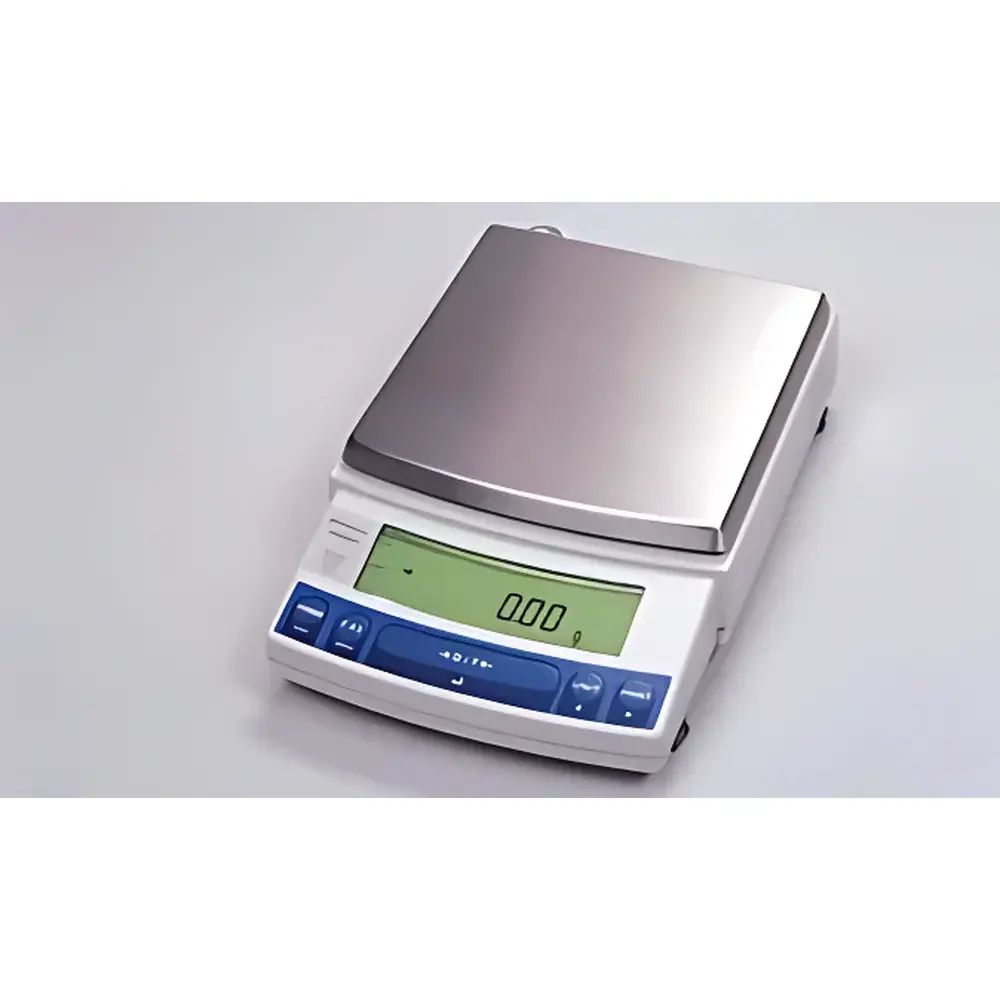
Shimadzu UW Series Precision Electronic Top-Loading Balances
| Brand | Shimadzu |
|---|---|
| Origin | Japan |
| Series | UW |
| Calibration | Internal PSC Auto-Calibration |
| Display Resolution | 0.001 g to 0.1 g |
| Weighing Capacity | 220 g to 8200 g |
| Pan Size | 108 × 105 mm or 170 × 180 mm |
| Power Consumption | ≤12 VA |
Overview
The Shimadzu UW Series represents a generation of high-performance electronic top-loading balances engineered for precision, stability, and operational efficiency in regulated laboratory environments. At the core of its design is Shimadzu’s proprietary Uni Bloc monolithic mass sensor — a single-piece, stress-free load cell architecture that eliminates mechanical hysteresis and delivers exceptional long-term repeatability. Unlike conventional multi-component sensors, the Uni Bloc enables rapid stabilization (<0.7 s for UW-S models), minimal drift under thermal fluctuation, and superior resistance to mechanical shock — critical attributes for routine QC testing, formulation work, and GLP-compliant sample preparation. The UW Series operates on electromagnetic force compensation (EMFC) principles, ensuring linear response across the full weighing range without mechanical wear. All models feature internal calibration via Precision Self-Calibration (PSC), eliminating dependency on external weights during daily operation while maintaining traceability to national standards.
Key Features
- Uni Bloc sensor technology for enhanced responsiveness, thermal stability, and mechanical robustness
- Internal PSC auto-calibration with programmable timing (scheduled or event-triggered)
- Manual electric calibration accessible via front-panel key for immediate verification
- Built-in real-time clock for automatic timestamping of all weight data (ISO/IEC 17025-compliant recordkeeping)
- Direct-Through Window (DTW) functionality: native RS-232C interface enabling seamless, cable-only data streaming to Excel, LIMS, or ELN systems without driver installation
- Backlit LCD display with analog bar graph for intuitive real-time mass tracking
- Multi-unit weighing modes: grams, count, %, carat, density (with optional SMK-101/102 kit), and user-defined units
- Rechargeable battery option (model 321-61691-02) for portable or backup operation
- Integrated draft shield compatibility (WBC-102, WBC-502) and animal weighing accessories (e.g., 321-62150 rodent pan) for specialized workflows
Sample Compatibility & Compliance
The UW Series accommodates diverse sample types — from powders and granules to irregular solids and small-volume liquids — across two distinct platform configurations: standard-capacity (UW-S) and high-resolution wide-range (UW-H) models. Pan dimensions (108 × 105 mm or 170 × 180 mm) support both benchtop vials and larger containers. Optional density determination kits (SMK-101/102) enable ASTM D792-compliant solid/liquid density measurement using Archimedean displacement principles. All instruments comply with international metrological requirements per OIML R76-1 and NIST Handbook 44. Firmware supports audit trail logging (user ID, time/date, calibration events, zero/tare actions) meeting FDA 21 CFR Part 11 and EU Annex 11 expectations when integrated with validated software environments. ISO print output includes metadata required for quality documentation (e.g., balance ID, calibration status, environmental conditions if logged externally).
Software & Data Management
Data integrity is ensured through native RS-232C communication supporting ASCII-based protocols compatible with LabWare, STARLIMS, and custom Python/Node.js acquisition scripts. The DTW function transmits weight values, timestamps, unit identifiers, and status flags (e.g., “stable”, “overload”) in real time — no polling delay. Optional EP-80 printer (321-62675) provides hard-copy GLP records with configurable headers. Relay output interface (IFB-RY1 + 321-54026) allows hardware-level integration with automated dispensing systems or alarm circuits. Remote display units (RDB-201/RDB-202) extend visibility across production lines. All firmware updates are performed via standard serial commands; no proprietary utilities required. Data export formats include CSV and tab-delimited text — fully importable into statistical process control (SPC) platforms.
Applications
The UW Series serves as a primary weighing instrument in pharmaceutical manufacturing (USP , ), food safety labs (AOAC 992.18), academic research (material science, chemistry), and contract testing organizations. Typical use cases include: raw material receipt inspection, tablet weight variation testing, formulation batch reconciliation, density profiling of polymer blends, and moisture content pre-weighing prior to gravimetric loss-on-drying. Its low-profile design and optional wall-mounting kits (321-55953/321-55954-01) optimize space-constrained cleanrooms. The UW-H series (0.001 g resolution) meets USP Chapter repeatability criteria for Class I balances used in analytical method development.
FAQ
Does the UW Series support GLP-compliant data recording?
Yes — built-in clock, ISO print capability, and DTW data streaming enable full traceability. When paired with validated software, it satisfies 21 CFR Part 11 requirements for electronic records.
What is the difference between UW-S and UW-H models?
UW-S models prioritize speed and durability for general lab use (0.01 g resolution); UW-H models deliver higher resolution (0.001 g) and extended linearity for analytical applications requiring tighter tolerances.
Is external calibration required for regulatory audits?
No — internal PSC calibration is sufficient for daily use. However, periodic verification with certified reference weights (e.g., class M2 or better) is recommended per ISO/IEC 17025 and internal SOPs.
Can the balance be used for density measurement out-of-the-box?
Density functionality requires the optional SMK-101 or SMK-102 kit (model-specific). Once installed, the balance executes ASTM D792 procedures automatically.
Is the RS-232C interface compatible with modern Windows/macOS systems?
Yes — standard null-modem cables connect directly to USB-to-serial adapters. No drivers needed; terminal emulators (e.g., PuTTY, Tera Term) or custom scripts read ASCII output natively.