
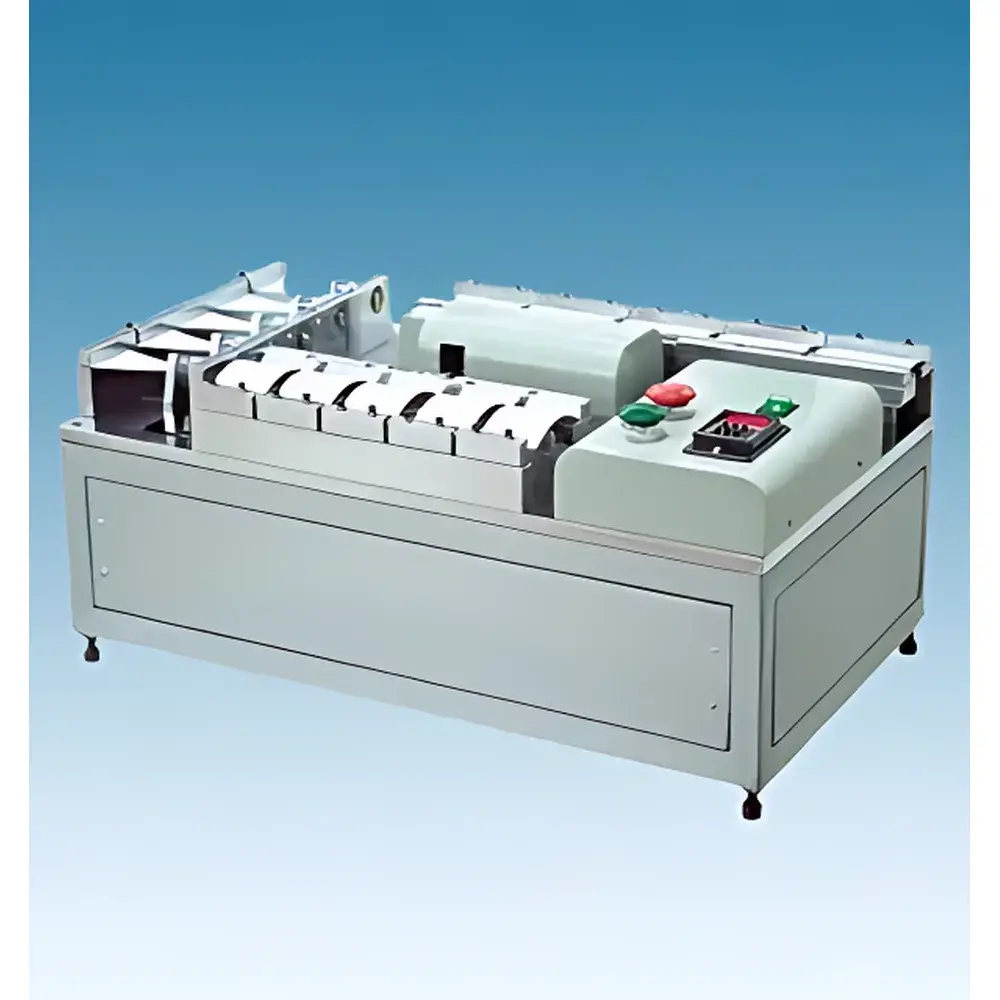
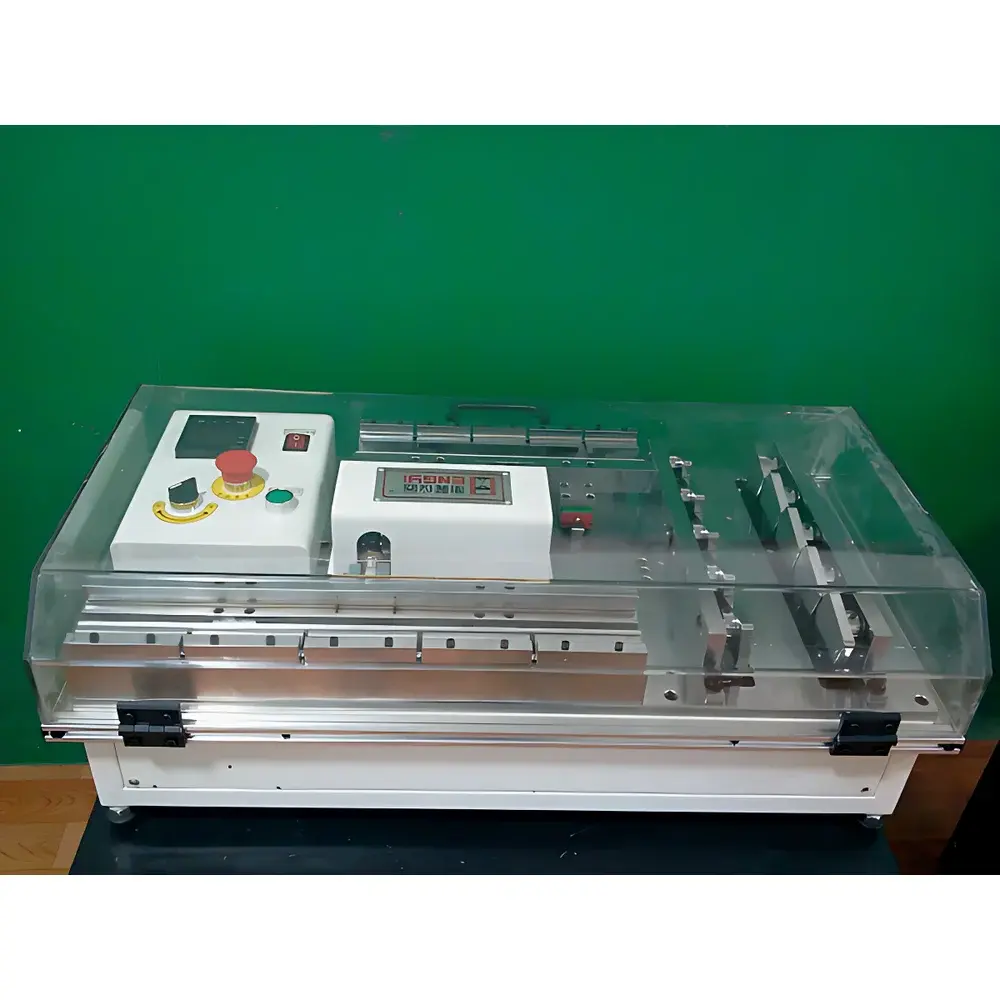
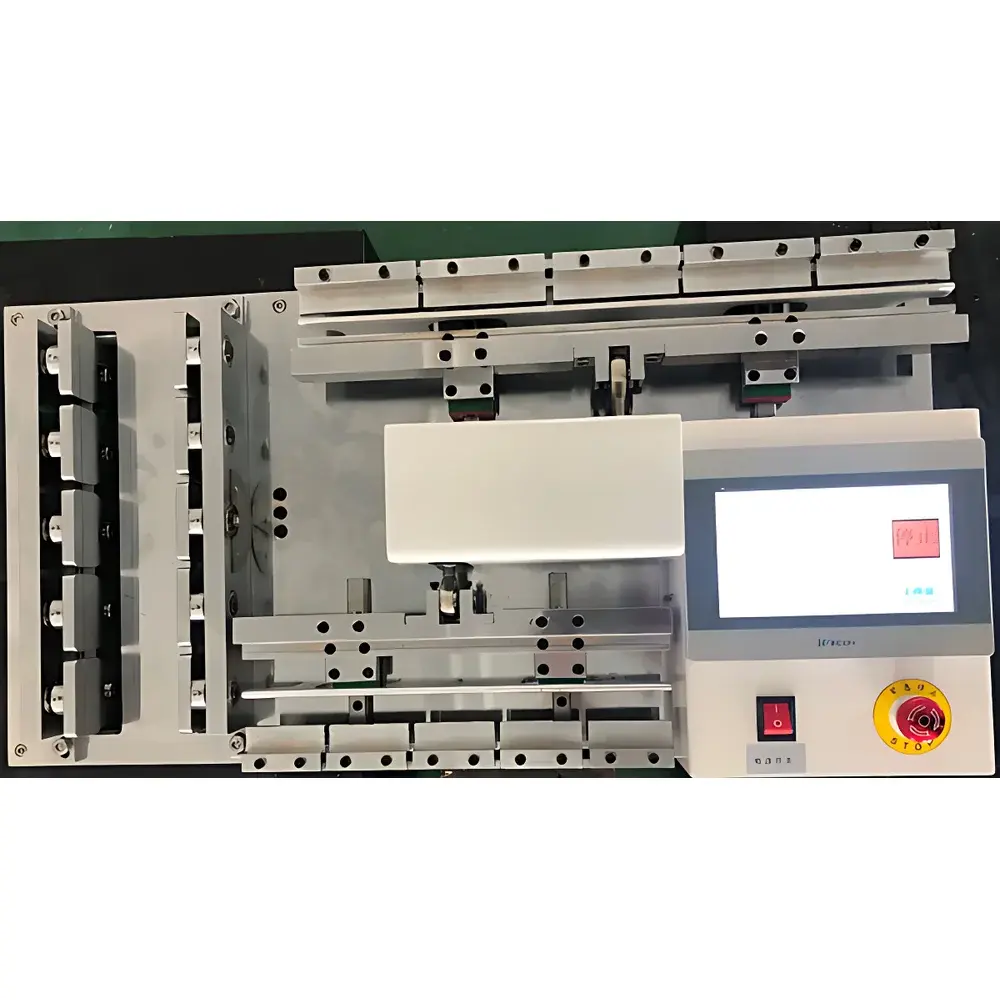
Shanghai Hengyi HY(IC)RGVBB Intelligent Dual-Mode Card Bending and Torsion Tester
| Brand | Hengyi / Hengyitest |
|---|---|
| Origin | Shanghai, China |
| Manufacturer Type | Direct Manufacturer |
| Country of Origin | China |
| Model | HY(IC)RGVBB |
| Pricing | Upon Request |
Overview
The Shanghai Hengyi HY(IC)RGVBB Intelligent Dual-Mode Card Bending and Torsion Tester is an electromechanical test system engineered for precise, repeatable evaluation of mechanical durability in contact and contactless smart cards—specifically targeting flexural fatigue and torsional deformation behavior under standardized loading protocols. Designed in strict alignment with international and national card reliability standards—including ISO/IEC 7816-1:1998, ISO/IEC 10373-1:2006, GB/T 16649.1–2015, and GB/T 17554.1–2006—the instrument implements a dual-actuation architecture combining independent bending and torsion modules within a single integrated platform. Its operational principle relies on controlled rotary motion transmission via high-precision gear reduction and AC speed-regulated motor drive, enabling programmable displacement profiles and angular excursions across three distinct test configurations: long-edge bending, short-edge bending, and bidirectional torsion. The system’s core function is to simulate real-world handling stresses encountered during card insertion, removal, and pocket storage—thereby supporting quality assurance, material selection validation, and conformance testing in card manufacturing, banking security R&D, and payment terminal certification workflows.
Key Features
- Fifteen independent test stations: five dedicated to long-edge bending (±20 mm max displacement), five to short-edge bending (±10 mm max displacement), and five to bidirectional torsion (±15° per direction, total ±30° angular range)
- Non-contact optical counting system with 9999-cycle capacity—eliminating mechanical switch wear and reducing mean time between failures (MTBF) to near-zero levels
- Precisely adjustable bending amplitude and torsional angle via calibrated mechanical stops and digital position feedback
- AC 220 V ±5 % input power supply; low-power consumption design (35 W nominal) suitable for continuous lab operation
- Test frequency: 30 rpm (0.5 Hz) for both bending and torsion modes—consistent with standard cycling rates defined in ISO/IEC 10373-1
- Standardized fixture geometry compliant with ISO/IEC 7816 mechanical interface specifications (d = 86 mm reference diameter)
- Integrated STK AC variable-speed motor control and high-accuracy planetary gear reducer assembly ensuring torque stability and motion repeatability
Sample Compatibility & Compliance
The HY(IC)RGVBB accommodates standard ID-1 format plastic cards (85.6 × 53.98 × 0.76 mm), including magnetic stripe cards, contact IC cards (with embedded silicon chips and gold-plated pads), contactless RFID cards (e.g., MIFARE, DESFire), and hybrid dual-interface cards. All test fixtures are manufactured to exacting tolerances per ISO/IEC 7816-1 Annex A and GB/T 17554.1 Clause 6.2. The system satisfies functional requirements for Clause 6 (Bending Test) and Clause 7 (Torsion Test) of ISO/IEC 10373-1:2006, and supports full traceability documentation required under GLP-compliant laboratory environments. While not certified as FDA 21 CFR Part 11 compliant out-of-the-box, the device’s deterministic actuation sequence and non-volatile cycle logging enable audit-ready data capture when paired with validated external software.
Software & Data Management
The HY(IC)RGVBB operates via a built-in industrial-grade touch HMI interface with localized English language support. Cycle count, mode selection, and runtime status are displayed in real time. Though no proprietary PC-based software is bundled, the unit provides TTL-level digital output signals for external PLC integration or custom LabVIEW/Python data acquisition scripts. All test parameters—including start/stop timestamps, completed cycles, and fault flags—are stored in non-volatile memory and accessible via USB export. For laboratories requiring electronic records management, the system supports manual CSV log export and can be incorporated into broader LIMS frameworks through I/O-triggered event logging.
Applications
- Quality control screening of PVC, PET, and polycarbonate card substrates during pre-production validation
- Comparative fatigue life assessment of laminated vs. monolithic IC card constructions
- Verification of adhesive bond integrity between chip module and card body under cyclic mechanical stress
- Supporting certification submissions to EMVCo, PCI SSC, and national central banks requiring physical durability evidence
- Academic research on polymer viscoelastic response under repeated flex-torsion coupling loads
- Failure mode analysis (FMA) of delamination, conductor fracture, and antenna detuning in contactless cards
FAQ
Does the HY(IC)RGVBB comply with ISO/IEC 10373-1:2006 for torsion testing?
Yes—it implements the specified ±15° angular displacement at 0.5 Hz with bidirectional symmetry and meets dimensional fixture requirements outlined in Clause 7.2.
Can the bending displacement be adjusted below the stated minimum values?
No—mechanical travel limits are fixed per standard compliance; however, users may install custom spacers or shims to achieve sub-millimeter deflections for research applications.
Is calibration documentation provided with shipment?
A factory calibration certificate verifying mechanical stroke accuracy and cycle counter linearity is included; NIST-traceable recalibration services are available upon request.
What maintenance intervals are recommended for long-term reliability?
Gearbox lubrication every 12 months and optical sensor cleaning every 6 months are advised; no scheduled motor servicing is required within the first 5 years of typical use.
Are replacement fixtures available for non-ID-1 card formats?
Custom fixture sets—including mini-SIM, micro-SIM, and embedded eUICC modules—can be developed under Hengyi’s OEM engineering service program.



