
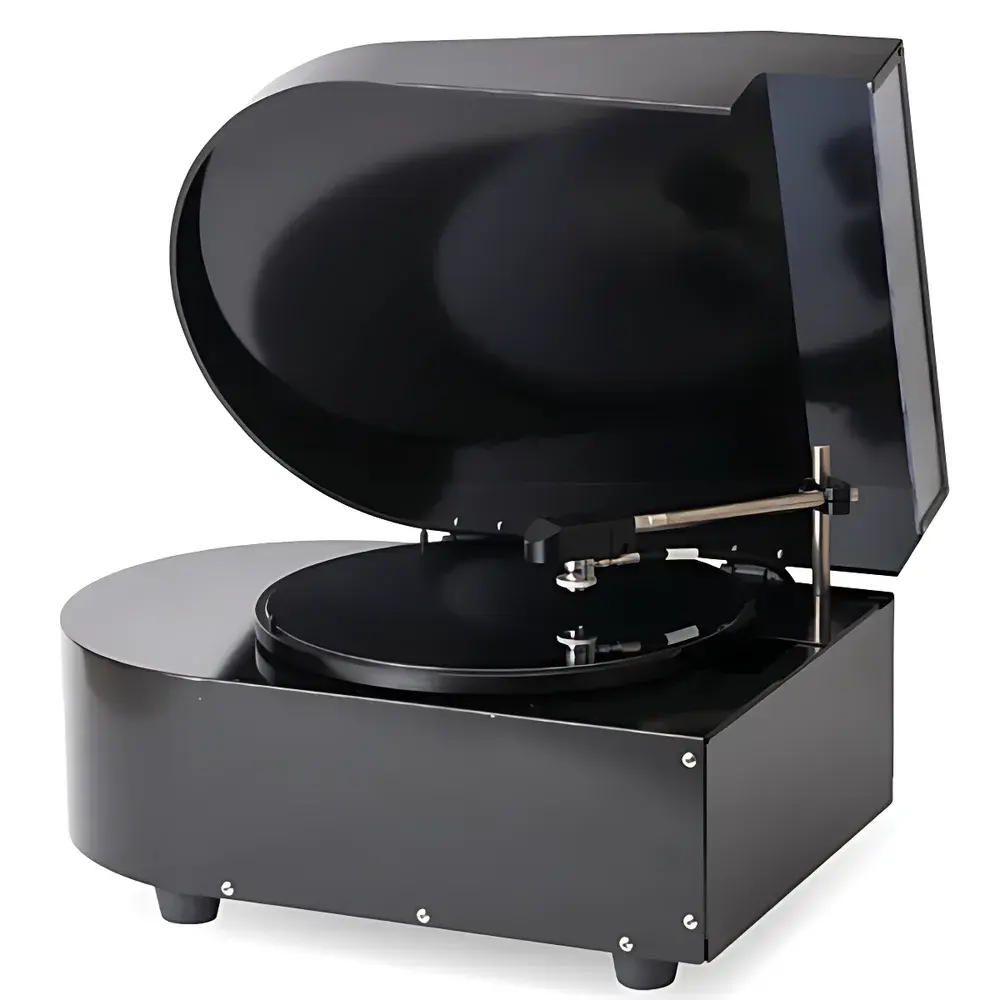
Shashin Kagaku Reflective/Transmissive Thin-Film Thickness Measurement System
| Brand | Shashin Kagaku |
|---|---|
| Origin | Japan |
| Model Type | Reflective or Transmissive Configuration |
| Application Scope | Photoresist, ITO, porous membranes, polycrystalline silicon, battery electrodes, glass substrates, bonded wafers, patterned wafers, adhesive layers |
| Compliance | Designed for semiconductor process monitoring and R&D environments |
| Software Features | Real-time endpoint detection, histogram-based statistical analysis, contour & 3D thickness mapping, region-of-interest (ROI) thickness calculation, optional auto-calibration module |
| Mechanical Compatibility | Standard wafer handling for φ100–300 mm circular substrates |
| Optical Architecture | Non-contact, optical interference-based measurement (white-light reflectometry for reflective mode |
Overview
The Shashin Kagaku Reflective/Transmissive Thin-Film Thickness Measurement System is an optically based, non-destructive metrology platform engineered for high-precision, real-time characterization of thin-film layers in semiconductor fabrication, photovoltaic development, display manufacturing, and advanced materials research. The system operates on the principle of optical interference—specifically, spectral reflectometry in reflective configurations and broadband infrared transmission spectroscopy in transmissive variants—to determine film thickness with sub-nanometer resolution across single-layer and multi-layer stacks. Unlike mechanical or stylus profilometers, this instrument requires no physical contact, eliminating risk of surface damage or contamination—critical for fragile photoresist films, ultra-thin ITO coatings, or bonded wafer interfaces. Its dual-mode architecture supports both inline endpoint detection during etch or deposition processes and offline quantitative mapping of spatial thickness uniformity, making it suitable for both process control and failure analysis workflows.
Key Features
- Multi-modal optical sensing: Reflective configuration optimized for opaque or highly reflective substrates (e.g., Si wafers with metal layers); transmissive NIR/FTIR mode enables accurate measurement of low-reflectivity films (e.g., polymer adhesives, glass interlayers, or transparent conductive oxides on glass).
- Real-time endpoint monitoring capability integrated into the core firmware—enabling automated process termination based on spectral shift detection during plasma etching or sputtering.
- High-speed automated mapping: Supports full-wafer thickness profiling at up to 100+ measurement points per second, generating contour plots, 3D topographic renderings, and statistically processed histograms (mean, standard deviation, min/max, uniformity %).
- Flexible sample handling: Standardized compatibility with φ100 mm to φ300 mm circular wafers; optional motorized XYZ stages and custom stage plates accommodate square substrates (e.g., display glass), diced dies, or irregularly shaped samples.
- Region-of-interest (ROI) analysis engine: Enables pixel-level thickness extraction from 2D intensity maps—essential for evaluating pattern-dependent thickness variation across lithographically defined features.
- Optional auto-calibration module: Implements reference-based drift compensation using certified NIST-traceable calibration standards, supporting GLP-compliant documentation requirements.
Sample Compatibility & Compliance
The system is validated for quantitative thickness measurement across a broad class of functional thin films—including spin-coated photoresists (10 nm–10 µm), sputtered ITO (30 nm–500 nm), porous anodic alumina membranes, polycrystalline silicon gate stacks, Li-ion battery cathode/anode layers, and adhesive-bonded wafer pairs (e.g., Si-SiO₂-Si). It complies with industry-standard measurement traceability frameworks and supports audit-ready data export formats compatible with ISO/IEC 17025 laboratory accreditation. While not FDA-cleared as a medical device, its data integrity features—including user-access logging, electronic signature support, and 21 CFR Part 11–compliant audit trail generation (when deployed with validated software configuration)—meet baseline requirements for GMP-aligned R&D environments.
Software & Data Management
The embedded Windows-based GUI provides intuitive workflow navigation—from single-point acquisition to full-mapping campaigns—with configurable measurement protocols, pass/fail thresholding, and batch report generation (PDF/CSV/XLSX). Raw spectral data is stored in vendor-neutral HDF5 format, ensuring long-term archival stability and third-party analysis interoperability. All measurement sessions retain full metadata: timestamp, operator ID, instrument serial number, calibration status, environmental sensor readings (optional ambient temperature/humidity logging), and optical path configuration. Data export modules support direct integration with MES platforms via OPC UA or RESTful API endpoints—enabling closed-loop feedback to process tools.
Applications
- Semiconductor front-end process control: Real-time endpoint detection during SiO₂ or Si₃N₄ etch; post-CMP thickness verification of ILD layers.
- Advanced packaging: Quantification of bond layer uniformity in TSV and hybrid bonding applications.
- Photovoltaics R&D: Thickness profiling of perovskite absorber layers and charge transport films on textured substrates.
- Display manufacturing: Monitoring of indium tin oxide (ITO) sheet resistance correlation with thickness across large-area glass panels.
- MEMS and sensors: Characterization of stress-induced curvature in thin-film cantilevers via differential thickness mapping.
- Academic materials science: In-situ thickness evolution studies during sol-gel film drying or thermal annealing cycles.
FAQ
What measurement principles does this system use?
It employs white-light reflectometry (WLR) in reflective mode and Fourier-transform infrared (FTIR) or near-infrared (NIR) transmission spectroscopy in transmissive mode—both relying on interference fringe analysis to extract optical thickness.
Can it measure multi-layer stacks?
Yes—spectral fitting algorithms support modeling of up to four-layer systems with known or iteratively determined refractive indices, provided sufficient spectral contrast exists between interfaces.
Is vacuum or nitrogen purge required?
No—measurements are performed in ambient air; however, optional environmental enclosures are available for humidity- or particulate-sensitive applications.
How is calibration maintained over time?
Through periodic verification using traceable SiO₂-on-Si reference wafers; the optional auto-calibration module automates this using integrated reference optics and motorized stage alignment.
Does the system support integration with factory automation protocols?
Yes—SECS/GEM, OPC UA, and Modbus TCP drivers are available as licensed add-ons for seamless integration into 300 mm fab host systems.
Related Products



