
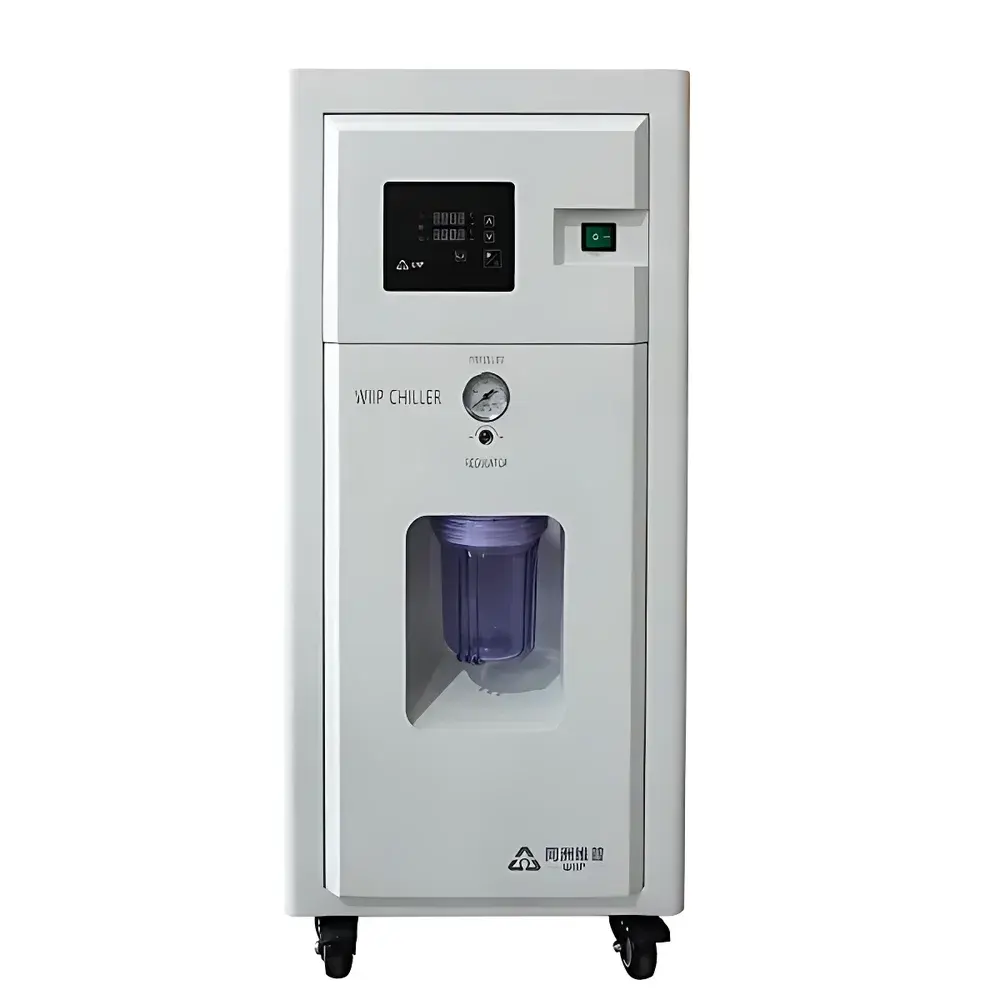
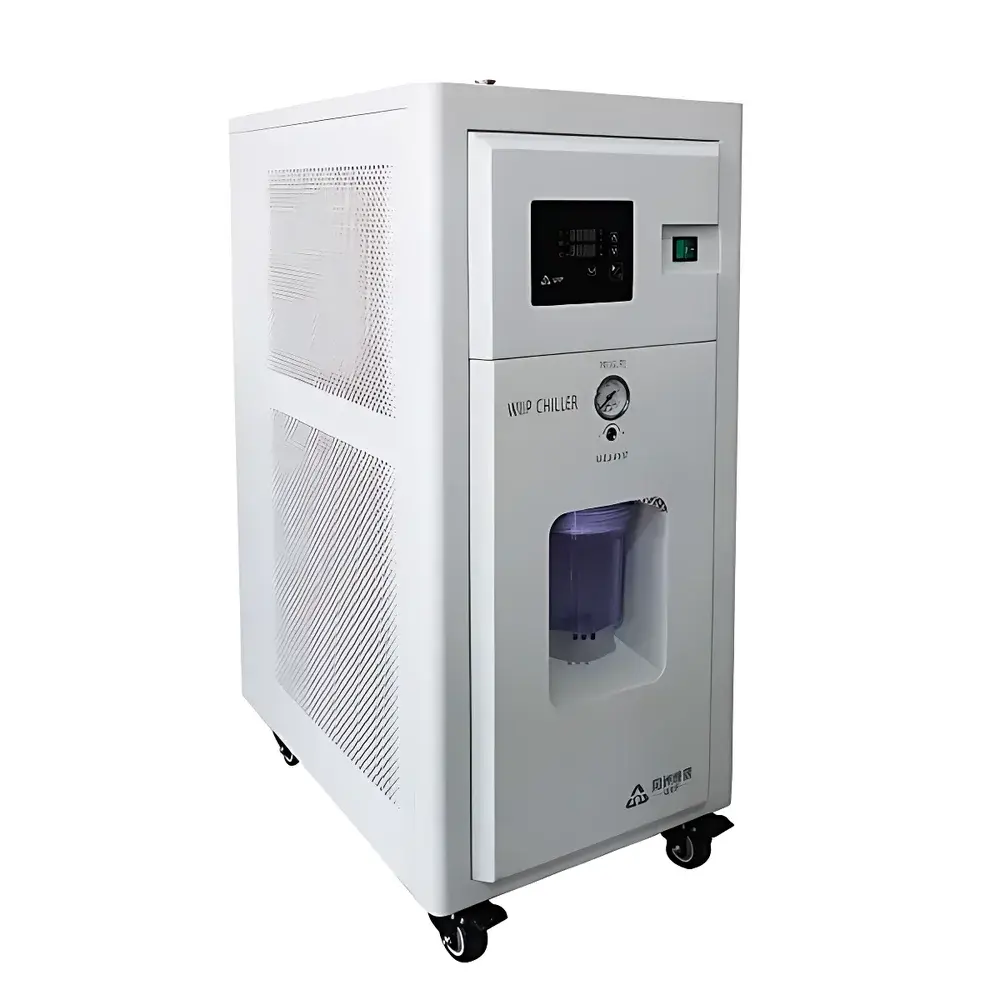
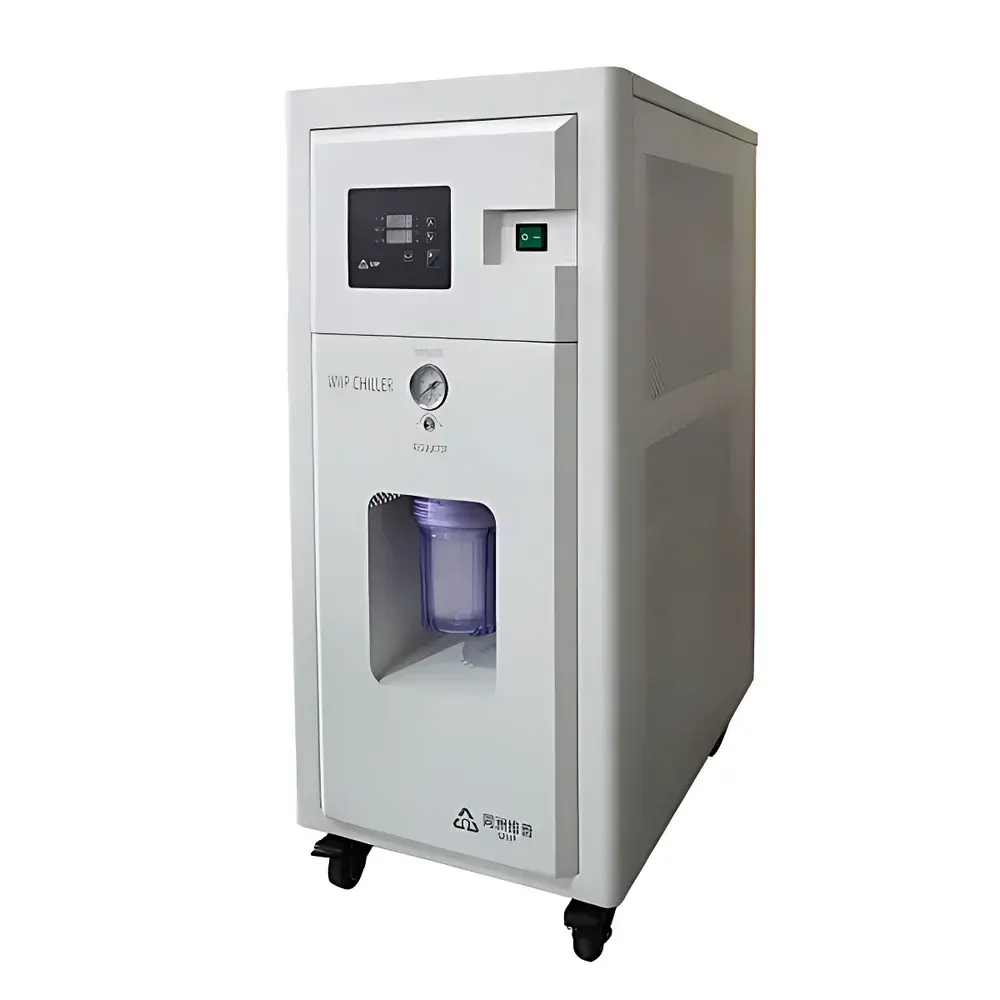
Tongzhou Weipu H2 Circulating Chiller for Atomic Absorption Spectrophotometers (AAS)
| Brand | Tongzhou Weipu |
|---|---|
| Origin | Beijing, China |
| Manufacturer Type | Direct Manufacturer |
| Product Category | Domestic |
| Model | H2 Circulating Chiller for AAS |
| Instrument Type | Integrated Unit |
| Cooling Method | Water-Cooled |
| Temperature Control Range | −40 °C to 95 °C |
| Refrigeration Capacity | 1200–1400 W |
| Temperature Stability | ±0.1 °C to ±0.3 °C |
| Reservoir Volume | 2.5–8 L |
| Operating Principle | Phase-Change Refrigeration |
| Certification | CE Compliant |
| Refrigerant | Environmentally Compliant (R-410A or equivalent) |
| Power Input | Universal Voltage Support (100–240 VAC, 50/60 Hz) |
Overview
The Tongzhou Weipu H2 Circulating Chiller is an integrated, vertically oriented refrigerated cooling system engineered specifically for stable thermal management of high-precision analytical instruments in laboratory environments. Designed to meet the stringent thermal load and stability requirements of atomic absorption spectrophotometers (AAS), this chiller employs a closed-loop phase-change refrigeration cycle—utilizing a compressor-driven vapor-compression system with environmentally compliant refrigerant—to deliver continuous, controllable coolant circulation. Its operational temperature range spans from −40 °C to +95 °C, enabling compatibility not only with AAS flame and graphite furnace modules but also with auxiliary systems requiring sub-ambient or elevated coolant temperatures, such as ICP-OES plasma torches, ICP-MS interface regions, SEM cold stages, and laser-based instrumentation. The unit’s thermodynamic architecture prioritizes low thermal drift and minimal vibration transmission—critical for maintaining optical alignment and detector baseline stability in spectroscopic platforms.
Key Features
- Compact vertical footprint optimized for benchtop integration beneath or adjacent to AAS systems and other space-constrained instrumentation.
- Low-RPM, large-diameter axial fan assembly engineered to reduce airborne acoustic emissions to ≤45 dB(A) at 1 m—minimizing noise interference in shared analytical labs.
- Integrated water quality management: factory-installed particulate filter (5 µm nominal rating), corrosion-inhibiting coolant reservoir lining, and optional deionized water compatibility support.
- Dual-sensor temperature monitoring with independent PT100 probes in both reservoir and outlet line, enabling real-time differential feedback control and automatic deviation alerting.
- Comprehensive safety interlocks including low-flow detection, high-pressure cut-off, over-temperature shutdown, and dry-run protection for pump longevity.
- CE-marked construction with universal power input (100–240 VAC, 50/60 Hz), supporting deployment across North America, EU, APAC, and EMEA regulatory jurisdictions without hardware modification.
Sample Compatibility & Compliance
The H2 chiller is validated for continuous duty cycles with AAS systems from major OEMs—including PerkinElmer, Agilent, Shimadzu, and Thermo Fisher Scientific—where consistent coolant temperature directly impacts nebulizer efficiency, graphite tube lifetime, and background correction accuracy. It supports both recirculating glycol-water mixtures (up to 30% v/v) and deionized water, with material-wetted components (reservoir, pump head, heat exchanger) constructed from 316 stainless steel and EPDM/FKM elastomers to resist chemical degradation. All electrical and mechanical designs conform to IEC 61010-1:2010 for laboratory equipment safety, and electromagnetic compatibility meets EN 61326-1:2013. CE certification documentation includes Declaration of Conformity (DoC) and technical files available upon request for audit readiness under ISO/IEC 17025 or GLP frameworks.
Software & Data Management
While the H2 operates via intuitive front-panel digital interface (LCD with rotary encoder), it provides RS-485 Modbus RTU communication port for integration into centralized lab infrastructure. When connected to laboratory information management systems (LIMS) or building automation platforms, the chiller transmits real-time parameters—including setpoint, actual outlet temperature, refrigeration load %, flow rate (via optional external sensor), and alarm status—for traceable thermal history logging. Audit-trail-capable data export (CSV via USB) supports compliance with FDA 21 CFR Part 11 when paired with validated LIMS software—enabling electronic signature attribution and immutable record retention for regulated QA/QC workflows.
Applications
- Primary cooling for flame and electrothermal atomization systems in AAS, ensuring reproducible atomization efficiency and minimizing memory effects.
- Thermal stabilization of ICP-OES plasma generators and RF matching networks to maintain plasma impedance consistency across multi-element analyses.
- Cooling support for ICP-MS interface cones and vacuum pump forelines, reducing thermal expansion-induced mass drift during long-duration runs.
- Temperature-controlled operation of glovebox antechambers and inert-atmosphere reactors where precise ambient offset is required.
- Stabilization of high-power diode lasers and ultrafast oscillator cavities in spectroscopy and metrology setups.
FAQ
What is the recommended coolant type for optimal AAS compatibility?
Deionized water is preferred for standard flame AAS applications; for sub-zero operation or extended uptime, a 25% propylene glycol/water mixture is recommended—ensuring freeze protection without compromising thermal conductivity or pump compatibility.
Can the H2 chiller be integrated into a networked lab environment?
Yes—via its native RS-485 Modbus RTU port, the unit supports bidirectional communication with SCADA, LIMS, or custom Python/Node-RED scripts for remote parameter adjustment and event-triggered alerts.
Does the unit include validation documentation for GxP-regulated laboratories?
Factory calibration certificates (NIST-traceable temperature sensors) and IQ/OQ protocol templates are provided. Full 3Q validation support—including risk assessment and test scripts aligned with ASTM E2500—is available through Tongzhou Weipu’s global service partners.
How often does the water filtration system require maintenance?
The 5 µm inline filter should be inspected every 3 months and replaced if pressure drop exceeds 0.1 bar; reservoir cleaning and coolant replacement are advised every 6–12 months depending on usage intensity and water quality.
Is the chiller compatible with non-AAS instruments requiring ±0.1 °C stability?
Yes—the H2 achieves ±0.1 °C stability at steady state under rated load conditions, verified per ISO 17025-accredited thermal performance testing, making it suitable for high-stability applications including reference-grade photometry and calorimetry.



